
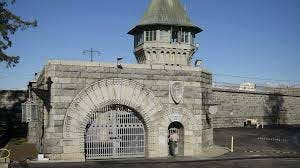
The walls are heavy stone, grey blocks stacked as high as a three-story building, spikes or razor-wires at the top and towers about every hundred yards or so. There is an entry gate where you check in and get a pass. You wait while the guard in uniform checks the trunks of cars leaving and the riders of cars coming in. Then it is a walk of a block to the first iron gate. You can hear the loud clank as the lock is released. You push the gate open. It creaks.
Folsom Prison, made famous by Johnny Cash.
Inside is another guard who rechecks IDs and looks in my backpack, while I sign the visitor’s log. Then the next clank of a bigger gate, followed by a third steel gate, before I am finally on the grounds.
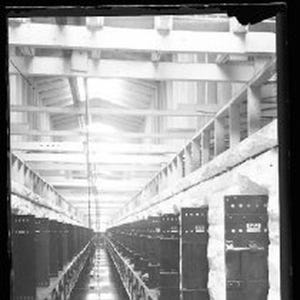
Pre-pandemic, I would enter and pass Death Row and the chamber when the condemned were hanged. Thirteen steps from the final cell to the steps at the bottom of the hanging platform.
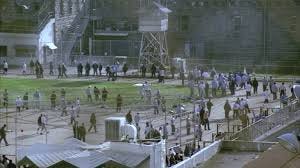
I pass a third guard who checks my ID and pass card, then through the new medical space and another door, and I am in the tiers of cells and showers where men are wandering, making phone calls, drying off. The cell walls were built in the 1800s. While they are enclosed now, they used to be exposed to the elements; three tiers in the cold and heat, 5X7 cells often housing two or more inmates, all dressed in blues and whites and greys. I exit the cell block into the yard where inmates jog, work out, play handball or cards, soccer, softball, or basketball.
These are prisoners; inmates of the State of California – Folsom Prison, made famous by Johnny Cash. I am here to write.
Monthly, I write with around forty inmates. The rest of the month, they meet as a Toastmasters Group, called the Gavel Club, but on Guy’s Night, which they call it, they write in Amherst Writers’ style. It is one of the most amazing experiences of my life. At entry, it is like a classroom. I am greeted with handshakes, fist bumps, glad to see you, how you doing? I hear about individuals who’ve been paroled and are now suddenly gone since I was last there. It is complicated, challenging, exciting, and always charged.
I have been writing with them since before the pandemic, although the Covid pause was long. But it has been an unbroken streak since 2022. Like every AWA group, I bring prompts, and we write and read together.
It’s a large group so the process can be a bit challenging, with short writing times. Not everyone gets to read on a given night. Those who do, get AWA feedback – what was memorable, what stood out, what was strong. They are good at this. They know how to address the writing without telling their own stories or talking about what they would’ve done differently. They write with such courage about themselves, how they got to this point in life, how they fill time and stay present, or how they allow their thoughts to carry them out of these confines.
We talk about how writing can help them play out life choices differently – to reconstruct events as if they had done something different. I often bring prompts in from other writers who have been incarcerated. Prompts from former inmates speak of things familiar, of like experiences, because the language, culture and experience inside is so very unique. I frequently use ekphrastic prompts, such as paintings or photographs, visuals that activate memories and perspectives. I recall bringing in Nighthawks at the Diner, the famous Edward Hopper painting, looking into the bright diner surrounded by night darkness.
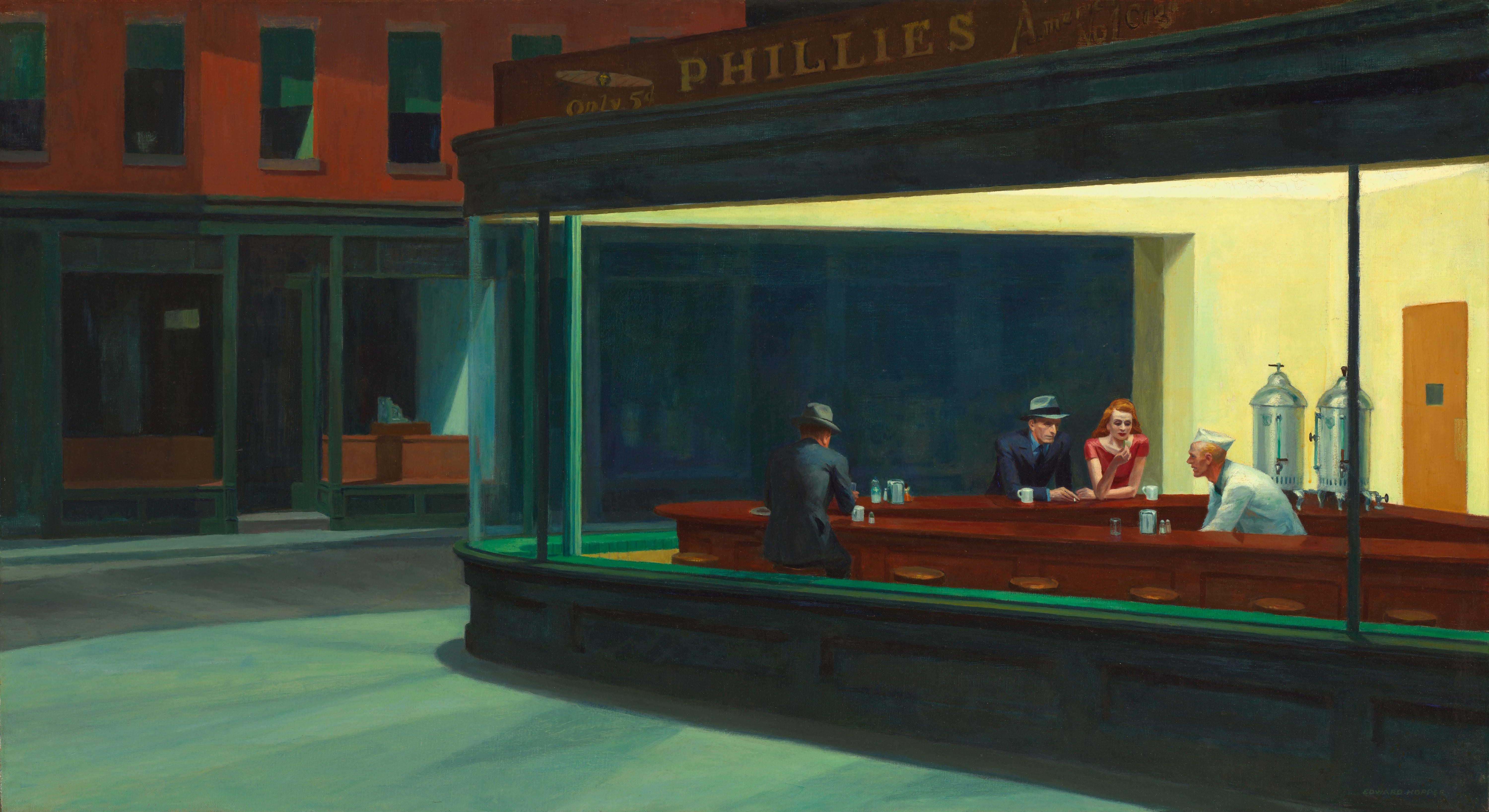
One of the writers wrote a stunning piece from the perspective of the black kitchen help just out of view, and another from the perspective of a black man outside, not allowed in the diner with white people – something I had never recognized before.
They write of their time inside, the sounds, smells, food, the haunt of separation, the missing of family, the search for pride and peace and forgiveness, from self and all the others affected. For some, English is not their primary language, and I tell them to write in their native tongue; that even if I don’t understand it, others in the group will and can provide effective feedback. I have had them swap written pieces and have their partner read their piece aloud to hear their words from another perspective. They talk about how affirming it feels to hear it not in their own voice, as though their words are more meaningful, more important, and how they hear elements they didn’t know they had written, such as humor or pathos.

Writing behind the walls is complicated – so many rules, what you cannot wear, what you cannot bring in or take out. No electronics in, no work out. We haven’t quite figured out how, despite the Club’s desire to create an anthology for publication, to publish their work. But they diligently save their writing for when we resolve the roadblocks.
I recognize our missings are the same. In this, we are brought together,
these like-minded men and me.
At the end of the night, the process is reversed, although the sky is now dark. I leave with a new round of handshakes and thank yous. The walk more silent, the clank and bang of metal bars and doors louder in the quieter evening. I watch them, singles and twos and threes, slowly walking back to their cell blocks in the dark, through an empty yard.
It takes me time to wind down. I have never left disappointed. It has always felt important and valuable. While some of my companions on these nights may spend the rest of their lives here, many go back to the world. The Gavel Club has existed for more than ten years. In that time, the recidivism rate for members released is ZERO. That is an astounding statement. Being even a small part of helping them find and hone their voices is uplifting. I cannot give you pieces from them, but I wrote this piece for one of their graduation events. It is called:
Among Like-Minded Men
I walk behind walls on a Wednesday night
When the outside day is ending
Walls thick and high like a castle or fortress
So high I would struggle to throw a stone over the top
set in place in 1880, when the only light was candle or oil
I enter through gates and bars and doors
that click and clank and bang and are emphatic
I lean into the night – to spend time with like-minded men
Hallways take me past buildings that once lived outside
Where top tiers froze or baked, and men used buckets.
Rooms empty now that once held men who would be hung, just 13 steps from their fate.
A yard surrounded by turrets and wire and men dressed the same
Who daily lean into the notion of getting through the next 24, and the next 24.
And the next 24 until their time is gone, and I cross the yard to meet them,
these like-minded men.
Greeted like an old friend in a classroom, it is easy to lean into this friendship. We are here to find the same thing, words and phrases with power to transport us to old or unexplored places. We seek the right way to lean into sadness or longing, to remind us of love lost, of love sustaining, of love we hope will remedy what plagues us.
I recognize our missings are the same. In this, we are brought together,
these like-minded men and me.
These like-minded men lean into forgiveness first for themselves, then from others. They lean into redemption, seek a do-over when a bad choice might be undone. They lean into understanding and give it freely, aware of the companionship in all they share. I lean in to listen and share the moment - one soul penetrates the others, and we know the room is filled with like-minded men in search of truth.
But there is a moment before the scritch of a pencil or glide of a pen puts words on a piece of paper. A moment after inspiration, but before thought has translated into word count, when there is the purest silence. Heads bowed as if in reverence for what will come. When we all lean into the moment. When a sense of brotherhood suffuses. We are all one, seeking our truth. We are bonded. We are linked for however long the moment exists.
And I am grateful for their company, I am grateful for their friendship, this room of like-minded men.
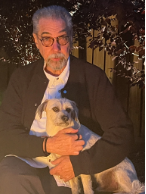
About guy:
I do write my name in lower case as I have a core belief I don’t deserve capitalization until I accomplish something great.
I have a wildly eclectic background having been a classically trained actor, doing Shakespeare all over the US, I worked in the cable television industry writing and managing proposals for major city franchises. I owned a custom-tailored clothing company, which I sold and moved to California. I got my degree in Public Administration.
I worked for Sacramento County in Alcohol and Drug Services, as a Manager in Senior and Adult Services overseeing a new Quality Control, Hearings and Fraud program. I closed my employment out with ten years as a Manager in Child Protective Services, overseeing Dependency and Adoption Units, Hearings and Clerical staff with over eighty staff in my chain.
I’ve been writing since I was a teenager (mostly poetry then) and was trained as an AWA Affiliate in 2018. I have been on the Amherst Writers and Artists Board for six years, currently serving as Chair. I facilitate a number of writing groups, in person and online, including three inside Folsom Prison. I am in final edits on my first stand-alone novel. I have finished the first draft of volume one and just started writing the second in a series of four novels. I have been published in a number of anthologies covering both prose and fiction.
I regularly post on Substack:
Thanks for reading Writing Alone and With Others! This post is public so feel free to share it.
Thanks for reading Writing Alone and With Others! Subscribe for free to receive new posts and support our work.
Comments
Nothing yet. Say the first thing.
Sign in to join the conversation.