
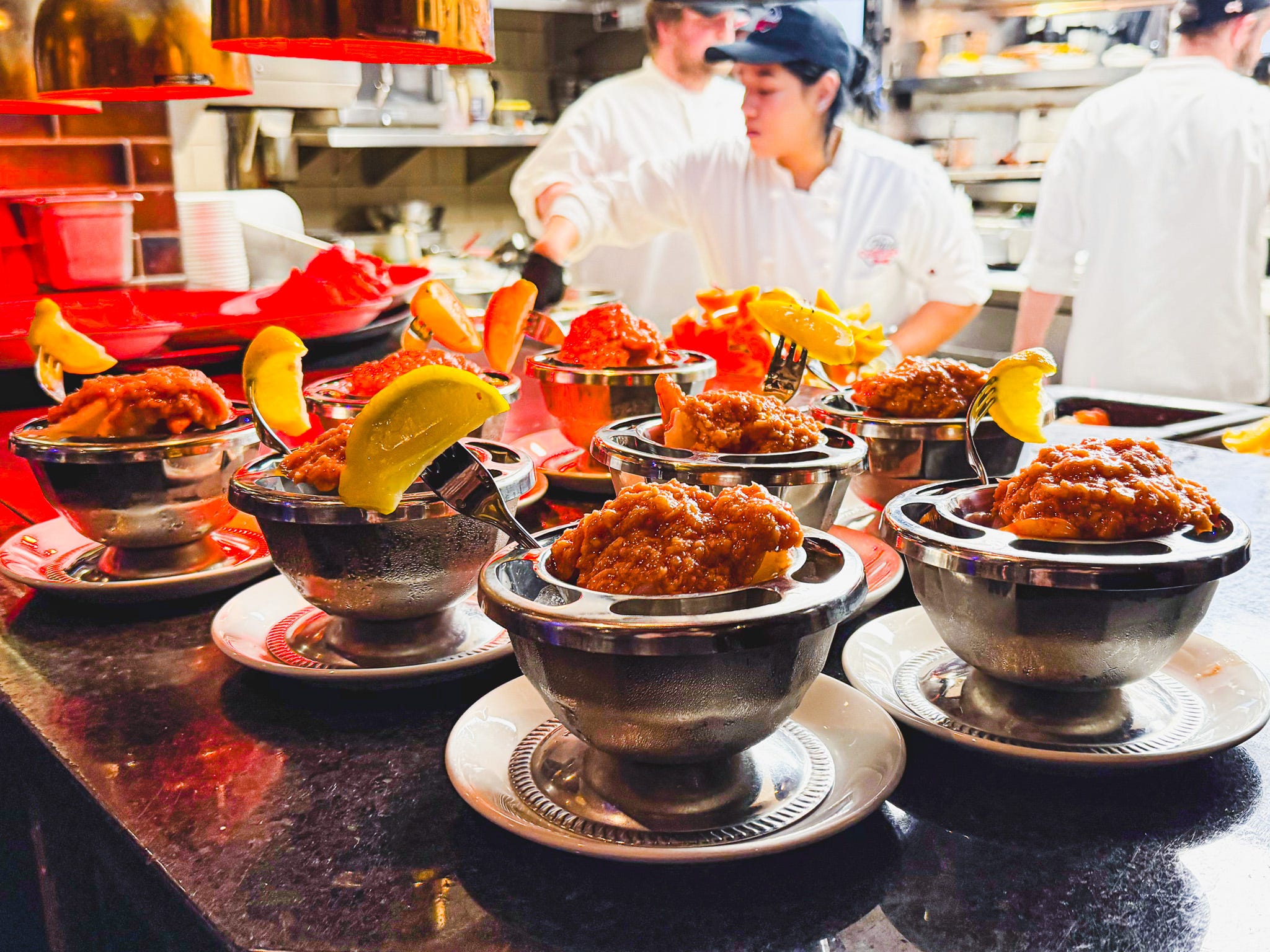
Welcome to the weekend!
Last week, we shared all our favorite places in Indianapolis, and today we’re digging deeper into one of Indy’s signature dishes: the shrimp cocktail at St. Elmo Steak House. If you order this shrimp cocktail, you won’t forget it — it’s the most intense, horseradish-y, spicy one we’ve ever had and it’s been on the menu at the downtown restaurant since it opened in 1902. At a recent dinner at St. Elmo, we saw nearly every person at the bar and in the dining room ordering one, and we decided we wanted to dig deeper. For this week’s Cover Story, Amy talked with Richard Edwards, St. Elmo’s general manager, about the history behind the dish, how it’s made today, and what it means to the restaurant.
As you plan your own trip to Indy, be sure to snag our Field Guide to Indianapolis, which features more than 30 places to eat and drink on your visit. It includes our picks for coffee shops, bakeries, lunch places, cocktail bars, breweries, and dinner spots. It’s included in a paid subscription, or you can grab it for $15 on our website.
Before we head out for the weekend, our Weekend Reading list includes an excerpt from Eaterland, dining detours in Minnesota, a tour of Miami’s Little River neighborhood, and a return to Louisville.
Thanks for reading!
— Amy Cavanaugh & Kenney Marlatt
Editors, American Weekender


INDIANAPOLIS, IN. — As we settled in for dinner at a cozy table in one of the myriad dining rooms at St. Elmo Steak House, our first dish of the evening was not up for debate. We started as we always do, with a shrimp cocktail. That’s one for each of us — tonight, we’re not sharing. It’s what every diner orders at St. Elmo.
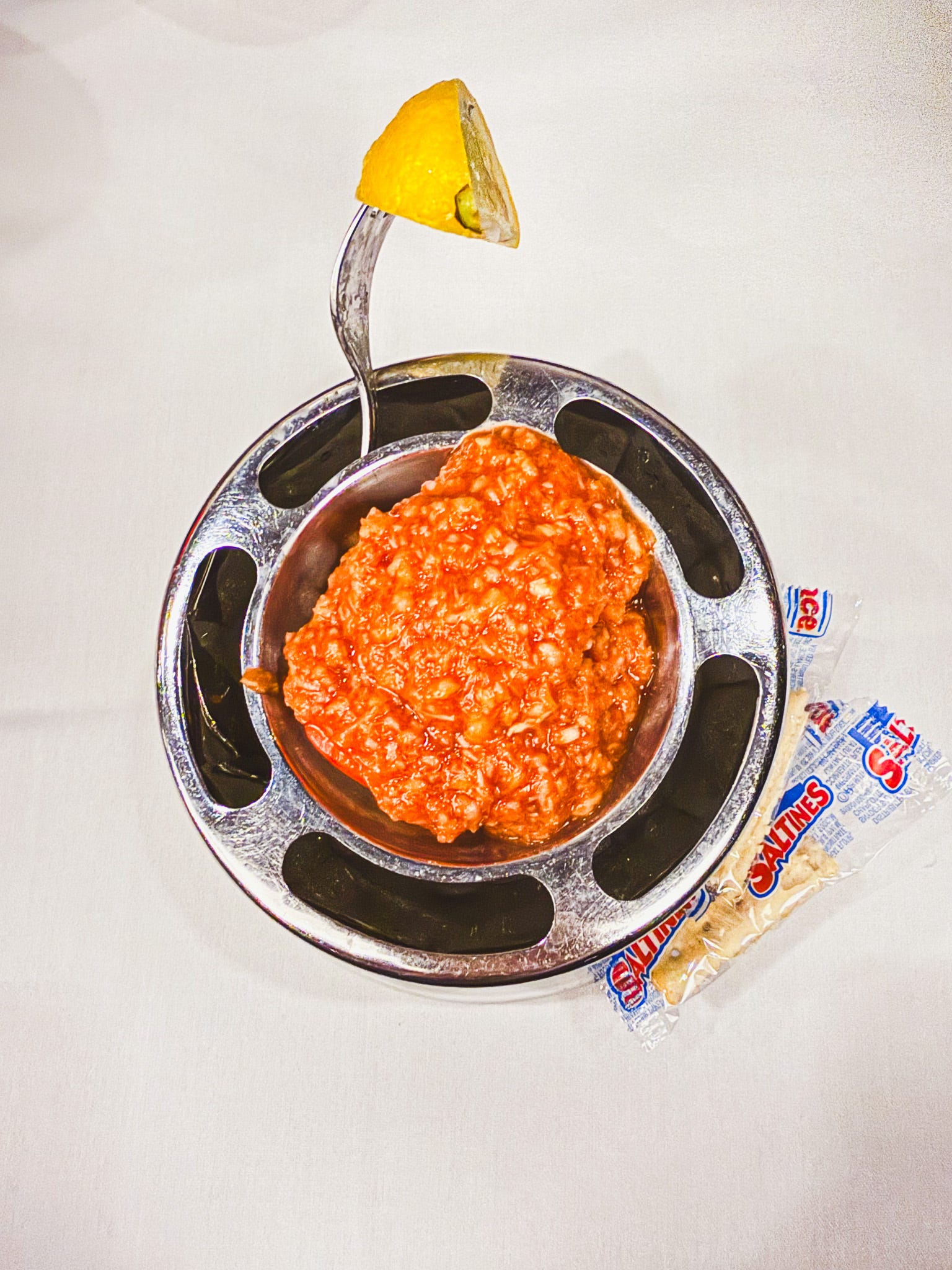
Our server brought us two iced silver bowls filled with four plump, tail-off shrimp doused with an intense, horseradish-laden cocktail sauce. A tiny cocktail fork holding a speared lemon wedge protruded from the bowl. He left our table with a few words of advice: “Good luck. Don’t breathe through your nose.”
With a squeeze of lemon over our shrimp, we dug in. This is the dish to eat when you’re feeling stuffy and want to blast your sinuses — the horseradish is intense yet brief, and by the time the rush subsides, you’re ready for another bite. This shrimp cocktail has put St. Elmo, the oldest steak house in Indiana, on the map for 124 years.
In 1902, Joe Stahr began serving this very take at his saloon, Joe Stahr’s Tavern, where he offered food from the “St. Elmo Buffet.” The shrimp cocktail back then was 10 cents — today, it’s $21.95. But when you visit, no matter whether you sit at the long tiger oak wooden bar or in one of the dining rooms, everyone you see will have a shrimp cocktail.
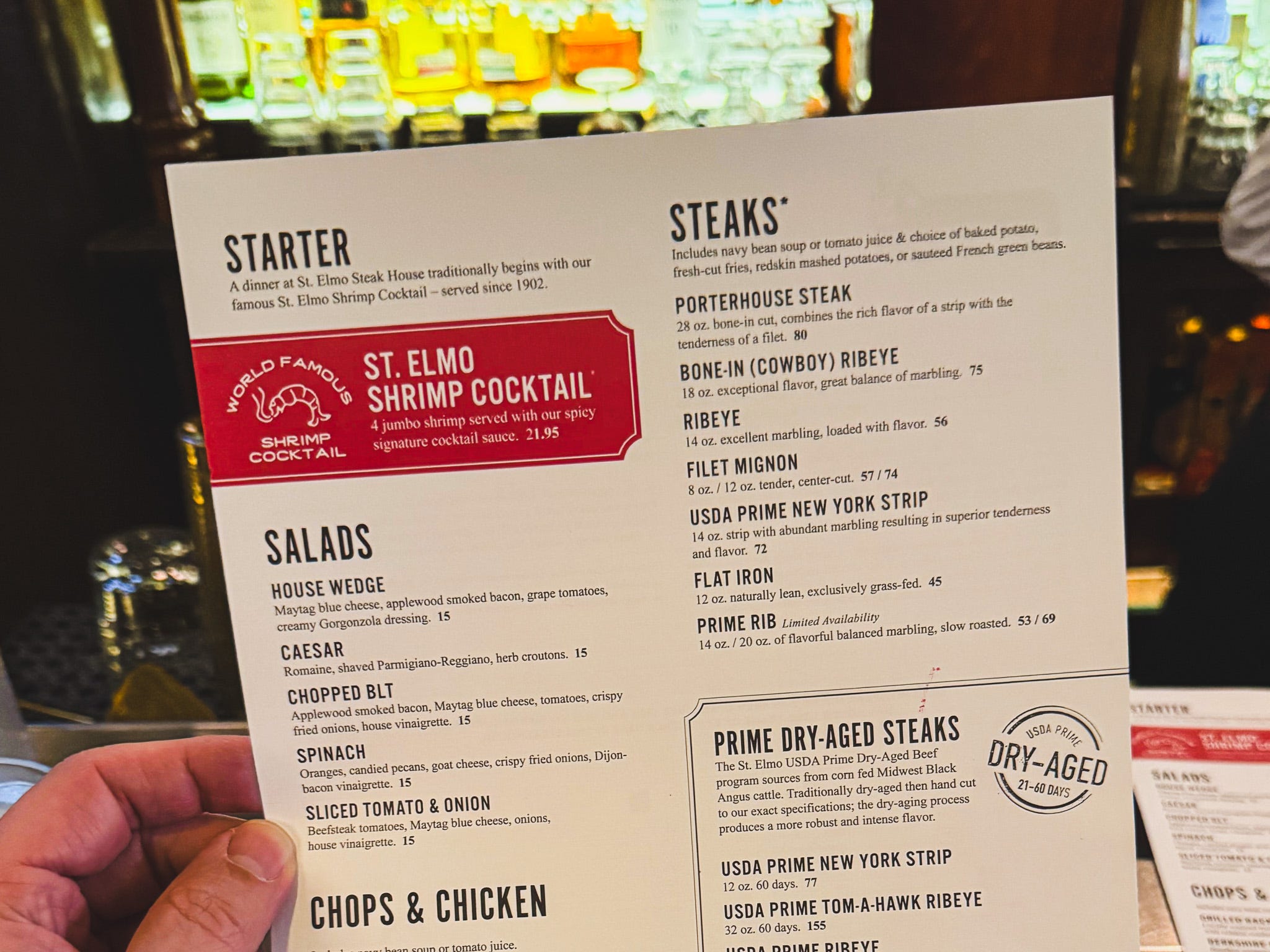
“Joe Stahr was a merchant marine, and he named St. Elmo after the patron saint of sailors,” St. Elmo General Manager Richard Edwards told me. “Originally, it was a seafood buffet, and it was one of his signature appetizers. The heat was a signature portion of it. How can you make a shrimp cocktail stand out? Even today, you go to most restaurants and there are shrimp cocktails. When people talk about St. Elmo, they talk about the steak, they talk about the history, they talk about the service. But the biggest thing that sticks in people’s minds is our shrimp cocktail. It is the only appetizer we have on our dining room menu.”
Edwards says that the shrimp cocktail has never come off the St. Elmo menu, and the presentation is also their standard. “I’ve been going to St. Elmo since the early 2000s when I moved to town, and it’s always been that container, that presentation,” he says. The container, a silver, slotted seafood bowl set over crushed ice, is a key part of the service, as the shrimp are in the center and the sauce is poured on top. “A lot of restaurants will have their shrimp outside to highlight it,” he says. “We do have guests that are confused — ‘Where are the shrimp? I don’t want that much sauce.’ But for us, it’s a combination of both items being highlighted.”
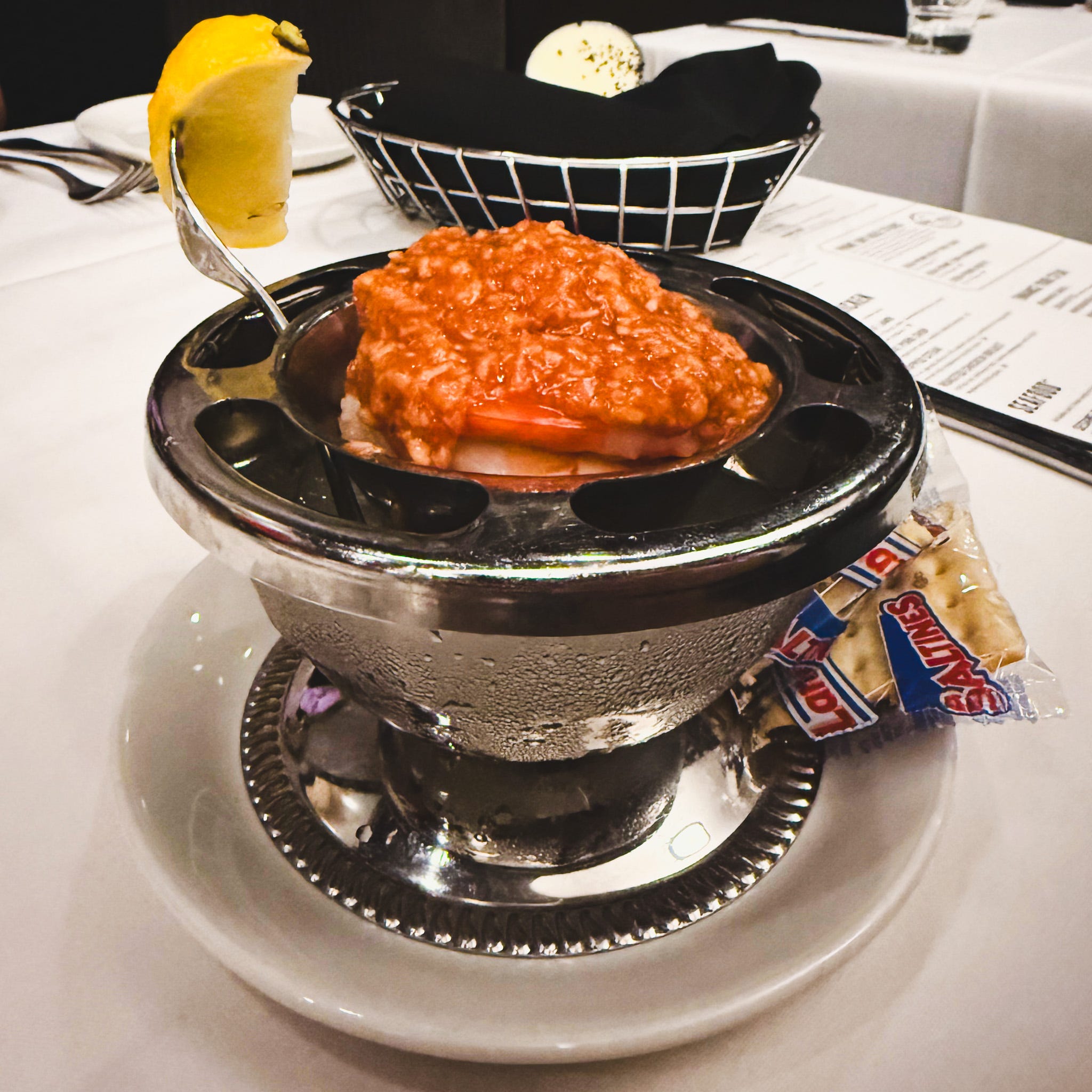
Each order features four Black Tiger shrimp, which are U10 to U13 (that means that are 10 to 13 of them in a pound) and raised in Vietnam. “We’ve visited the farms,” Edwards says. “They’re not your typical giant tub where it’s harmful to the shrimp. These are more gently raised in mangroves and more sustainable.”
The shrimp would be tasty no matter how they were dressed, but it’s the sauce that makes this dish special. Edwards says their horseradish is grown specially for them on a small farm in Southern Illinois. (Fun fact: Illinois is America’s leading producer of horseradish and grows more than two-thirds of the country’s annual supply). “I taste this daily,” he says. “I make sure it’s hot enough. If it’s not hot enough, if it does not hit our specs, we get new bags.”


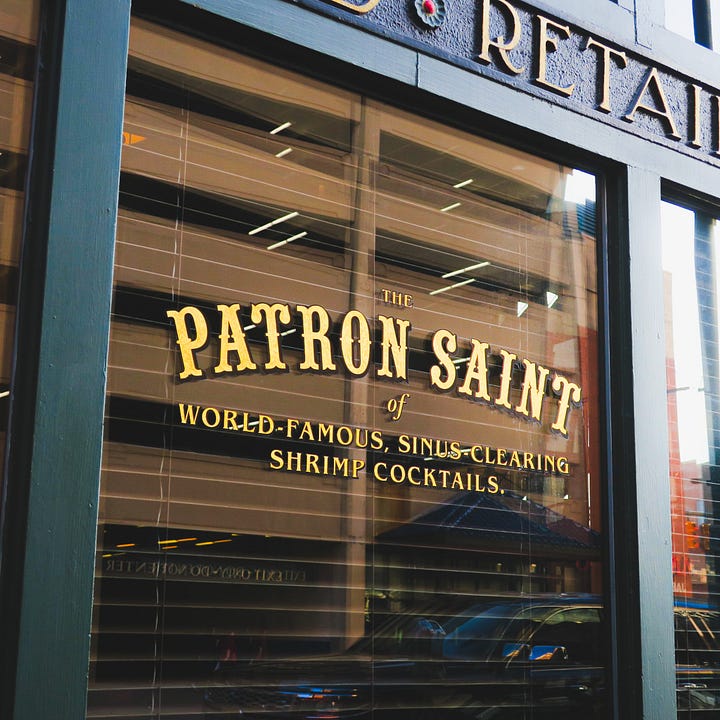
And they need a lot of that horseradish to meet the nightly demand. “We grind over 30 pounds of horseradish per day,” Edwards says. “Batches of cocktail sauce are made multiple times a day, at least 10 times per day. We do it fresh all throughout the night.” They need that much because, on a typical night, 65% percent of diners are ordering the shrimp cocktail. Edwards says, “On average, we’ll cook 100 pounds or 335 orders per day. We’re blessed at St. Elmo. Tonight is a good Tuesday and I’m walking into 800 reservations this evening. There are some conventions in town and when you come to Indianapolis, this is where you want to go, this is where you want to be.” And that doesn’t count the St. Elmo shrimp cocktails that are served at the restaurant group’s other spots, like Harry & Izzy’s and HC Tavern & Kitchen.
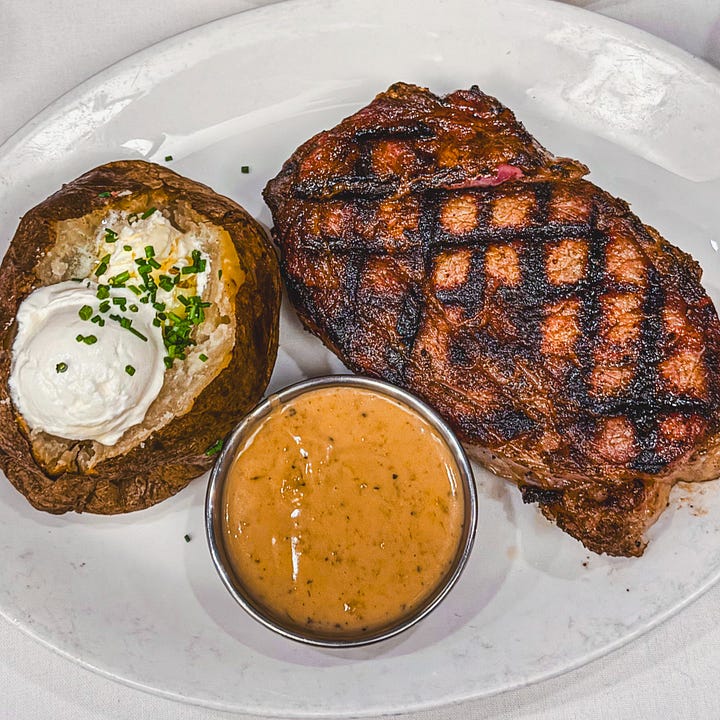
St. Elmo offers more than shrimp cocktail of course. At our most recent dinner, we also enjoyed the chopped BLT salad, a ribeye, and a particularly great creamed spinach. Each entree also comes with your choice of tomato juice or a bowl of navy bean soup. When our server brought our bowls of soup to the table, he also brought us more cocktail sauce, and advised us to stir a little into the navy bean soup, giving it a welcome little hit of heat. Edwards says the sauce is versatile. “At home, I’ll put it on burgers when grilling or I dip pizza crust in it,” he says.
St. Elmo often draws athletes who are in town for professional and college sports. For many years, during the Big Ten Football Championship weekend, St. Elmo hosted a shrimp eating contest. In 2024, competitive eating champ Joey Chestnut put away 21 pounds of shrimp cocktail in eight minutes, which is probably about the time it took me to eat my four shrimp. But it’s especially popular with local athletes. “It’s a rookie athlete rite of passage,” Edwards says. “If you’re a rookie quarterback for the Colts, part of the rite of passage is that you come to St. Elmo and you try the shrimp cocktail. It’s with basketball players, baseball, football, hockey, whatever. I’ve been there a little over 10 years and it’s still entertaining. I still giggle when I see people do that. Their friends will be like, ‘oh, take a big bite, it’s delicious’ and then you see them go into the ‘oh my gosh’ moment — ‘what did I do?’”
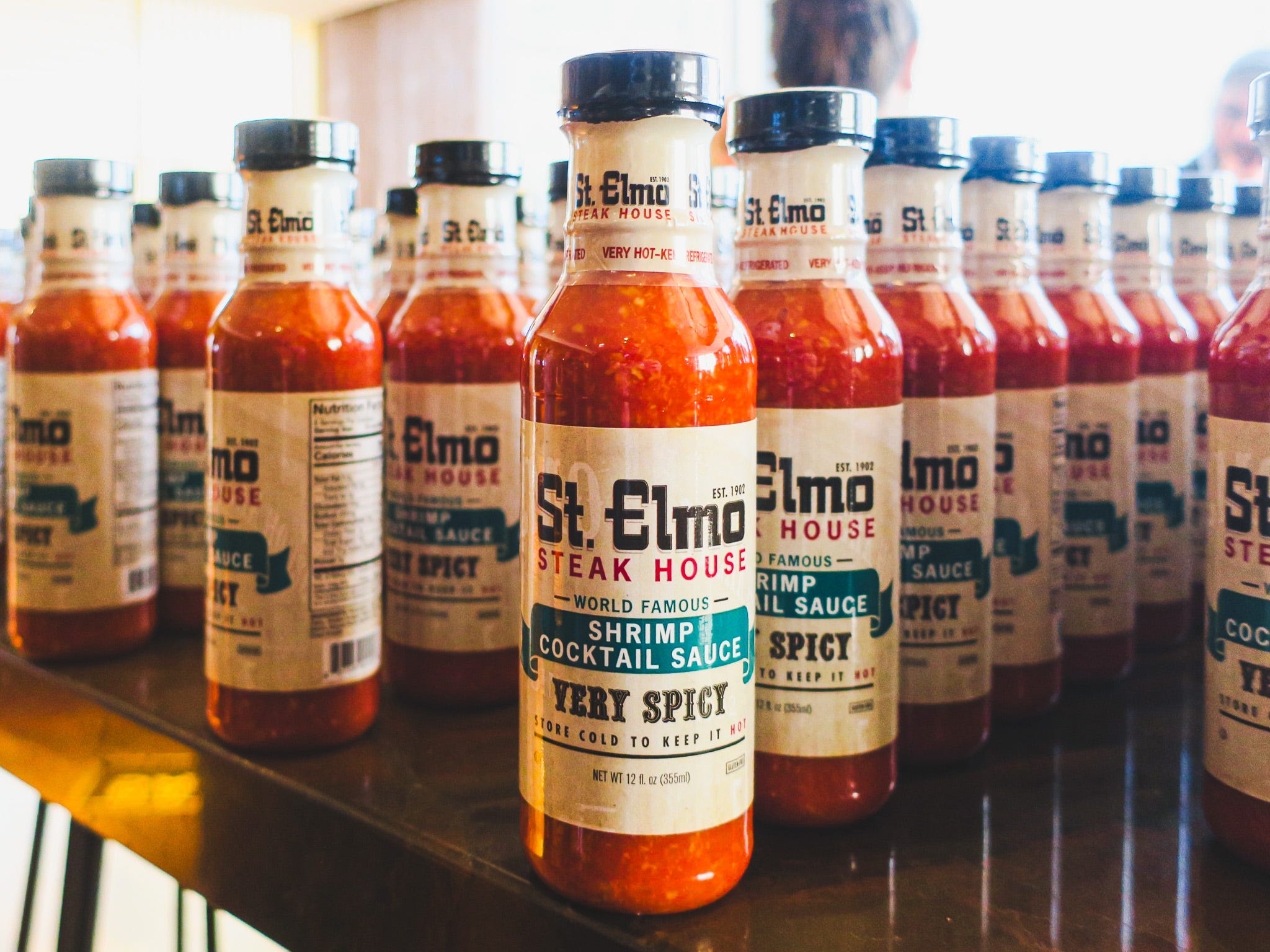
Outside of Indy, you can find bottles of St. Elmo cocktail sauce at stores around the country (in Chicago, you can get it at Costco and Mariano’s) or you can order bottles online. Goldbelly also offers a World Famous Shrimp Cocktail package that serves four and includes 16 shrimp and a bottle of cocktail sauce.
Just be sure not to breathe through your nose.
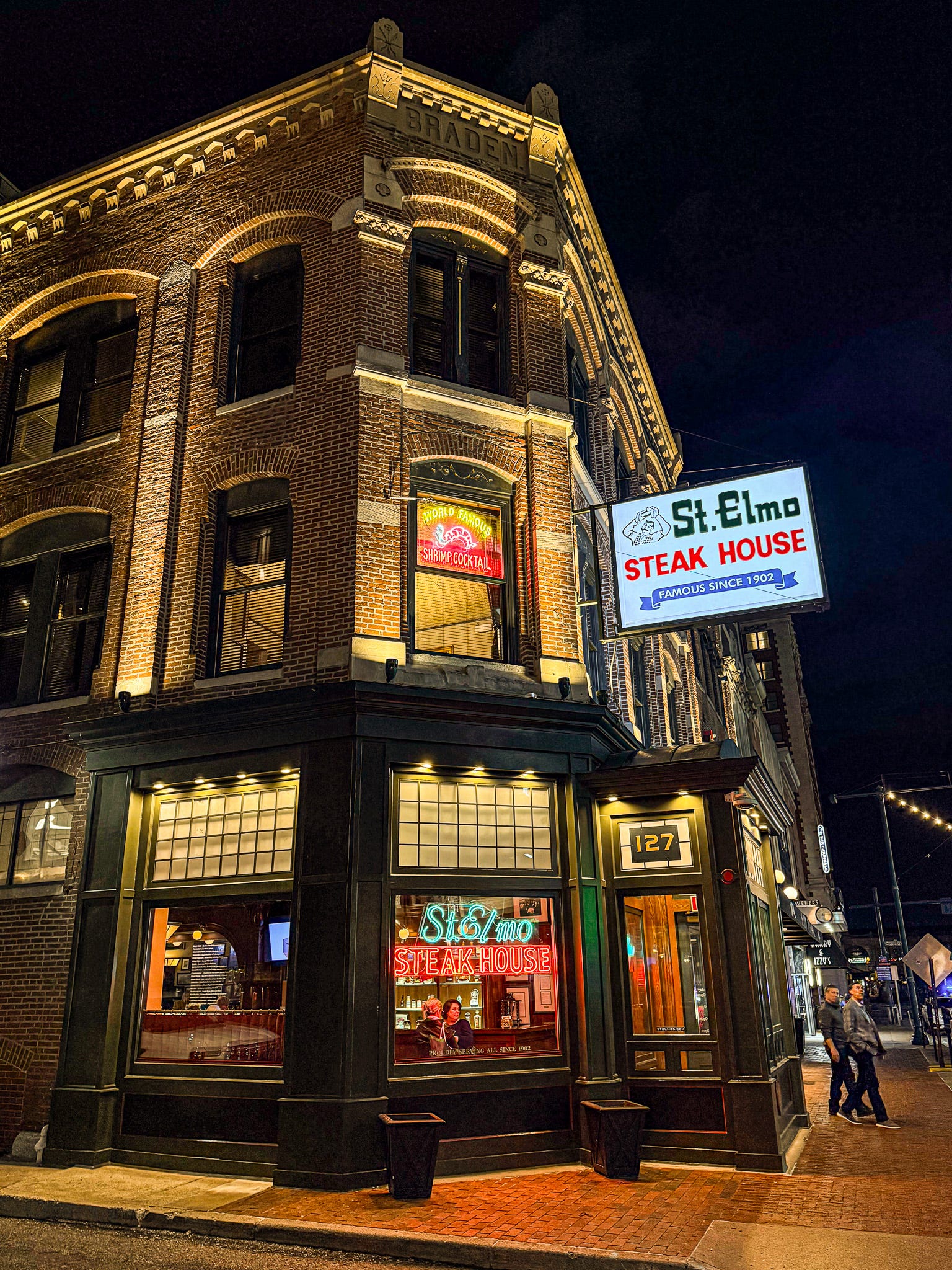
127 S Illinois St, Indianapolis, IN | @stelmosteakhouse

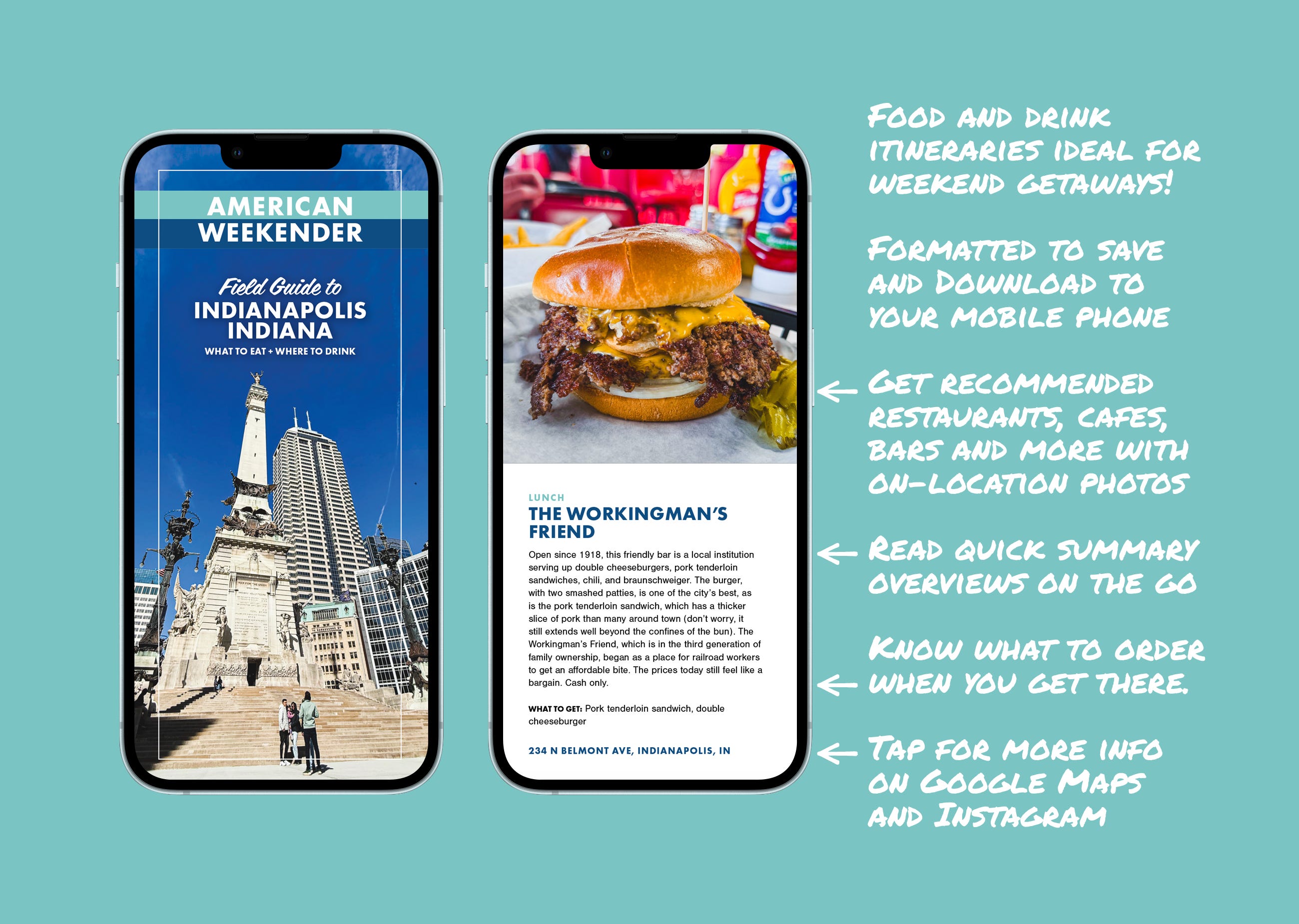
All our Indianapolis favorites are available as a three-day Field Guide that you can download on our website. As always, it’s free for paid subscribers — just use the code in this month’s Weekend Getaway newsletter. Here’s what you get:
Three-day recommended dining itinerary
Picks for breakfast, lunch, dinner, and drinks
Downloadable for quick reference
Designed for your mobile phone
Reminder: As a paid subscriber, you can use this month’s code to download any other Field Guide you’d like for free! We recommend saving your Field Guides to Apple Books or Dropbox for the best experience on an iPhone. Google Drive works great too on other smartphones.
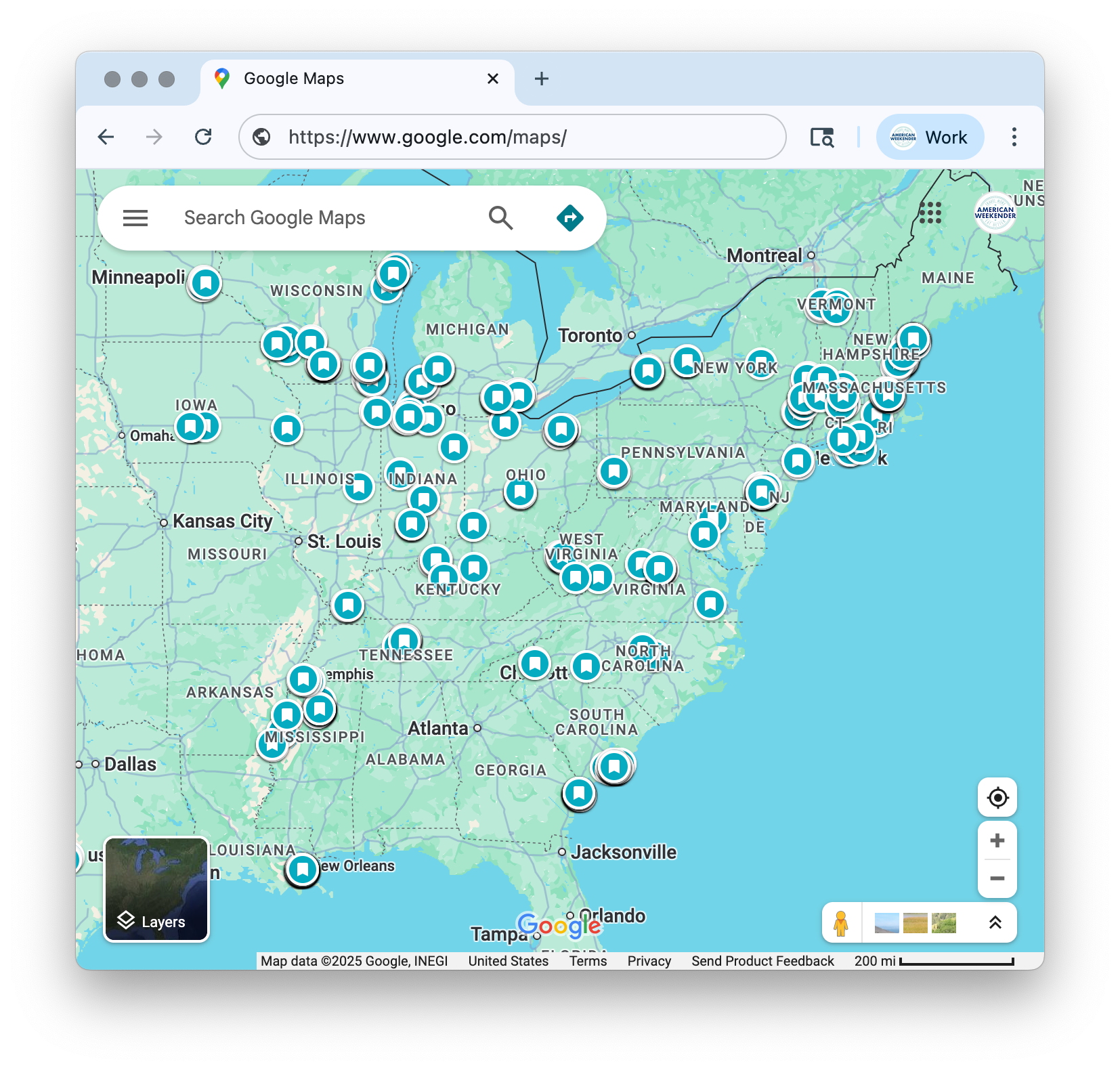
Paid subscribers also get access to the American Weekender Google Map. This map includes every place we’ve ever mentioned in our newsletters plus every place we’ve ever recommended in our Field Guides. Whether you’re looking for roadside barbecue in Tennessee, afternoon cocktails in New Orleans, or a farm-to-table dinner in Western Michigan, our map — which has more than 1,200 locations! — will point the way. We update it with new spots each week, so keep it bookmarked for your next trip. Paid subscribers can find the link in this month’s Weekend Getaway newsletter.

WISCONSIN
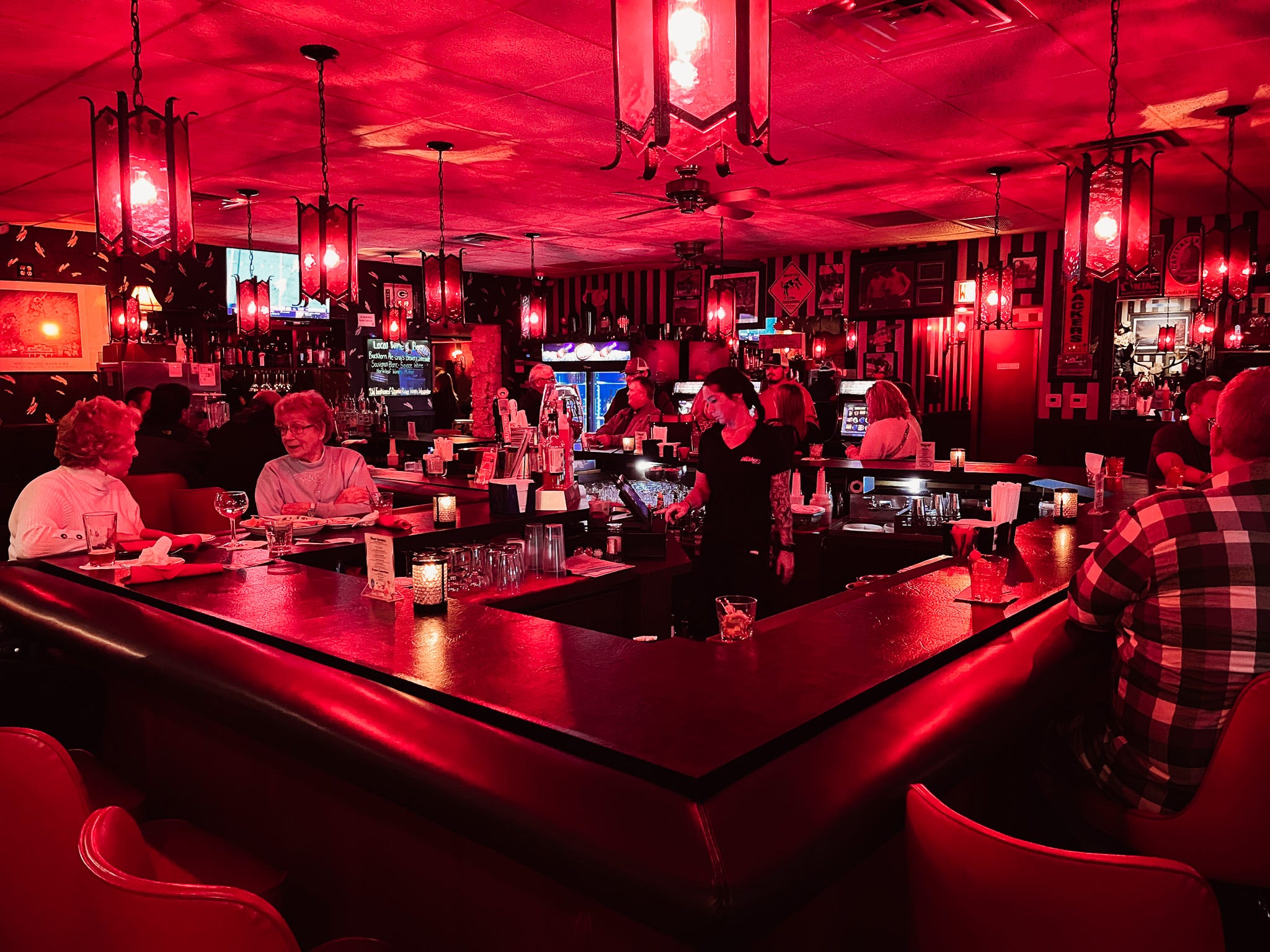
To Really Understand Wisconsin, Eat at a Supper Club: We covered Eaterland, the new cookbook from Eater that I contributed to, in a recent newsletter. To celebrate the release, Eater published an excerpt from the cookbook, and it happens to be the piece about supper clubs that I wrote for the book. Read it and then snag a copy of the book for yourself (order here and use code EATERBOOKS40 for 40% off). (Eater)
FLORIDA
The Miami Neighborhood to Visit Next: Carrie Honaker is one of our go-to writers on Florida dining, so we’re bookmarking her suggestions in Miami’s Little River neighborhood for our next trip. She writes: “‘There is this organic realness here,’ says Jacqueline Pirolo, co-owner of Bar Bucce, a bottle shop and pizzeria, serving rare amaros, a zucchini pie with Calabrian chile, and eggplant sott’olio — a family recipe from Pirolo’s grandmother. ‘You see owners in the shops. We have lots of families and young professionals gravitating here, and we all support each other.’” (Food & Wine)
MINNESOTA
Delicious Dining Detours: Minnesota Monthly food editor Jason DeRusha is a traveler after our own heart — he recently put together this list of roadside stops around the state where you can eat well on your road trips. His picks include Victual in Crosby: “The coolest general store I’ve ever been in—incredible bakery, cheese, and meat counter, the smallest (and most perfectly curated) wine shop in Minnesota, and ice cream. Will you buy a Meat Raffle T-shirt at the entrance to the Cuyuna Trail? I hope so. Just a perfect detour when you’re in this extremely adorable little town.” (Minnesota Monthly)
KENTUCKY
Louisville Has a Charm All Its Own: Writer Adam Sachs returns to his hometown of Louisville to explore how it’s evolved. He hits some favorites of ours, like North of Bourbon, as well as many spots we’ve added to our to-visit list: “Down the block is Meesh Meesh, chef Noam Bilitzer's small, lively Levantine restaurant. House-made pita dragged through hummus topped with salty-sweet pastrami ‘marmalade’ makes it clear why it's one of the city's hardest tables to book. Green shatta, the Middle Eastern chili paste, lends its spicy tang to the grilled chicken shishlik.” (Condé Nast Traveler)
— Compiled by Amy Cavanaugh
Want more? Chat with us on Substack, download our Field Guides, check out our archives, or follow us on Instagram @americanweekender. We’ll be back next week.

Comments
Nothing yet. Say the first thing.
Sign in to join the conversation.