
Welcome to new readers of the American Geographical Society’s weekly, the AGS Globe! The Globe shares articles on geography and geospatial, along with exciting opportunities and news from our network. Our pieces fall under four categories: Exploring the World, Championing Geography, Mapping the News, and EthicalGEO. As the world revolves, geography evolves. The mission of the AGS Globe is to bring our storied legacy of exploration and thought leadership into the frontiers of the future.

By Caitlin Chan
Every spring, millions of birds across North America take flight on lengthy northward journeys to reach their summer breeding grounds. And every fall, they make an equally long return flight, traversing thousands of miles to arrive in warmer southern climates. Crossing vast distances up and down the continent—and even reaching as far as South America—is an integral part of the reproductive process of these migratory species. North America is home to around 650 breeding avian species, more than half of which migrate every year. Environmental cues such as changes in temperature, food availability, growth or loss of leaves, and rainfall at the transition from winter to spring or summer to fall tell migratory birds when to begin their journeys. However, avian migration and the species that undertake these journeys are increasingly under threat of rising global temperatures and human-induced climate change.
Across many migratory bird species, patterns of migration have been greatly impacted by climate change, a contemporary phenomenon chiefly influenced by anthropogenic factors. Beginning in the Industrial Revolution with the invention of large-scale power sources using natural resources such as coal and natural gas, humans have had an outsized impact on the environment and its health. Modification of the landscape for urban development and manufacturing purposes has not only led to widespread faunal habitat loss, but has also given rise to a major increase in emissions of greenhouse gases (GHGs). These GHGs collect in the atmosphere, trapping radiation near the Earth’s surface and causing an unprecedented rise in global temperatures, degrading ecosystem vitality and our natural resources.
All kinds of animals and plants are threatened by the negative effects of climate change and global warming, and birds are no exception. Nearly two-thirds of North American bird species are vulnerable to climate change, the majority of which are migratory birds that are struggling to adapt to the abnormal seasonal changes brought about by rising temperatures.
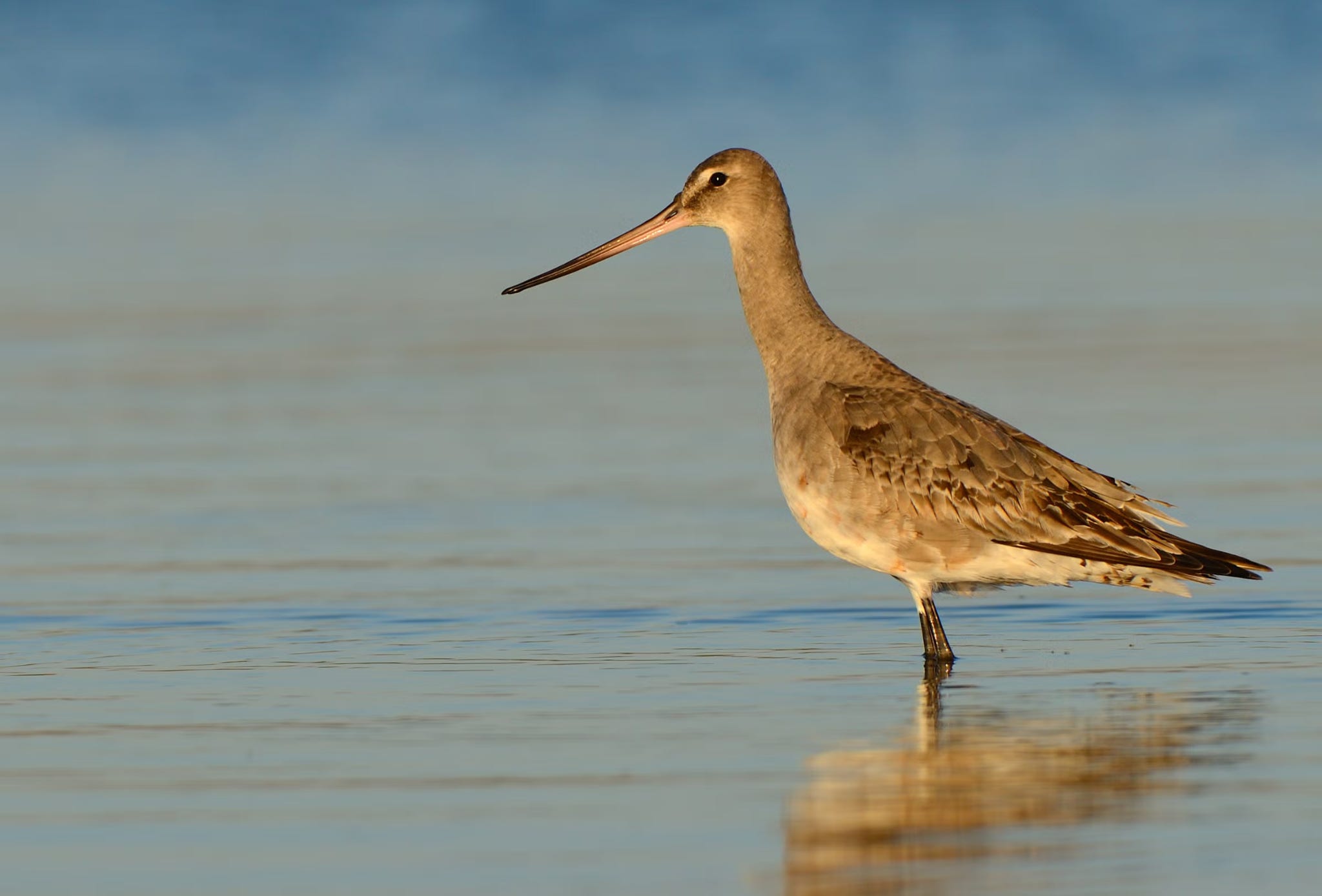
A study on Hudsonian godwits, a sandpiper species of shorebird that migrates long distances each year, found that their annual migration was delayed by six days in 2023 compared to 2010. Godwits travel some of the longest distances of any migratory bird, flying from the southern tip of South America to their historical breeding grounds in parts of northern Canada every spring.
But as global warming pushes the arrival of spring earlier each year, the annual migration cycles of these godwits—which are largely based on temperature and food availability—are disrupted. While their northward journey has remained consistent in duration, changing conditions at their South American departure sites have caused the delay. The late arrival of godwits to Alaska and Canada has negative impacts on their reproduction, as the short Arctic summers limit the growth period of godwit chicks. If the birds arrive too late, they will not have enough time to lay nests, adequately incubate their eggs, and provide nutrition to their chicks before their autumnal flights back to Argentina and Chile. Many other bird species are spending up to 10% less time at their northern breeding sites, which have warmed more rapidly than their southerly non-breeding grounds.
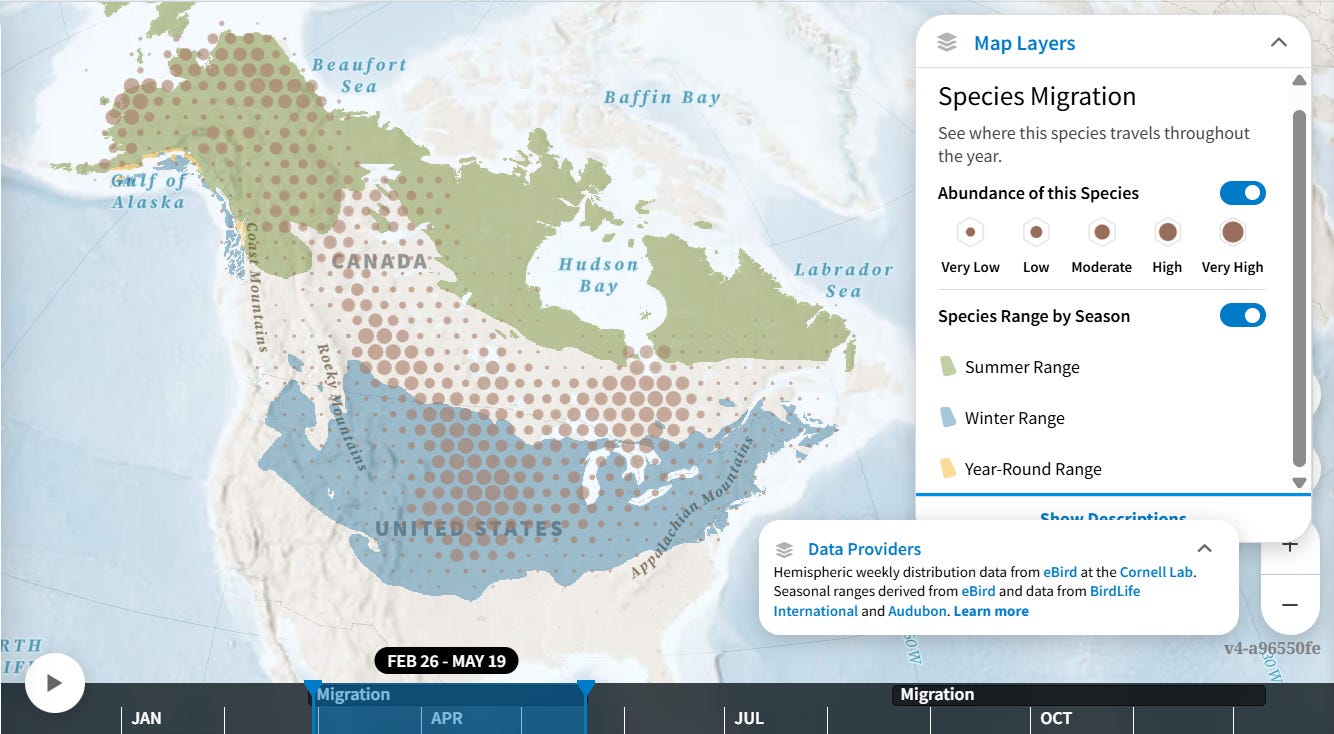
With no end to climate change in sight, we will witness more dramatic shifts in the movement patterns and behaviors of these migratory bird species. Overall, migration is expected to decline as shorter winters and hotter springs continue to disrupt the seasonal cues that birds take to begin their long-distance journeys. Species that have already begun altering their routes may continue to do so, while others will have to begin traveling longer distances or extending their habitat range to reach ecologically appropriate breeding sites. In an analysis of 406 North American bird species, biologists at Yale University found that while more than 75% of birds were able to reach slightly cooler climes during their yearly movements, most cannot outpace rapid warming. Not only that, but the historical breeding grounds of 206 North American species have shifted 51 miles (82 km) north since 1966 in an effort to move north of too-warm winter regions. While many birds shift their ranges, the study indicates that many species are failing to keep up with the speed of climate change.
Additionally, in order to adapt to longer migratory paths, some birds are showing signs of physical adaptation, whether through the development of slightly longer wings or smaller bodies to sustain prolonged travel. Several avian groups are also slowly adjusting to early springs or late falls by changing the timing of their departure from non-breeding grounds. On the whole, however, birds are largely unable to outfly the warming climate and shifting seasons. Over the past 20 years in North America, wintering bird populations have experienced a notable ~7-degree Fahrenheit (~4 degrees Celsius) increase in temperature, while facing a slightly lower average increase of ~4 degrees Fahrenheit (~2 degrees Celsius) in the summer months. Birds that cannot adjust to this continual warming risk population decline on a large scale.
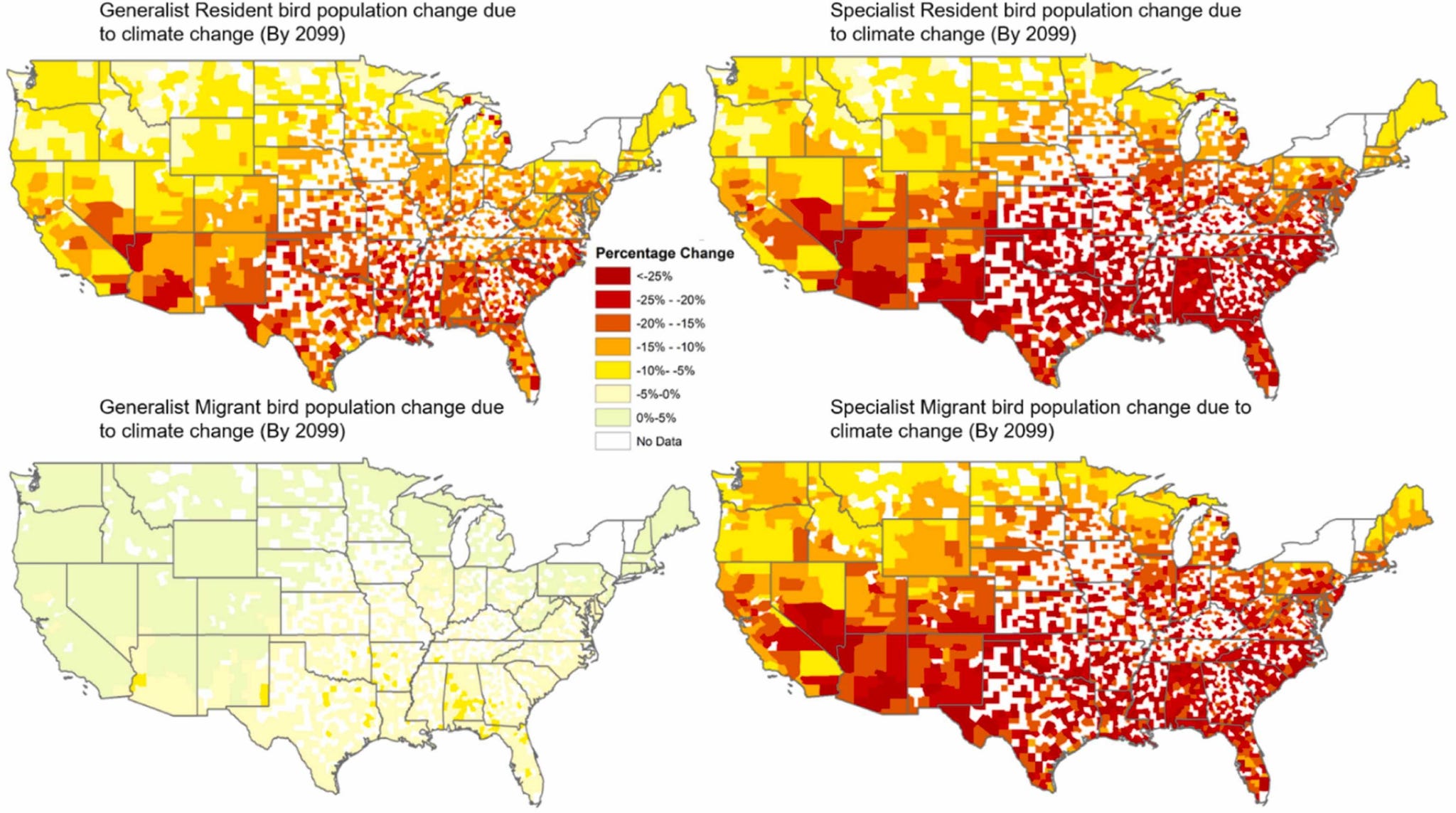
The negative impacts of climate change on migratory bird populations are situated amidst a decline in global biodiversity, in which North American birds have not been spared. Since 1970, North America has witnessed a cumulative population loss of over 3 billion birds due to habitat destruction caused by human activities on the natural landscape. In these fifty years, the hardest-hit populations were birds that migrate—in particular, migratory sparrow, blackbird, and finch species saw the steepest decline in numbers. Bird abundance in the United States is particularly impacted by agricultural activity, where about half of a study group of 261 bird species saw significant decreases in population near locations of agricultural intensity. While generalist migrant birds (species with three or more habitat types) are expected to see slight population losses by 2099, specialist migrant birds (species adapted to singular habitats) are projected to experience the greatest losses—in many regions, over 25% of the population—by the same year. Furthermore, loss of avian populations will have outsized impacts on the North American ecosphere. They are integral to the functioning and growth of ecosystems, as birds are major pollinators and predators of insects.
The accelerating decline of these bird populations signifies a loss of genetic diversity that will make the conservation and protection of the continent’s ecosystems ever more difficult, but ever more critical. Today, researchers and policymakers across North America are searching for ways to not only conserve the historical habitats of all birds but also to mitigate the wider impacts of climate change that affect us all. After all, birds, humans, and the rest of the biosphere have depended upon each other and lived in harmony for millennia. It is our responsibility to be stewards of the environment and to ensure that these migratory birds continue to thrive.
Caldwell, E. (2026, February 26). Hotspots of accelerated North American bird decline linked to agricultural activity. Phys.Org. https://phys.org/news/2026-02-hotspots-north-american-bird-decline.html
Climate Change. (n.d.). American Bird Conservancy. Retrieved April 30, 2026, from https://abcbirds.org/threats/climate-change/
Hagen, K. (2024, November 7). Climate change effects on migratory birds. Natural Resources News. https://extension.umn.edu/natural-resources-news/climate-change-effects-migratory-birds
Hathaway, B. (2025, May 28). Even birds can’t outfly climate change. Yale News. https://news.yale.edu/2025/05/28/even-birds-cant-outfly-climate-change
How Climate Change Puts Birds at Risk. (n.d.). Climate Central. Retrieved April 30, 2026, from https://www.climatecentral.org/climate-matters/birds-at-risk-2026
New Study Finds Delayed Long-Distance Bird Migration Due to Climate Change. (2025, July 22). Mass Audubon. https://www.massaudubon.org/news/press-room/2025/new-study-finds-delayed-long-distance-bird-migration-due-to-climate-change
Rosenberg, K. V., Dokter, A. M., Blancher, P. J., Sauer, J. R., Smith, A. C., Smith, P. A., Stanton, J. C., Panjabi, A., Helft, L., Parr, M., & Marra, P. P. (2019). Decline of the North American avifauna. Science, 366(6461), 120–124. https://doi.org/10.1126/science.aaw1313
Thanks for reading The AGS Globe! This post is public, so feel free to share it.
Did you enjoy reading this? Support the American Geographical Society today with a donation of $50 to help us support Geography education.

Members of the American Geographical Society enjoy reduced-price access to AGS events and free access to the online version of Geographical Review.


Attention APHG Teachers - Join AGS in New York City this November as a Geography 2050 Teacher Fellow! In addition to regular symposium sessions, our fellows participate in two days of specialized workshops where they can connect with other educators, get access to new classroom tools, and learn about college and career pathways for their students. Applications are open until June 14th and can be found on the Geography Educator Initiative page of our website.
This year’s Geography 2050 venue and themes have been announced! Save the date for our annual fall symposium, Geography 2050: Africa Shaping Tomorrow, taking place this November 19-20, 2026, at the Schomburg Center for Research in Black Culture in New York City! By 2100, over one-third of the world’s population will live in Africa, already the world’s youngest and fastest-growing continent, with profound implications for the interconnected human and environmental facets of the transformative demographic and technological boom across Africa. You can view this year’s Geography2050 website here.
Comments
Nothing yet. Say the first thing.
Sign in to join the conversation.