

Monday, February 10
11:21 a.m.
My body is resisting the story I have to write. My elbows do not bend right; I feel them stiffened under winter layers. The silent sound of no. I don’t want to be sitting at this desk but I need to be sitting at this desk. I push the chair away and roll it back again, marrying the wood and my sweatered belly. I try to force the resistance into a shape I know can mean something.
I scroll through Instagram. Someone I went to high school with (who now offers services in medicinal mushroom trips) just posted something online about the types of resistance we feel in our bodies. She says there are ways to follow the negative physical charge of resistance to a growth path, or to follow it to more discomfort; also growth path. Either way, she wants the audience to know that the path you take with resistance is one of growth. It’s just a matter of knowing what resistance feels like in your body and what you do with it.
Grow I will myself. The funny thing about writing about trauma is that, ideally, you’ve healed to some degree before having to face it down again on the page. I thought I already grew I say to the words that do not come. I do not move from my desk.
1:15 p.m.
I’ve moved. Hallelu. 1,641 words worth of surprise movement. I discover that I’m back in the drafting stage that requires me to question nothing and just write.
Do not question whether or not the words are good words
Do not question where they fit in the story
Do not question whether the story is a story
Do no question whether you need to tell the story you’re not sure is a story anymore anyways
Do not question anyways
12:41 p.m., the next day
My novel is the first thing I touch each day. That’s the best way I’ve found to stay on top of it. Another surprise 1,314 words later (my daily goal right now is 1,000) and I am on to reviewing my classmates’ the novel excerpts.
Because the writing life is kind of a shitty one, I have had to train my brain to be nicer to me. This means that when I read the stunning, gut-wrenching prose of one of my classmates, I tell myself all the reasons not to spiral into self-doubt:
It is good for other people to be good.
This person has a unique perspective. This does not mean that you do not have a unique perspective.
You can’t tell their story. They can’t tell yours.
As I write this, I can tell you for sure that I feel it reveals a level of self-absorption (also the writer’s plight) that I am uncomfortable with. I also feel I should have learned these things a long time ago. Both of the above are pretty harsh self-judgments, not the point of this exercise. We’re training our brain, not fixing it.
6:26 p.m.
I’m covered in pasta sauce. It’s almost bath time for the girls and I am eager to isolate: not from them, I am simply exhausted and don’t know any other way to feel these days. 1,000+ daily words of reliving deep-rooted shame will do that.
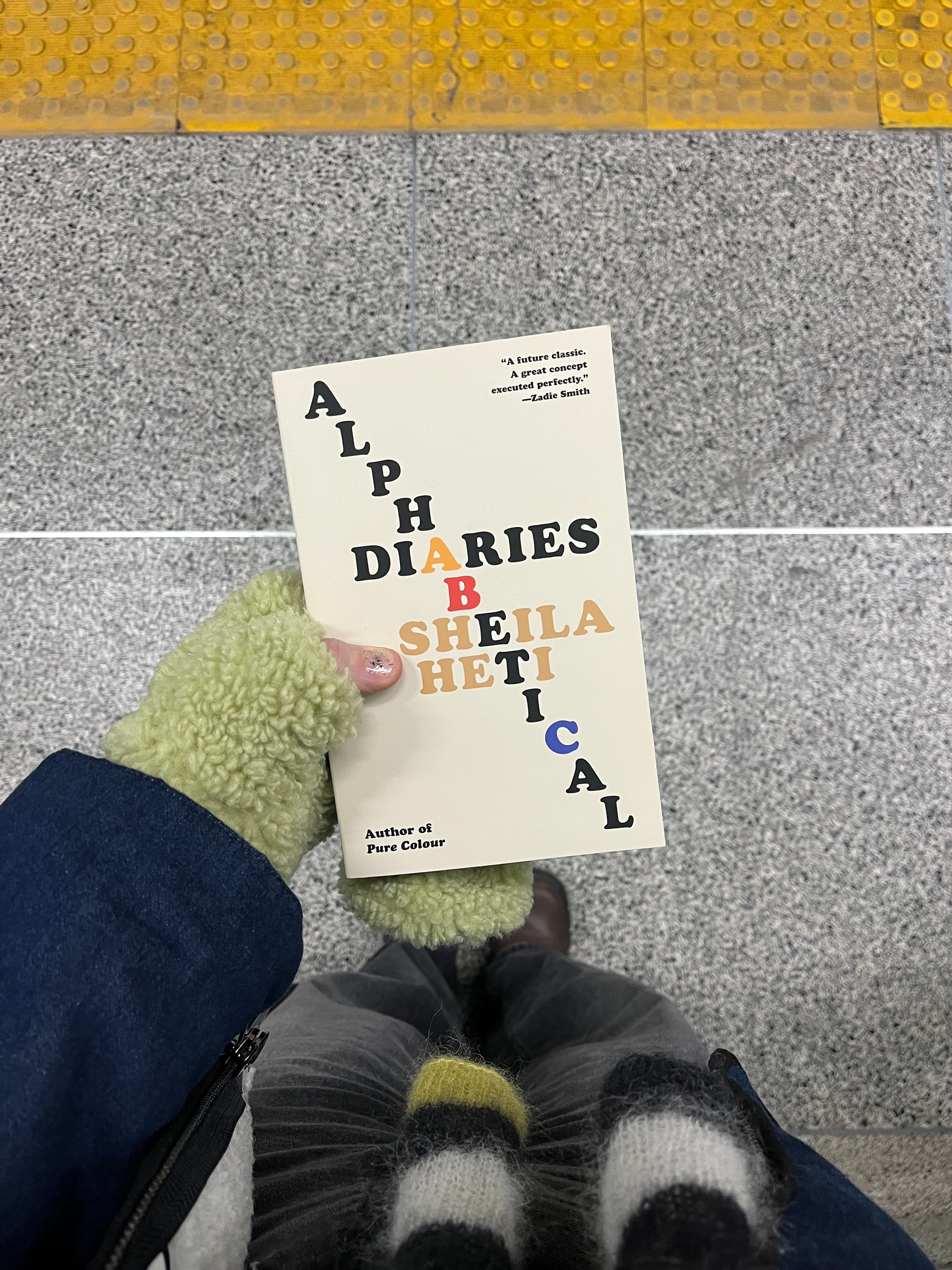
I try to think straight while mothering two young children. Not possible some days. In general, I find I’m having difficulty recalling memories to put into a book of fiction, because yes, I am that kind of writer. I met Sheila Heti at an event last week and asked her about that whole business—the writing from life bit—and she just shrugged and said (not her exact words) it’s just kind of how it is. People experience life and equally, people write about it.
4:10 p.m., the next, next day
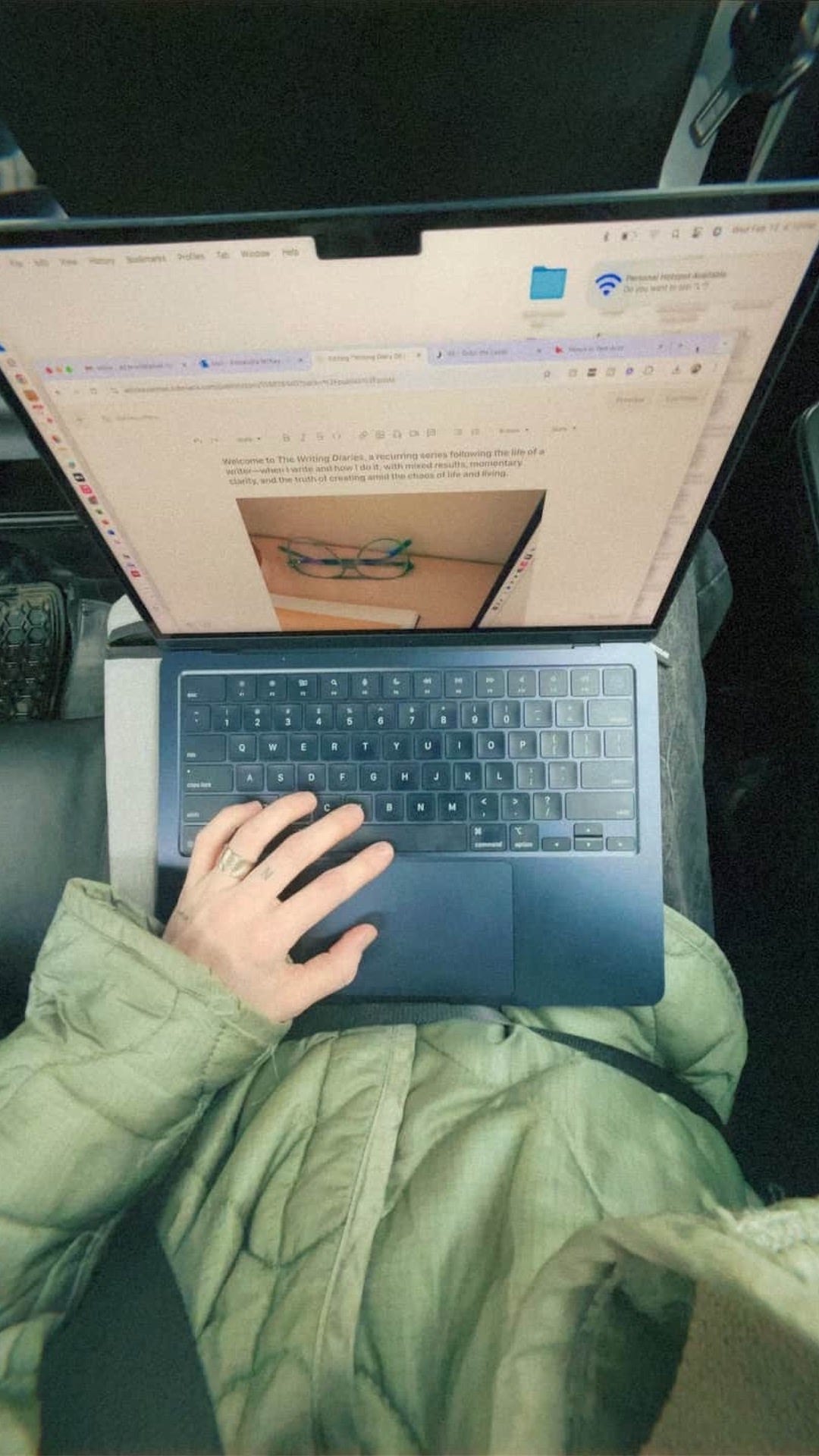
In the back of an Uber. It’s February, snowy, and that’s all I can tell you. The days blur from Monday to Thursday in a cycle that looks something like this: feed the kids, care for the home, read, write, feed the kids, care for the home. Read. Stay on top of the laundry. Live at a reasonable, emotionally manageable pace with the news. For now.
4,000 words came through me this week. Perhaps I’ve effectively resisted resistance, also for now. Perhaps it will visit me again next week.

Comments
Nothing yet. Say the first thing.
Sign in to join the conversation.