
One Stubborn Thing: In 2003, China was the largest trading partner for 18 African countries. It’s now the top partner for 52.
Trade between Africa and China has been growing steadily for more than two decades. In 2023 alone, according to Johns Hopkins’s China-Africa Research Institute, it grew by nearly 18 percent, rising to almost $350 billion. With Beijing’s extension of tariff free access for 53 of 54 African nations now taking effect, China-Africa trade will likely grow even faster in coming months.
But the significance of those growing trade ties goes well beyond dollars and cents —and yuan.
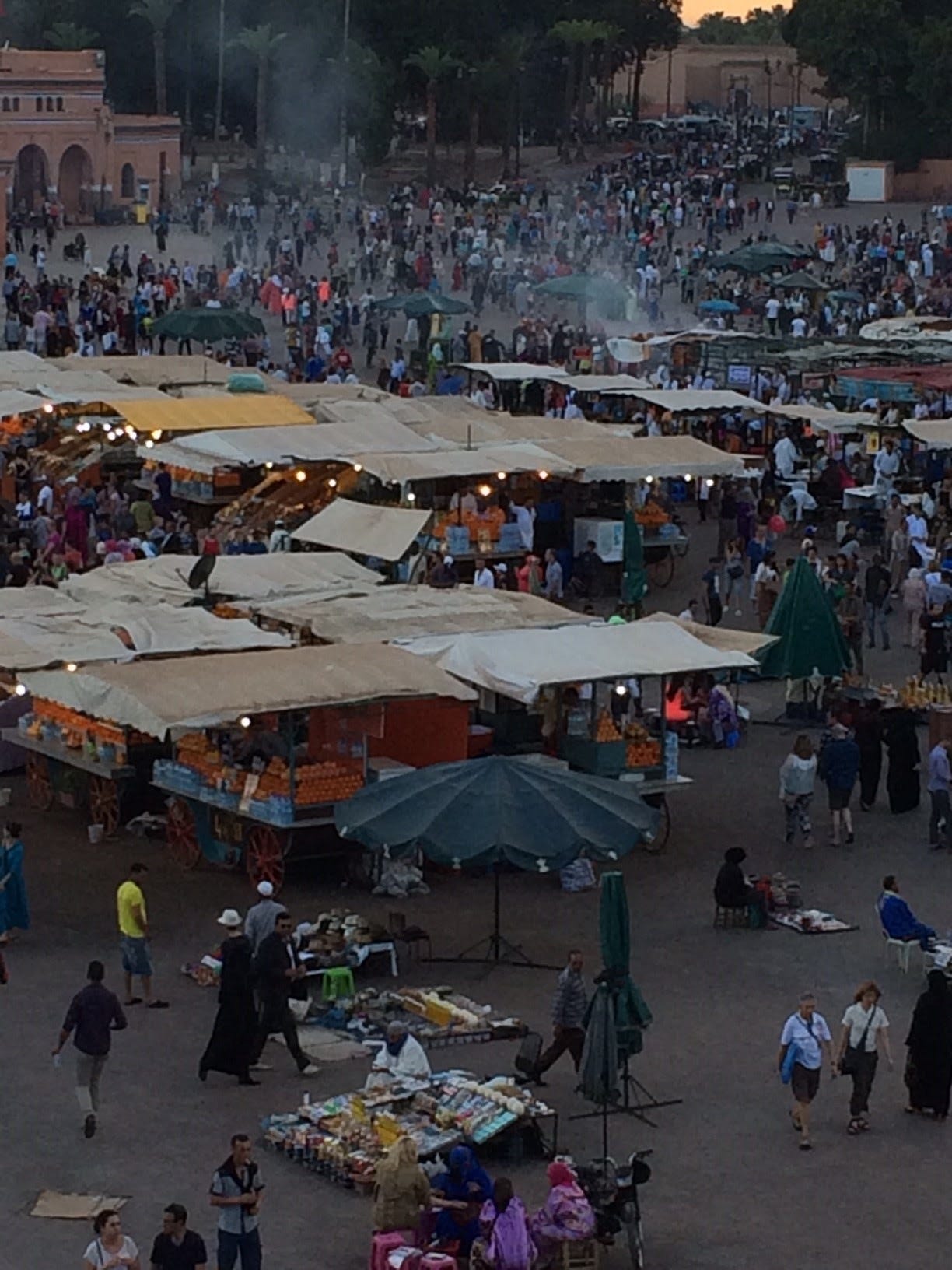
In my time as a teacher in a small African village, I relished my weekly trips to the nearby open market or soko. Walking through a sea of grass mats, where villagers (usually old women) were hawking pyramids of vegetables, piles of various spices, mounds of dried fish, and more, I loved the sites and sounds and smells.
But what made these visits so memorable wasn’t merely the goods being offered: it was the human interactions at the heart of that marketplace. Buyers, sellers — even “mzungus” (white people) like me-- were communicating with each other in the most basic and human of ways. When I stopped in front of an individual mat that caught my eye, a ritual began that would be repeated by others over and over in every corner of the soko, and every soko in the land.
Marshaling (and butchering) my best kiswahili, I’d ask “mama” how much she wanted for those tomatoes. She would come in way too high —we both knew it — and I would chuckle and she’d break into a smile. When I gently pushed back, she would talk about the exceptional quality of those tomatoes or the costs and hardships that she faced in her shamba (gardens). We slowly and smoothly reached an agreement on price. I’d been in the area long enough to know the right way to close the deal. Switching to her mother tongue of kiluhya, I’d ask her if she could please, please add just a little bit more to her offering. She’d slowly shake her head in laughter (after all, I am an mzungu), and then add in another tomato. The deal was done.
Neither of us had won or lost. The transaction didn’t necessarily make us best friends —or even friends at all— but it did bind us together in an important, yet unspoken way. Each of us was glad the other had been there, and each of us was satisfied that a need had been met. In all of my trips to that soko, I never once saw a buyer and seller end up in a fight. I rarely even heard a harsh word or raised voice.
The legion of policymakers who waved the banner of “trade not aid” in 2025 got many things wrong about what the dismantling of development programs would mean in terms of hunger, illness, and weaker economic growth. But the need to accelerate the transition to private enterprise-centered policies wasn’t wrong.
If I had simply walked through the soko each week handing out large sums of cash, or if I had avoided the marketplace altogether and had my food shipped in from elsewhere, I would have weakened the sense of community and shared humanity that made the soko the centerpiece of village life. My neighbors would likely have grown to resent my money, my presence and the message of superiority that such activities would have sent, intentionally or not.
America needs to expand true, meaningful trade relationships for a wide range of reasons. Trade helps us grow, and exports to far off lands support good paying jobs back here at home. After all, 95 percent of the world’s population lives outside the United States, and many of them are potential consumers for what our farmers grow and for what our companies make.
But broad trade relationships also matter because they softly bind countries together in ways we often take for granted. Trade deals don’t always turn enemies into allies or strangers into friends, but they can build trust and respect. Just like that old woman in the market, we can each be glad of the role the other played in supporting order and stability, commerce and economic growth.
For years, when western policymakers complained that China was striking deal after deal in Africa, many leaders on the continent were dismissive, saying they knew full well what they were getting through their transactions with Beijing. But as China expands its diplomatic presence across the continent (it’s now larger than America’s) and takes steps like granting tariff-free access for nearly every African country, it’s increasingly clear that, like that old woman in the market, they are glad China is there and Beijing is only too pleased to play its part.
Trade deals are more than transactions. Done well, the parties aren’t mere vendors and buyers, but respectful economic collaborators. This approach has been at the heart of America’s longstanding global leadership.
These days, 52 of 54 African countries have China as their largest trading partner. What’s our next move?
No posts
Comments
Nothing yet. Say the first thing.
Sign in to join the conversation.