
Stubborn Thing: When people hear the term “critical minerals,” the digital economy and its growing hunger for rare earths, lithium, and cobalt usually comes to mind. The Middle East conflict’s growing impact on the global food economy reminds us why phosphate and potash are on that list too.
In 2022, Russia's full scale invasion of Ukraine caused havoc and pain in many farming economies because the theater of conflict was also the source of a significant share of the world’s supply of fertilizer and related products. In those days, 20 percent of overall fertilizer supplies came Russia and Belarus, including 40 percent of the world’s potash and 20 percent of urea, the most widely used nitrogen-based fertilizer. As a result, many countries, especially in the developing world, saw food production go down and food costs go up. Even the World Food Program was impacted—their funding for humanitarian assistance simply couldn’t reach as many hungry people.
In 2025, the Trump Administration, perhaps with that experience in mind, added both phosphate and potash—key fertilizer elements— to the US Geological Survey’s official list of critical minerals. With that move, the Administration signaled its willingness to boost domestic research, production, and stockpiling of phosphate and potash to reduce the vulnerability in fertilizer supply chains. The European Union and Canada also designated those substances as “critical minerals.”
But if the war on Ukraine reminded us where many of our most important agricultural inputs are produced, the war in the Middle East has made clear that every part of the supply chain needs to be stable and secure. Western media has reported that 20 percent of the world’s oil passes through the Strait of Hormuz. But UN Trade and Development reports that 30 percent or more of the world’s nitrogen-based fertilizers and 45 percent of granular sulphur (a key ingredient in phosphate-based fertilizers) go through there as well. As the conflict continues, Fitch Ratings foresees potential price increases for urea (the most widely used nitrogen-based fertilizer) and ammonia of nearly 25 percent this year. Food prices themselves will likely reflect these cost increases later on as fertilizer and fuel costs make their way through the farm-to-market chain. As Fitch notes, fertilizer costs make up nearly half of overall grain production costs.
As it did in 2025, when it added to the critical minerals list, the Trump Administration has moved to lessen the cost impacts of the conflict upon American farmers. It recently waived provisions of the Jones Act, which requires that certain goods shipped between U.S. ports be moved only on U.S.-flagged vessels. The Administration hopes its move will lessen some of the cost impacts for American agriculture.
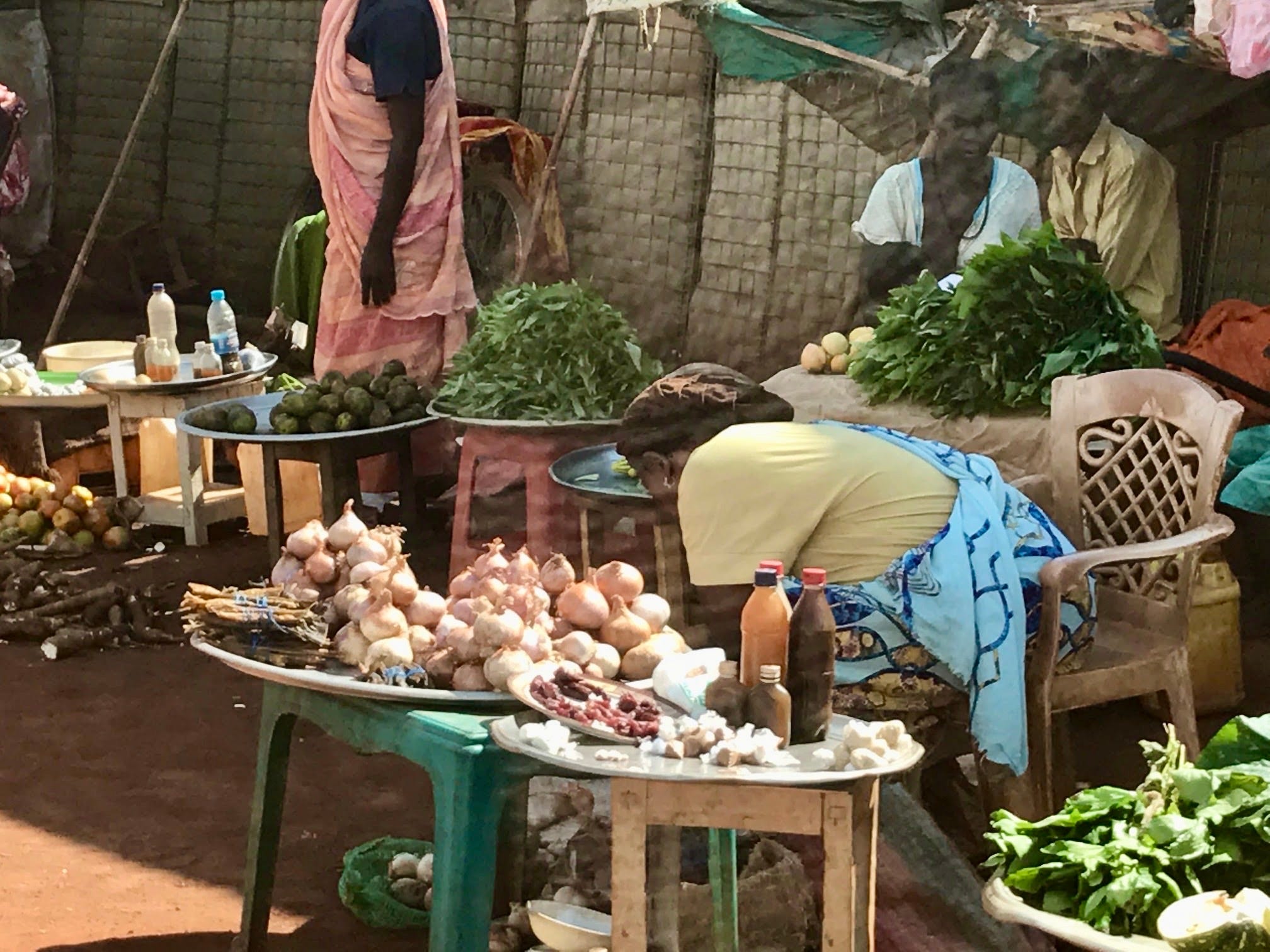
According to the UN, in agricultural terms, nowhere is more impacted by restrictions on movement through the Strait of Hormuz than Africa. Of the world’s 10 countries most dependent on fertilizer coming from or through the Persian Gulf, 5 are in Africa. Over half of Sudan's fertilizer supplies passes through Hormuz and nearly a third of Somalia's— both countries are already among the world’s most food insecure nations.
It’s a longstanding principle of international law that food should never be used as a weapon of war. But conflicts in the Middle East and Eurasia remind us that even when food isn’t a weapon of war, it’s very often a victim of it.
Comments
Nothing yet. Say the first thing.
Sign in to join the conversation.