
Stubborn Thing: The world’s first widely used mobile money service was invented in Africa.
It’s hard not to be inspired by Africa’s young people.
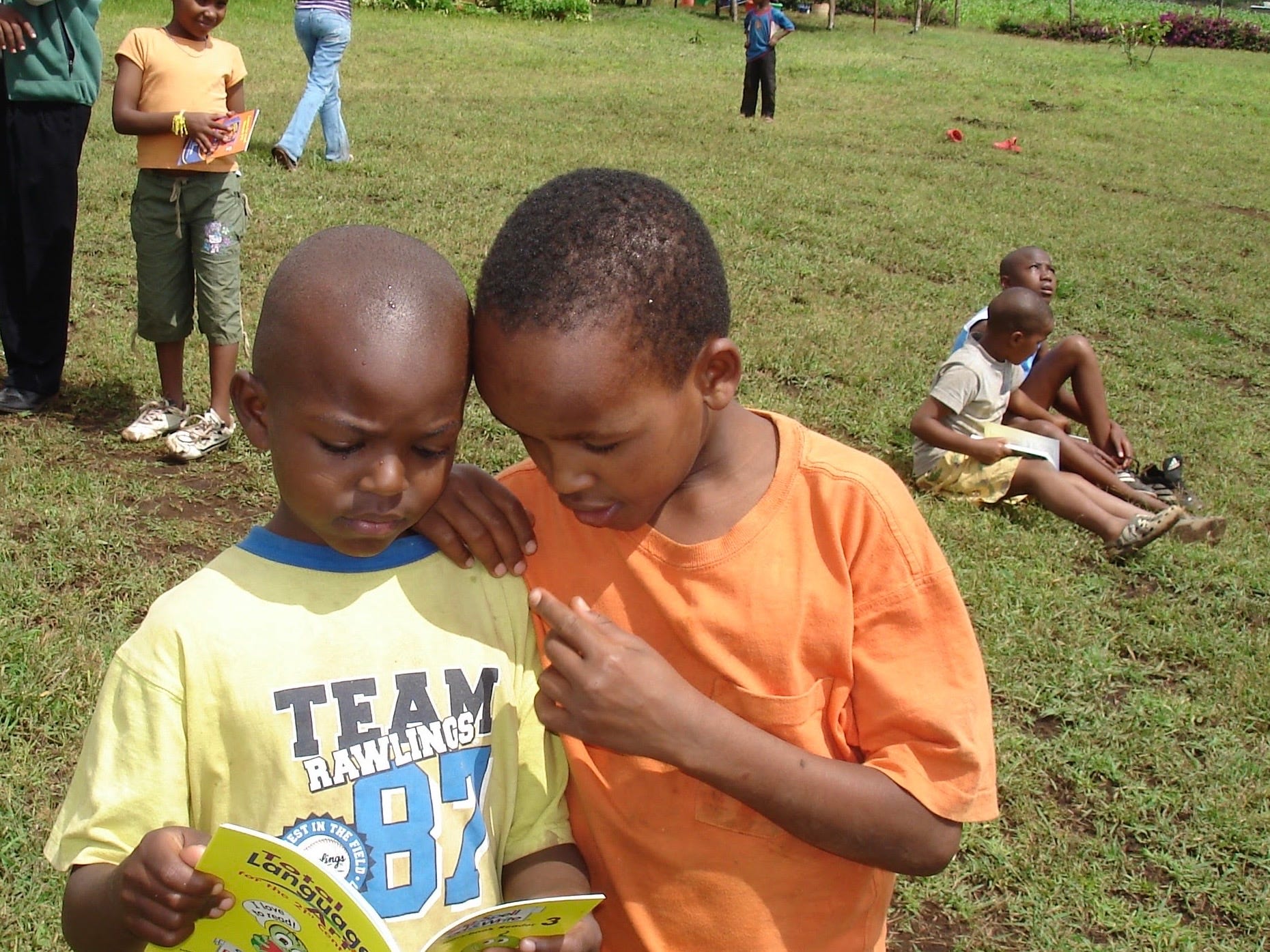
Those who have spent much time there are often overflowing with stories of moving encounters with African youth in remote villages or big city neighborhoods. The stories speak to the optimism and resilience visitors sense in those young people, and express amazement at how youth have found ways to persevere, even flourish, in the face of material challenges and disadvantages that would quickly discourage many of us in the West. Tourists often return to the US with souvenirs made from discarded household items that African children have somehow turned into toys or even beautiful works of art. Tin cans transformed into toy cars and trucks. Old wire and batteries become animal figurines. Broken glass and thatching magically transformed into jewelry.
Now imagine if those same young Africans had frugal technologies —mobile phones, civilian drones, etc.— at their fingertips. That’s actually what’s happening in many places… and it represents one of the most hopeful —and least reported— stories unfolding in Africa. And it’s also one of the many reasons why I firmly believe it’s in America’s strategic interest to stay close to Africa and Africans.
We’ve all made this complaint before. We do get news about Africa these days, but it’s almost always coverage of humanitarian crises like Sudan and South Sudan, or record-breaking investment deals for critical minerals. Such topics are important. After all, more than half the countries on the International Rescue Committee’s 2026 Emergency Watchlist are in Africa. In terms of natural resources, the UN Environmental Program estimates that the continent is home to 12% of the world’s oil reserves, 40% of its gold, 90% of its chromium and platinum, and the list goes on.
But while that news coverage is accurate, it’s also incomplete. It lacks context, and it fails to pick up on some of the exciting possibilities emerging on the so-called “Dark Continent.”
In early 2007, Kenya’s Safaricom (partnering with South Africa’s Vodaphone) launched a mobile money service, M-Pesa, which opened the door of financial access to vast “unbanked” communities. In the months and years that followed, countless other mobile money entrepreneurs —in Africa and beyond— created their own versions of M-Pesa’s framework. Those services are now everywhere… a revolution in finance.
But M-Pesa was just scratching the surface of mobile phone-powered possibilities. We now have Find-a-Med, an app that helps users locate their nearest health care facility, and Vula Mobile, which helps health care workers find specialists for referrals and consultations. M-Farm and iCow, among others, help farmers stay on top of crop prices and other key agricultural inputs. Safari Tales helps students access African stories and books that are not widely available. Slimtrader is an e-commerce app that helps users purchase goods and services. The list goes on and on (and grows, quite literally, by the day).
Civilian drone use in Africa is also flourishing, and it’s showing the world what can be done with innovative minds at the helm. Zipline, an American company, made headlines when the Trump Administration turned to it for key projects in the American First Global Health Strategy. Zipline proved its value with its successful work in delivering fresh blood and key medicines to both remote villages in Africa and targeted urban neighborhoods. The company is now training young African engineers and designers to not only expand Zipline’s work, but to develop other applications and ventures.
Drones are being used in Africa to fight poaching in national parks. They’re being used for precision crop spraying. Forest and farmland mapping. Humanitarian relief, and anti-malaria larvacide spraying. In Kenya, entrepreneurs are exploring the use of high altitude drones to increase connectivity in rural areas.
Tourists come back from Africa amazed by the creativity and optimism of the kids they meet. Now imagine what happens when those kids, and their kids, have technology to turn their dreams and ideas into inventions that can advance the human condition. So… we want access to critical minerals, to be sure, but we need access to their critical minds.
Additional notes:
According to the World Economic Forum, by 2030, over 42% of the world’s young people will be African. By 2035, there will be more young Africans entering the workforce each year than the rest of the world combined. By 2050, more than 1 in 4 people in the world will be African.
No posts
Comments
Nothing yet. Say the first thing.
Sign in to join the conversation.