
Stubborn Thing: 32 African countries spend more on debt service than they do on basic health.
In my days as Ambassador to Tanzania (2007-09), I invited my parents to come and stay with us in Dar es Salaam. I didn’t just want them to experience the country’s extraordinary natural beauty, I wanted them to better understand why I so loved representing the United States there…being the face and voice of the American people in a country that naturally looked our way.
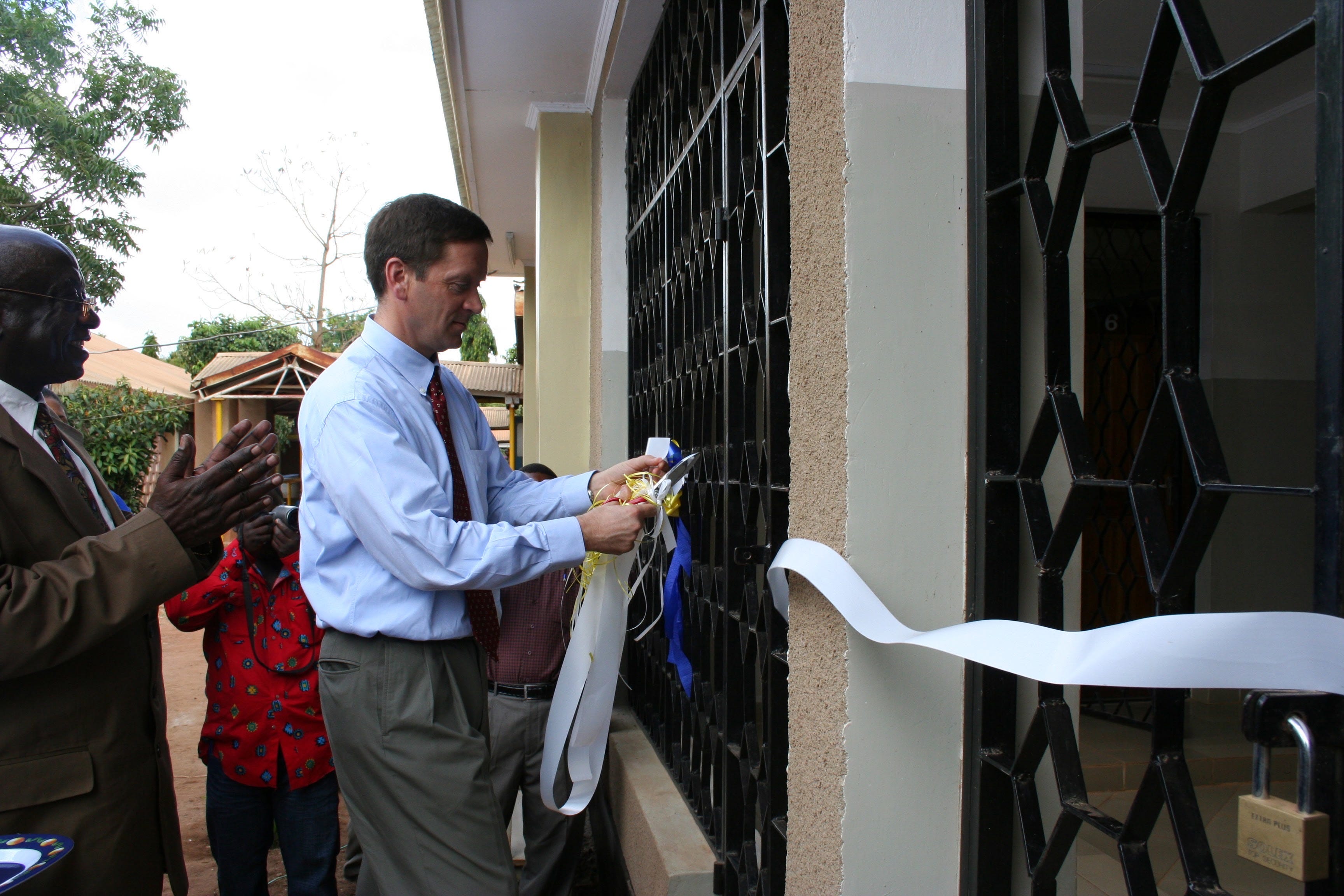
I remember how proud I was when I was able to invite my dad, who’d been a practicing physician for more than fifty years, to join me for a ribbon cutting event at a US-supported health care center a few hours from Dar. As we got into our car, I said, “Dad, let’s go do rounds!”
Opening the newly expanded center was a truly joyous occasion. There was singing and dancing —there was always singing and dancing— and a grand tour of the facilities. Of course, the place was modest by American standards, but it was a godsend to those who otherwise had little access to care. After the public ceremonies, we walked the hallways, chatting with nurses and hospital workers. I remember how Dad loved to ask them questions and compare notes on how various afflictions would be treated. Local officials were bursting with pride and spoke glowingly about how this new center was a downpayment on lifting the lives of countless families.
After the festivities were over and we had driven away from the crowds, I took Dad to another US-supported project—one with a very different feel.
We joined a small number of US and Tanzanian health officials in making home visits to families that had been ravaged by the scourge of HIV/AIDS that still burned bright in many parts of the country. Our purpose was to check on those families, bring some basic food and medicine, and generally help them realize that they hadn’t been entirely abandoned or forgotten. All of our stops that afternoon were moving and poignant, but there was one in particular…
The home was a rickety structure on the outskirts of town. It looked more like an abandoned farm shed than a place where human beings could live. There were no windows, but a few rays of sunlight reached in through holes in the walls. The floor was dirt.
As we entered the house, and after our eyes adjusted to the darkness, we saw an old lady, and wearing threadbare clothes, sitting on an old crate. She was a little overwhelmed by our visit, even though she knew we were coming, but she seemed to relax as we opened our boxes of food. A few of her children, dressed in tattered shorts and shirts, stood by, eyeing us carefully.
The poor woman's breathing was labored and noisy as she sat on that old crate, but she wanted to talk. Through a translator, and little emotion, she told us that her husband and one child were already dead from AIDS and, as Dad would later confirm, she was in the homestretch herself. She went on to explain that she was once a successful businesswoman, but now she was down to her final shillings.
Through that translator, and with little emotion, she said to me, “Ambassador, I have a question.” She was looking off into the distance as she spoke. “With this last little money, should I buy books for my children who are healthy or medicine for the ones who are not?”
She wasn't asking her question for effect… it was a sincere question from a woman deflated by life’s challenges. And, of course, I had no answer. None.
As Dad and I quietly walked back to our car, he said to me, “Mark, can't the government do something?” “Dad,” I answered, “There's no Medicaid here or disability or welfare. If we don't do this, it won't happen. That's the simple truth.”
Programs like PEPFAR (the President’s Emergency Plan for AIDS Relief) and the President’s Malaria Initiative, powered by the generosity of the American people, have changed the course of human history. Simply put, countless Africans are alive today who would not be if American taxpayers hadn’t mobilized their compassion through these and other programs.
The success of these initiatives —and the basic health care infrastructure they helped create— means that achieving true self-reliance in sectors like public health and food security is possible, and even within reach, for many African countries. The America First Global Health Strategy emphasizes shared technologies and joint investments in order to boost sustainability. It prioritizes innovation and private enterprise in order to foster new economic opportunities for a very young population.
While AFGHS is very different than traditional programs which depended almost entirely on traditional foreign assistance, it continues an important American principle: it doesn’t resort to the Chinese-style lending that has made the continent’s debt distress so much worse. According to ONE Data, a project powered by Google’s Data Commons and the ONE Campaign, 32 African countries are spending more on debt service these days than they do on public health. Put another way, according to ONE Data, African countries spent approximately $89 billion in debt payments in 2025— significantly exceeding the highest level of development assistance they’ve received ($60 billion in 2023). The last thing the continent’s leaders need is anything that exacerbates their debt challenges.
American compassion is our “brand advantage” in so much of the world. From the Peace Corps to PEPFAR, our helping hand has been extended further than any other country in history. In this new chapter of that story, combining the value of compassion with the spirit of innovation and the power of private enterprise, we can take our brand to new heights.
I’ll never forget how proud I was when I took my dad to that ribbon cutting. I’ll never forget how moved he was when we visited that poor dying lady. And I’m excited for what continued American leadership will mean for so many lives in the years to come.
No posts
Comments
Nothing yet. Say the first thing.
Sign in to join the conversation.