
February 6, 2026 – As my fatherhood research and coaching has grown, I’ve started collaborating with some of the best motherhood experts out there. Becky Jennings of ResponseABLE Parenting is one of them, and on February 22 we’re hosting a Valentines’ish workshop called From Tense to Together: a 90-minute reset to turn stressful parenting moments into deeper partnership. We’ll identify you and your partner’s biggest parenting triggers, uncover what’s underneath them, and practice how to feel better supported in the heat of it. Come join us! Now back to the story…
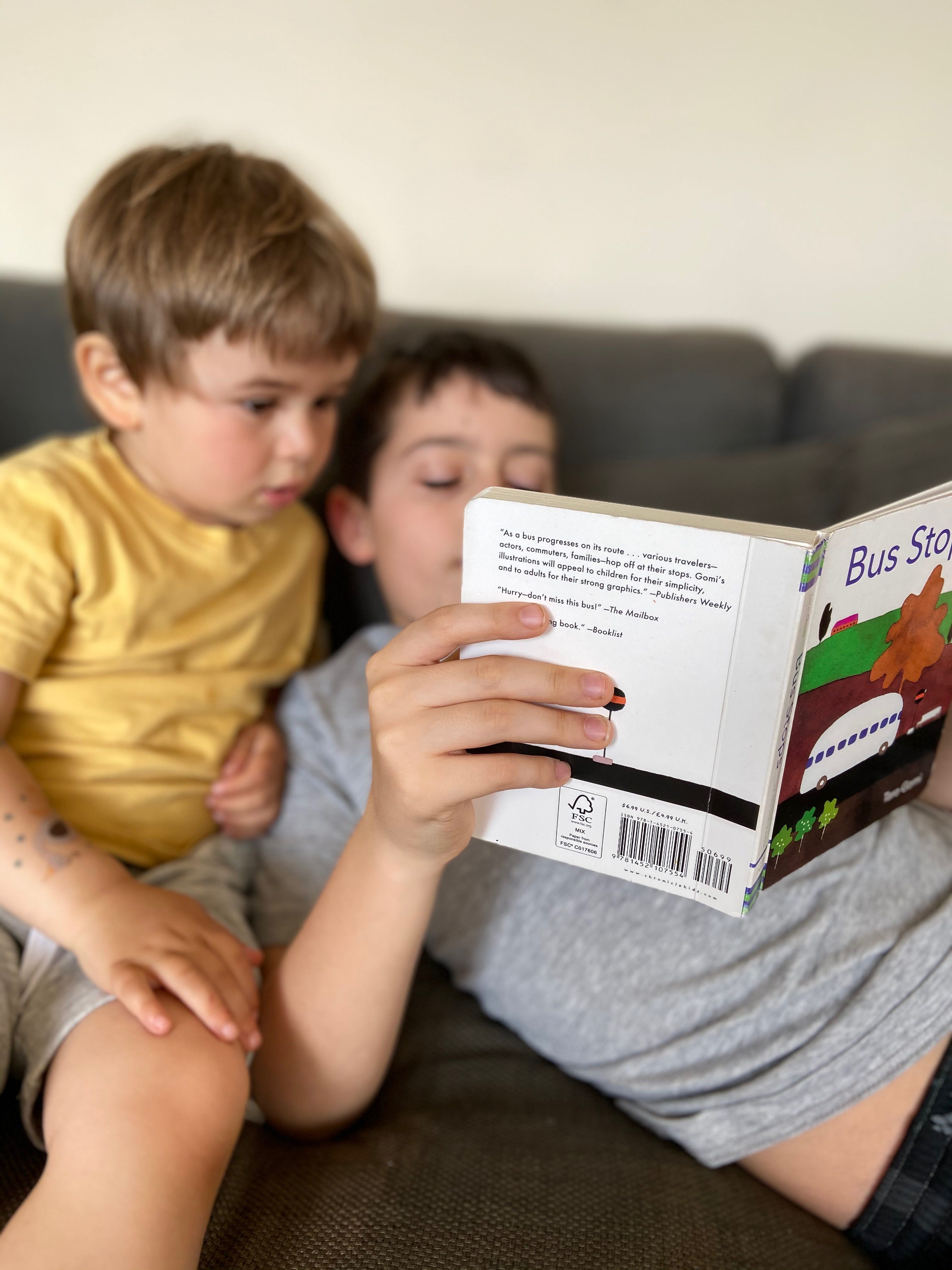
Over the Christmas holidays, my 8-year-old did a week of robotics camp. He loved it. I barely understood what they were building, but in my head did the laziest possible math:
Robotics = tech = AI = career and future… handled.
Meanwhile my rambunctious 5-year-old can make each eyebrow move independently like Mr. Bean, is obsessed with dancing and just started piano. Somehow that doesn’t trigger the same automatic “elite track” storyline in my body.
Which is ridiculous, because in our house we’ve banned the question: “What do you want to be when you grow up?” And when grandma inevitably sneaks it in like a McDonald’s visit, I always find a moment later to say: “Boys, I only care about who you want to be, not what.”
And yet culturally, I still feel the gravitational pull to think about careers from toddlerdom.
I’m not alone.
According to Pew, nearly nine-in-ten parents say it’s extremely or very important that their kids become financially independent and have jobs/careers they enjoy. We’ve made “future job satisfaction” the emotional center of parenting, even if we dress it up as curiosity.
And teens feel it too. In Pew’s survey on teen anxiety and depression, 95% of teens said having a job or career they enjoy would be extremely or very important as an adult. That ranked higher than helping others in need (81%) and even getting married (47%).
Ufff. That’s an entire culture aiming to forge identities around a career. And even when the career goes “well,” the identity cost can be real. As IBM Executive Dan Gormin told me: “I got lost in my work for a long time… and my identity is not what I wanted to get my kids exposed to.” That’s the danger. We’re tying our kids’ sense of self to the one thing the modern economy keeps rewriting.
The 5 stats that should make us stop forging our kids’ identities around a future career
When most of us grew up, “What do you want to be when you grow up?” felt like a question with a finite menu. Now it’s closer to: “What do you want to be in a world where the menu gets updated weekly?” That’s why these numbers matter. They’re not “doom.” They’re a reminder that certainty is no longer a safe parenting strategy.
Young high school grads found work faster than young college grads. (This is not a typo.)
According to the Cleveland Fed, 41.5% of unemployed young workers with only a high school diploma found work each month, compared to 37.1% with at least a bachelor’s degree.This doesn’t mean college is worthless. It means the degree is no longer a guaranteed bridge to stable work, especially early on.
Underemployment is the default for many new grads, and it can stick.
Strada + Burning Glass found 52% of recent four-year grads were underemployed one year after graduation. And the St. Louis Fed highlighted that 45% are still underemployed 10 years later.Underemployment isn’t just a career detour; it’s and identity smack if your definition of success is “the degree guarantees the job.” One dad in my interviews said it perfectly: “Success is when your adult children want to spend time with you.” And I’m pretty sure he didn’t mean, “because they’re a 25-year-old barista living at home.”
The early-career job supply is shrinking right now.
Handshake reported that early-talent full-time job postings were down 15% year over year through 2025. These are the jobs many of us contemplated or took after college, the classic “entry-level” roles. When these roles disappear, the story has to shift from “pick the right major” to “learn how to retool and adapt without panicking.”Even if your kid “wins,” the game itself is being rewritten.
The World Economic Forum also estimates around 1.1 billion jobs could be transformed by technology. Transformed isn’t a buzzword here; it means completely reimagined, re-tooled, and re-skilled.This is why I’m increasingly allergic to career-identity talk for kids. The goal can’t be “choose the right profession.” It has to be “become the kind of person who can thrive across multiple technology cycles.”
And this is where the viewpoint of Asheesh Advani, CEO of JA Worldwide, one of the largest youth serving organizations in the world is helpful. His recommendation: stop betting on titles, start building capabilities. He emphasizes future-ready skills like problem-solving, collaboration, and adaptability, plus self-efficacy (the belief you can figure things out).
That’s the through-line: the world is moving from “where did you study?” to “what can you do, with whom, under pressure, repeatedly?”
But this doesn’t apply to my family
If you’re like me (especially me watching my 8-year-old come home glowing from robotics camp), you read those stats and your brain whispers: “None of this will apply to my kid.” Because robotics feels like certainty. Like the future already stamped “approved.”
But that’s exactly the trap: we’re using our kids’ early interests as emotional proof that the world will remain predictable. And right now, predictability is the one thing the labor market is quietly withdrawing.
So the question isn’t whether your child is smart enough.
It’s whether we as fathers are willing to loosen our grip on a single scripted path and build a definition of success that survives a shifting world.
So what can we do as fathers, knowing the trajectory is unknown?
Here’s the shift I’m making in my own head:
My job isn’t to predict the future for my kids. It’s to paint many futures for my children to imagine (because goals are derived from exposure to new ideas). In other words: widen the map before they pick a direction.
I need to swap the script I inherited (school → college → job) for the reality my kids will inherit: a world where paths will be more diverse, more nonlinear, and more frequently rewritten.
And because Ambitious Dads like us tend to turn everything into a plan, here are 5 practical moves that I’m practicing (semi-regularly) that don’t require us becoming career coaches to third graders:
Replace “what do you want to be?” with two better questions:
• “What problems do you like solving?”
• “What curiosities do you have about the world?”
This builds identity around curiosity and contribution, not titles (nor social media likes).Monthly “action-first” projects
Once a month, pick a real-world topic, curiosity, or something they’re learning in school and convert it into a small project.Example: my son still loves Beyblades, so we’re designing our own. First with Play-Doh, then we’ll explore how molds get made (maybe even 3D print it). They end up learning prototyping, problem solving, and patience, without a single lecture from me.
Make it your homework to widen the path (and tell different success stories)
If you climbed the corporate ladder, went to law school, or have been in the same industry for 15+ years, your default stories will quietly reinforce one “respectable road.”So here’s the homework: actively research and normalize multiple viable pathways, and share stories that aren’t just your path: college (yes), but also gap years, apprenticeships, entrepreneurship, portfolio careers, remote/global work, public service, going back to school at 35, etc.
Not as “Plan B’s.” As real options. You don’t have to know which path your kid will take. But you do have to stop acting like there’s only one safe road.
Create a family definition of success defined by values, not outcomes
This is the most important step.Because this is the real work underneath all of it: identity. Anesthesiologist James Garas said it better than I can: “A big part of my job is that I represent to my son an identity. I want him to know who he is as a person and I want to lead him through that process.” That’s what a values-based definition of success actually is, a way of leading our kids toward becoming someone solid, regardless of what the market does next.
Step 1: Choose 3–5 family values
(Examples: courage, integrity, curiosity, connection, contribution)Step 2: Translate values into behaviors you can actually practice at home
• Courage → “We try hard things and don’t quit at the first frustration.”
• Integrity → “We do what we said we’d do, even when no one is watching.”
• Connection → “We repair quickly after conflict.”
• Curiosity → “We ask more questions than we answer.”
• Contribution → “We help without being asked.”Run the “30-year dinner test”
Imagine your child at 35 or 40 sitting down to dinner with you.
Ask: Who are they? Not what do they do.
What are the character strengths you’d be proud to describe to a friend?
Write down five.That list becomes your north star when the world (or your own ambition) tries to yank you back to the old scoreboard.
Conclusion: success isn’t a slogan, it’s a practice
Redefining success for our children isn’t a one-time insight. It’s an ongoing process. It starts with us. We define it with intention, then we live in a way that reinforces it, because our kids don’t just hear our definition, they absorb it.
The best gift we can give our kids isn’t a perfect plan.
It’s a sturdy inner compass and the skills to keep walking when the map changes.
Thanks for reading Ambitious Dads ! Subscribe for free to receive new posts and support my work.
Comments
Nothing yet. Say the first thing.
Sign in to join the conversation.