
Notice: article contains mild spoilers for the original iteration of The World Ends With You.
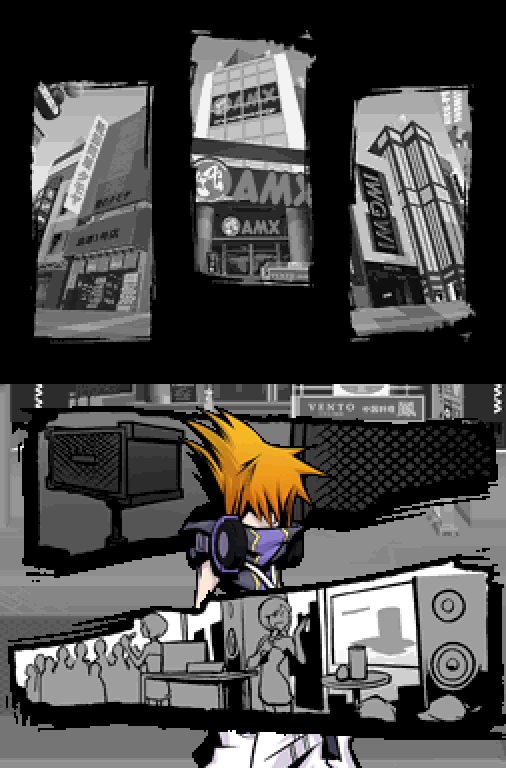
2007’s The World Ends With You is an unconventional entry among developer Square Enix’s lineup. Alongside the diverse imaginative worlds of Final Fantasy and the fantastical realms of Kingdom Hearts, The World Ends with You boldly stands out with its real-world setting bursting at the seams with simulacra of real-life culture.
Tokyo’s Shibuya district serves as the setting for the title’s narrative, and the Scramble Crossing - the busiest pedestrian crossing in the world - forms its central hub. Shibuya has long been Japan’s premier hotspot for young people following developments in the 1970s, a central district fundamental to the country’s output in art, fashion and music. Square Enix’s main headquarters were situated there at the time of the game’s development.
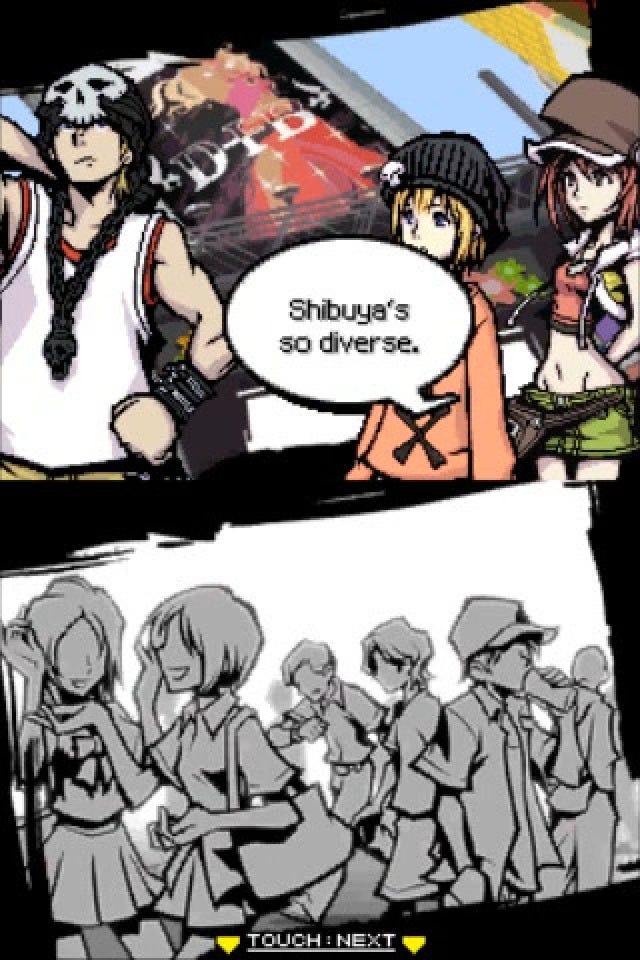
Inside Shibuya, The World Ends With You’s narrative sees teenage protagonist Neku thrown into the Reaper’s Game, a week-long contest where people who have died in the RG (meaning ‘real ground’, or the real world) must participate in challenges in the UG (meaning ‘underground’, an alternate reality manifesting beneath Shibuya) to secure their right to a second chance at life. Participants must form a pact with a partner in order to survive, as battles with the supernatural (referred to as Noise) require two people to work together in order to fight effectively.
Neku begins the story in the UG with no remaining memories, and no clues as to how he wound up in the Reaper’s Game. He initially copes with the situation by keeping his guard up at all times, refusing to open up to others any more than absolutely necessary for survival - but as he participates in the Reaper’s Game three times over the course of the plot, working alongside a different partner each time, he finds himself growing more open to developing understanding for those around him - a change crucial to the narrative’s core message.

In The World Ends With You’s combat, trends and fashion are everything. Stats in battle are determined by clothes obtained from Shibuya’s many unique stores, special partner abilities are enhanced via rare stickers, and usable skills take the form of collectable pins. Clothes and pins each belong to one of thirteen unique brands - all based on real-world fashion styles.
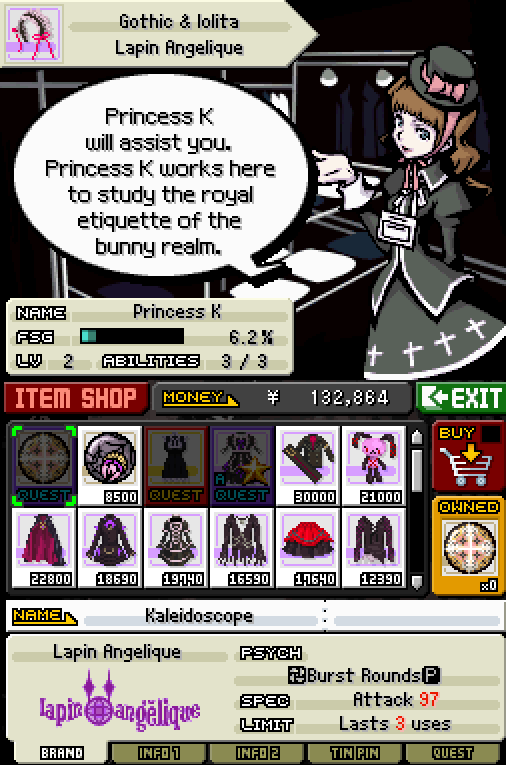
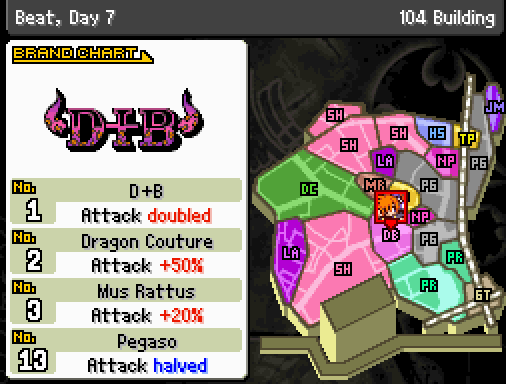
Their effectiveness is influenced by which brands are currently trending in the specific area you’re in, and in turn, participating in repeated battles in the UG while wearing your brands of choice grants the player the coveted opportunity to influence popularity rankings in their favour - imprinting their own mark on the world around them.
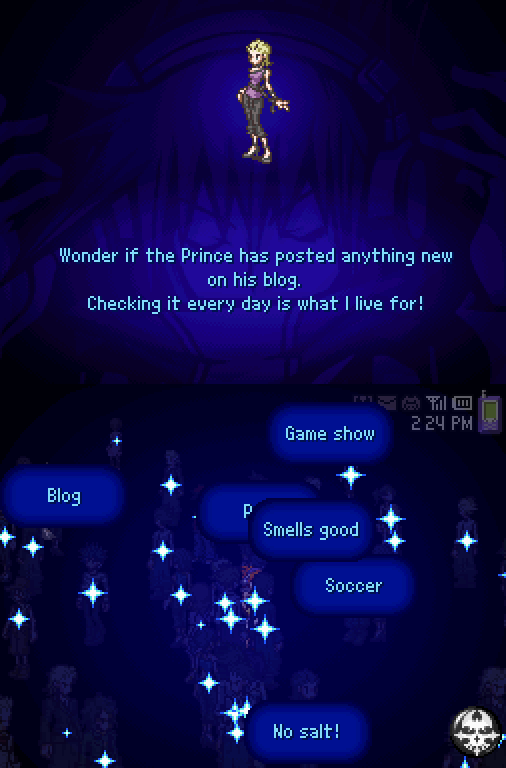
All the various battle mechanics lead to The World Ends With You appearing overwhelmingly complex at times, but the story’s inclusion of the Reaper’s Game is a brilliantly implemented method to smoothen the experience. While a traditional RPG with many intricately woven mechanics might present a barrier to entry to the player interacting with its world, The World Ends With You cleverly circumvents this by shifting the layer of separation. All interactions with its world function exactly the way you’d expect them to - walking around, buying clothes and collectible merchandise from typical retail stores, using your mobile phone to navigate around, check the latest trends and listen to music - with all the supernatural elements isolated to the Reaper’s Game.
If there’s something you don’t understand, chances are strong that your avatar Neku doesn’t either - you’re learning the intricacies of the game right alongside him. This trick goes a long way to enhance the player’s immersion in the world, ensuring Shibuya remains welcoming regardless of their understanding of the Reaper’s Game’s finer mechanics.
While music doesn’t have any direct gameplay benefit, it doesn’t miss out on the close attention to detail that other elements of The World Ends With You received. The title’s soundtrack is astoundingly large for a DS game (too much so for its own good unfortunately, as every song had to be compressed to an extraordinary degree to fit onto a cartridge with a fraction of the capacity of a music CD) and spans a diverse range of genres. The roster of tracks is augmented as each new partner joins - Shiki opens the playlist with lighter pop songs like Deja Vu, Joshua brings a selection of hip-hop melodies like Detonation, and Beat rounds it out with heavier rock tunes like Transformation. Neku’s partners don’t stick around after their respective week, but their corresponding music remains in the random rotation - while we don’t see those characters anymore, their imprint on Neku remains, and hearing those familiar songs is an effective device to keep their memory alive.
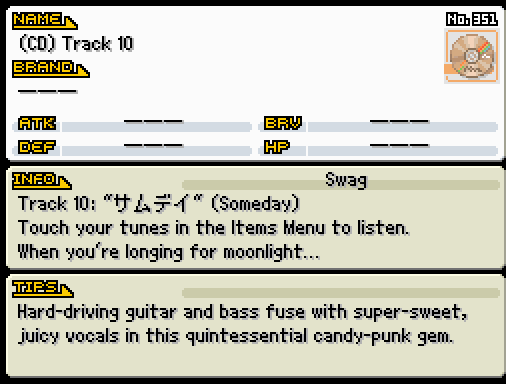
The World Ends With You also takes strides to pay homage to its influences, as many of the in-game tracks are purchasable from various CD stores dotted around Shibuya - and viewing the tracks via Neku’s mobile phone provides a brief background on the composition of the song.
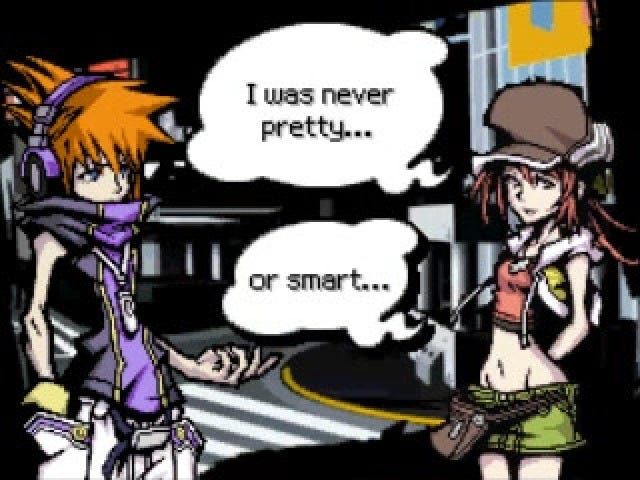
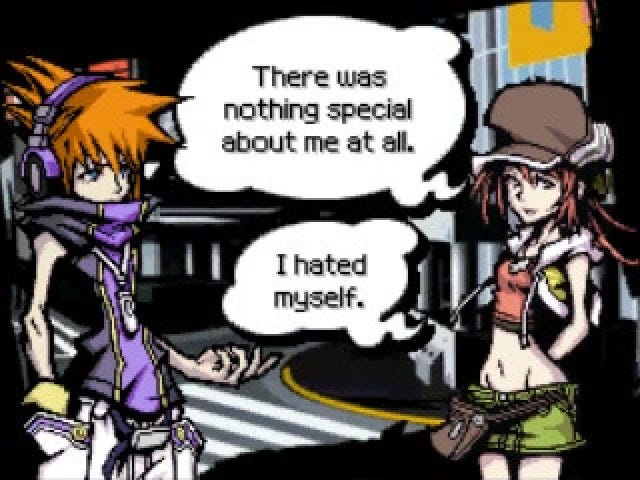
Of course, many of the narrative’s core points do dive into the pitfalls of such a rapidly evolving culture. Initial partner Shiki’s character arc revolves around the jealousy developed by existing in a society so deeply rooted in chasing popularity and following trends, as she loses sight of her true self and opts to instead take on the appearance of a friend she once envied in the UG. Revelations relating to the origin of the Reaper’s Game additionally highlight concern surrounding the growing commercialisation and monopolisation of art, and the dishonesty of online influencers.
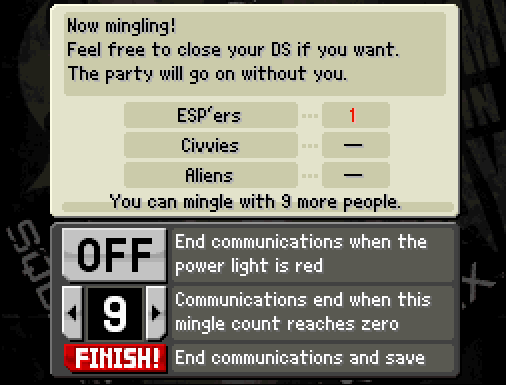
If deepening its own self-contained recreation of Shibuya wasn’t enough, The World Ends With You ambitiously attempts to bridge the gap by interfacing with the real world, wherever the player may be. Mingle Mode is an innovative precursor to Nintendo’s StreetPass technology, predating the feature by three and a half years. When the player activates Mingle Mode and takes their DS console out with them on-the-go, the game constantly scans for other nearby consoles using wireless connectivity.
Encountering another device grants experience points to put towards leveling up your equipped pins, and meeting another The World Ends With You player allows you to exchange personalised stores stocked with your favourite brands. It makes complete sense for a title that places so much emphasis on social interaction to attempt to bridge outside of the confines of its fictional world, granting the player a very literal opportunity to put its themes into practice.
When taking into consideration The World Ends With You’s core message - quite literally, “The World Ends With You”, the broadness of the world is what you make of it - it becomes clear just how seamlessly every aspect and mechanic behind its world synergises with each other. Relying on your partners expanded on your capabilities in the Reaper’s Game; following trends might’ve made battles easier, but staying true to your own preferences influenced others, increasing the popularity of the things you like (seen either in Shibuya through the popularity rankings, or in the real world through Mingle Mode); spending time with others expanded your tastes in a way that endured beyond the duration of that relationship (seen in the soundtrack’s expansion) - The World Ends With You toys with numerous different concepts, but in the end, everything comes together in service of the narrative’s true purpose. If you want your own world to feel larger, you just have to explore the things already within reach, no matter where you are in the physical world.
The World Ends With You turned 18 years old back in July. While trends and the methods we use to interact with the world might’ve changed, the core psychology driving them has remained static - this ambitious title remains just as relevant as it ever was. There’s still lessons to be learned here, and I think The World Ends With You is a game everyone should at least try - even if solely for the cultural experience. It’s a remarkably immersive experience for an early handheld game, and one that’ll surely stick with me for a long time.
Comments
Nothing yet. Say the first thing.
Sign in to join the conversation.