
I have watched hundreds of storms through my studio skylight.
A few of them have never ended.
The weather itself moved on, of course. The cloudbanks crossed the roof. The bruised light altered, rain struck the glass or passed us by, and eventually another sky replaced the one that had held me so completely.
But something of the encounter remained.
I remember these storms with my body: the sudden change in pressure, the atmosphere drawing close around the house, the strange color of the room before rain. I remember the awe of watching something immense, beautiful, and entirely beyond my control moving just overhead.
The storm passed through the world once.
Then it passed into me.
Other images arrive through a different door.
A dream may possess its own landscape, weather, and sequence of events, bearing no obvious relationship to anything we have recently seen. Yet we awaken with the feeling of having encountered something: an impossible wave, an unfamiliar house, a sentence that follows us into the morning.
Sometimes the dream disappears almost immediately. Sometimes one image remains for years.
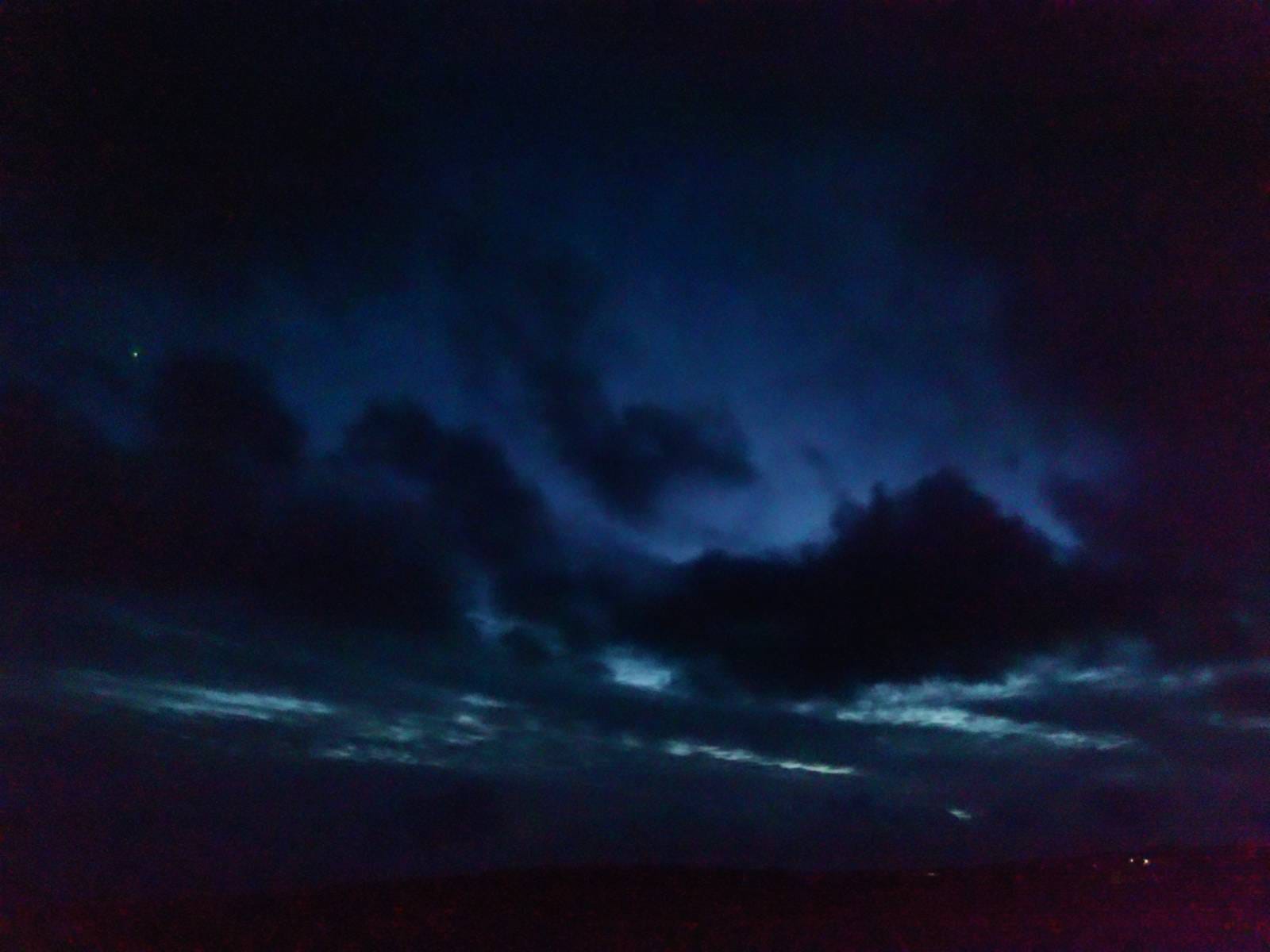
In my own work, dream-weather and physical weather continually exchange qualities. Storms, waves, nocturnal skies, and the atmospheric ocean move between observation and dream until I cannot always locate where a particular image began.
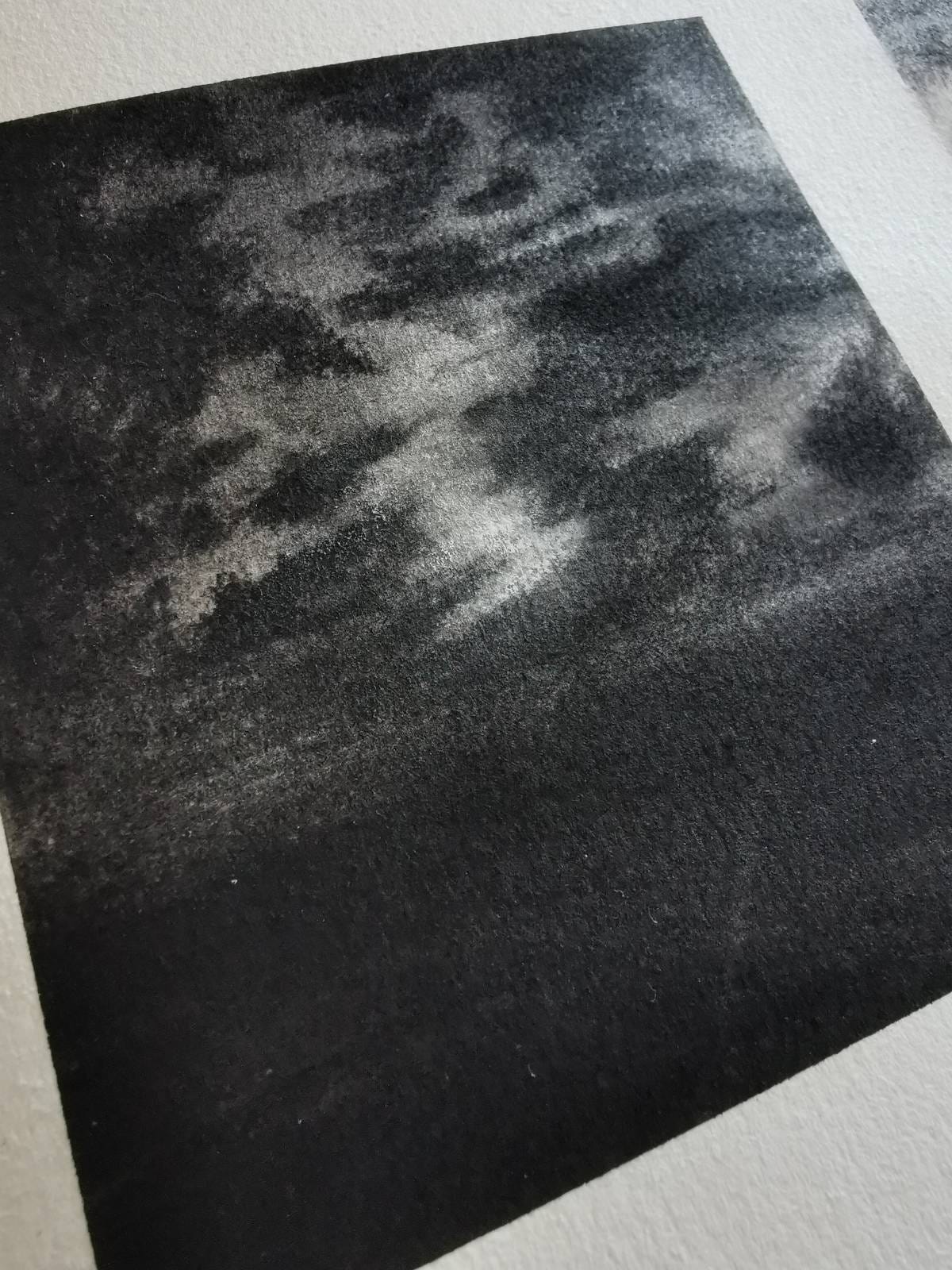
This week, as the Moon disappeared into darkness, I found myself making small charcoal and pastel fragments from somewhere inside that exchange.
They are atmospheric scraps: darkness, pressure, a pale opening, the suggestion of light gathering behind weather. I have been allowing them to stop before they become finished objects, without requiring myself to make them something bigger than whatever feels right for this low-energy (high heat) season.
Small things are entering form. Whether they will go any farther remains undecided.
And this has brought me back to a question at the heart of the Creative Court:
All 25 founder spots for the Creative Court Report have now been claimed, which means reports are currently available at their regular price of $247, with a four-week delivery window.
Because my docket is already quite full, I am accepting only 7 more commissions before closing my books for a bit.
I need the space to complete the reports already entrusted to me… and to continue developing a top-secret experiential project currently taking shape right now 😈
If you have been wanting a Creative Court Report, this is the time to reserve one.
Commission Your Creative Court Report
We usually recognize creation once the body becomes visibly involved.
The hand reaches for charcoal. The needle enters cloth. The wheel begins to turn. Energy rises or falls; a habit holds or breaks; the work moves or stalls.
These are all lunar matters. Most of us already understand the Moon through some version of them: body, mood, need, rhythm, and fluctuating capacity.
We also tend to understand lunar creativity through the calendar. Waxing Moons are associated with building and increase; waning Moons with editing and release. New Moons become beginnings, Full Moons culminations.
The Moon’s visible phases give us an elegant way of contemplating change. But they can also tempt us to make lunar creativity far more orderly and measurable than it is.
We begin looking for a dependable energy cycle: the correct week to begin, the ideal phase for production, the point at which an idea should be ready to become a project. We have tried to make the planet of fluctuation behave like a modern creative productivity calendar, which is a rather strange fate for the Moon.
Actual creative lives are continually altered by encounters that cannot be scheduled. A dream arrives. A particular quality of light catches us during a walk. Something glimpsed once follows us for twenty years, while yesterday’s urgent idea leaves no trace by morning.
The older cycle of generation was capacious enough to include these mysteries.
It began before the body acted upon matter. It included the subtler stages through which something emerged from possibility, became perceptible to the soul, entered memory, acquired familiarity, awakened desire, and perhaps—perhaps—eventually gathered a physical body.
Not every seed completed that passage.
Some images visited once and disappeared. Others returned until familiarity deepened into love, obsession, or devotion: a relationship with something that would not leave the maker alone.
Only then might the hand begin reaching toward matter.
This is what makes the Moon so important within the Creative Court.
Venus may recognize what is worthy of love. Mercury may discover a method. Mars may supply the force required to act.
But the Moon is the Regent who receives their light and determines how—or whether—it can enter material life.
She governs far more than the amount of energy available on a particular day. She governs the intricate cycle by which something begins acquiring form within a living creature.
If we recognize only the final physical stage, every period without visible production appears empty. We overlook the dream that has not yet found a medium, the encounter still changing inside memory, or the fragment that needs no larger future in order to have participated in creation.
So before we follow the Moon into body, material, gesture, and physical generation, we must begin in the imaginal dark.
Creation begins before the body performs an act of making.
It begins when an encounter enters the living soul, remains after its world has disappeared, and acquires an imaginal form capable of returning.
Dreams make this mystery impossible to dismiss.
The dream-world is perceptible while we inhabit it. It has places, presences, movement, and atmosphere. We may stand beneath an impossible sky or feel the approach of something for which waking language has no useful name.
Then we wake.
The place is gone, but the encounter may remain.
Often it dissolves immediately. Sometimes only one thing survives: a color, a sentence, an animal watching from the edge of a road. And sometimes a dream follows us for years with a vividness that makes the ordinary distinction between “real” and “imaginary” feel non-existent.
The fourth-century philosopher Synesius of Cyrene took this territory very seriously. In his treatise On Dreams, he described the imaginative pneuma—a subtle, breath-like intermediary occupying the borderland between incorporeal soul and dense physical body.
He called it the “first body of the soul.”
The phrase is extraordinary.
For Synesius, this imaginative spirit was the shared organ of sensation through which dreams and images became perceptible, a boundary where things otherwise distant from one another could make contact. The dream had already acquired a kind of body: imaginal, changeable, capable of being encountered and remembered. Synesius places the imaginative pneuma between incorporeal and embodied life.
From the dark, something gathers enough distinction to appear.
The image may never become a sketch, much less a finished work.
Yet for one moment, possibility has accumulated into form. Something previously unseen has become perceptible to Psyche.
It has an atmosphere. It can move us. It can leave a memory.
This is already a creative event.
Our modern language makes it difficult to honor this stage because imagination has inherited the flimsy reputation of unreality.
We say something is “only imaginary” when we mean that it has no consequence or legitimate claim upon us. Imagination becomes a private theater in which the conscious mind invents pictures for its own amusement, separate from the serious reality happening elsewhere.
For my own practice, the older idea of phantasia is much more interesting.
Aristotle distinguished phantasia from immediate sensation and discursive thought. It was the faculty through which an image arose for us. A physical thing could move the senses and disappear, while the movement it created continued. We close our eyes, but the image remains.
Aristotle places phantasia between perception and thought.
This gives us one movement of imagination: the physical world touches the creature, and the encounter continues inwardly after its source has gone.
Synesius gives us another: the dream itself may be the encounter.
The image does not always arrive as a copy of something first perceived while awake. It may appear in its own imaginal country and cross into waking life because something of it survives in memory.
In an actual creative life, these movements mingle.
Dream changes perception. Perception enters dream. A physical storm gives pressure and light to the dream; the dream gives the waking eye a form it now knows how to recognize. Imagination becomes the place where inner and outer encounters exchange qualities until their origins are no longer cleanly separable.
This is how storms work in my paintings.
My work begins in the storm-lit skies and Atlantic weather of the Dingle Peninsula, where sea and sky often seem to become one continuous body. The images hover between observation and dream: waves, cloudbanks, nocturnes, horizons, the breathless pause before a storm breaks.
The atmosphere moves through me as much as around me.
When I paint a storm, I often feel as though I am riding the weather from within a dream or trance. I am trying to meet something that has already moved between sky, body, dream, memory, and image more times than I can count.
The painting may eventually become one more place where that encounter occurs.
But the encounter, the activity of relational life, did not begin with the painting.
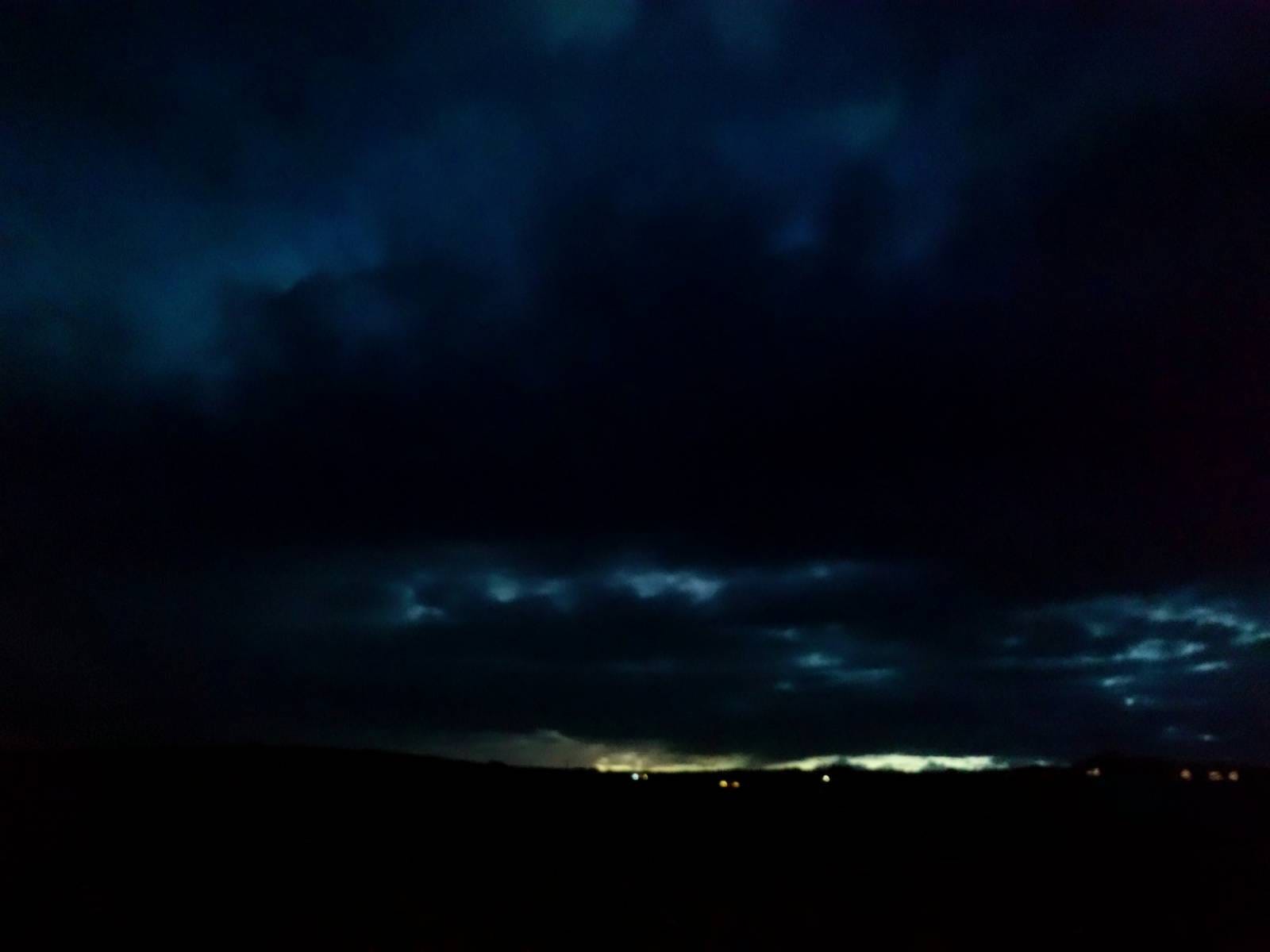
For an image to return, something must hold it after the original encounter has ended.
This is the work of memory.
We often speak as though the mind were a computer and memory an archive of stored information: accurate or inaccurate, retrievable or lost.
The older Psyche was the life-principle of a creature—the sensitive, responsive soul through which a living body nourishes itself, grows, senses, moves, desires, and decays. Aristotle called it the first actuality of a natural body capable of life.
Aristotle Psyche is what makes a potentially living body actually alive.
Memory belongs to that creaturely life.
Aristotle compared perception leaving a memory to a seal impressing its figure into wax. The receiving surface matters. Some experiences barely mark it; others encountered once leave a deeper impression than those repeated a hundred times. Memory, in his account, belongs directly to sensory perception and requires an image or presentation.
Aristotle’s account of memory is bodily, sensory, and imaginal.
We remember because we were affected.
Emotion matters here in its oldest, most physical sense: the capacity to be moved. The body was present. Psyche registered scale, pressure, pleasure, danger, beauty.
Something about the encounter mattered enough to continue.
This is why a few of the storms above my skylight have never ended.
I do not remember them as meteorological data. I remember the scale of the sky, the strange light before rain, the atmosphere pressing close. Yet memory does not preserve the storm unchanged. The weather is worked upon by later storms, dreams, illness, desire, and time.
Memory gives the encounter duration, but duration is not stillness.
What remains in us remains alive enough to change, just like the Moon.
Countless images enter us without becoming part of our creative lives.
Dreams disappear. Ideas flicker and leave no trace.
Perhaps they were never ours to make. Perhaps their only life with us was the brief contact itself before they returned to the vast dark from which possibilities emerge.
A garden produces more seed than it can bring to maturity. Some seeds never open. Others wait in the soil for conditions that may not arrive for years.
And then there are the images that keep returning.
They become familiar.
Familiarity is deeply lunar: repetition, closeness, recognition, the intimacy created through renewed contact. (To say nothing of how familiar spirits and guiding and guardian daimones were governed by the Moon in Hellenistic thought.)
The image enters a dream, reappears during a walk, catches in the throat when a particular blue arrives at twilight. Each encounter alters it slightly and deepens the relationship.
This is where the Moon begins speaking with Venus.
Memory can hold many things, but desire gives one image gravity.
Venus recognizes something there as beautiful, necessary, worthy of love.
This one.
Return here.
At first it may be fascination. Then preference. Then an obsession that begins reorganizing attention around itself. The image becomes a kind of haunting—not necessarily frightening, though it can be unsettling. It simply will not leave us alone.
And because it returns, we come to know it. Because we know it, we become capable of loving it with greater specificity. Through repeated contact and encounter the relationship develops its own history: recognition, separation, return, frustration, pleasure, devotion. Just as being familiar with a lover means you could trace and almost feel the shape of their hip, without them being in the same room.
This is more than an idea we have decided to execute.
It is a love affair between Psyche and an image.
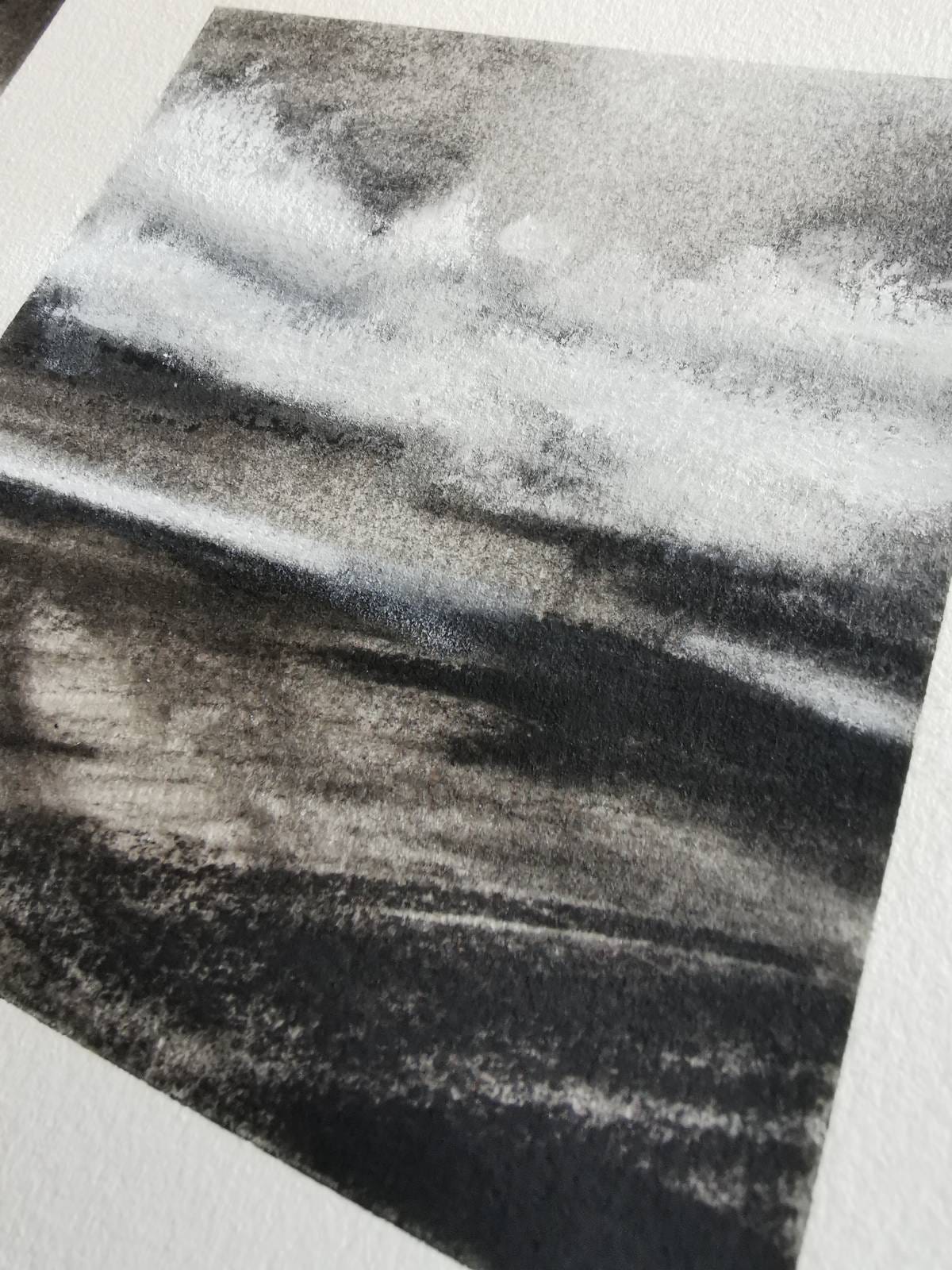
The familiar form may eventually gather enough devotion, memory, and imaginal substance to ask for another body. The hand begins reaching toward charcoal, clay, pigment, fiber.
The rest of the Creative Court starts to stir.
But not every beloved image enters physical reality, either. Love does not eliminate circumstance. Desire cannot by itself provide time, strength, material, skill, money, method, or the bodily conditions required to make a thing live on Earth.
That final jurisdiction belongs to the Moon as generatrix and Regent.
And that… is the next part of her cycle.
For now, the Moon is dark.
The New Moon is often called empty, but empty is a deceptive word. A dark field may contain more seed than it can ever grow. Beneath the visible surface, there can be rest, decomposition, and first stirrings too small to announce themselves yet.
My practice currently looks a little like that.
I am not pressuring myself toward large paintings or projects. I am making fragments: small experiments with charcoal and pastel, light and darkness, the atmosphere thickening around a pale opening. I let them stop when the contact feels complete, even if the object does not.
Perhaps some will return in a larger form. Others may remain exactly what they are: the first slight condensation of an image that never wanted a finished body.
The fragments keep the exchange open. They allow dream-weather to cross a little farther into matter without demanding that it complete the entire lunar cycle of generation.
I think of it as priming the pump, or at least attempting some familiarity.
The dark is being allowed to remain dark. Psyche is receiving. Memory is gathering. An image is becoming familiar through repeated contact. A few marks have entered paper.
The work may go farther. It may not.
Either way, I’m honoring and keeping myself receptive to the creation that began before my fingers touched the charcoal.
It began when something emerged from possibility and became perceptible. When memory gave the encounter duration. When desire recognized one presence among thousands and loved it enough to keep returning.
The unseen had already taken its first body.
What allows that imaginal body to become flesh, pigment, clay, cloth, or object—and what determines whether it ever does—is the next turn in the Moon’s cycle.

No posts
Comments
Nothing yet. Say the first thing.
Sign in to join the conversation.