
Hello Starlings,
Mercury is finally direct, and I have an announcement that feels very appropriate for the end of their retrograde:
I am opening 25 final spots for the original, fully expanded Creative Court Report.
These reports are $247 and have a current delivery window of 4–6 weeks. Once these 25 spots are claimed, I will be closing the offer for a while.
When it returns, the report will have a different shape.
Commission Your Creative Court Report
So let’s talk about why…
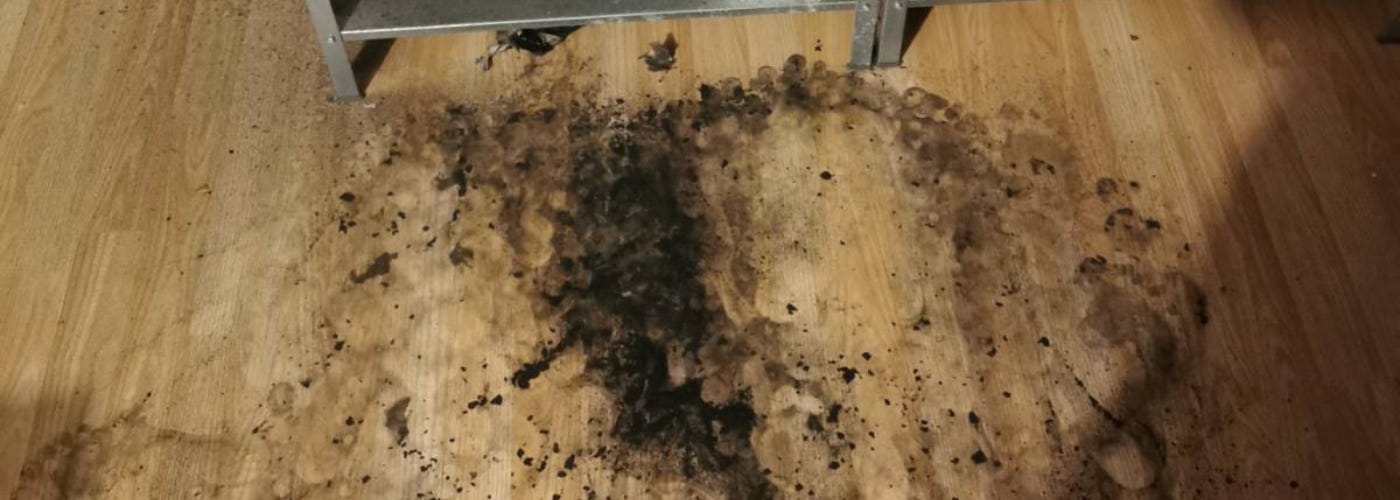
I thought I was making a much smaller thing (whoops)
When I first created the Creative Court Report, I promised one to two pages about each member of the Court: Venus, Mercury, Mars, and the Moon.
Then I planned to write another two to four pages bringing everyone into a Craefter’s Concord, where we could look at the practical agreements these four planets might need in order to support a satisfying and sustainable creative practice.
Altogether, I imagined the report would be somewhere between six and twelve pages 😅🫣 Silly me.
This was my first time offering them! I had spent a long time researching the planets of praxis, looking at charts, and developing my own framework for applying this astrology to the lives of contemporary makers. I knew what I wanted the reports to do, I simply had no idea what would be required to do it well.
It turns out I am apparently incapable of meeting someone’s Venus and asking her to explain herself in a page and a half 🫠
The same thing happens with Mercury, then Mars, and then the Moon.
Once I sat down with real charts and questionnaires, each planet required more attention and care.
People shared their paintings and stories with me, their sculptures, textiles, unfinished manuscripts, strange creatures, beloved tools, and the creative questions they had carried for years. Some invited me into practices that were already thriving. Others showed me places where the work had fallen silent and was only beginning to move again.
One page became three… Sometimes three became five… 😅😅😅
Then I would reach the Craefter’s Concord, where the whole Court finally sits down together, and discover that their agreement needed another five to seven pages.
What I thought would be a relatively small report became an individual studio document that often approaches thirty pages.
I kept thinking I would learn how to make the next one shorter. Instead, I became better at seeing what was happening in the chart. The reports grew more detailed because I could see more clearly how the planets were speaking to one another, where they were pulling apart, and how closely their disagreements matched what the person had already told me about their creative life.
Sometimes the maker who believed they lacked discipline had been trying to force themselves into a method that exhausted their Moon.
Someone who felt scattered across many art forms had a Venus who gathered beauty through variety and combination. Their interests were already speaking to one another beneath the surface. They needed help recognizing the connections they shared.
Another person had a Mars who could begin with tremendous force, while the rest of the Court needed a slower structure to help him carry the work beyond that first glorious rush.
Once the living person entered the room with the living planets, remaining brief became seemingly impossible.
More than 35 people have now commissioned Creative Court Reports, and the response has been more beautiful than I could have anticipated 🤯
Again and again, people have told me that they feel seen 😭💙
They have written to say that the report helped them understand why a practice they thought should work for them never quite did. It gave them permission to return to a neglected material, work in shorter sessions, take their bodily needs seriously, or stop measuring their art against a form of mastery they never actually desired.
Several people have told me they wanted to get up and make something as soon as they finished reading 👏🏻👏🏻👏🏻
These are some of the greatest compliments I can receive!
What Mercury began
I opened the Creative Court Reports on July 5, about a week into Mercury’s retrograde through Cancer and my natal ninth house.
The ninth house is the part of my chart connected with astrology, study, meaning-making, divine inspiration, and the larger frameworks through which we try to understand a life. It is also where my Moon lives.
I had been quietly developing this work for months. I studied my own chart first, then the charts of family and friends. I began offering small pieces of the framework in readings, paying attention to what became visible when I looked at astrology through the very particular question of modern creative practice.
Then my Mercury and Mars got hold of the idea.
In my chart, Mercury and Mars have a close relationship (I think of it as a classic anime rival-relationship, they spur one another on). They are clever together, quick, experimental, impulsive, and a little rebellious. They learn by beginning the work and seeing what happens. Meticulous advance planning is rarely a successful route for them to take, it short circuits their genius and momentum.
They would rather get their hands on the material, make the first mark, and allow the work to answer back.
So I opened the doors to this offering.
I had not yet written several complete sample reports first or calculated precisely how many hours each one would require. Why would my Mercury and Mars do something so sensible when they had an adventure to begin?
I had an idea I believed in, enough research beneath me to trust it, and a strong feeling that people would find it useful.
This is an extremely recognizable part of my own creative process. I often begin by jumping in, making contact with the materials, and discovering the true form of a project from inside it.
I find out through the doing.
The work reveals its scale once it is alive in my hands. Assumptions change. New possibilities appear. Sometimes the thing I thought I was making opens its mouth and announces a much larger appetite. Often similar to No-Face from Spirited Away.
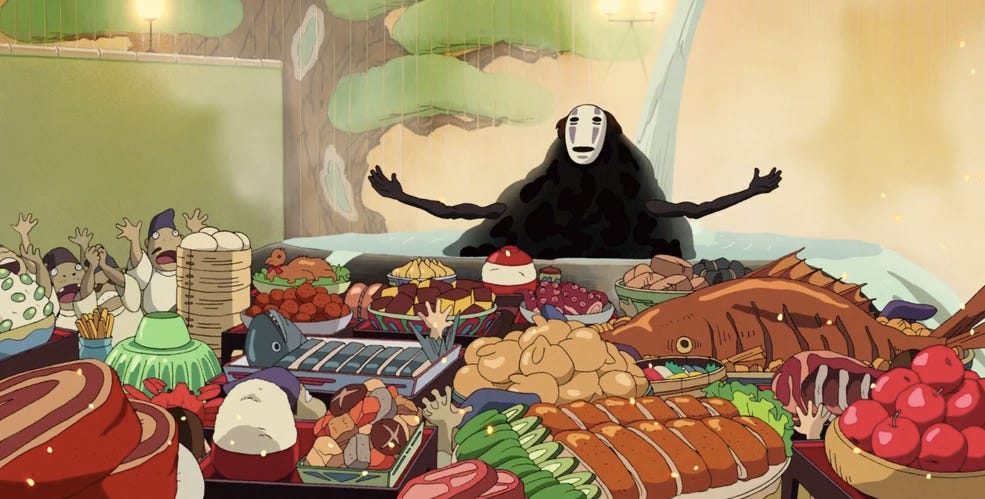
So… that is what happened here.
Mercury and Mars were right about the idea! The reports have found the people who needed them, and the response has been more heartwarming than I could have anticipated.
They were also right about how I needed to learn. I could only understand the real shape of the Creative Court Report by entering each chart, meeting each Court, and allowing the work to show me how much attention it required.
When the work talks back to you
One of my favorite things to watch is the restoration of old paintings.
Even when a painter was trained in an intensely academic tradition, where the artist’s hand was meant to disappear beneath technical accuracy, something of the maker always remains.
You can see it in the direction of the brushstrokes and the pressure of a line. One painter has a distinct way of portraying shadows, while another is drawn towards light-flooded illumination. Preference for color, temperature, or softness is part of their distinct visual language underneath the scaffolding of technical precision.
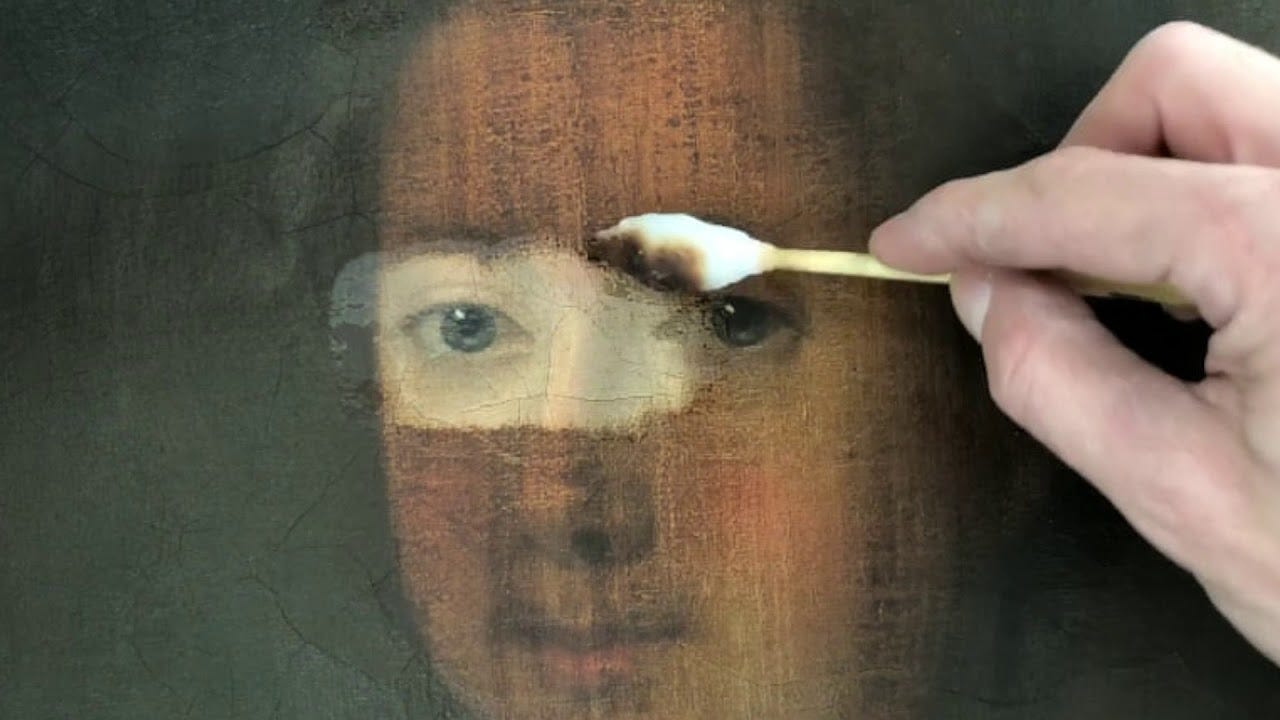
However thoroughly an artist learned the rules of their time, they leave small traces of themselves inside the work.
We cannot fully remove ourselves from the things we make.
The artist’s hand reaches far beyond visible brushwork. It is present in the materials we are drawn toward and the subjects that follow us across years. It lives in the strange way we prepare to work, in what our attention notices first, in the problems we enjoy solving and the ones that drain all pleasure from a project.
It can be found in the person who needs to cover an entire wall before they can understand an image, and in the person who builds a world inside a sketchbook small enough to rest in their palms. It appears in charcoal ground deeply into the tooth of the paper, in cloth pieced slowly from saved fragments, in sentences gathered from dreams before you fully understand their meanings. (All genuine Creative Court examples!)
Our work keeps a record of how we encounter and have relationship with the world.
And yet, many artists spend years trying to train these traces out of themselves.
We compare our practice to someone with a different body and a different Creative Court. We decide that our own methods are too slow, too scattered, overly repetitive, insufficiently disciplined, or simply too weird. We become suspicious of our pleasures. We ignore the materials that make our hands itch to begin because we believe we ought to be making something more “serious”.
Eventually, the work starts talking back to us.
It shows us what we return to after every attempt to leave it behind. A form reappears. A color refuses to be abandoned. The same creature walks through the margins of every notebook. The body keeps reaching for the soft pencil, the rough paper, the small loom, or the half-finished story waiting beside the bed.
These recurrences are part of the artist’s hand!
They carry vital clues about what allows the work to live.
This is what I most want the Creative Court Reports to help people recognize and accept.
Venus reveals the beauty that has a claim on us. She has her own sense of taste, pleasure, attraction, and value. She knows what draws us close enough to care.
Mercury joins intellect with the hand. They learn the craft, gather tools and techniques, improvise when the usual road closes, and scheme how an inward image might cross into physical form.
Mars gives us the courage and force to interfere with matter. He makes the cut, applies pressure, takes the risk, and begins before every uncertainty has been settled.
The Moon carries the practice through a living body. She remembers and imagines. She feels the changing weather of the inner life and knows whether the conditions around the work can be embodied again tomorrow.
When I write a report, I meet these planets as people. I listen for who speaks first, who keeps interrupting, who has been quietly holding the entire practice together, and who may have been pushed into a corner while someone else controls the workshop.
Every Creative Court has its own beautifully unique arrangement. The Creative Court Report aims to understand the people who have actually gathered there, because their relationships shape the artist’s practice.
The report can offer practical help with real frustrations. It can show us where a practice needs more support or a different method.
Yet its deepest reward may be the moment when someone realizes that the way they have always worked makes sense for them: their life, their body, their circumstances, their preferences, their vision, their relationship with the world.
I am overjoyed when someone realizes the thing they kept trying to correct may contain some of their greatest creative intelligence.
A living practice necessarily changes shape
Accepting our artist’s hand does not mean every habit must remain exactly as it is. The hand itself is alive. It responds to new materials, changing bodies, new inspirations, shifting responsibilities, seasons of devotion, and long fallow stretches when very little seems to move.
A sustainable creative practice needs room for these changes.
The hours available to us may contract. A material that once behaved beautifully begins causing pain or irritation. A method that carried us for years starts leaving us cold. An idea grows much larger than the structure originally built around it.
We learn what the work requires by doing it.
Sometimes that knowledge arrives through pleasure, when a process suddenly feels so alive that we cannot imagine returning to the old one. It can also come through fatigue, resistance, frustration, or the gradual recognition that something we love has become too difficult to continue in its present form.
The Creative Court Report illuminates the breathing, living entities of a creative practice, and how they grow and change together.
I love writing these reports, and I want to continue making them. Their current size, however, requires far more time and labor than I understood when I first designed the offer. In order for the work to remain useful and sustainable, its structure will be changing.
After these final 25 reports, I will rebuild the offer into a shorter format.
The future report will include a three-to-five-page synthesis of the entire Creative Court, followed by a substantial five-to-seven-page Craefter’s Concord. It will still introduce the maker to their Venus, Mercury, Mars, and Moon while giving most of its attention to the agreements that can help them create. The long individual planetary portraits will no longer be included automatically.
I may eventually offer those deeper planetary portraits separately, so someone who wants to spend more time with their Venus or Mercury can invite that member of the Court into the room alone. (There are also the beginnings of workshops and other forms of this work quietly gestating behind the scenes right now.)
The final 25
If you have been wanting the original, fully expanded Creative Court Report, I am opening 25 final commissions at $247.
You will receive an in-depth individual portrait of your Venus, Mercury, Mars, and Moon, followed by the full Craefter’s Concord that brings them into conversation around the actual conditions of your creative practice.
These reports frequently approach thirty pages and are written entirely for you. I study your chart alongside your questionnaire, creative history, materials, current frustrations, and the work you most want to bring into being.
The current delivery window is 4–6 weeks.
Once all 25 spots have been claimed, I will close the reports for a while so I can finish the existing commissions and rebuild the offer with care.
Commission Your Creative Court Report
The greatest reward of this work has been watching people recognize and embrace themselves.
This is the power I found in exploring my own Creative Court: the relief in discovering that your creative practice does not need to resemble anyone else’s in order to be real.
Your methods may be strange. Your rhythms may refuse the schedule you once imagined for them. Your attention may travel by a winding path, following a flash of color or a half-heard phrase until it finds the hidden passage into the work.
That path leaves traces. Over time, those traces become a deep relationship, through multiple encounters.
My hope is that these reports help you have more encounters that build that relationship into something recognizably, undeniably yours.
From the charcoal dust gathered in the whorls of my fingers,
A Standing Note on AI and Authorship
I have resisted making a statement about AI because I do not want every piece of writing on the internet to become a small courtroom where authors are expected to prove that they made their own work. Still, the atmosphere around generative AI has become so muddy and accusatory that I want to offer one clear account of how I work and where I stand.
I have watched friends who have never used generative AI in their creative projects paste their writing into so-called AI detectors and receive verdicts declaring it 80% machine-written. These are people whose work and processes I know, often with substantial bodies of work that predates generative AI.
I have also experimented with putting my own drafts through these programs. Strangely, the more carefully I edit a piece, the higher the alleged AI percentage sometimes climbs. The rougher version passes as human. Once the sentences become clearer and the rhythm more deliberate, the detector grows suspicious.
That should tell us something about what these programs are measuring, and what they cannot possibly know.
AI detectors do not establish authorship. They make statistical guesses based on patterns in language.
Even the companies developing this technology acknowledge how unreliable that can be.
OpenAI withdrew its own AI classifier in 2023 because of its low rate of accuracy and warned that human writing could be incorrectly and confidently labeled as machine-generated.
In May 2026, the Authors Guild tested five prominent detectors using ten articles published before generative AI became widely available. One detector classified every article as predominantly AI-written, returning scores between 71% and 100%. Another gave the same pieces scores of 0%.
A machine producing a percentage does not transform that percentage into forensic evidence.
Large language models were trained on vast quantities of human language, including literary and academic writing. We fed machines the work of human beings and taught them to imitate the patterns they found there. Now people are using other machines to accuse human writers of sounding too much like the material those systems learned from in the first place.
The circle is absurd.
In the interest of transparency, here is how my own writing process generally works:
As a chronically ill and disabled person, I often begin by speaking. I dictate my thoughts about a subject into transcription software, sometimes at considerable length. I organize that material into a rough outline, although the outline rarely survives unchanged once the real writing begins. I then develop the piece through writing, research, and repeated revision.
Before publishing, I use editorial and readability tools such as Grammarly and Hemingway. I use them to catch errors and show me where a sentence may have become difficult to follow. I’ve personally worked hard to regain clarity in my written communications after a few years of extreme brain fog and exhaustion from chronic illness and burn out; these tools have been vital to help me do this.
Automated writing assistance of this kind existed long before the current generative AI boom (Grammarly was founded in 2009) and writers have used grammar checkers, spellcheck, dictation software, and readability tools for many years.
These tools make my work more accessible to me. They help me communicate my ideas as clearly as I can. I decide which suggestions to accept, which to discard, and when the style of my specific writing matters more than a program’s idea of correctness.
The research, experiences, interpretations, creative practice, and years of thought behind this publication are my own. I remain responsible for every sentence published under my name.
I care about the ethical questions raised by generative AI. There are serious conversations to be had about consent, creative labor, environmental cost, the scraping of artists’ work, and the industrial production of empty content.
Those conversations deserve considerably more rigor than uploading someone’s writing into an unreliable detector and treating the resulting percentage as proof of wrongdoing.
I will not participate in AI witch hunts. I will not treat detector scores as evidence against another writer, and I will not continually place my own work on trial before programs incapable of knowing how it was made.
This is my standing statement on the subject. I will continue using the accessibility and editorial tools that allow me to do my work, and I will continue placing my attention where it belongs: on making that work honest, thoughtful, and worthy of the people who choose to read it.
Comments
Nothing yet. Say the first thing.
Sign in to join the conversation.