
Before we begin, a quick reminder: the Creative Court Report is still open.
I released 25 reports at the founding rate of $197, and more than half have already been claimed. There are now only 12 spots left at that price.
After those 12 are gone, the report will move to its standard rate of $247, simply because each one is a deeply bespoke written study and quite a lot of work.
So if you’ve been thinking about commissioning one, now is the time.
Commission Your Creative Report
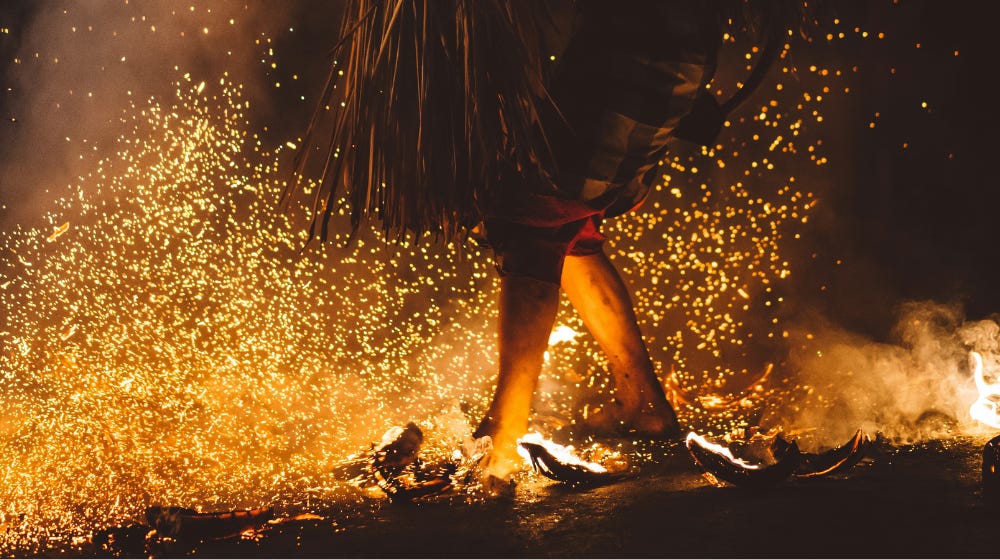
If Mercury is the clever hand, then Mars is what gets the hand moving at all.
And I do mean moving.
In the Hellenistic tradition, Mars is not only about war, conflict, iron, or fire in the dramatic sense we tend to associate with him often. He was also connected to the older philosophical ideas of kinesis and horme.
Very simply: motion and impulse.
The body crossing the threshold into action.
The ancient astrologers often described Mars through force, heat, cutting, boldness, speed, severance, impact, physical labor, and what Valens called the “sudden start.” Ptolemy describes Mars as active, eager, headstrong, full of velocity. In medieval astrology, Abu Ma’shar links Mars to the “animal power” — that instinctive force that moves the limbs and sends heat through the blood.
Which is to say: Mars is not merely aggression.
Mars is the motive force.
Mars is the part of the soul that says, enough planning. Move now.
That matters a great deal when we are talking about physical makers.
Because in craft, Mars is often the one who performs generative action.
He cuts, and something can finally be shaped. He scrapes, and something hidden emerges. He applies pressure, and the material yields. He risks spoiling one version so a (potentially) better version can come forward.
This is why the older texts also connect Mars to what were called the crafts of iron and fire: blacksmithing, metalwork, carving, masonry, labor with hard materials, trades that require friction, impact, pressure, heat, severing, endurance, and force.
The astrologers of times past understood that the act of creation is not always soft or palatable.
To make a cabinet, wood must be chopped and sanded. To carve stone, the surface must be struck. To sew, cloth must be cut. To paint, the untouched white field must be broken. To sculpt, the outer mass must be destroyed so the form within can emerge.
Mars governs that threshold.
He is the courage to alter matter.
He is the willingness to ruin pristine blankness so that something else may emerge.
He is the gardener who prunes in order that new blooms can grow.
He is the surgeon who removes the broken and infected so that we may heal and grow into health.
Cutting/severing/incising isn’t just an act of destruction: it can be incredibly life giving.
And if Mercury tells us something about method, dexterity, and the hand’s problem-solving intelligence, then Mars tells us something about momentum.
What gets you into motion. What overcomes inertia. What kind of force helps you act. What kind of pressure kills the work instead.
This has become one of the most helpful ways for me to think about creative practice, because you can have beautiful ideas, genuine taste, and real skill — and still be unable to begin.
You can know exactly what you want to make and still remain at rest.
That is often a Mars challenge.
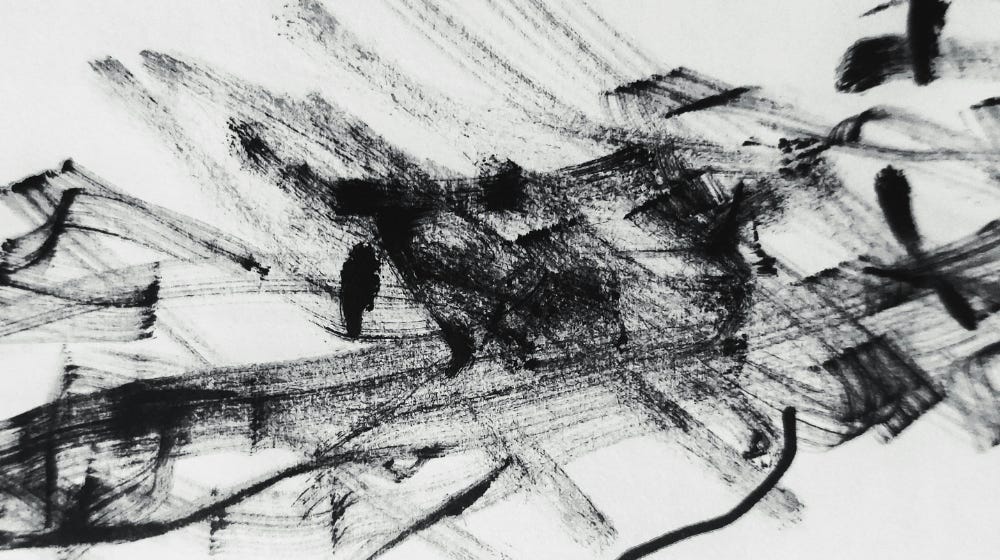
My own Mars has taught me this rather bluntly.
I have Mars in Taurus, in detriment, and it is angular. It also rules my 6th house, which in traditional astrology is known as the house of apprenticeship, labor, and the things we must toil at in order to become skillful.
So again, much like Mercury (whom I wrote about last time), we are dealing with a planet in my chart that does not behave in the most standard or socially legible way. (Nevermind that every artist you read about is 100% a proudly certified weirdo doing things their own bizarre little way.)
But it’s imperative we address the friction between what we’re told we should do, and what is instinctually ours.
Because when you have a planet that is challenged, or idiosyncratic, or operating outside the script people expect, you are often told — subtly and directly — that the way you function is not quite right.
Not proper. Not efficient. Not respectable enough. Not how it is done.
If you internalize that too deeply, it can kill your momentum stone cold dead.
That has certainly been true of Mars, for me.
Mars in Taurus is not a quick, sharp, elegant little blade in my life. It does not want to move fast just for the sake of speed. It needs rhythm. It needs contact. It needs a bodily sense of pleasure. It needs beauty worth pursuing. It needs to feel the material.
And perhaps most importantly, it needs motivation to arise from an instinctive, somatic place.
For me, that has meant that I cannot sustain a practice through methods that feel overly delicate, overcontrolled, or hyper-technical, even if I am capable of doing them.
When I first began trying to recover my art practice as an adult, I assumed the problem was discipline. I thought I needed to learn the “right” way. So I threw myself into highly technical modes of drawing — repetitive, careful, measured, conventional. The sort of thing that looks very proper from the outside.
And I could do it.
That was not the issue.
The issue was that I hated the process.
The more I forced myself into methods that worked against my instincts, the less desire I had to make art at all. I became less motivated, less certain in my mark-making, less willing to return.
This was another moment that again revealed and emphasized an essential insight into the needs of a maker’s process:
For many people, the problem is not discipline. It is fit.
It is a mismatch between the kind of momentum their own Mars can generate and the kind of motion they are trying to force themselves into.
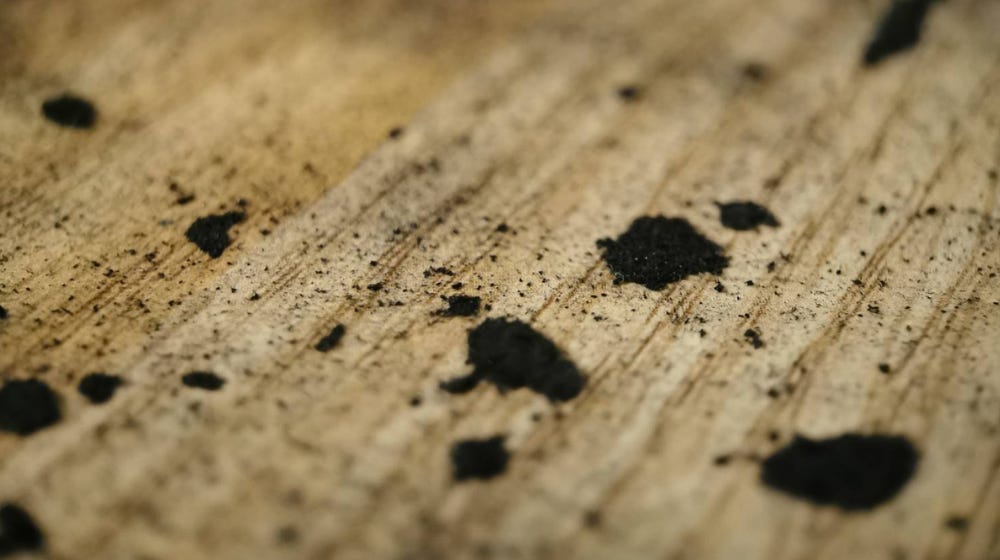
Another key to gaining momentum in my creative practice again was understanding that my Mars needed permission (or rather, needed to be freed) to create beauty in a way that was a bit abrasive. A bit rough. A bit destructive.
For years I thought I hated charcoal.
But it turned out that I did not hate charcoal.
I hated being taught charcoal in a way that deadened me.
Then I saw a few artists working with it completely differently. They were massing tone onto the paper, erasing whole passages back out, sanding through layers, pushing and pulling the image as if they were sculpting rather than drawing. It wasn’t delicate slowly built layers of tone precisely applied into a technical framework that had been drawn previously. It was more like… conjuring a picture from a foggy gestalt, almost like a whirling dervish.
That was the first time any kind of drawing medium felt truly alive in my hands.
Or perhaps more truthfully: it stopped feeling like drawing and started feeling like evocation.
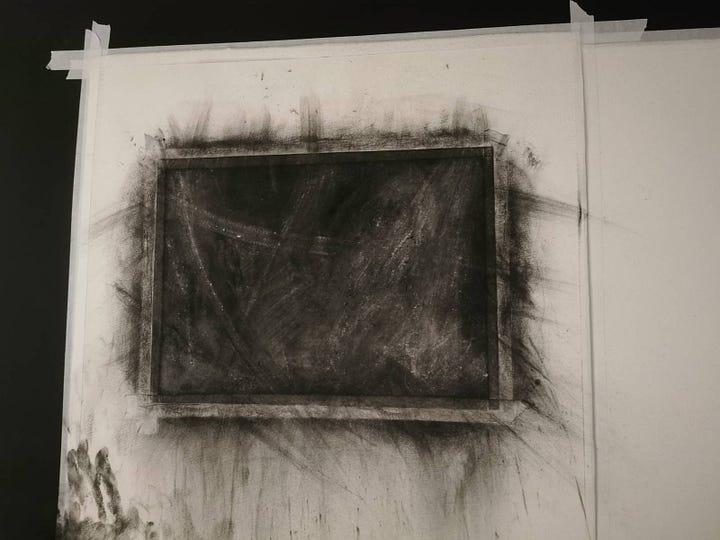
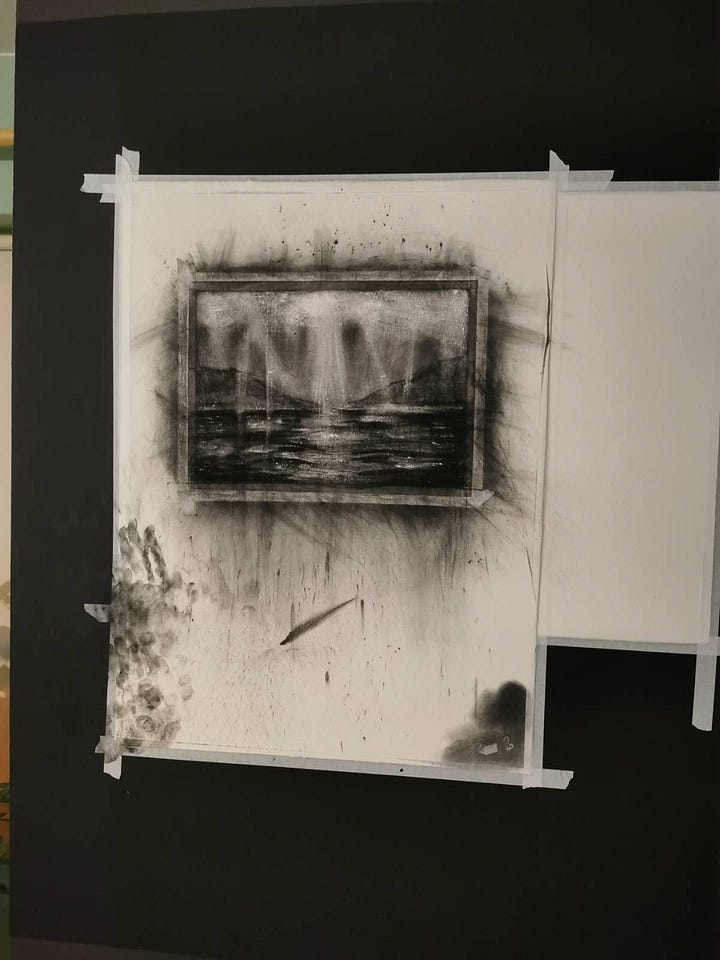
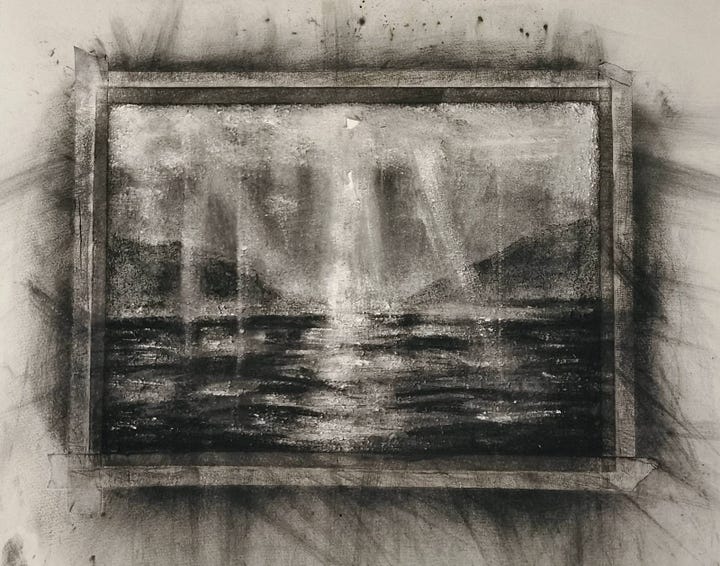
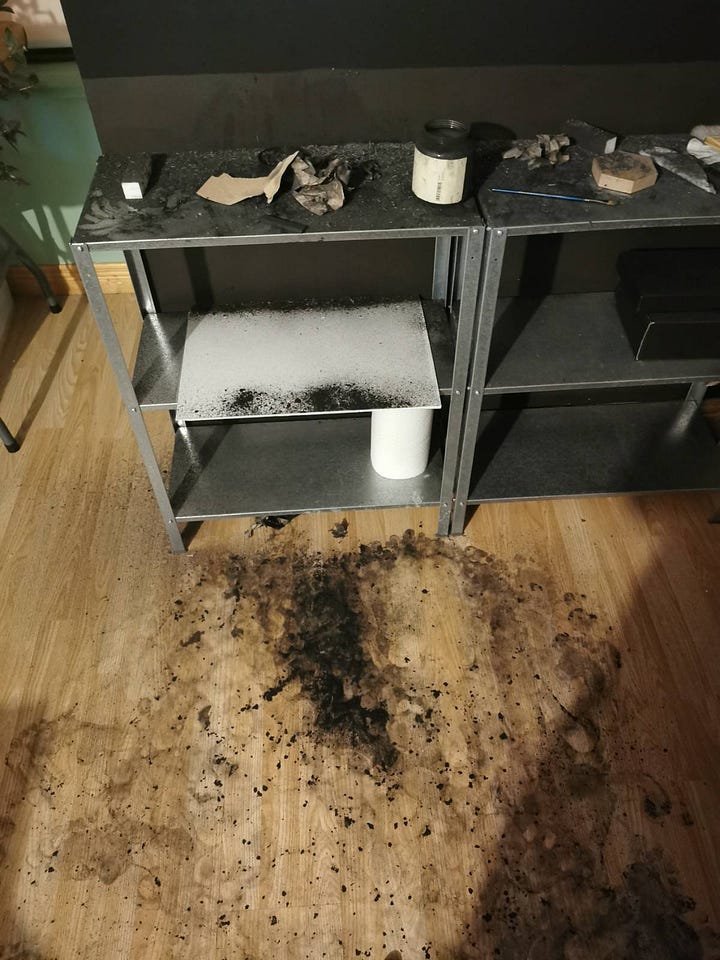
The first time I really let myself work that way, I had had a terrible week and I was furious about something (yes, very Mars). I needed to get the energy out of my body. So I locked myself in a room where no one could see me being strange, put on loud music, taped paper to the wall, and made an unbelievable mess.
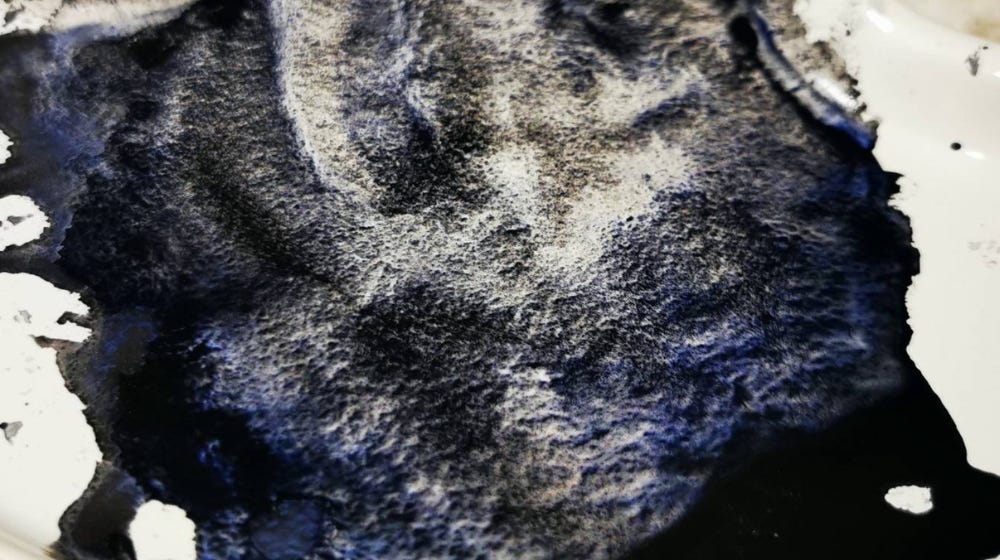
I threw charcoal dust at the paper. I ground charcoal into it. I used sandpaper to abrade passages back to light. I moved around like I was doing some combination of painting, dancing, and fighting.
It did not look refined. It did not look “proper”. If anyone had seen me, I suspect they would have thought I was destroying the paper (I kinda was).
And yet by the end of it, I had made the first charcoal landscape in my adult life that I genuinely loved.
That experience taught me something crucial about my own Mars:
My momentum depends on directness. On contact. On sensation. On allowing the body to help solve the image. On embracing mark-making that may look rough or strange in process. On finding beauty through friction rather than trying to eliminate friction entirely. On trusting my body’s inbuilt intelligence to improvise an image, rather than plan it until it’s dead before arriving.
That is Mars in a Venus sign, at least in my life.
Beauty, yes.
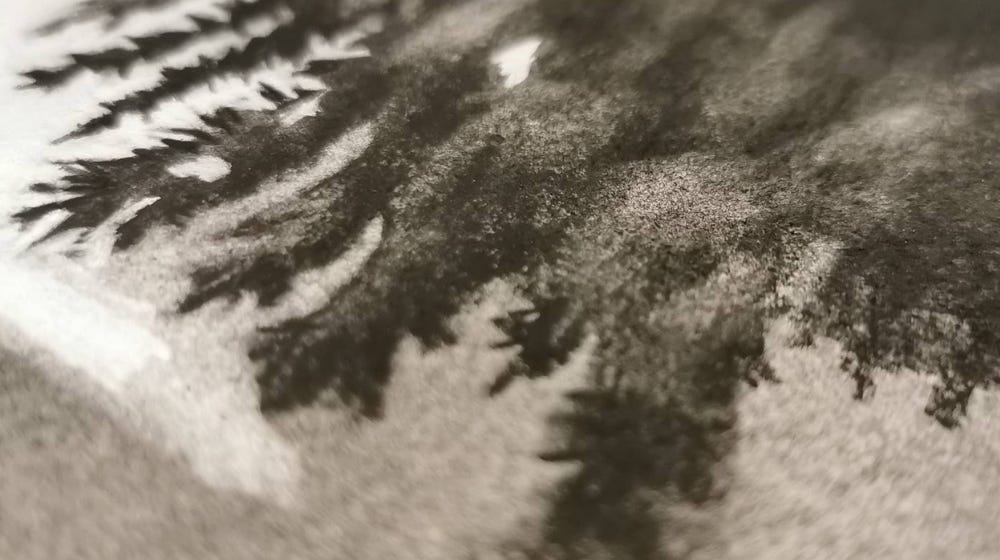
But beauty through abrasion. Beauty through pressure. Beauty through contact. Beauty through the willingness to disturb the surface so form can emerge.
Some Mars need rules, drills, exact repetition, and training. Some need emotional current. Some need privacy and instinct. Some need to glide and slip into a result. Some need challenge, speed, or boldness. Some need pleasure in order to sustain effort. Some need to be allowed to make a mess before they can make anything beautiful.
When Mars is challenged, you may spend years assuming your natural engine is a problem to be corrected.
But in my experience, that is very often where the living force of the work actually is.
You can not keep a making practice alive by becoming less yourself.
You keep it alive by learning how your own momentum works — and refusing to confuse difference with failure.
This is exactly the kind of terrain the Creative Court Report is meant to illuminate.
Each report is a custom written PDF where I look closely at the four immediate Creative Court members most involved in physical making (Mercury, Venus, Mars, and the Moon) and the way they cooperate, contradict, compensate, or fall out of rhythm in your chart.
The report is designed to help you understand your process with more precision and more curiosity, so you can stop wasting energy trying to perform someone else’s making process and begin building a practice that is more workable, more sustainable, and more truly your own.
The point of the report is not to tell you whether you are talented enough, serious enough, or destined for fame.
It is to answer the questions that matter in the actual life of a maker:
Why do I freeze, stall out, or abandon work?
What kinds of methods genuinely suit me, and which ones quietly kill momentum?
What does my body need in order to keep creating?
What part of my process is truly mine, and what part have I borrowed from someone else’s idea of seriousness?
As a reminder, I opened 25 reports at the founding rate of $197, and there are now only 12 left before the price rises to $247.
If you’ve been circling this, I would begin there.
Commission Your Creative Report
I’ll keep writing about the members of the Creative Court in my coming letters, because there is still more to say about the multifaceted inner workings of making, and the strange contradictions that shape a life in materials.
But for now, I wanted to leave you here:
with Mars as the sudden start,
the appetite that breaks hesitation,
the heat that changes the state of things,
the blade that cuts so form can emerge,
the courage to risk the pristine surface,
the hand that does not apologize for contact,
the force that says: enough thinking — move.

No posts
Comments
Nothing yet. Say the first thing.
Sign in to join the conversation.