
Early in my career, this is something I’ve thought about often and something I am still figuring out in real time.
How do you get into the environments where conversations about the sports industry are actually happening, whether that’s small group discussions at industry events, panels where strategy is being debated, or settings where people are openly sharing how they approach their work?
There’s a part of working in sports that isn’t always clearly defined at this stage.
You can be doing the work, building relationships, and gaining experience in your role, while still feeling removed from those environments. There is a difference between being around the industry through your day-to-day responsibilities and being included in conversations where decisions, strategies, and ideas are being discussed more openly.
A large part of that comes down to access.
Access is often shaped by experience, title, and cost. Many of the more visible industry environments, particularly large conferences or events, can be difficult to navigate early on, either because of financial barriers or because they are not designed for active participation. In other cases, the pathway into smaller, more discussion-based settings is simply not clear.
That gap has an impact.
Without being in those settings, it becomes harder to understand how people in the industry think through decisions, how they evaluate opportunities, and how different perspectives are incorporated into the process. A lot of that context is not visible from the outside.
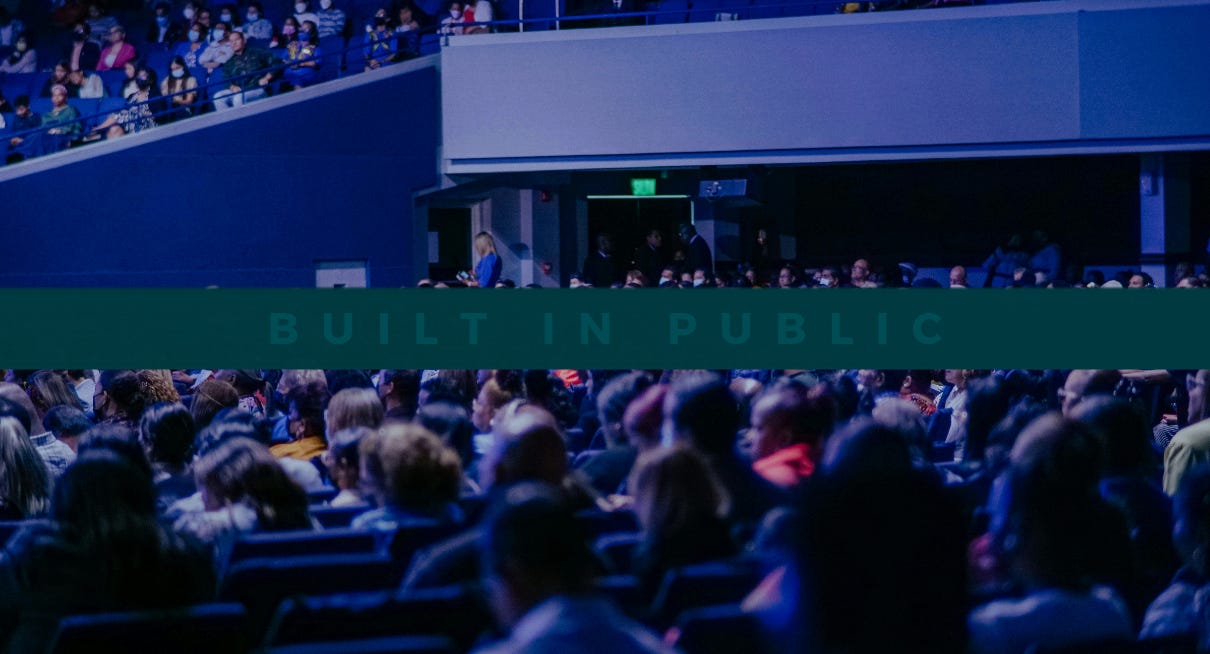
Recently, I had the opportunity to be part of a smaller, structured setting where conversation was the focus rather than presentation. Everyone in the room contributed, and there was no clear separation between speakers and attendees.
What stood out to me was how much you can learn from hearing how people approach their work in real time.
Listening to how individuals with different roles and levels of experience think through challenges, where they agree, where they disagree, and what they prioritize adds a level of understanding that is difficult to gain elsewhere. It changes how you interpret what you see across the industry and how you think about your own role within it.
It also reinforced the value of having different levels of experience in the same setting.
A lot of industry conversations focus on future audiences, evolving platforms, and where the business is going next. Those discussions are more complete when they include people who are earlier in their careers and actively working within those changes, not just being referenced as part of them.
Experience brings context and a longer-term view, while early-career professionals bring a different perspective shaped by how they are entering and navigating the industry now. When both are present, the conversation tends to be more grounded and more reflective of what is actually happening.
There is also a broader takeaway.
Creating these types of environments does not necessarily require large-scale conferences or high barriers to entry. Smaller, more focused formats that prioritize discussion and participation can be just as valuable, particularly when they are structured to include a range of perspectives. Expanding access to those settings allows more people to contribute to and learn from conversations that would otherwise remain limited.
At the same time, this is something I am still figuring out for myself. As a young professional, understanding how to consistently be part of these environments and continue to find my way into them is still a work in progress. Experiences like this make it clear how much they shape the way you see the industry, how you approach your work, and how you develop over time, and they also make me want to see more spaces built this way.
That is part of the long game.
Built in Public is a newsletter where Amani Marie documents her growth as a young sports public relations professional in real time. It focuses on what she is learning, what she is observing across the industry, and the people and work that stand out.
Some issues will examine moments in sports and how they are communicated. Others will reflect on career development, access, and what it takes to build in this space over time.
This is intended to be a space for learning, sharing perspective, and tracking progress along the way.
No posts
Comments
Nothing yet. Say the first thing.
Sign in to join the conversation.