
This (and the remaining newsletters for 2025) will deviate from my usual format to share in-depth essays on my trip to Denmark this summer and the many wonderful textile encounters I had while there. There’s a Part 1 and Part 2 that you may like to catch up with first. This newsletter may be clipped in your inbox — I encourage you to click on the title (November 2025) to visit this post in your browser so you don’t miss anything. Thanks!
Halfway through my time at DVS, I went over to Sweden (again) to visit my friend Linda. I know — this is supposed to be about my time in Denmark, but this weekend with Linda was all about weaving and textiles! It would be a shame not to share some of what we did together.
Linda planned an incredible 2.5 days of textile field trips for us that had us driving all around Skåne in its summer finest, while dipping in and out of loppis (thrift stores) hunting for treasure. I had such a wonderful time visiting her and I still think about what we did together all the time.
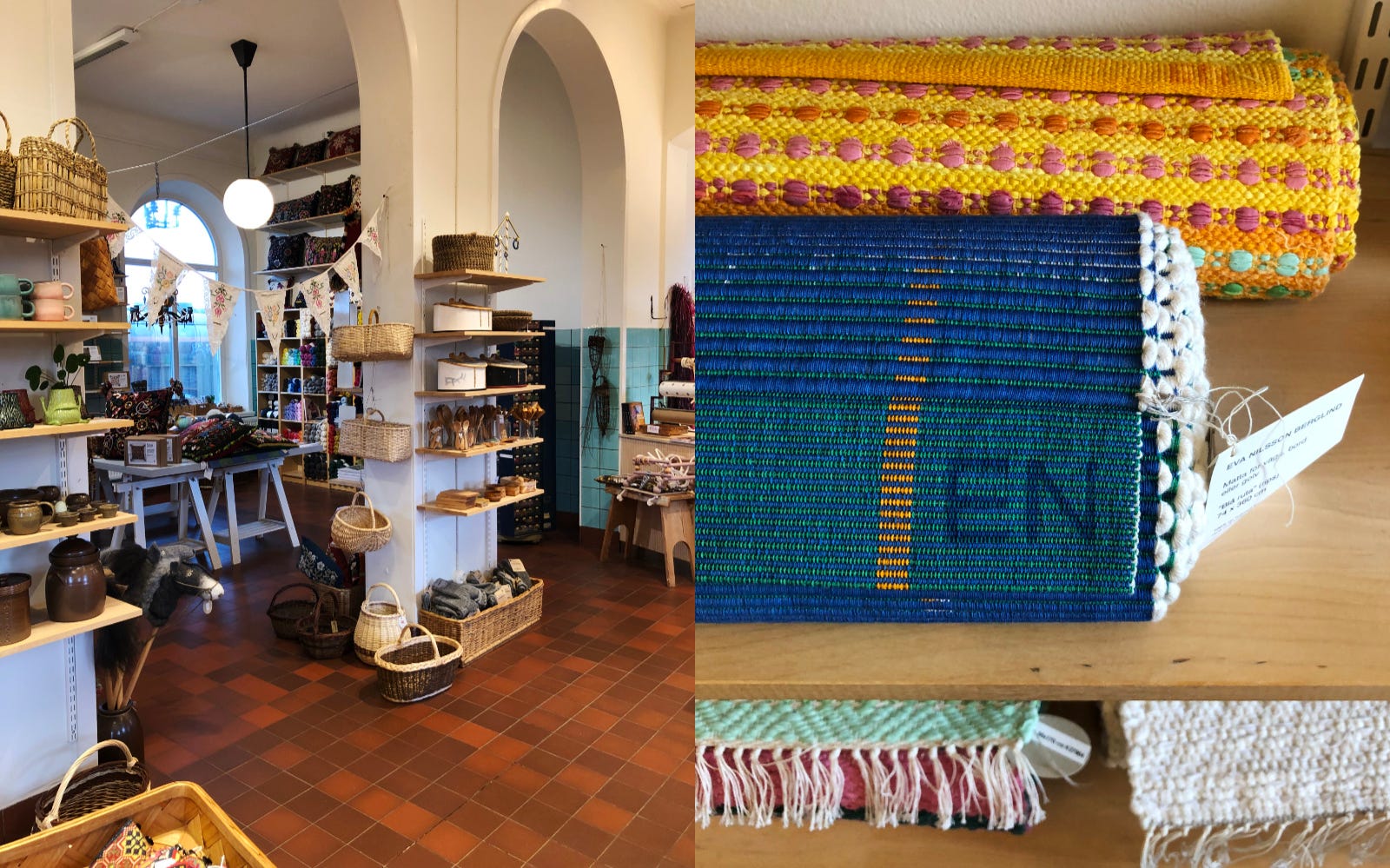
We began the weekend at Hemslöjden i Skåne in Landskrona, the regional branch of Hemslöjden, the National Federation of Swedish Handicraft Associations. At Hemslöjden i Skåne they have a small gallery, shop where you can buy craft, books, and materials, as well as a workshop where they run courses.
Linda is also a weaver and so it was natural to spend our time together geeking out and visiting places she’s never had the opportunity to go to before. One of our stops (after we had scratched our thrift-store itch in several places) was the Svenska VävstolsMuseet (Swedish Loom Museum) in Glimåkra.
This small museum opened in 1995 and has a permanent exhibition of looms, tools, and textiles, as well as a small gallery where an exciting exhibition of double weaves by Dutch weaver Sytze Roos was on display.
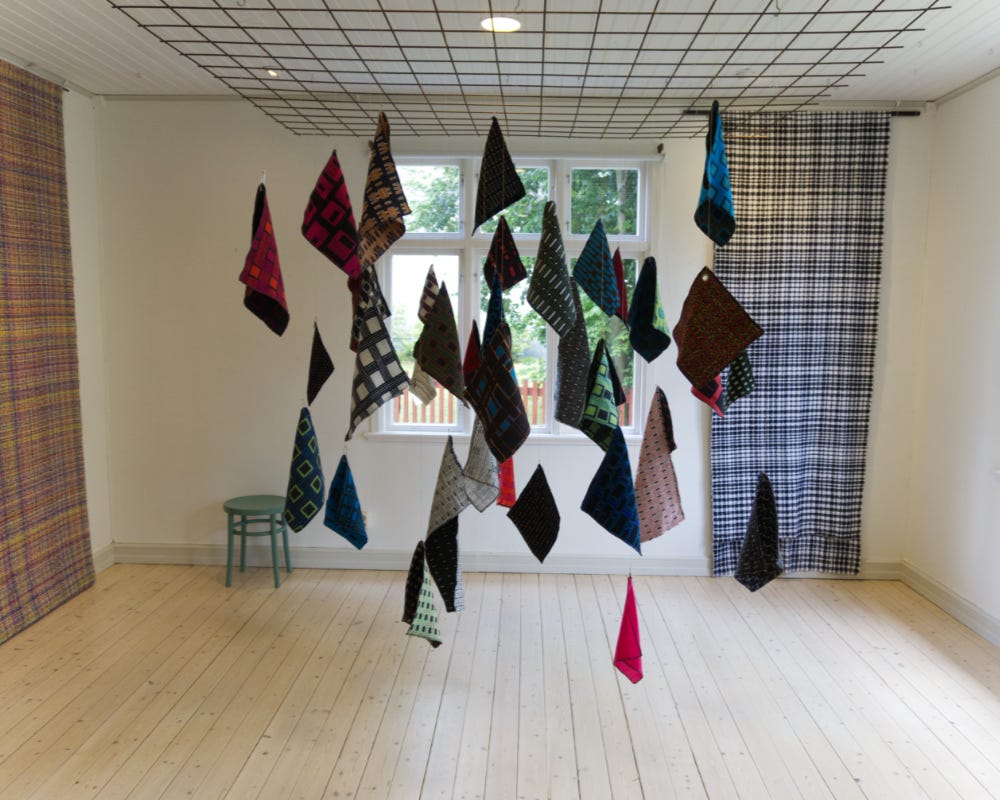
Roos begins designing his weaves on the computer, constructing unique textiles with two differently patterned sides. He tests his designs on a computer-controlled handloom before moving the final production of functional textiles (like scarves or blankets) to a computerized power loom. In the exhibition text, Roos describes himself as a “weaver on the move,” constantly searching for new iterations and interventions he can insert into a mechanized process. The text notes that Roos will often stop the loom to tweak or change the pattern or colour, ensuring his textiles are constantly evolving from human creative input.
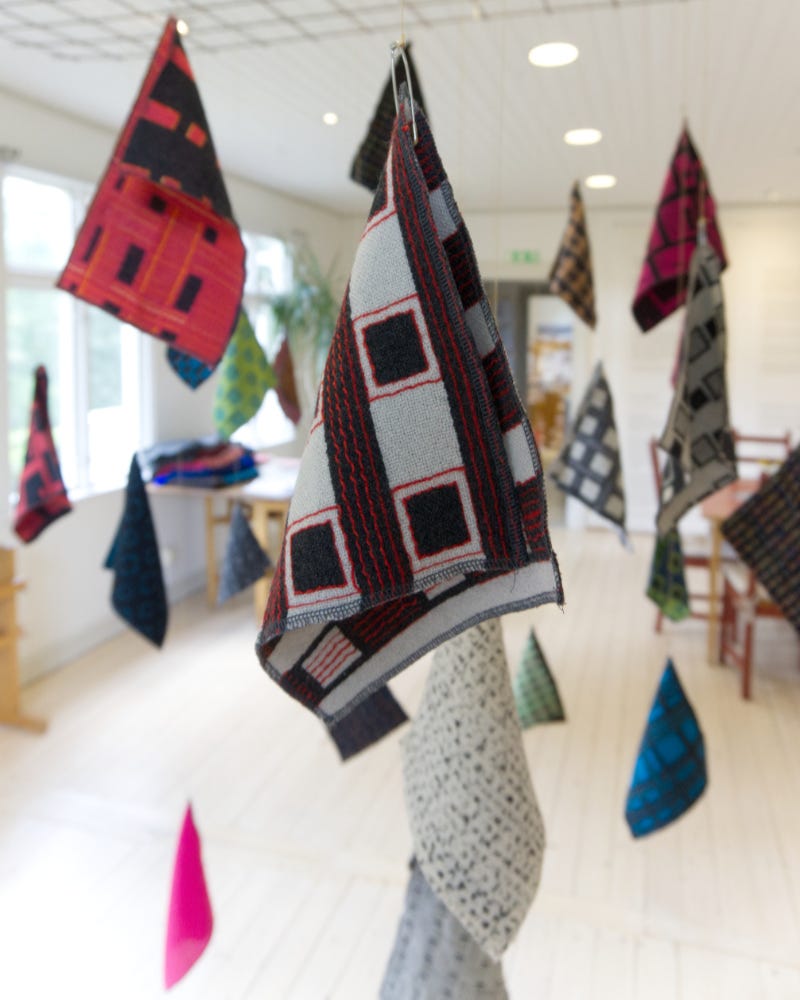
In this exhibition, small handkerchief-sized samples were beautifully displayed by hanging them on transparent wire from the ceiling. This gave them movement, but also allowed you to see both sides and follow threads as they switched back and forth from front to back. The museum had small samples for sale, so I was able to bring one home with me — it defies my understanding in a very pleasurable way, and getting to peek between the layers is fascinating!
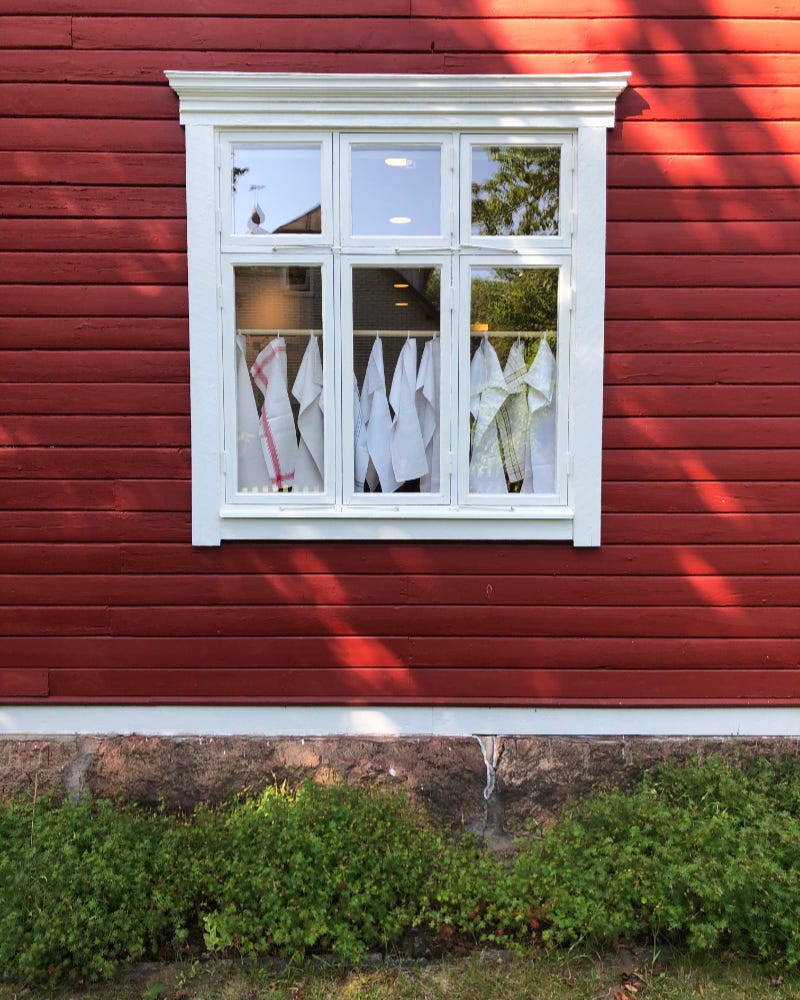
The museum has a charming little cafe area where you are surrounded by gorgeous hand towels, and there are several unusual looms and equipment throughout the old building.
Linda couldn’t have been a better host nor could she have picked a better place to visit for our second day of field trips when we drove up the coast to visit the Märta Måås-Fjetterström studio in Båstad.
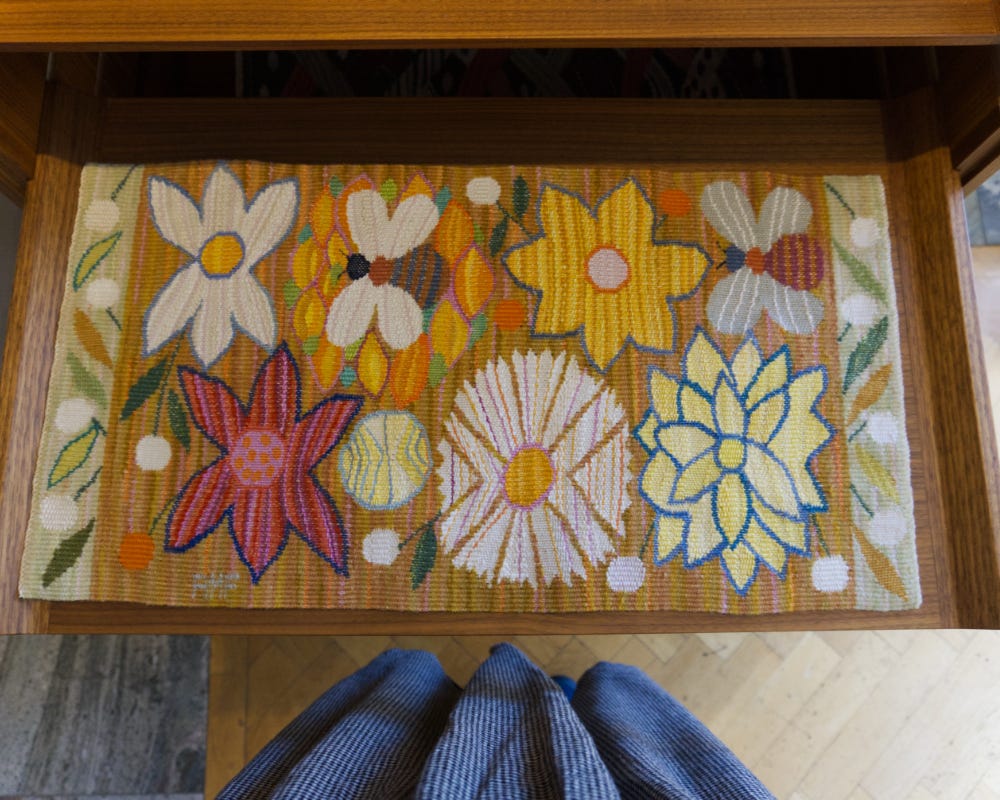
I have long admired the work from this studio, which was founded over 100 years ago by artist and designer Märta Måås-Fjetterström (MMF). Born in 1873, MMF dreamt of being an artist and moved to Stockholm from rural Skåne as a teenager to pursue drawing and painting.
MMF began her professional career as a drawing teacher, but after having several of her drawings woven by the Lund Museum of Cultural History, she began to see the potential in creating new, modern designs for gobelin-style tapestry and rölakan (flatweave) rugs.
In the publication Look At the Rugs — Find Me, the editors note that William Morris and John Ruskin’s ideas and ideals about craftsmanship and beauty were a very popular topic for MMF and her friends during her school years, and, while she received training as a weaver, much like Morris (and Vibeke Klint) she operated more as a designer and studio manager, overseeing a team of weavers to produce her designs.
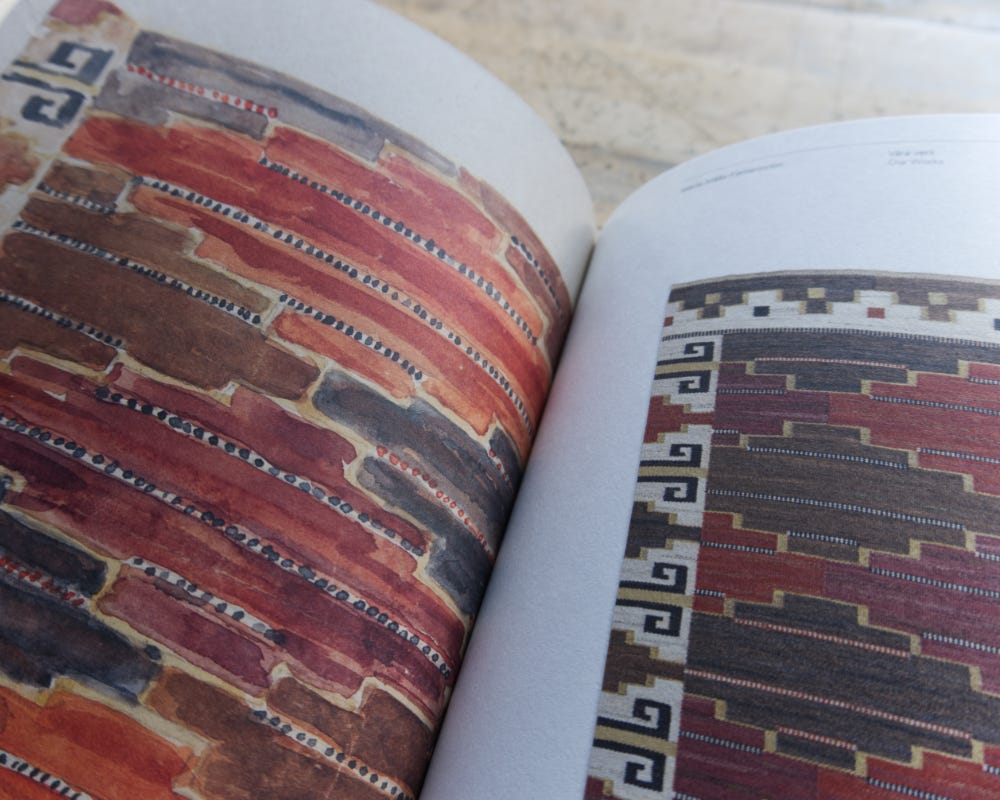
Look At The Rugs — Find Me (written in both English and Swedish) outlines MMF’s career and highlights several important commissions and projects, and is beautifully illustrated with many of the original drawings of some of her most famous designs. It describes her as a “reserved individualist who disliked following the herd,” (Bragfors) with strong ideas on what needed to happen for craft to remain relevant and desirable.
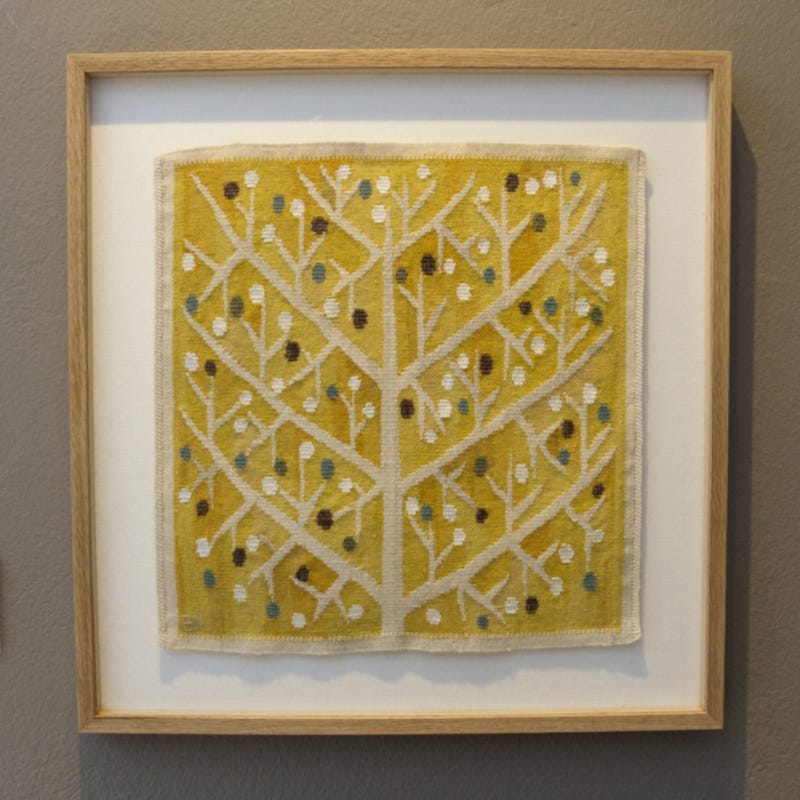
MMF felt that the future of craft lay in strong leadership and organization as well as fair payment for work. In many ways, this attitude was far ahead of her time and at odds with her contemporaries; while serving as director of the Malmö county handcrafts association, for example, she was sacked by traditionalist board members for trying to put her modern ideas into practice!
MMF died in 1941 but her studio continues to this day, producing her designs as well as those of subsequent artistic directors, such as Barbro Nilsson, Marianne Richter, and Ann-Mari Lindbom, as well as other creative collaborations.
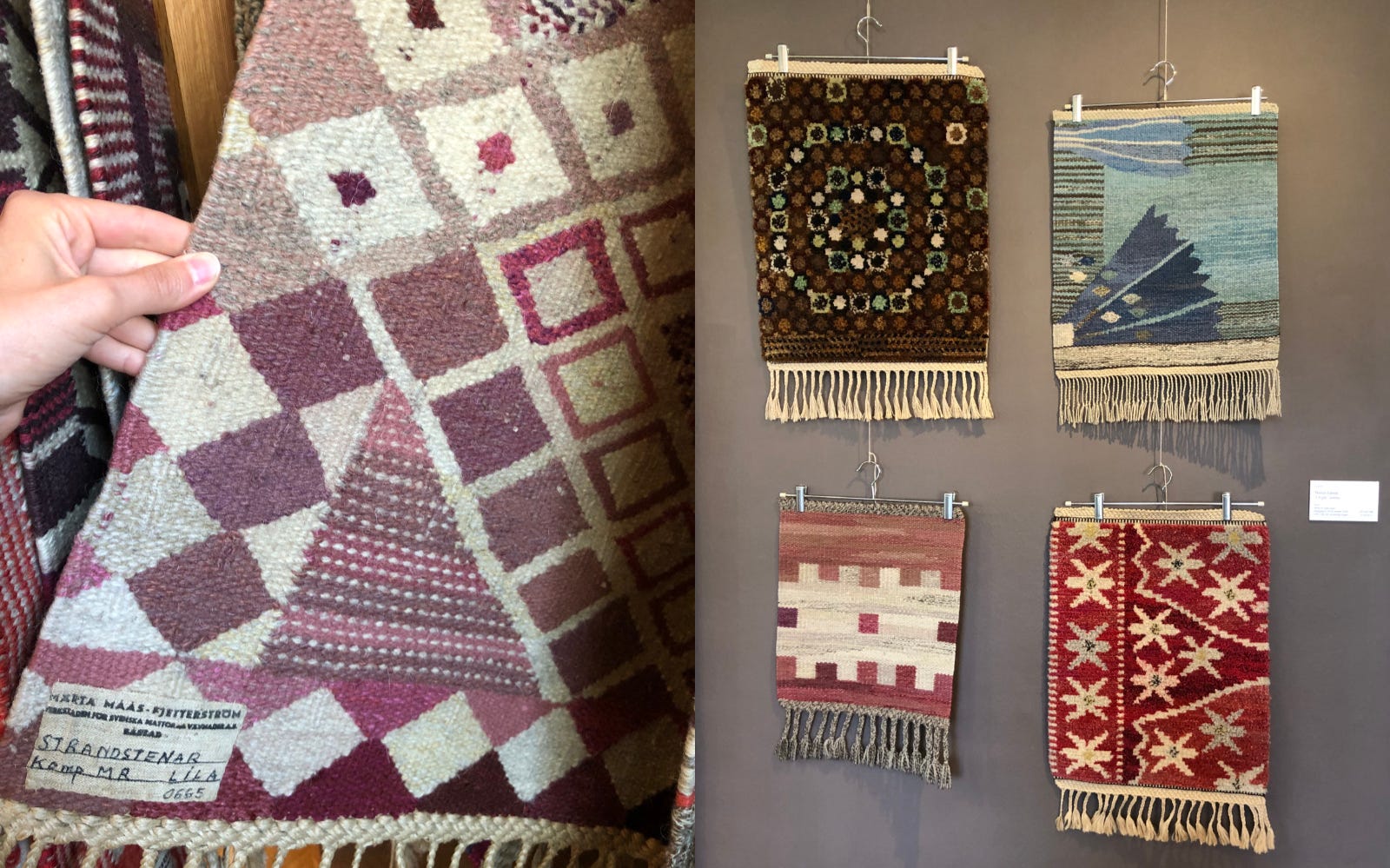
The showroom in Båstad was full of samples as well as finished rya, flossa, and rölakan rugs and it was really special to visit. We’re so lucky that we can share pictures and see the world from our screens, but… a picture is flat. When it comes to textiles, the experience is created not only by your eyes, but the feel of it in your hands, under your feet, the way it crinkles, or the yarn moves. Getting to browse through samples while standing on a rug, surrounded by finished work and sketches and looms was both deeply moving and inspiring in equal measure.
Linda started talking with the woman at the front desk and through working some sort of magic, we were invited to have a look in the studio’s yarn storage. They work with several different types and plies of wool as weft1, and use linen or wool warp depending on the type of rug they are making. Dyeing is done on site, and samples of colours were kept stored on a ring at the end of each row. We geeked out — what else is there to say?
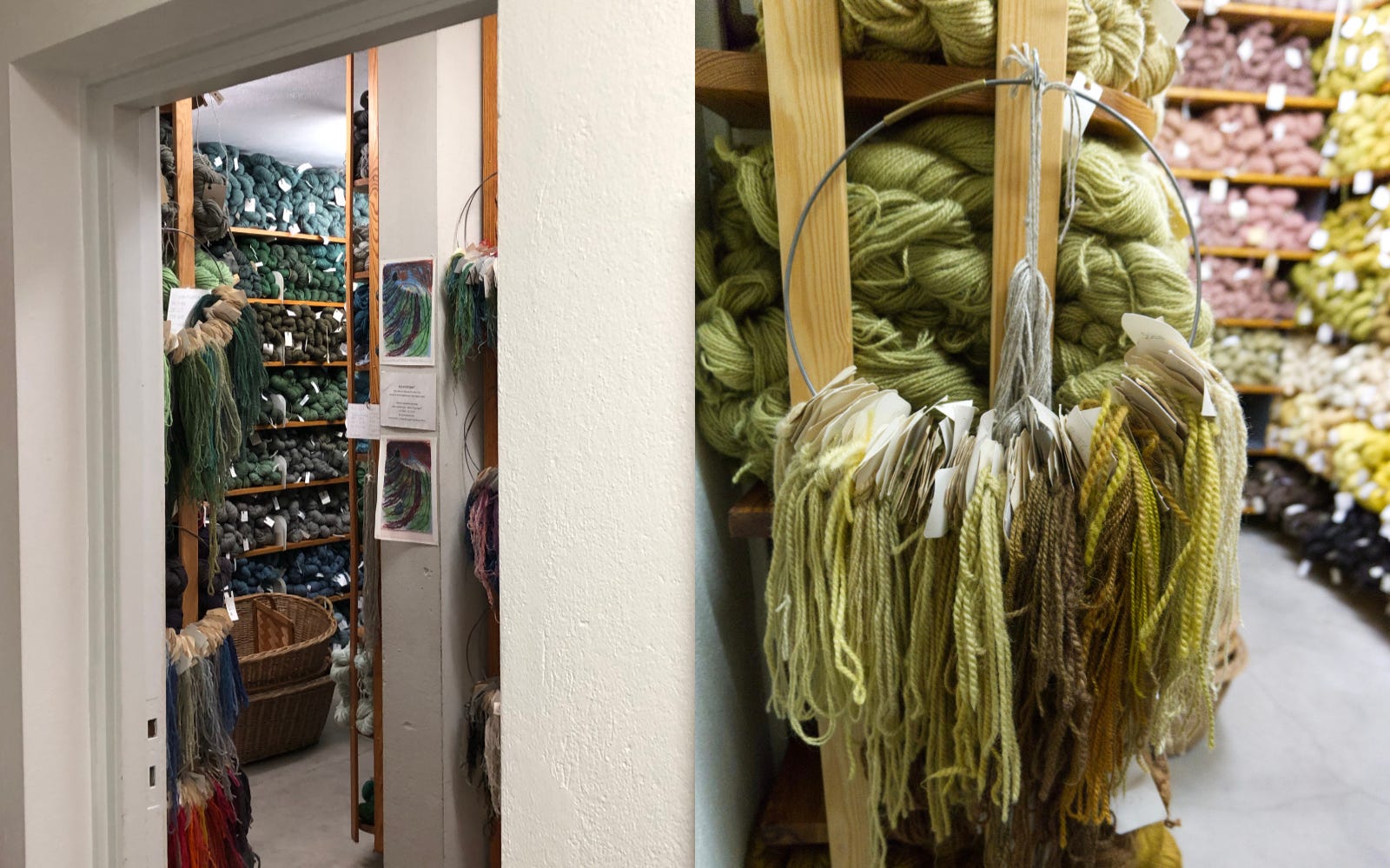
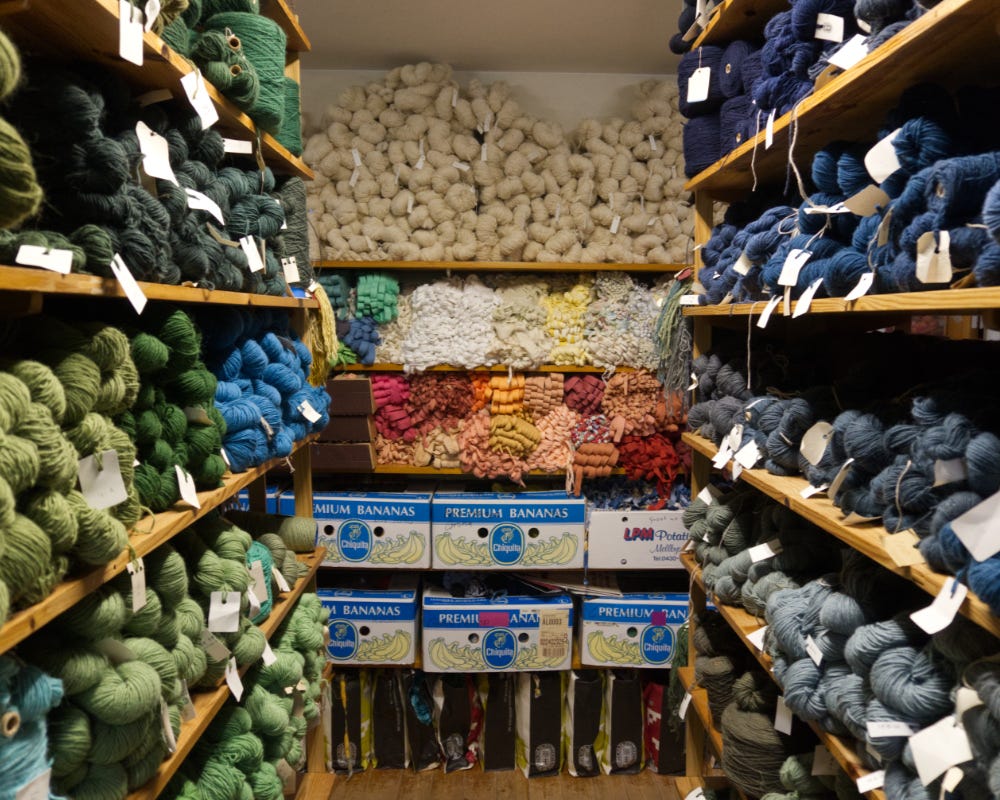
Linda and my visit to MMF was a highlight of my time in Scandinavia. Not only was it great to spend time with Linda, but what we saw together was tremendously inspiring and creatively fulfilling. MMF represents craft work at the highest level of skill and beauty, and I was only sorry that there were no weavers working when we visited — it was their day off!
I returned to my work at DVS really excited to continue experimenting and making things — which we’ll get to next month.
One of the ongoing threads of interest in my work and through my time in Denmark and Sweden this summer is wool. I feel very strongly about sustainability and ensuring that my work makes a minimal impact on the environment, and wool has always felt like an obvious way for me to practice those ideas. Because wool is produced right on my doorstep here in Ontario, it’s an excellent method for reducing my carbon footprint and fostering a deeper understanding of where, why, and how my materials are made.
Therefore, I was thrilled to attend the Canadian Wool Conversations conference on November 13, 2025, hosted by the Canadian Wool Council and The Campaign for Wool at this year’s Royal Agricultural Winter Fair, in Toronto.
Through four engrossing sessions, artists, makers, students, farmers, producers, designers, and other wool-passionate professionals shared ideas, knowledge, and visions for Canadian and regional wool systems. Panelists shared fascinating insights into research and development from their professional areas; for example, did you know that keratin, the structural material that makes up hair, wool, scales, feathers, and hooves (among other things), is being explored as a bioplastic? Or that wool is biogenic, which means that it’s actually carbon negative, not just carbon neutral?!2
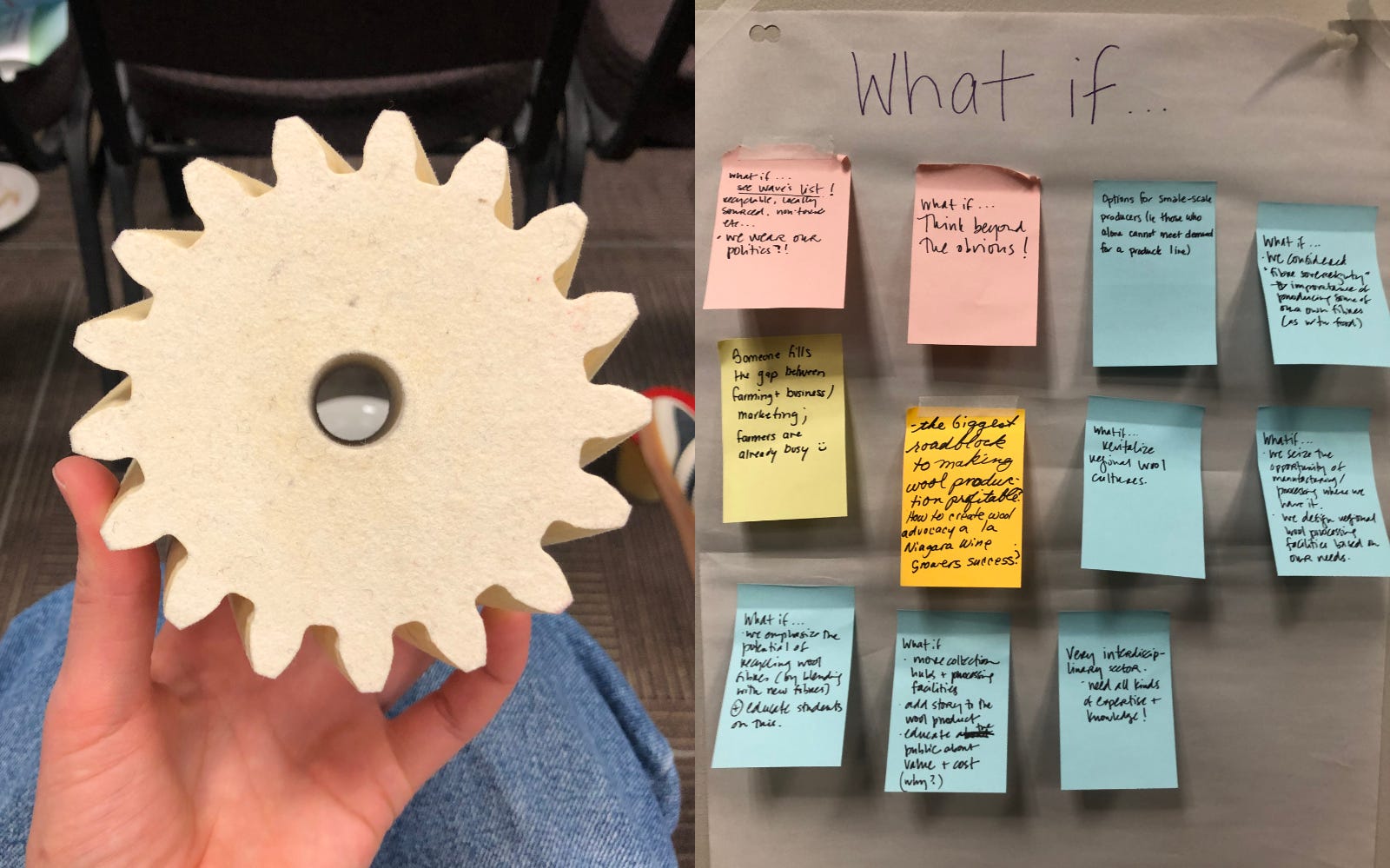
Through speakers such as Brenda Hsueh of Black Sheep Farm, I learned about more practical aspects of regenerative agriculture, like managed grazing and silvopastures. I was fascinated by Jasper Brand’s presentation on his family’s company, Brand Felt3, and the many uses of wool felt in industry and interiors. The wool gear was remarkable!
We have incredible farmers and makers producing everything from fleece to yarn to textiles to garments within a 250km radius of Toronto, and it was very stimulating to listen to and participate in conversations about how this valuable resource can be better promoted and used. The atmosphere at the conference was encouraging, collegial, and collaborative — what a pleasure to be among people who want to support each other instead of compete.
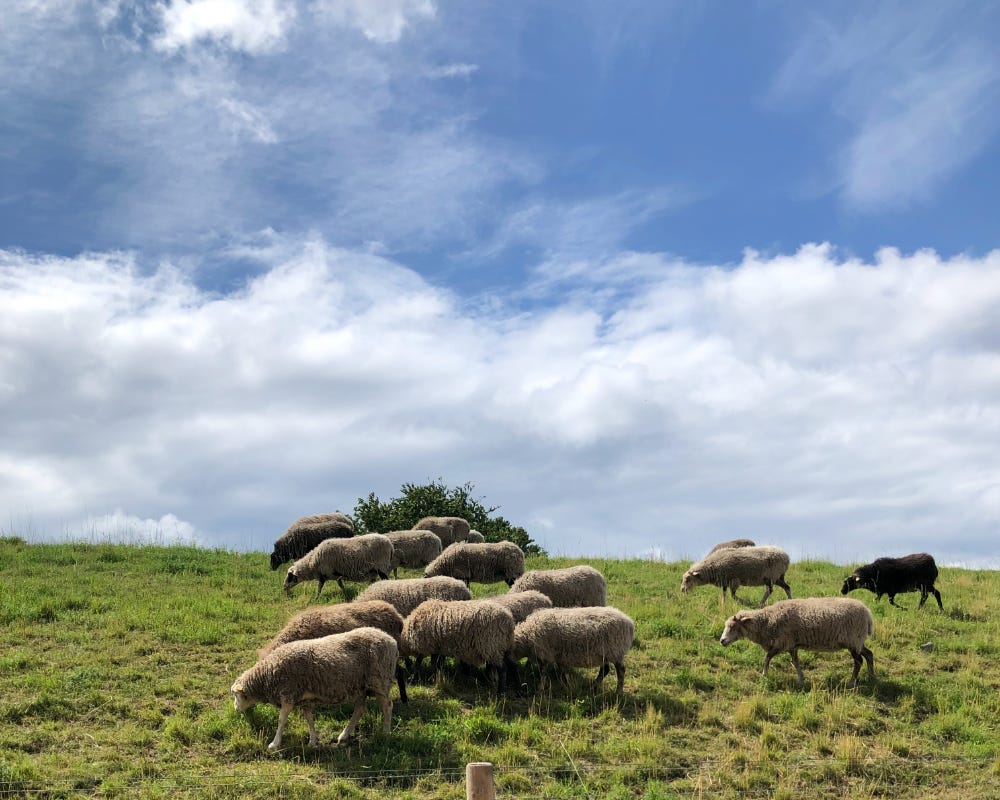
There were many moments during the day when topics or points would be raised that were the same things I spoke about with the director at DVS or when talking with the MMF staff. Wool is an under utilized but incredibly flexible resource, both in Canada and Europe. A lot of the annual shearing is wasted through poor processing and distribution networks, a lack of education or knowledgeable technicians/makers, or outdated ideas about softness or usability, not to mention the competitive capitalist vision of scaling up up up that doesn’t actually serve communities, famers, or consumers!
This program was a really exciting opening to a (hopefully) longterm conversation about how we can continue to use wool in Canada and beyond. I don’t use a huge amount of local wool in my pattern design (being hyper-local, it’s harder for folks outside of Canada to find), but I’ve got an artistic project coming up in January where I use Ontario wool — I’ll share more about that next month, when I haven’t already written so much!
I would like gratefully acknowledge the support of the Canada Council for the Arts for my residency at Det Vilde Spinderi.

References
Bragfors, Ehrling, Angelica Persson, Ulrik Swedrup, editors. “Look at the Rugs - Find Me: 100 Years of Textile Art - Since 1919”. Märta Måås-Fjetterström AB, 2019.
They also had cut rags for making rag rugs.
Comments
Nothing yet. Say the first thing.
Sign in to join the conversation.