
All women writers I know who came up in academic settings have a story about a famous man who loomed over their artistic education. Paternal, patriarchal figures who both guided and thwarted their growth. Some of these story include deep, haunting violations; others include more ambiguous transgressions of the body and mind, from stray touches to the repeated extraction of unpaid labor to the simple yet profound psychic cost of following men’s ideas about art, women, and creativity.
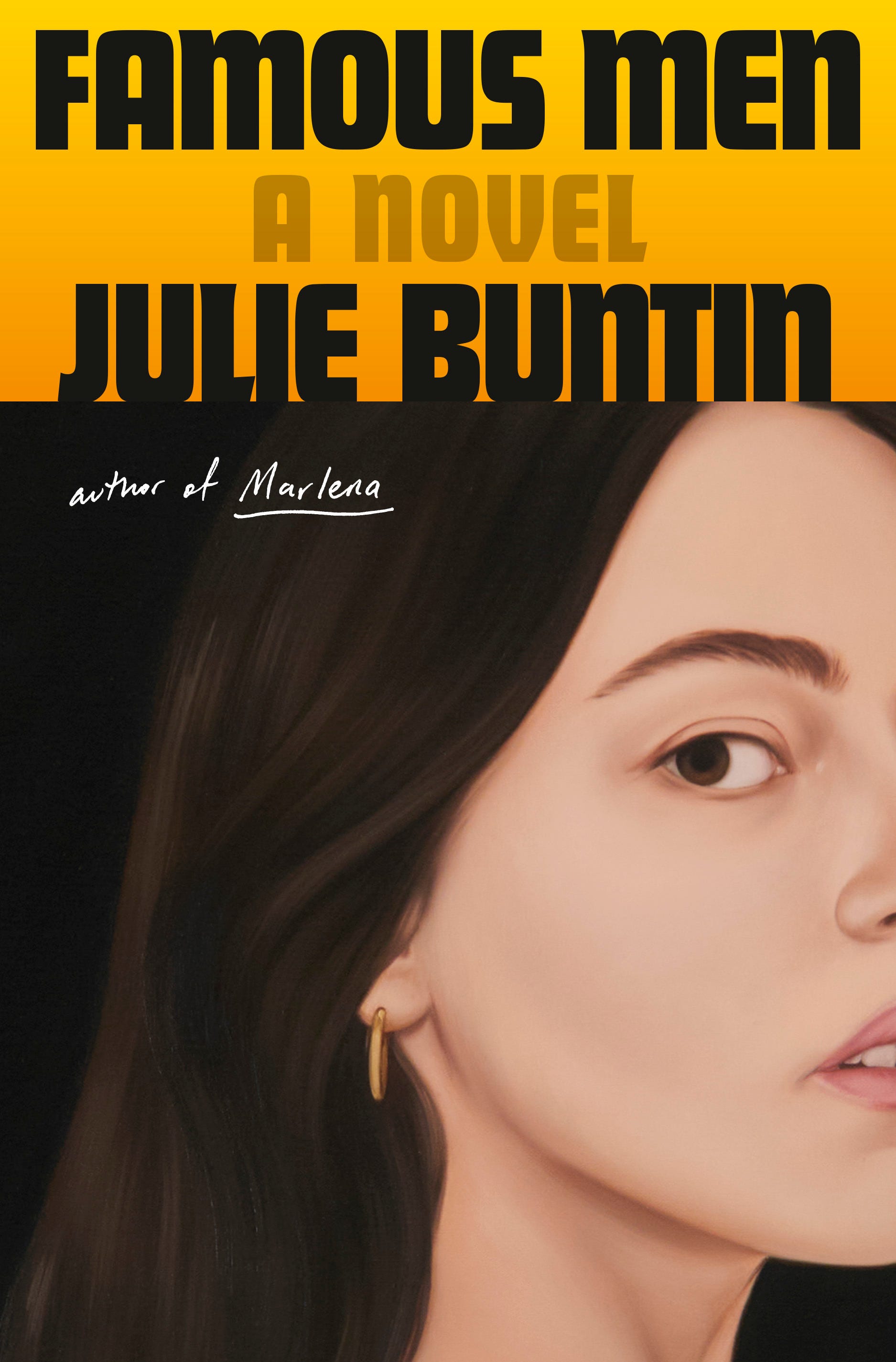
Julie Buntin’s second novel Famous Men is a künstlerroman of sorts— the story of a woman coming into her own creative work. More than that, it’s about the shadow men cast on women’s artistic development— their sense of voice and art, their sense of self, and their relationships with other women. It’s also a novel that is deeply aware of how class and money shape one’s ability to write, and the compromises women often make to secure something like a room of their own.
Haunted by financial precarity and debt, the novel’s protagonist, Wilhelmina Miles, makes a kind of deal with the devil, as she falls under the spell of a revered MFA professor, stirring questions about consent and care, recognition and desire, ambition and success. Ultimately, Will stumbles into a more collective story, about women who have been entangled with, and harmed by, famous men.
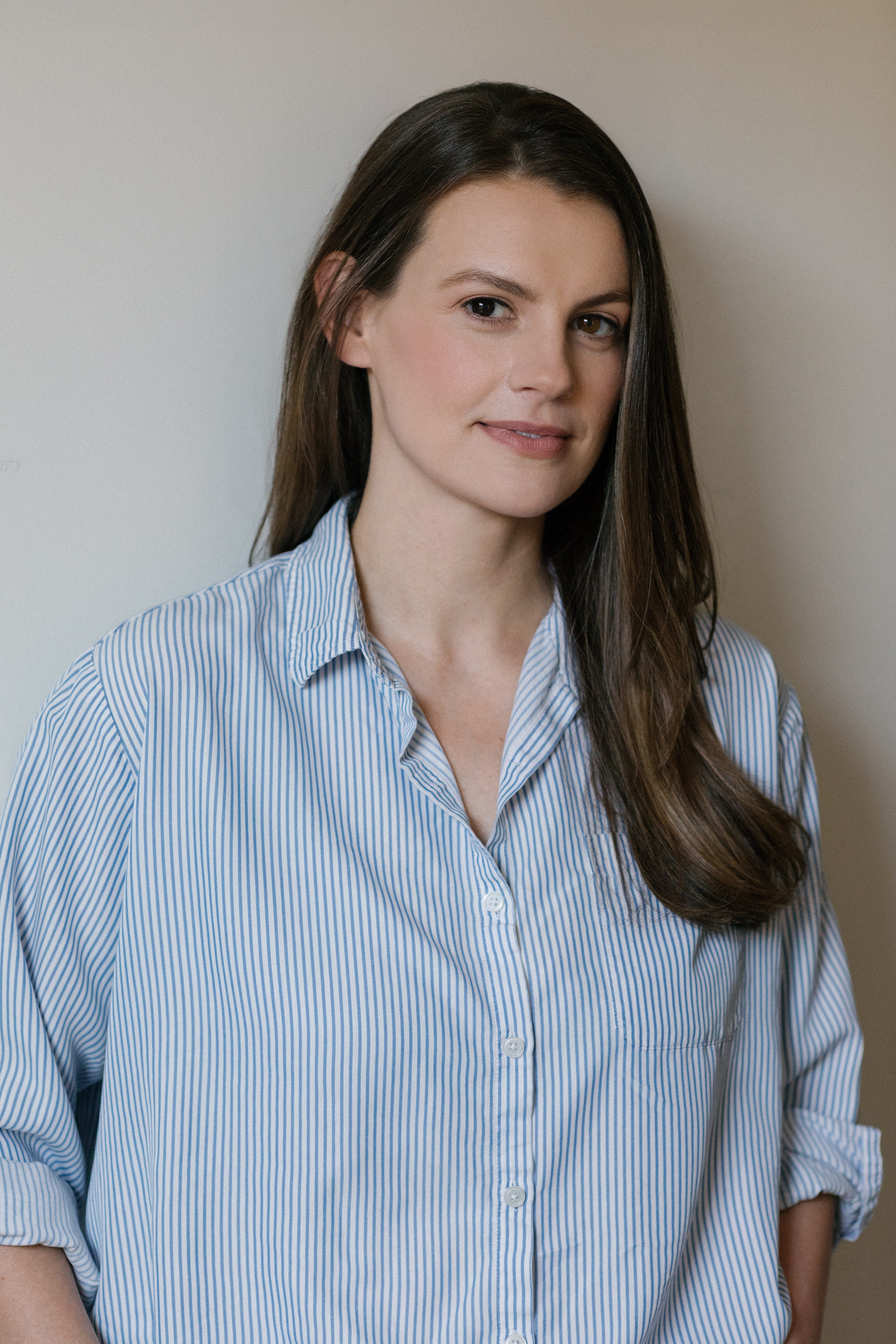
Julie is also the author of the novel, Marlena, a finalist for the National Book Critics Circle’s John Leonard Prize and longlisted for the Center for Fiction’s First Novel Prize. Buntin was previously an editor and director of writing programs at Catapult. She is now an assistant professor at the University of Michigan. I love her rich and kaleidoscopic answers to the Intake, which reflect the depth and humanity you’ll find in Famous Men.
What is something you are mad about right now?
Mad, in a loving way:
My daughter, Iris, is two years old and has very little hair. What hair she does have is blonde as heck, about as dense as her brother’s was the day he was born. At the nape of her neck the little strands curl up, and even though she’s a walking, talking toddler, her hairlessness gives her the energy field of an infant. We’ve recently been talking a lot about manners, and my favorite thing on earth is when she says, in her very formal way, “Thank you, Mama,” or “Sorry, Mama!” or “Can I have an apple please, Mama?” sounding miraculously grown up even though she looks like a tiny baby. And also how she pronounces Ls with a Y sound. Iris, I yove you too!!
Also, my Glerups. God bless my purple Glerups, a Christmas gift from my five-year-old son. It’s the dead of summer and I can’t bear to be in my house without them on my feet. Worth every penny. A true life upgrade.
Noah Kahan’s new album, The Great Divide, like everyone else in the world. When I realized that the song “Willing and Able” is from the brother’s perspective, it broke me. A national treasure!
Mad, as in angry:
The fact that my five-year-old son, who I have kept away from iPads and laptops and all manner of personal screens his entire life (except for TV, I’m not that extra, and movies are art!) is going to have access to his own chromebook when he starts kindergarten in the fall. WHY.
What “feelings rules” did you learn growing up? What did those lessons teach you about gender, relationships, and the world?
Gosh, this question. My heart aches a little bit just thinking about it. I grew up in small-town northern Michigan, in a big blended family that transformed several times throughout my childhood because of marriage and divorce. I’m the oldest of my mom’s biological kids, and except for like a year when I was very young, was always the eldest girl in the family. There was some difficult stuff going on that I won’t get into here, but these events were not ever processed directly, or really spoken about at all - I think this led to me internalizing very early on the idea that feelings are dangerous, or bad, or shameful in some way.
Also, in terms of gendered socialization which came both from my community/environment and the particular dynamics of my family, I was definitely taught to care for other people’s feelings over my own, and that the way to be accepted, valued, etc, was by making myself useful, which almost never meant drawing attention to myself (unless I was achieving). Even into high school and early adulthood, I cultivated a kind of cool girl persona, feelings-wise - I remember repeating like a mantra during my earliest romantic relationships, “the party with the least interest has the most power” which is real “advice” my mother gave me when I was a teenager. It took a long, long time for me to understand that is only good advice if your goal in a relationship is to be adored, or put on a pedestal, or never be hurt, and that it actually is deeply counter to the ego-erasing experience of falling in real love (with a friend or a lover, or anything, really).
What is your relationship now to feeling/emotion? What feelings scare you most? Which emotions do you find most powerful? Do you like feeling things?
Probably a bit of a hangover from my childhood, but I think sometimes I can be a little numb, emotionally - I often experience myself experiencing emotion as if from a few feet away. Like, how interesting - that’s making me very sad. And then it takes a second to sync up.
There are a couple of exceptions to this. My children are conduits to unfiltered emotion - my son has had a couple of medical scares and just typing these words brings that fear and grief back to me so profoundly it’s as if I’m there again. And I have a troubled sibling, for whom I carry around a kind of chronic grief. Once, about a year ago, my mother called me in the middle of the night, and when I saw her name on the phone I thought it was the call I’ve feared for years. There was no numbness to what I felt then.
I’ll also admit, with some sheepishness, to having felt some pretty textured layers of agony over professional disappointments, which never seem to be matched by their opposite when I do achieve a goal. Not sure what that’s about (though I suppose there’s a connection buried in my previous answer…).
After my second child was born, my house got a lot louder and more overstimulating, and I also went through a particularly intense time in my career. There have been a few moments in these past couple of years where I’ve felt bursts of almost uncontrollable rage. They come quickly and fade quickly too, but that’s the feeling that’s scariest for me.
I like feeling things - I write towards big feeling in my fiction, and sometimes use it as a marker of whether or not I’m onto something.
Do you think of your creative process as related to a state of madness? Some other way?
I think writing for me is a way of acting out. To weave various threads from this Q&A together, I am a people pleaser to my core, with the personality of like, an affable midwestern waitress. (Maybe a slightly distracted one.) I’m into being a mom. I’m the professor students come to with personal issues. I try to be a good daughter; I feel guilty when I upset my mother. I’m polite sometimes to a fault, even when I’m being taken advantage of.
Sometimes I think the entire reason I write is in resistance to these external qualities. My fiction is intense. It’s moody and uncomfortable. The me who comes alive through this particular channel, whether in fiction or nonfiction, is somehow free from the people pleaser I have become in my real life. Fiction is where I can be ugly, provoke, unsettle. It’s the place that can hold all of me.
What is your relationship to diagnosis?
Complicated. I was diagnosed with an anxiety disorder in my late teens, and then a few years later I found out I have a heart arrhythmia, and I’m still not sure if the anxiety was because of the very real problem with my heart, or if it would have arisen organically. Because I do struggle with anxiety! I also have periods of obsessive, circular thinking, of dysthymia. I’ve been on and off Zoloft much of my adult life, and have found it lifesaving during certain periods (like, um, now).
After my son was born, I was evaluated for ADHD like every other high-achieving millennial woman, and was diagnosed. I have a really conflicted response to this particular diagnosis - part of me doesn’t quite believe it, and another part of me wants to collapse on the floor, thinking of my impulsive, self-destructive behavior as a teen, my lifelong struggles with disorganization, how all of my accomplishments can be tied to really intense work patterns that essentially involve procrastination and binging. I can’t take stimulant medication for ADHD because of my heart stuff and because I don’t quite trust myself with potentially addictive substances, so I’ve mostly found this diagnosis to be a source of confusion and grief, rather than clarity. But I’m open to the fact that once I’ve done more processing, it could help me figure out a gentler way of being in the world.
If you had to diagnose yourself with something, what would it be?
I have enough diagnoses! Truly though, I think as much as having language to talk about certain qualities of mind and spirit has been useful at various points in my life, there’s another way for me a diagnosis can be limiting. I am trying, at thirty-eight years of age, to accept that I’m never going to be a person with like, coherent dresser drawers, who writes in moderate daily bursts, who remembers to consistently text back, throw out the leftovers, send a Christmas card on time. It’s too bad. It sounds like it would be nice to be like that. But in exchange, I don’t know! There’s some essential me-ness that comes along with those inefficiencies that I’m starting to, if not like, at least appreciate, for being connected to what I am uniquely able to offer the world.
Have you ever felt normal, healthy, or healed? Why or why not? What is your relationship to these concepts?
The healthiest and most healed I’ve ever felt was when I held my son for the first time. I’ve written about this a little, and the ways this feeling morphed into something that was, I think, eventually a bit destructive in its single-mindedness, but having my children filled some really deep and aching void in me, a part of myself that’s always been hungry and unsatisfied. When I held my son, I felt for the first time like I’d gotten enough.
How do art and culture make you feel? What are your favorite feelings to have when engaging with books or culture? What do you hope people feel when they engage with your work?
There are two broad and categorically different things I get, feelings-wise, from engaging with art. Sometimes I encounter a piece of art that, in its utter singularity, makes me feel something new - it expands my palette of feelings. It makes me bigger, in some way, more dimensional. I love that very much. A book that does that for me is The Savage Detectives, by Roberto Bolano. Or the The Driver’s Seat, by Muriel Spark.
There’s another feeling I get from art, that I also love - but it works in a different way. It’s the feeling of words (or sound, or image) making concrete something I have felt to be true, or lived myself. The feeling of, yes, that’s right, that’s exactly how it is. Noah Kahan’s new album does that for me - so does Ferrante’s Neopolitan Quartet.
I would be thrilled if readers had either of these responses to my work - but in the end, aside from hoping they get something from it, I don’t know that I have a super specific intention for what my books make readers feel. I believe that the reader is an active participant in a text - that a book is completed in their mind, not mine. So in that way, I hope whatever they get from my work feels quite personal and true to them, maybe even in a way I could never predict.
What is the relationship between politics and art for you, and in your work?
I always come at fiction, at least, via character - and I don’t think it’s possible to separate a character from politics, even if the character themselves would argue with that statement.
Is there a question you are often asked in interviews that makes you angry or uncomfortable? What do you wish people would ask you instead?
I haven’t been asked it this time around, but after my first book was published many people asked in direct or indirect ways how much of my novel was true. Or sometimes they didn’t voice it, but I could tell they inferred it was all true from what they actually did ask. That still makes me angry. I really take issue with the very pervasive idea that there is something less artful about writing anything that is informed by lived experience - whether fiction or nonfiction - and I truly don’t feel a significant difference, texturally, in the experience of making things up that could never happen vs altering in a substantial way things that might have, or almost did, or kind of did but in a different way. It’s all writing, it’s all hard, it all involves technique and imagination and care.
What is something keeping you sane right now?
The new splash pad near my house. My neighbors and our impromptu pizza dinners and their perfect children who have known mine since birth. My students. My mom, who helps me with my laundry and brings new library books to my kids every week. Speaking of the library, the Ann Arbor Public Library summer game. IYKYK.
No posts
Comments
Nothing yet. Say the first thing.
Sign in to join the conversation.