
My dad read my book. Yes, my recently retired judge of a father, a man guided by faith, discipline, and a strong moral compass, read it. All of it. He read about my guilt, my desires, my stepping away from Mormonism, and yes, also my sex life.
And this is what he told me:
“Amanda, you are a very good writer. I can see this as a movie. Like that one called Eat Pray Love.”
(Me, smiling widely. This meant a lot. My dad is a big critic of writing.)
“But you may regret, in the future, putting so much personal stuff out there.”
I thought about this. Hard. Too hard. I have reflected on every detail of this book far more deeply than is reasonable, turning it over in my head again and again. I can’t stop questioning myself. Did I share too much? What about the fights with my best friend? The vomiting and diarrhea in several countries? The journey toward sexual acceptance? The moment I chose to step away from the Mormon faith?
No. I don’t regret it.
And here is why: That character in the story was me, but she is not me anymore. I am okay with who I was, with what I did, and I am proud of how I navigated all of it.
Writing my past into a book felt strange, like researching and crafting the historical fiction of my own life, choosing the moments that served the arc of the story, while knowing that nearly all of it was true.
I did not write about the most important people in my life now. I didn’t give away current secrets or expose the deepest hardships or triumphs of my present. I didn’t tell you about the depth of my marriage, the quiet magic of motherhood, or everything that shapes me today. (Yes, I am an expressionist to the core, but I do keep some things sacred. 😉)
I told a history.
And writing it and releasing it was so fucking hard. My dad’s comment was just one of many moments that made me question everything.
So for anyone planning to publish a memoir, I want to offer some emotional guidance. Not about the writing itself, but about what happens to you once you let something deeply personal out into the world.
***
#1 Writing about real people will tear you apart.
How much can you say? Will they hate it? Love it? Will they think I am naïve or foolish for putting this out there? And worse, will imagining how they read it change how honestly you tell your story? Will you soften it, trim it, or cut the juiciest parts to protect the people you wrote about?
Short answer: Yes. Yes. Yes. And definitely yes.
#2 You will get physically ill the day you publish.
Self-questioning will rip you apart. Will people hate how I represented them? What the fuck am I doing? Am I even a good writer for fuck’s sake?!
That stress hit my body hard. My immune system collapsed and I spent days in bed with a horrible cough, feverish and exhausted. Then I forced myself outside, went on a walk, wandered into a random climbing gym, saw God, and somehow came out of it with a new New Year’s resolution.
#3 Self-publishing is so much harder than you expect.
First, you write the thing. Two to three years. Then you join writing groups and get feedback on every chapter, over and over again, another two to three years. Then you restructure and rewrite, again and again. Then you find an editor. Then you rewrite everything once more with that editor, intensely, for months. Then come the copy edits and proofreading, more months. Then formatting. God, the formatting! And then the cover, which is its own special kind of hell.
And then comes the worst part.
#4 Self-marketing is a bitch.
A big one.
I feel like a pyramid scheme. Like when all my Utah girlfriends started selling makeup, essential oils, candles, and whatever else on Facebook, trying to get me to buy their product. Fuck. Now I am the one asking people to buy my product.
I am a scheme. Except I am not, because this book might actually help you navigate some of the shit that made you start that scheme in the first place. Still, I had to build a website, an Amazon page, a Goodreads page, a Facebook page. I had to post and post and post, annoy people, and get messages from friends saying things like, “Amanda, stop spamming me.”
#5 You will rebuild relationships you didn’t expect.
On Christmas Eve, my favorite uncle came to our family’s new tradition: the Grinch party. All the kids of my cousins, brothers, and sisters pile in, while my mom’s best friend dresses up as the Grinch with her husband. They steal decorations, throw dollar bills and useless gifts at screaming children, dance to blasting rap music, and terrify or delight the kids, depending on their age. It’s chaos. It’s ridiculous. It’s family.
My uncle and I hadn’t been close for decades. But he was always my favorite, the one who slipped us twenty-dollar bills for Christmas, the one with the easy smile you just loved without knowing why. I finally understood why, because of my book.
At the Grinch party, we started talking, along with a few cousins, about Mormonism and why some of us stepped away from it. I explained my story, my reasoning, mentioning that parts of it lived in the book sitting in a box behind him. He was curious. Deeply curious. He kept asking why I made those choices, why I questioned what others accepted.
My uncle has leukemia. The doctors have told him, more than once, that he has weeks to live.
The next day, he came over, gave me cash, bought the book, and read it within days. A week later, he came back, and we talked. And talked. And talked.
I didn’t expect his reaction. I had secretly believed that if I wrote a book about myself, my conservative family might finally accept my choices and stop seeing me as sinful or wrong. That didn’t happen. He did not accept many of my actions. He said things like, “That’s erotica,” and “You damn well opened your knees every time you drank.”
Although he didn’t accept many of my actions, he accepted me.
He wanted to understand why I wrote it. What I felt at the time. What made me take those steps. Why I carried guilt for being American. Why imperialism felt heavy to me when, “we’re the best country in the world.”
Through this process, he wanted to know me, truly know me, in what may be his final days. And I learned why. He was my caretaker when I was a toddler. I don’t remember those years, but he did. He told me about terrible diaper rashes he didn’t know how to fix, about how giggly and determined I was. He told me about his own rough years, living in his older brother’s house, experimenting with drinking, pretending to be homeless to understand it, living out of his car at times, choosing decades of learning and university over a conventional life.
Because of my book, and my vulnerability, I got to know my old caretaker and his love for me.
#6 You will finally feel that beautiful release.
Eventually, you feel it. You feel that old, moldy page finally turn, finally close, finally be done. For me, part of that release came through my uncle, through his unfiltered honesty, his curiosity, and his love, expressed in the only ways he knew how.
I felt it again when messages started coming in from women.
“I learned to dance. I learned to live.”
“Thank you for helping me navigate my own guilt.”
“This book helped me see my life differently.”
That was the point. This book was about helping others traverse guilt, complexity, love, and messy relationships, and find their own way through them.
I didn’t expect that doing so would bring me closer to someone I thought I had lost to time, or that vulnerability would rebuild a relationship, or that honesty would invite curiosity instead of rejection. But it did.
And I didn’t expect that, por fin, I could move on. I could leave those chapters behind. I am no longer a young, spunky, naïve girl trying to figure out her place in the world, her sexuality, her purpose. I am a mother who loves her family and her life in Buenos Aires to pieces. I am a writer. And now, I want to write something completely different, a world I’ve been quietly building in my head for years: a mystical series that weaves transformation, alchemy, and ancient wisdom into an immersive story set one hundred years in the future.
I can do that now because I gave myself closure. I gave my youth, my past, my history a final release. I literally printed it, signed it, and turned the last page! And none of this would have happened without surviving the vulnerable, terrifying act of releasing it into the world.
So if you want to publish a memoir, a truly vulnerable one, it is fucking hard.
But yes. It is worth it.
****
For those who have yet to read my history, you have options:
Get it on Amazon (kindle & print)
Or my website (print, signed by yours truly)
And if you like it, don’t forget to leave a review on Amazon and/or Good Reads and share with others! Us Indie authors need all the help we can get!
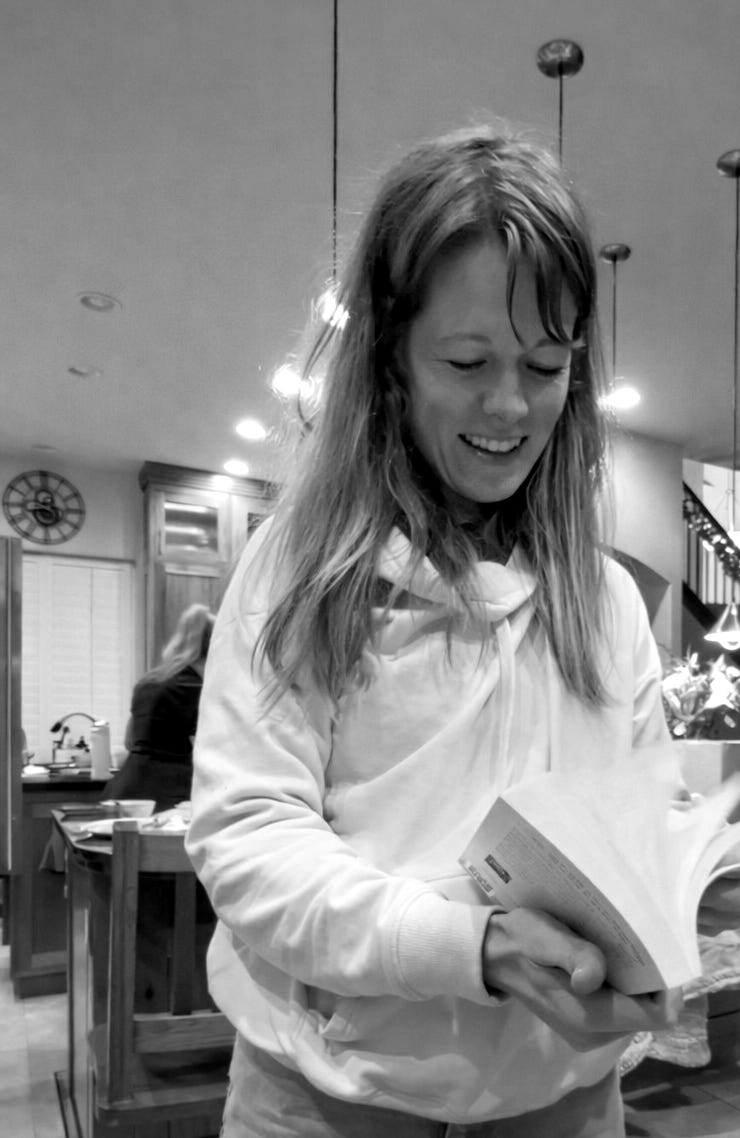
Me, seeing my memoir in print for the first time.
No posts
Comments
Nothing yet. Say the first thing.
Sign in to join the conversation.