
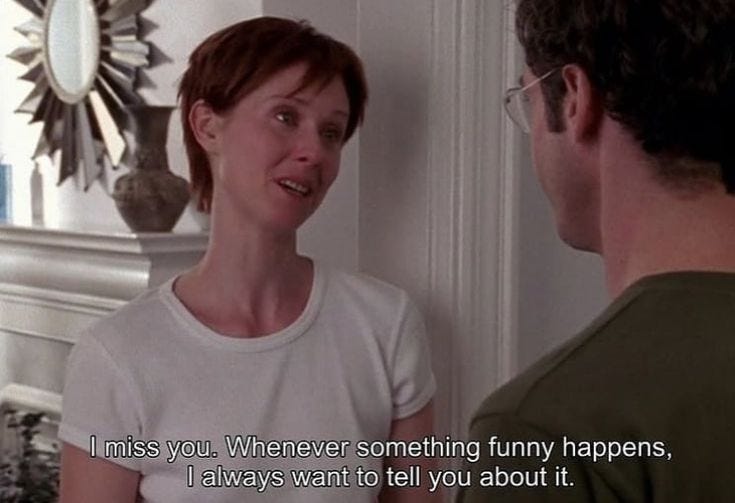
I’ve forever had the belief of soulmates instilled in both my heart and mind. In adolescence, I had the absolute conviction that everyone in the world found their soulmate. Everyone met their perfect person and soaked up each other’s presence as if it were the sun—warm, constant, and life-giving—until death did them part. And even then, you’re promised to one day meet again in the afterlife. If there were millions of parallel universes, one aspect would remain fixed: you would meet in every one.
I had believed everyone bickered with their soulmate, but never fought. I had believed love was something that simply happened—a magical, unexpected appearance of a lush, flourishing garden—instead of something that was tended to, something that began as nothing more than a fragile bud, fueled by hope, patience, and the right conditions to grow. I believed no bad day was ever so bad that it was irreparable in the presence of their soulmate. They would aid each other throughout the sicknesses that infected them. They would strengthen each other in times of weakness. They would make each other laugh even in the midst of their worst days.
The concept of soulmates has long been mythologized by me. I believed everyone was rewarded, in some cosmic sense, with a soulmate—almost as a “thanks for playing” prize from the universe, so all of the suffering you endured was okay in some way. The soulmate would be the balm to soothe the gash caused by life’s cruelty. There’s something elusive about the soulmate that makes them perfect for you. An ease that isn’t typically present with others, or an effortless understanding of each other in a way that can’t be taught, only recognized.
Despite being a mythologized idea in my adolescence, my perception of the soulmate shifted as I began to experience relationships instead of consuming the fictionalized version, whether it be in songs, films, or novels. Instead of imagining my soulmate as a perfect Prince Charming who would never hurt my heart, I began to yearn for something different. Something simpler, yet still seemingly unattainable. I wanted a person who made me excited about the mundane—grocery shopping, folding the laundry, watching a TV show together each night, sitting across from each other at dinner after a long day. Someone who was as elated about belonging to me as I was belonging to them. Someone who would happily choose me, day after day, even if the night ended unhappily.
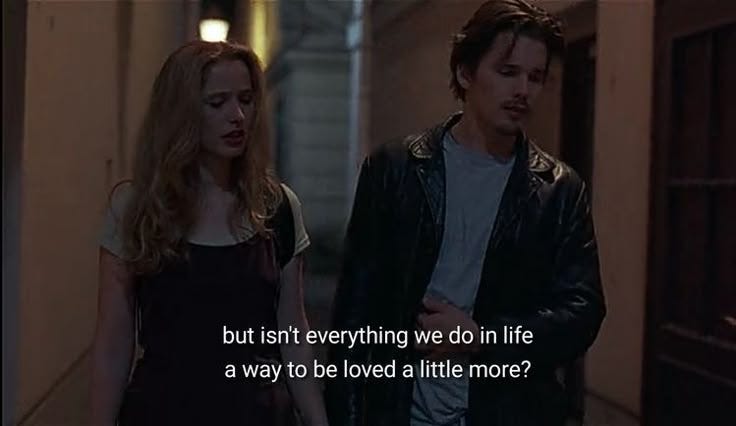
And then came the reality of people. I’d experienced encounters where I felt an absence, even if I couldn’t name it. There had been men where our conversations only ever lingered on the surface. There had been others who didn’t understand my writing, making me feel strange for something so essential to me. There were men who were good, but I knew instantaneously that they weren’t mine. I had even thought I’d found my soulmate before, only to be shown, eventually and undeniably, that, no, my person would never treat me the way they did. I had told one of my faux-soulmates that if he ever made me cry, I’d know he wasn’t the one. He replied, saying, “If I lived by that, then you wouldn’t be my soulmate.” I reconsidered my juvenile beliefs then. Maybe it isn’t that your soulmate will never hurt you, but when they do, they’ll care, genuinely and deeply. They’ll try, in whatever ways they can, to not let it happen again. Despite perfection being impossible, they’ll act otherwise.
There’s always been discourse surrounding the existence of soulmates. Do we even have souls? Isn’t it a little far-fetched to believe that everyone will, absolutely, meet their perfect person? Selfishly, I’ve believed, sure, some people might not find their soulmate, but I’m not some people. For me, it’s destiny.
There are over 7 billion people wandering this planet, and I believe many can be “the one” if circumstances aligned. We’re perfectly compatible with many people that we’ll never meet. We’ll never even know that they exist. And yet, when you do meet that person—talking for hours, trusting each other with sacred secrets, becoming each other’s favorite person—it feels indistinguishable from what I once believed a soulmate to be. Maybe a soulmate isn’t immediate, electric certainty. Maybe it’s someone unexpected who slowly becomes that person over time. Someone who becomes essential to your life because you chose it, not because the universe declared it.
I also find it interesting how when people get married, we say they’re “settling down.” And then comes the connotation of “settling.” Choosing to be committed to one person for the rest of your life is, in its simplest definition, settling. You’re no longer searching. You’ve decided you’ve found the greenest shade of grass. This is the one you’ll build your life around. Of course, if you’re standing at the altar—clad in ivory lace and a forced smile—thinking about how “this is it” with a twinge of doomsday, maybe that’s not your soulmate. Or maybe it’s just fear. The horrifying qualm is not knowing the difference. And then comes the uncertainty of it all. What if we don’t find them in this lifetime? What if we’re one of the unlucky ones who marries someone good, but not extraordinary? What if the idea of a soulmate is just convincing enough to keep us hoping, but just unrealistic enough to keep us searching?
Sometimes I think believing in soulmates is like believing in God—a faith we need, something we feel we must practice because we ought to. Heaven and my other half are what I ultimately live for. On the sweetest day of my life, I know I’ll look at the one opposite of me and declare confidently: “You’re my soulmate.”
Not because the stars aligned, but because we will have made it kismet.
If you’d like to support me and my writing, you can consider buying me a coffee :)
No posts
Comments
Nothing yet. Say the first thing.
Sign in to join the conversation.