
I’ve never had a good relationship with exercise.
I’ve also never been one of those sporty girls. You know the ones you always see on tampon adverts throwing Frisbees on the beach, or playing volleyball with perfect skin and bouncy…. ponytails.
I on the other hand was always the awkward introverted girl that sat on the side lines in gym class, always on the bench because…
1) the popular sporty girls didn’t pick me
2) because I made it very clear with my disgruntled face and closed off body language, that I didn’t want to be picked anyway thank you very much.
I hated everything about sports. Being out in the cold. The running, oh the hideous running. The competitive aspect of it all. And the fact that I was never very good at it. If it needed even the slightest bit of hand eye coordination, I was guaranteed to fail miserably at it.
And also (my friends who are reading this will laugh at this next bit because they can attest that it is 100% true), if there was a ball present in a 30 metre radius of my head, it would hit it. Guaranteed. It was like I had a flashing target on my head saying ‘Aim here’. So I not only didn’t like sports, it was actually rather dangerous for me to take part in them, or to be anywhere near a sports game of any kind that involved balls… (no sniggering please).
One exercise I actually enjoyed as a kid was dance and ballet. I loved it. The cute pink tutus we got to wear, my mum putting my hair up in a neat bun with a silk ribbon wrapped around it. I loved the gracious intentional movements, the calm classical music playing in the background, the beautiful neat synchronicity of it all.
I got lost in it and for the first time I felt like my mind and body were perfectly aligned. I think I would have continued with it, was it not for the fact that I was so painfully shy as a child.
I had a ballet recital and unbeknownst to me my mum had invited all my family to come and watch me. She was so proud of her little girl, but to me, seeing all those eyes staring at me, put me into a state of pure panic. Even though they were clapping and cheering me on, I felt judged and painfully self aware.
My body suddenly felt clumsy and I was no longer in my happy place. My mind and body were totally out of sync with one another.
So sadly, at great disappointment to my dear mum, I never went back to the class after that…
To me, exercise growing up was full of embarrassment, pain and judgement. It felt like it was all wrapped up so tightly with my own sense of self-worth.
There was no way for me to see exercise in any other way than pure punishment.
Then as I hit puberty, it got even worse!
Your body starts to change. The changing rooms become an absolute pit of despair and angst, trying desperately to hide every wobbly bit and stretch mark that seemed to just appear over night. And wow teenage girls can be brutal with their scrutinising stares and backward compliments.
‘Cute T-shirt’, they would scoff, as they looked you up and down with what can only be described as disgust, flicking their perfect shiny hair in your face as they walked away giggling.
The boys were no better. Swimming lessons, where you had to wear a swimming costume with BOYS present, was like the worst thing I could ever have imagined at that age. I always ‘forgot’ my swim kit and happily took the punishment of detention each and every time over exposing my newly pubescent body to a class of ogling teenage boys.
And then, at the tender age of 13, there were periods. Oh my gosh, suddenly out of nowhere my period started and the excruciating cramps would make it near on impossible to stand up straight, let alone run around playing hockey in the freezing damp British winters.
‘How does anyone do that?’, I would shout at the TV every time another tampon advert came up on the screen. It would always show women running around playing sports in small white shorts (white, really?), with a smile on their face. ‘How is she smiling???’, I would continue to shout in utter confusion, clutching onto my hot water bottle for dear life.
Exercise then became about body shaming, comparison and even more judgement and pain. I felt like a failure that I couldn’t participate in something that seemed to be so simple and fun to everyone else around me.
‘What is wrong with me?’, I would often ask myself.
In all that time no one actually explained to me that I was already doing a lot of exercise, without me even knowing about it.
Every chance I got I was out in nature. Either out walking somewhere or playing around in my garden. I also enjoyed dancing around my bedroom to pop music, coming up with dance routines with my friends. Or I was play fighting with my brother, practicing wrestling and karate moves. I often helped out around the house doing the hoovering and cleaning which would work up a sweat.
I didn’t see any of these as exercise because it was actually enjoyable. There was no competition attached to it. I didn’t have to wear any special fancy outfits. There was no one else around judging me or telling me I won or didn’t win (ok, maybe my brother liked to rub it in my face when he won at wrestling each and every time!).
But I never felt like a failure with any of those things. Therefore, I presumed it wasn’t ‘proper’ exercise and no one thought to correct me.
As I got older, I tried multiple times to get into ‘proper exercise’. I tried running, but I often felt unsafe running by myself. The first time I went out for a run around my village, a bunch of men started to shout crude sexual comments at me from their car windows.
That single incident put me off for months.
I then tried again and got into a bit of a rhythm with it, but then winter came and it got dark by 3pm. Again, I didn’t feel safe going out in the dark by myself, keys clutched between fingers, so I stopped altogether and hung up my running shoes for good. It all felt too hard.
I then tried to go to my local gym, but even then I felt unsafe with men’s eyes following me around the room. I would also compare myself to the other women around me, with their immaculate lululemon outfits that I could never afford and I would end up hating myself even more.
So then as I got older, exercise became even more about comparison and hatred of my body, with the extra threat of being over sexualised and feelings of compromised safety thrown in for good measure.
It felt like there was barrier after barrier put in my way, preventing me from being able to fully enjoy exercise.
It was only when I started to do at-home workouts that I finally became more comfortable with exercise.
I loved doing my Davina McCall workout DVDs. She made it fun with her hilarious commentary and funky pop music blaring out in the background.
I bought weights and resistance bands. I bought a yoga mat and started to do the ‘Yoga with Adriene’ videos on YouTube.
FINALLY, it all started to click into place.
‘Exercise can be enjoyable!’, I rejoiced.
But then, over time, I noticed that I couldn’t do as much as every one else. I often couldn’t finish a whole workout. I would get injuries and huge energy crashes after each session.
‘Was I doing something wrong?’, I often thought to myself.
For years I would go through cycles of trying to exercise and then having deep crashes in my energy and health. I would often go to the Drs to try to get some answers, but they would tell me its because of my hormones or I was being anxious, or some other reason that would absolve them of any responsibility.
I self-referred to physiotherapists multiple times with neck, back and shoulder pain, but they often told me I needed to exercise more.
Round and round I went.
Again, I felt like a failure. I just couldn’t do what everyone else could do. My body began to be a source of great disappointment to me.
But then in 2024, after many years of searching, I got diagnosed with the autoimmune disease Ankylosing Spondylitis (AS), a type of inflammatory arthritis of the spine and pelvis, which came with a whole host of other debilitating symptoms.
I had been living with pain and fatigue for almost 10 years at that point.
Nearly a decade of thinking I was a failure. A feeling I thought I just had to learn to live with, whilst everyone else around me seemed to thrive.
The ironic thing is, that one of the main ways of treating AS is with physical therapy and exercise. I had to laugh when they told me that. All these years I had been trying desperately to get along with the idea of exercise and find something that was suitable for me, with no such luck, and here they were saying I needed to exercise, with zero information or guidance on how to actually do that safely.
The even more ironic thing is, that another symptom of AS is crippling fatigue. So your body feels in constant opposition with itself. You desperately want to move to soothe your stiff and fusing bones, yet you have zero energy to do it.
‘Here we go again’, I thought. More cycles of exercise then crashes in my energy.
Over this past year, since my diagnosis, I’ve had to relearn everything all over again about what it means to exercise.
And do you want to know the biggest thing I’ve learnt over that time?
How to change my mindset about what exercise really is. I don’t even call it exercise anymore, I call it movement.
I’ve had to work with my body, not against it. I have to see movement as medicine, not punishment. To see it as something that is making me feel better, not as a tool to hate myself or to feel immense guilt over.
This has of course taken time. I’m nowhere near perfect. I still have my days where I push myself too much or feel guilty about not doing enough, but that’s ok. I now see it as a work in progress. I have my whole life to work on it. It’s not something I do a few times to get to my ‘goal weight’ or ‘bikini body’ and then stop.
Movement is all about sustainability. It’s about building habits over time that work for me. Pacing myself, having plenty of recovery and rest days, without guilt. I’m learning to listen to feedback from my body and adjusting my movements slowly over time to suit my needs.
I’m no longer competing against anybody else now, only building upon my own goals.
For now that means a few walks here and there in nature. A few gentle stretches. On the days I have high fatigue that may mean a few stretches in bed, or just standing up in the shower. Other days, stretching may mean following along with a yoga video at home or adding light weights and resistance bands to a workout video.
Movement to me is also doing the chores around the house or walking up and down my stairs at a snails pace. Movement is helping my dad out in his garden, pulling weeds up or planting a small patch of bulbs. It could mean playing with pets or climbing in and out of our campervan.
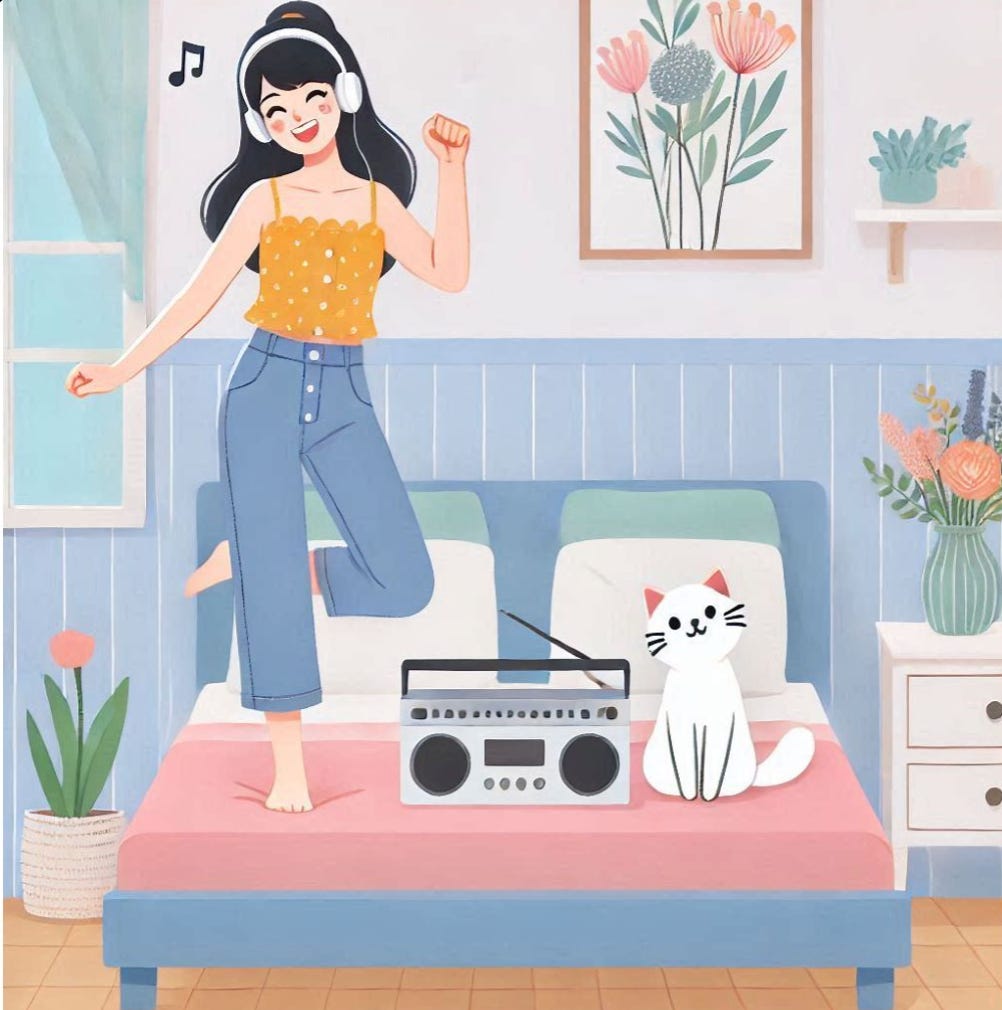
And of course, my most favourite movement of all… dancing along to cheesy pop songs in my bedroom, minus the dance routines….mostly.
Overall, I’ve learnt that exercise doesn’t have to be intimidating or a way of punishing myself.
Exercise is just movement, and movement can be fun AND medicine for your body, no matter what body you happen to be living in…
How about you?
Do you find it hard to exercise due to your chronic illness or fatigue? Did you have much help with how to pace and build up strength? Did you have to reframe how you saw exercise and movement after diagnosis? Do you still have moments of guilt or comparison? What movement do you enjoy? What has your relationship been like with exercise over the years with your changing body? I would love to know in the comments below!
See you next week!
Lots of love & hugs,
Amanda x
Resources- Things that have helped me and they may help you too!
The NASS charity page with a range of information about exercise and AS
Exercise Well with Autoimmunity book by Zoe McKenzie- she is a physiotherapist with several autoimmune disorders herself so she really understands what its like to live with pain and fatigue and how to exercise around these things/work with your body. She’s also on Instagram!
Train Happy book by Tally Rye- a good book about challenging your mindset when it comes to exercise. A more holistic approach to movement with some workout plans included in it you can do from home.
I love following a lady called Ali DiGiacomo on Instagram (Anotherdaywithra). She is a Fitness trainer who also has rheumatoid arthritis. She is so joyful and funny its hard to resist her enthusiasm when it comes to movement and exercise. She shares lots of tips and tricks and also does (paid) workout plans on her website HERE.
I love doing the Yoga with Adriene videos on YouTube. There are so many different ones to choose from depending on what your mood/energy levels are like. I’ve always found her so calming and I love her sweet dog Benji that always accompanies her on the mat!
I found this Diary of a CEO podcast episode fascinating- Dr Stacy Sims is an exercise physiologist who explains nutrition and exercise specifically for women (who have been chronically under researched for decades). She talks about differences in our lung/heart capacity, blood sugar levels, how best to exercise, working with our menstrual cycles and during menopause. She also talks about why women get more knee injuries and what exercises we can do to reduce these. I wish they told us this stuff in gym class at school!
I found this YouTube video helpful regarding SI joints (SI involvement is a classic sign for AS)- Dr Ryan Peebles explains what the SI joints are, how to stabilise them by explaining what exercises to do and ones to avoid. The main take-away from the video for me was that glute bridges are really good for SI stabilisation, so I’m now incorporating those into my daily stretches!
And as always, please feel free to mention in the comments some good resources that you have found helpful too!
Thanks for reading In my bones...! This post is public so feel free to share it.
No posts
Comments
Nothing yet. Say the first thing.
Sign in to join the conversation.