
Have you ever wondered why you behave like you do?
You might wake up in the morning full of good intentions only to find yourself doing the precise thing you said you wouldn’t by mid-morning.
Or maybe as a leader you've sat frustrated at your desk thinking ‘why can’t people just do as I tell them?’
If so, this week's substack is for you.
I was a star performer, full of ideas and energy and then something happened and I found myself struggling to think. It wasn’t just me: my team went from ‘can - do’ to ‘ can’t - won’t’. Everyone seemed to be affected by the same malaise. You could almost feel the atmosphere tilt and shift as you walked past the reception desk and headed up the stairs.
So, what had caused the change?
In a word: uncertainty
We were a scale up facing our first restructure. My challenge as a newly promoted head of department was to change the way I worked to be more ‘commercially’ focused [At the time I didn’t know what that meant] and lose 30% of my headcount.
My favourite neuroscientists had yet to publish their papers that would radically change the way I think about performance at work. So I had no understanding of the impact neurochemicals have on the brain. I just didn’t understand what was happening to me or my colleagues.
All I knew was, I used to be great.
My team used to be great.
Work used to be great.
And now everything sucked!
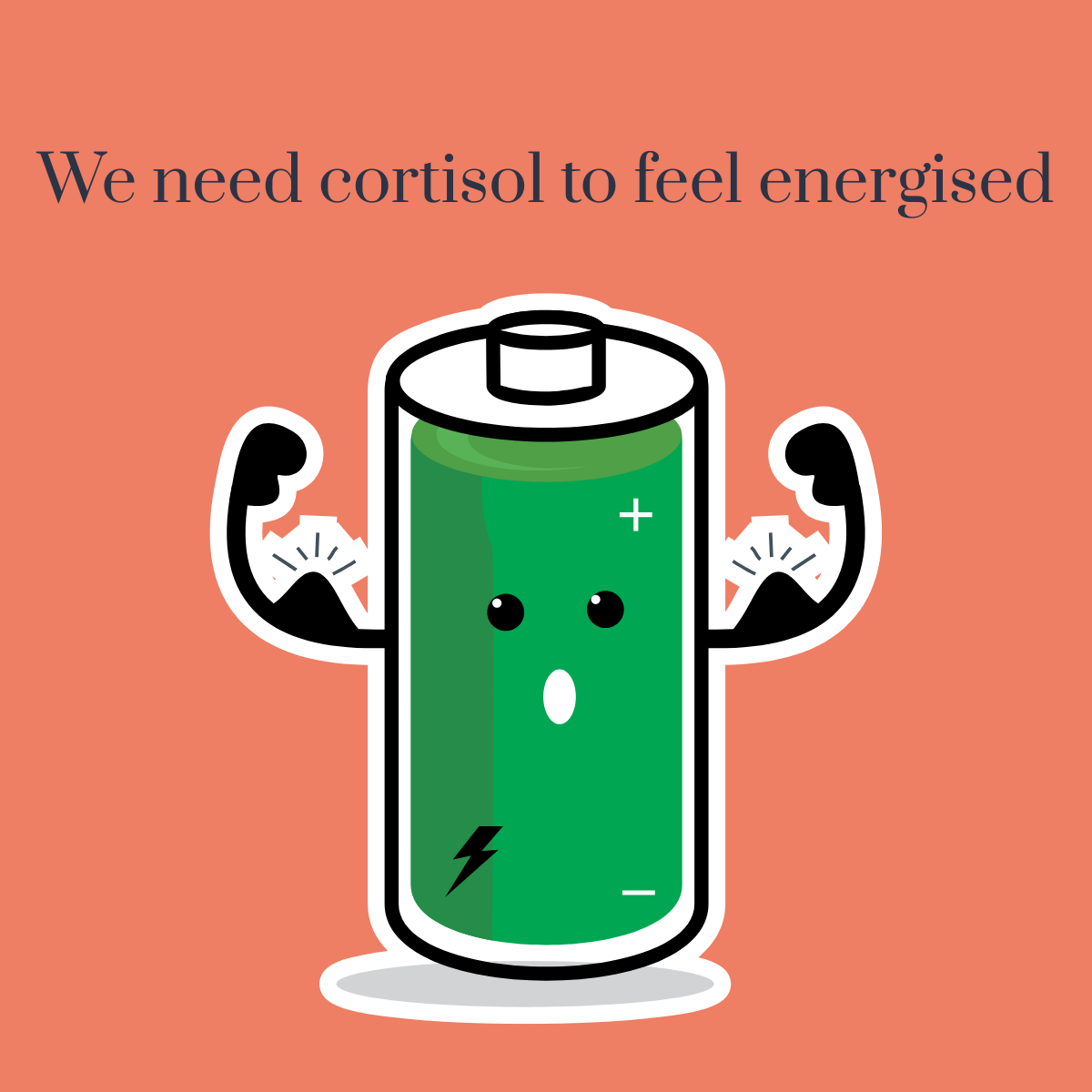
When you are under any form of stress a neurochemical called Cortisol is released into your brain. A little bit of Cortisol creates that buzz of excitement and ‘game on’ focus you need to boost performance.
Think of a world class sprinter on the starting blocks or a comedian before they take the stage. Cortisol is what gets them pumped up and ready to perform at their best.
When there is too much stress on your system the levels of Cortisol rise to such an extent that your brain kicks into survival mode.
Access to the thinking, reasoning and creative parts of your brain are shut off. Your brain is now in a purely reactive state. That focus is now laser sharp and honed in on the danger. Bits of brain functionality like socially acceptable behaviour, self-control and learning are shut off so you can react at lightning speed and get yourself to safety.
Imagine if a tiger walked into the building. You would react with speed and get out of the tiger’s path immediately. If you weren’t in survival mode you might sit and wonder:
Where did this tiger come from?
Is it someone’s pet?
It looks less orange than I thought it would. . .
and as you muse and wonder
YOU WOULD BE EATEN!
It might be helpful to think of your brain as having two modes of operation
Reflective
Reactive
In a reflective state - we have access to our whole brain and can do deep thinking, connect to others and solve problems creatively. This is us at our best.
In a reactive state - we are being influenced by Cortisol and are behaving in a way that’s driven by a need to protect and survive.
Going back to my experiences during my first ever restructure. The uncertainty of working in a new way; plus the fear of job losses and the impact this would have on ourselves and others - elevated our Cortisol levels.
We were asked to maintain business as usual and keep to the same pace and quality of work, whilst we waited for further information and decisions to be made. In the period of time when performance was at its worst we had no certainty about who would lose their job, or how many would be affected. We had no control over our future and felt, considering the impact we had and the positive good the company was making, that job losses seemed unfair.
The high performance we had previously enjoyed was created because we had a high level of engagement with what we did and were able to work together in a ‘reflective’ [whole brain] state.
The drop in performance, motivation and creativity was because we had been triggered into survival mode and you can’t do your best thinking when operating from this reactive state as it limits which parts of the brain you can access.
What I have learned as an executive coach over the last 10 years is that the reactive brain state in survival mode brings a set of automatic behaviours that seem logical to the individual but are corrosive at work.
That’s why understanding how you can generate more value as a leader starts with exploring your internal brain state and working out if you are operating from a reactive or reflective state.
To read more about what’s going on inside the brain please consider subscribing to my substack
Comments
Nothing yet. Say the first thing.
Sign in to join the conversation.