
At age 33, I feared that I was a sociopath.
I didn’t love people or seek to be loved by them. When they left me, I didn’t miss them; when they touched me, I couldn’t feel them; when they died, I didn’t grieve. I had no secure attachments, not to myself nor anyone else. I must be a sociopath. What else could explain my cold heart? My anxiety became so torturous that I needed to know one way or another.
I completed a whole battery of psychological tests, which reported that I was a survivor of complex trauma as a result of the physical and emotional neglect that I experienced throughout my childhood. The psychologist told me that I had a severe case of avoidant attachment, generalized anxiety, and dissociation. How could this be? I wasn’t physically or sexually abused; I was simply ignored. My childhood wasn’t that bad.
My parents rarely spoke to me. I was left alone to raise myself. When I was sick, I took pills that I found in the drawers. When I was hungry, I ate dry, uncooked food that I hoarded in the backs of cupboards. When I was lonely, I created imaginary people in fantasy worlds who adored me. When my parents couldn’t ignore me, they treated me as an inconvenience.
I was denied food, warm clothing, a clean home, medical care, academic support, and, most of all, love. Instead of being stuck with consistent, pervasive pain, I became an expert on dissociation. When I didn’t have enough food to eat, my body shut down, so I didn’t feel the hunger pangs. When I didn’t have warm clothes, my body went numb, so I didn’t feel the sting of the cold. When I was ill, I didn’t feel much pain at all. Dissociation helped to protect me, but it also left me feeling as if I did not physically or emotionally exist in the world; it made it difficult for me to know when I was seriously ill or injured, and it prevented me from connecting with others. I went through the motions of life mechanically, as if I were not fully alive, but not yet dead.
I had no safe, healthy, or capable adult in my life to act as my attachment figure, the foundation upon which children build relationships. It was as if I were building a house on loose gravel as opposed to sturdy concrete. As an adult, I tried to build a house on this shaky foundation, which never worked. How was I supposed to know how to love or be loved when my parents couldn’t love me? I couldn’t.
People tend to focus on the impact of childhood physical and sexual abuse and downplay the effects of emotional abuse and neglect. I learned that this is a mistake. No one type of child abuse is worse than another because trauma isn’t about experiences themselves; it’s about the impact of those experiences or lack thereof. The first step in my trauma recovery was acknowledging that my childhood was abusive and it had a significant adverse effect on me. My childhood was, in fact, that bad.
Over the next five years, I began intense trauma therapy. I participated in EMDR (Eye Movement Desensitization and Reprocessing) therapy, attachment therapy, somatic experiencing, internal family systems therapy, and animal-assisted therapy. I engaged in support groups, took psychiatric medication, and embraced my realization that I was not a sociopath but a trauma survivor. I made significant progress. I noticed a decrease in my anxiety, hypervigilance, and dissociation as well as an increase in self-worth, feelings of safety, and ability to connect with others. Then, I came across one of the most significant obstacles in my recovery: forgiveness.
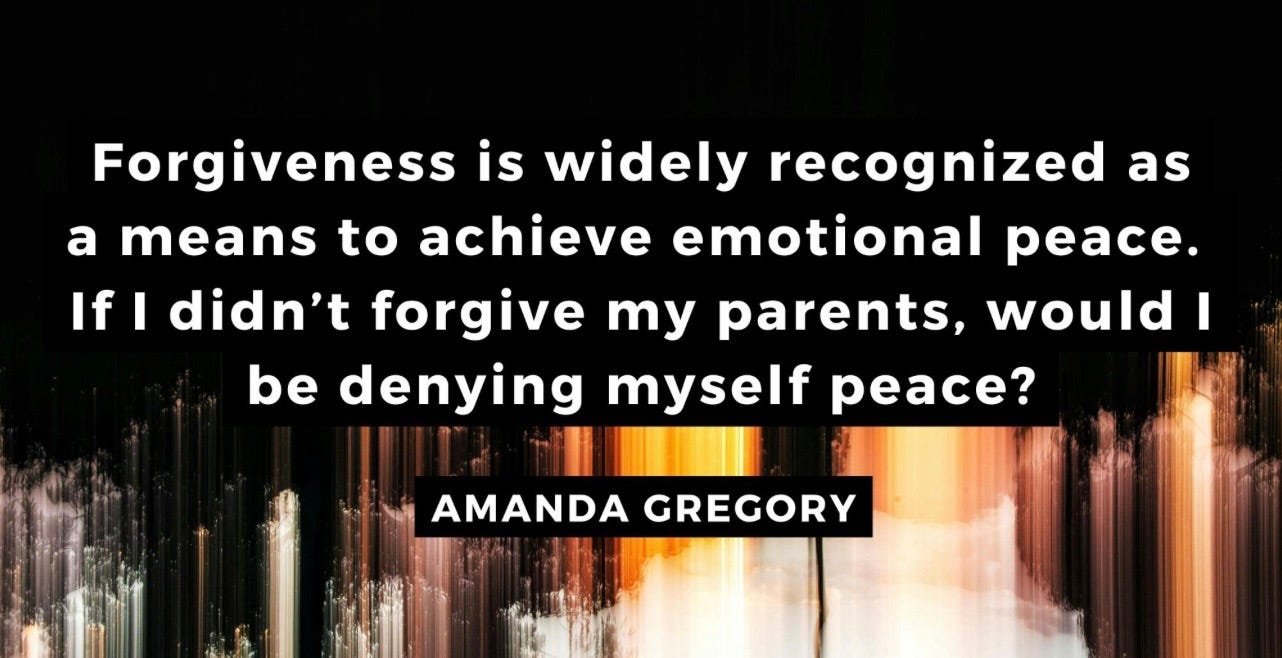
During my recovery, I experienced intense confusion, anger, betrayal, and grief directed at my parents. My treatment team told me this was healthy, and I needed to explore and feel these emotions to process them and heal. I did, and these emotions became less intense. Yet, they were never entirely gone. They would reemerge as less severe, but still present. Was it possible for these emotions to completely dissolve and never return? Could I one day think of my parents and feel content, neutral, or even love? Forgiveness is widely recognized as a means to achieve emotional peace. If I didn’t forgive my parents, would I be denying myself peace?
“Do I need to forgive my parents to make more progress in my recovery?” I asked my therapist.
“What do you think?” asked my therapist, which is the typical response of a therapist who’s trained never to give advice. But I needed an answer, so I asked other clinicians.
“Yes, if you can forgive, you should. It will improve your life and strengthen your relationships,” said a marriage and family therapist.
“I can’t say for sure. I’ve had clients who forgave and those who didn’t, and I honestly haven’t noticed a difference in treatment outcomes,” said a trauma therapist.
“Absolutely. Forgiveness is the key to healing. You cannot truly heal without forgiveness. I encourage all my clients to forgive,” said a Christian counselor.
“I think it all depends on what the client needs. I’ve had many clients who didn’t forgive, and they made great progress in therapy,” said a psychologist.
“Everyone needs to forgive. Holding grudges isn’t good for mental or physical health,” said a child therapist.
“If forgiveness were a proven cure-all, we’d recommend it to every patient. As you know, nothing in psychology is all-or-nothing,” said a psychiatrist.
There was no consensus among them. How could that be? How could they not know? As a trauma survivor, how could I not know? I needed an answer.
I spent the next three years researching forgiveness from the perspectives of psychology, sociology, philosophy, and religion as it applies to trauma survivors in recovery. I interviewed mental health clinicians, scholars, religious leaders, social advocates, and forgiveness therapy practitioners. I listened as trauma survivors shared their own perceptions, experiences, and struggles with forgiveness. I learned that forgiveness should be considered an elective, not a requirement, in trauma recovery, and when it is not, it can cause harm.
Continue reading this essay on Recovery Diaries
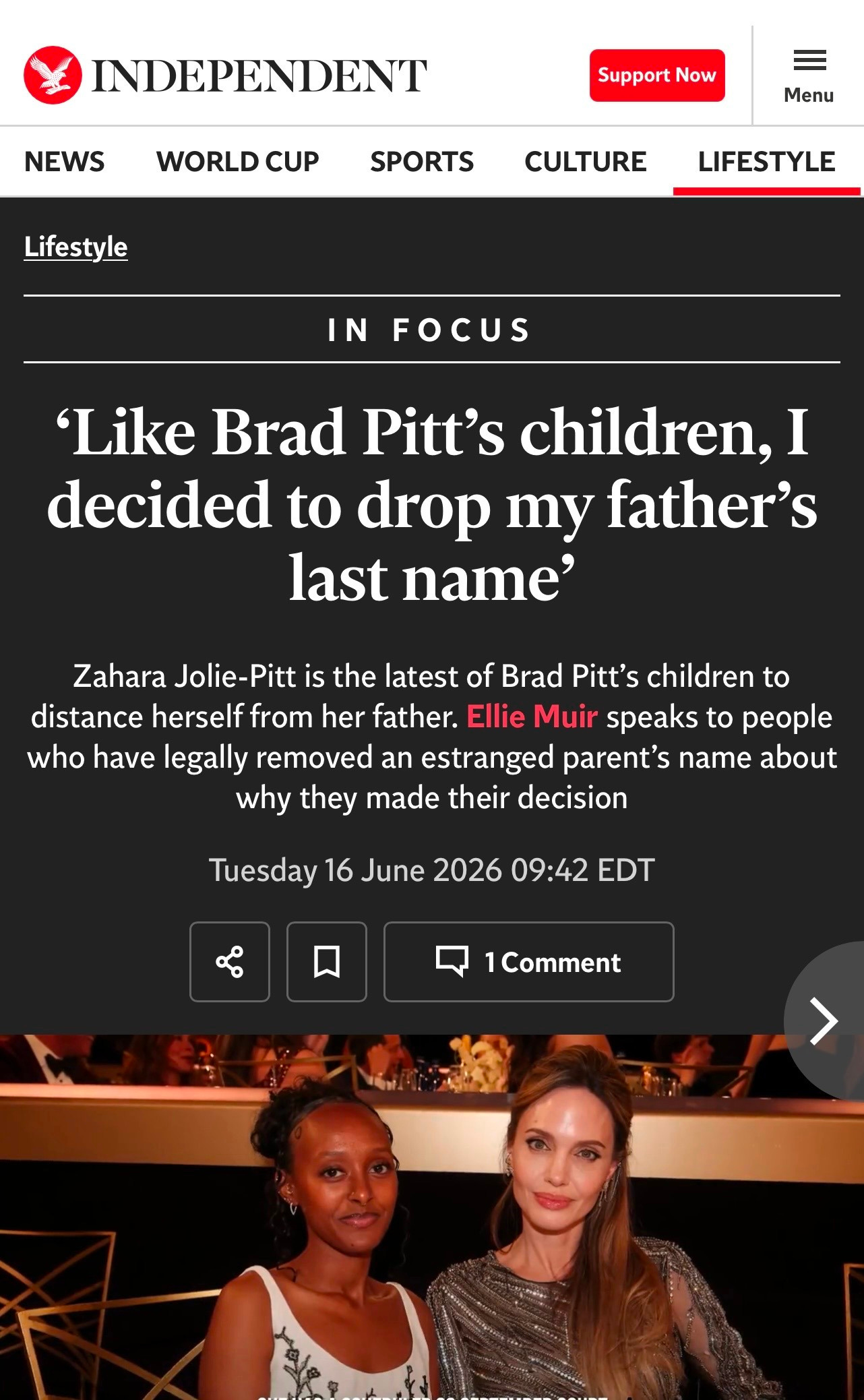
My interview for The Independent:
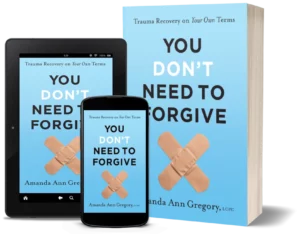
Amanda Ann Gregory, a Chicago-based complex trauma psychotherapist and author of the book You Don’t Need to Forgive: Trauma Recovery on Your Own Terms, says that the decision to change a name rarely stems from anger or the prospect of “getting even” with a parent. In Gregory’s experience, clients who go through this process are usually motivated by a desire to strengthen their sense of self-worth and identity. “They change their names because it no longer fits. It doesn’t represent who they are anymore,” she says.
Gregory says clients rarely make the decision on impulse. “This is often something that has been thought about over a long time and researched,” she says. Some of her clients have had people call them by their new last name to test out how it makes them feel. “There’s usually a lot of [emotional] steps that somebody will go through before they decide to do this because this is a big change.”
“There is a belief in our society that if someone shares genetic makeup with you, they should have more entitlement in their relationship with you,” says Gregory. “I wish people were more aware of how this influences them when they’re forming their opinions on whether ‘estrangement is bad’ or ‘estrangement is good.’”
No posts
Comments
Nothing yet. Say the first thing.
Sign in to join the conversation.