
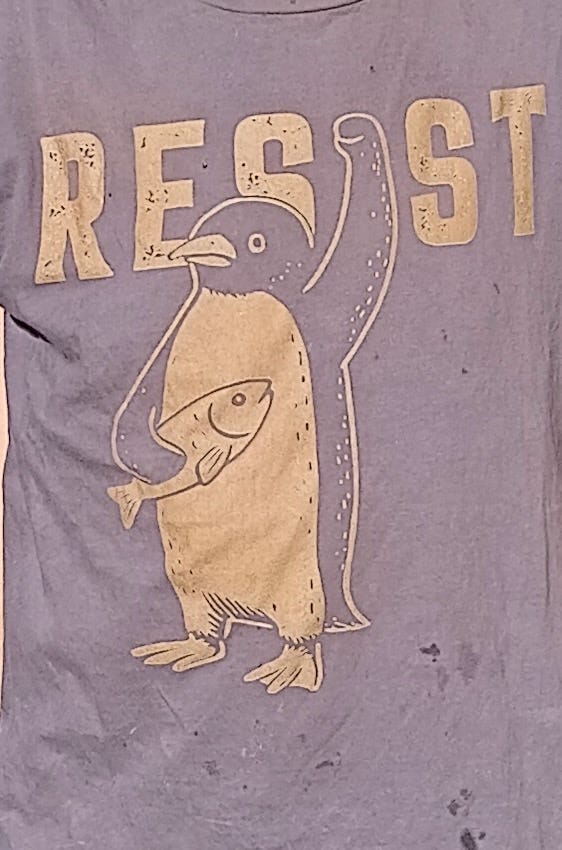
The recent flurry of US Supreme Court rulings makes the protection of civil rights now as crucial as in the 1950s and ‘60s, when significant breakthroughs through massive protests extended the civil rights of many ordinary people.
ICE has increased its quotas to 2,000 arrests per day with its extra funding from Congress. 10,000 people were arrested in a five-day period this week, including the Haitian caregiver of a friend of a friend with Lewy Body dementia here in Santa Fe. Presumably he was one of the 350,000 immigrants impacted by the Supreme Court’s decision to end the Temporary Protective Status of Syrian and Haitian immigrants in this country. He was flown where? Maybe DC, they hope with his lawyer. (For more info about the proposed Find Our Families Act click here.)
Imagination, Experience, Awareness, Gathering Together
It has been observed often in recent years that as a divided populace, we need to connect with one another. Yet how? Imagining others’ experience, experiencing outside-the-box moments, increasing our awareness of others’ realities, could be part of building this different reality. Gathering together to do so, YES.
In the midst of reading a recent biography of writer and activist James Baldwin, Baldwin: A Love Story by Nicholas Boggs, it’s quite remarkable. It’s written a lot in Baldwin’s own words, drawn from his letters to loved ones as well as his published and unpublished work. One story really got me:
In the spring of 1963, president John F Kennedy, non-violent leader Martin Luther King Jr, and attorney general Robert F Kennedy were all still alive. Author James Baldwin had just appeared on the cover of TIME magazine, May 17, 1963, and was in an extensive article in LIFE just six days later. The March on Washington and MLK Jr’s famous I Have a Dream speech were still to happen in August of that year There was a huge amount of violence happening in the South. The administration was looking to discuss with Black leaders ways to reduce tensions.
Civil rights activist - famous Black comedian Dick Gregory suggested Baldwin’s name to attorney general RFK and Burke Marshall, chief of the Civil Rights Division at the DOJ. Ironically, at that time, Baldwin was considered safer than talking with MLK Jr, of whom, RFK reportedly said, King is so hot these days that (it would be) like Marx coming to the White House.
Baldwin was somewhat shocked to be invited to breakfast with Bobby, his family, and Marshall in the Kennedy apartment in New York. The conversation was cordial, yet Baldwin told Kennedy that he and his brother the president had not made it clear to Americans that civil rights was a moral issue. RFK didn’t see any lack in that regard, yet the three men agreed to meet the next day for a longer period with a larger group of people, willing to advise them on the Negro situation in the North and what role the federal government might take.
The following day, Friday May 24, 1963, Baldwin had assembled a stellar group of potential advisors, ready to meet at the Kennedy apartment on Central Park West. The group included Lorraine Hansbury (award-winning playwright of A Raisin in the Sun), Harry Belafonte, Baldwin’s brother David, the inimitable Lena Horne, a young actor Rip Torn, twenty-five -year-old civil rights activist Jerome Smith who’d been recently beat up on the front lines protesting in the South, Dr. Kenneth Clark, producer Henry Morgenthau, Edwin Berry of the Chicago Urban League, and others.
In a wide-ranging conversation that centered on Jerome Smith’s harrowing experiences in the fight for desegregation, there were multiple accounts of what happened at the meeting.
Kennedy expressed disbelief that the FBI is the South could be in collusion with racists. An impeccably dressed Lena Horne is said to have cooly looked at him and asked, But, Mister Attorney General, you’ve never been a Negro being questioned by the FBI in the deep South…have you?
She was inviting Kennedy to imagine something that had never crossed his mind. We White people, there are many things we fail to imagine. Or willfully ignore. That afternoon, the conversation was deeply shaking for attorney general RFK; his experience was harshly expanded. His awareness of what civil rights then meant to millions of citizens became larger.
Less than two weeks later, his brother JFK would go on national TV to announce that he would be asking Congress to enact civil rights legislation, calling it a moral issue…as old as the scriptures and as clear as the American Constitution.
Civil rights now
A veteran of civil rights then and now, labor activist Dolores Huerta spoke two days ago in Texas. She is ninety-six. Latinos hold over 40% of the votes in Texas. Addressing the many cruel events that have occurred, she said, There is a way to change it, and the power to change it is in us.
In her long life, she sees the critical steps as:
Get people together.
Work collectively for the good of all.
Organize the vote, the only way to solve this.
Find Our Families Act
Congressional Representative Rashida Tlaib of Michigan has introduced a bill in the House to help loved ones track people seized by ICE. Is your rep a co-sponsor? Find out more here.
Art in support of civil rights now
If you happen to live here in northern New Mexico, the Monroe Gallery of Photography in Santa Fe has a powerful exhibit happening, America the Beautiful. You can find out more about it here.
Yesterday photographer Ryan Vizzions gave a presentation at the gallery with his featured work, From Standing Rock to Minneapolis. Access it here.
The shadow of white supremacy has always been with us
We are in this place now because of the exercise of many kinds of imagination, including Stephen Miller’s. His take on disability rights is radically different than my own. What do you imagine as fair disability rights? Check out his views here.
Many people fought very hard for the breakthroughs we’ve experienced since the era of the Voting Rights Act of 1965.
Yet White supremacy has informed the actions of famous leaders who have done decent as well as appalling things in our 250 years as a nation, as well as the thinking of millions of us. Witness FDR and the practice known as redlining: his housing legislation helped millions of US citizens – yet discriminated against African Americans. It was in another infamous Executive Order, 9066, that FDR ordered the rounding up and incarceration of 122,000 Japanese-American citizens.
For a closer look at our Shadow, see Roxanne Dunbar-Ortiz’s An Indigenous People’s History of the United States.
Encouragement in Mercury retrograde
Spoiler alert: if astrology helps you make sense of things, read on. If it’s not your story, these next two sections refer to planetary wisdom.
The planet Mercury is retrograde these next three weeks. This can mean many things, yet as Vedic astrologer Michelle Berry writes, The invitation isn’t to rush toward the next chapter, but to clear away what no longer belongs so the path ahead can reveal itself naturally. To access her wisdom, click here.
Jupiter is freshly in Leo
Western astrologer Thea Anderson writes about a current planetary transit that will be with us close to a year. Jupiter in Leo, she says, wants your vulnerability and your presence. It wants your truest self – not the self-aggrandizing or performative self but the one that deserves to be witnessed. For a generous take of Jupiter transiting in each horoscope, click here.
May all sentient beings be happy, peaceful and free of suffering. What a thing to imagine. Imagine! - a very young John Lennon and Yoko Ono.
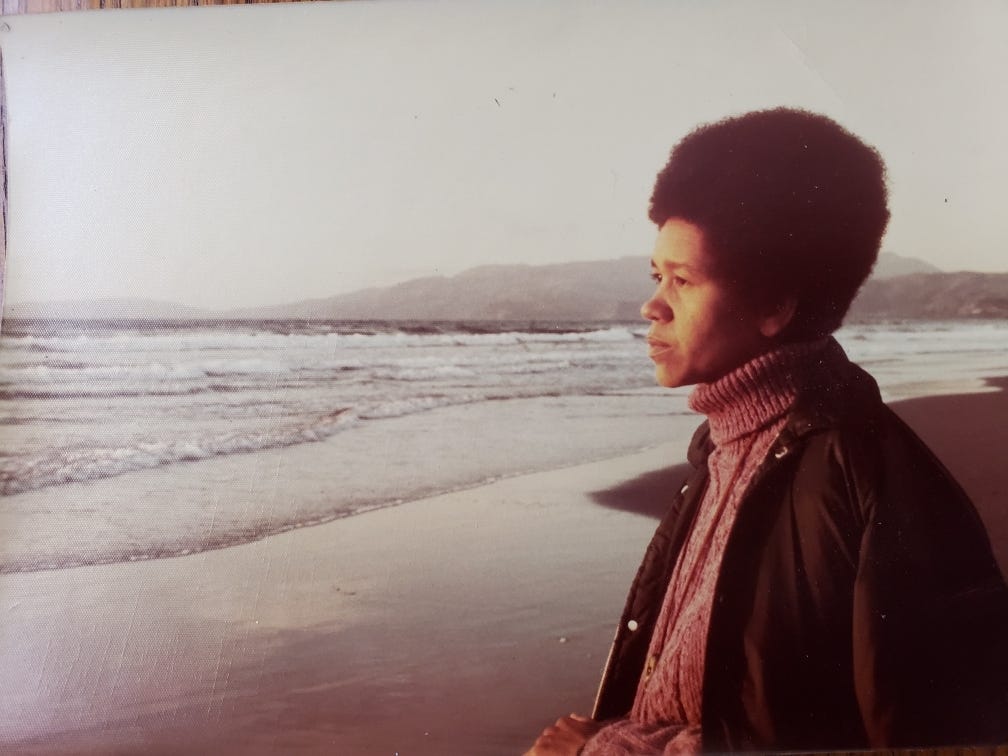
This Substack is in loving memory of my mentor and deep time friend, Shamaan Ochaum, who would have turned 85 today. Bless you for all your revelations, Shamaan.
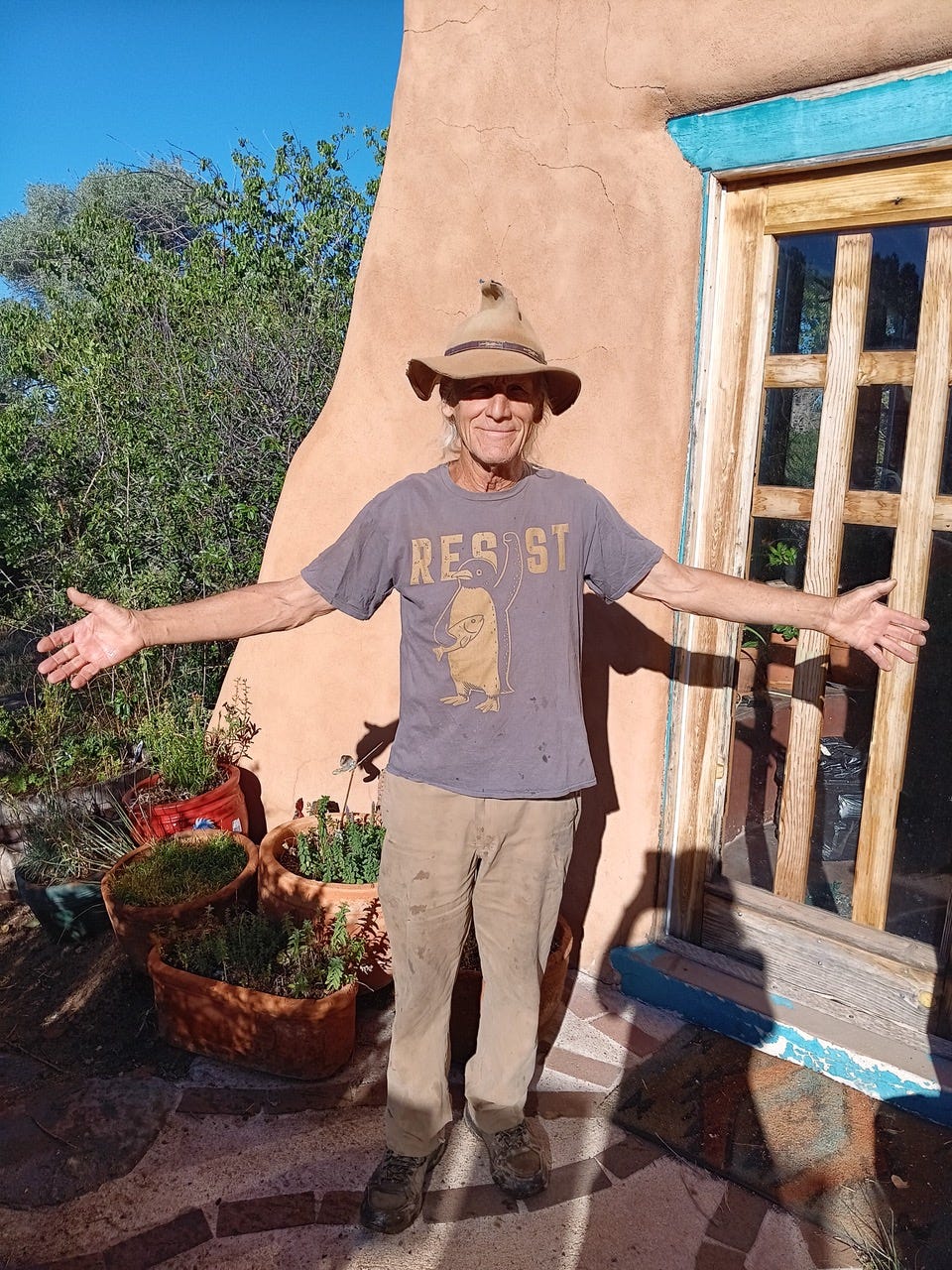
Image: RESIST T-shirt thanks to loving companion Gordon Bruen, pictured here. And to Adam LaVail, for all the great Tees you’ve gifted Gord over the years.
Bio: I’m a writer, Ayurveda health educator and Polarity Therapist practicing in Santa Fe, NM. My most recent seasonal cookbook Easy Healing Drinks from the Wisdom of Ayurveda is on special here.
No posts
Comments
Nothing yet. Say the first thing.
Sign in to join the conversation.