
On May 6th, 1954, Roger Bannister broke the four-minute mile barrier. At the time, this represented a towering athletic achievement — one that runners had been seriously pursuing for more than 65 years.
Bannister’s story is often referenced as evidence of the power of mental models. Despite decades of prior attempts to break the four-minute barrier, it took just 46 days for another runner to follow in his footsteps. A year later, three more runners did it…in the same race! Once Bannister showed the world that a sub-four-minute mile could be run, other athletes could set their minds on greater challenges.
In the world of interactive entertainment, a different sort of “mile” has challenged developers with a similar mental barrier.
MILEs, or Massively Interactive Live Events, are a relatively new type of experience that promise interactive entertainment at unmatched scale. An offshoot of cloud gaming, MILEs offload heavy computation tasks (such as game physics, AI, and the like) from participants’ local devices and move them to the cloud. Meanwhile, MILEs utilize video streaming technology to deliver an interactive viewing experience with potentially massive concurrency.
Twitch Plays Pokemon is a commonly cited example of an early MILE: thousands of players could view the stream simultaneously and send their inputs back to the “game”, but the game logic itself occurred on just one machine running a GameBoy emulator.
I first covered MILEs for Naavik in June 2021. At the time, the format seemed poised for a breakout:
Streaming was booming, partly as a result of pandemic-induced lockdowns
Cloud gaming providers were struggling to deliver on early promises and in need of a major pivot
Genvid Technologies, the leading purveyor of MILEs, had recently concluded their flagship MILE, Rival Peak, boasting more than 100M minutes watched. A month after my essay was published, Genvid raised $113M in a Series C round to develop, publish, and scale more MILEs.
Two years later, MILEs have made little impact on the broader industry landscape. Largely overshadowed by the barreling hype trains of blockchain gaming and generative AI, MILEs have not seen the uptick in developer or investor interest that I had initially predicted.
Could it be that MILEs have not yet had their Roger Bannister moment?
To continue with the previous comparison, one might argue that Axie Infinity (blockchain gaming) and ChatGPT (generative AI) were the four-minute miles for their respective fields. Each product kicked off its own wave of consumer and investor interest, rewriting the world’s mental models for what was possible with each set of technologies. An imperfect comparison, perhaps, but a helpful reminder of the scale required to seize the spotlight in the crowded field of interactive entertainment.
In many ways, an evaluation of the MILE format is necessarily an evaluation of Genvid’s performance as the standard bearer for the format. To paraphrase Genvid CEO Jacob Navok from his appearance on the Naavik podcast, there is “more knowledge on how to build MILEs, more tech on how to build MILEs, [and] more data on how to build MILEs, than anywhere else in the world inside of our company.”
No company is poised to benefit more from a hypothetical Roger Bannister MILEs moment than Genvid.
And yet, despite boasting a roster full of former games industry executives, leveraging established gaming IPs in its products (Pac-Man, The Walking Dead, and the forthcoming Silent Hill, to name a few), and receiving press coverage in games-centric outlets like Polygon, Gamesindustry.biz, and VentureBeat, Genvid has largely flown under the radar of industry observers.
While a formal analysis of the company’s performance is difficult to conduct in the absence of publicly available data, it’s fair to say that the average gamer today has no idea what a MILE is. In my own anecdotal experience, the average game developer is equally unaware of the format. However, herein lies the challenge with mental models: though Genvid is covered like a gaming company, and MILEs are closely associated with cloud gaming, it is likely that the audience for MILEs is quite different than that of traditional games.
Navok himself has discussed this in interviews, stating explicitly that the company’s much anticipated collaboration with Konami, Silent Hill: Ascension, is “not a video game.” He has also referenced the “next two billion gamers” from Google Stadia’s ill-fated attempts at cloud gaming — the supposed untapped market of new gamers that was meant to be unlocked via cloud distribution. From Navok’s perspective, this audience opportunity lies not in the owners of PCs or gaming consoles, but among the billions of mobile-first or mobile-only consumers in search of high-fidelity interactive entertainment experiences.
Intuitively, this makes sense. The company’s own messaging identifies an opportunity between “lean back” and “lean-in” entertainment. However, as we’ll explore below, there are many practical challenges to solve in achieving this balance that may be hindering broader adoption of the format.
Before proceeding further, I want to make clear that this is not meant to be a takedown of Genvid by any means. I am actually incredibly excited by what they’re building, and if my prior writing on the topic is not evidence enough, I’d like to clearly state for the record that Navok and his colleagues should be commended for pursuing such an ambitious vision.
I find the MILEs format fascinating and would love to see more developers experimenting in this space, as I believe it presents many interesting and under-explored opportunities for designing and deploying novel interactive entertainment experiences. While I am hopeful that Silent Hill: Ascension brings the format to a more mainstream audience, I believe that many obstacles to greater adoption remain, even if it does ultimately prove successful.
The first and most obvious obstacle is finding true product-market fit. There are two ways to analyze this challenge:
“Fit” between a given MILE (e.g. Rival Peak, Silent Hill: Ascension) and player/viewer audiences.
“Fit” between the MILEs tech stack and prospective MILEs developers.
On the first point, there are positive indicators to point to. The breakout success of proto-MILEs, such as Twitch Plays Pokemon or Reddit Place, combined with impressive viewership figures from Genvid’s early MILEs, like Rival Peak and The Walking Dead: Last Mile, show encouraging momentum for proponents of the format. While skeptics might wonder why metrics like “views” and “minutes watched” are being touted — as opposed to something like DAU or MAU — we can at least say that there are positive directional indicators for the format’s fit with its target audiences.
Unfortunately, on the second point the fit is less clear. If imitation is any indication of success, there are rather few examples of MILEs to point to. Though there are a handful of companies and games that offer directional signal, they are all imperfect comparisons:
Netflix’s first experiment with interactive storytelling, Black Mirror: Bandersnatch
The Game Band’s recently-shuttered absurdist baseball simulation, Blaseball
Mark Cuban-backed interactive entertainment app Fireside
Interactive streaming platform Adventr
Captain.tv’s streamer-led games
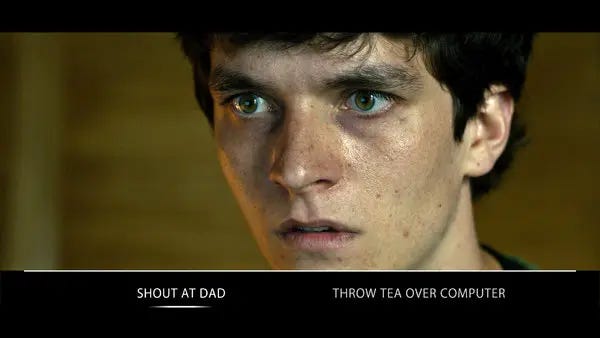
None of these products were built leveraging the Genvid SDK, as far as I can tell, and at least two of those companies (The Game Band and Captain.tv) have gone through layoffs in recent months.
Of the nine example MILEs that have been built on Genvid’s tech stack (according to the company’s website), five were built in partnership with major corporate backers (Facebook, Konami, Intel, etc.), three were made by little-known game developers, and one was made exclusively for Genvid.
To summarize, yes — several MILEs and MILE-like products do exist, but it’s difficult to say with any confidence whether a real community of developers or players/viewers has been properly established around the format.
Clearly, it’s still early days for the MILEs ecosystem. Developers need to see what’s possible with these technologies before taking a risk on developing experiences for an unproven format. This is a challenge faced by many emerging platforms and technologies, from Roblox experiences to blockchain games to VR headsets. All of these ecosystems have at one point faced the so-called “Cold Start Problem.”
While Genvid’s approach of leveraging major IPs and corporate backers to kickstart growth is valid, it is not the only option available. Other approaches, such as developer grants, hackathons, incubators, and so on, have been successfully deployed for other emerging ecosystems and may yet be in the cards for the company.
It’s also possible that the relative infancy of the MILEs format would be better served by a more open-source approach. This doesn’t exactly jibe with Genvid’s current business model — and there are definitely challenges here, such as the server costs for operating experiences explicitly defined as “massive” in scale — but from the perspective of growing the format, it may be worth considering additional ways of making experimentation with MILEs tech more accessible to amateur developers. As it stands today, it is far easier for a hobbyist to experiment on either end of the interactivity spectrum — say, spin up a game prototype or film a YouTube video — than it is to create a rudimentary MILE.
Adding to the development risk of building for an unproven platform is the uncertain investment required (in both dollars and labor) to live operate a MILE. Two of Genvid’s most successful experiences to date — Rival Peak and The Walking Dead: Last Mile — were operated as always-on, 24/7 interactive experiences. Both MILEs played out over the course of months (roughly three months for Rival Peak and four months for The Walking Dead). How should a developer structure their operations to support such a demanding schedule?
Genvid has detailed some of the challenges it faced in a blog post outlining the live operations behind Rival Peak, including managing a distributed workforce of live operators and QA staff, difficulties associated with onboarding vendors, and the technical limitations of Facebook as a live streaming platform, among others.
Presumably, the company has established some best practices for this sort of live operation by now, particularly with additional high profile releases under its belt (Pac-Man, The Walking Dead) and the pandemic-induced challenges of collaboration and remote work in the rearview. It’s also possible in the future that advances in internal tooling and perhaps even generative AI could help to reduce the complexity and human cost inherent in keeping that 24/7 live ops treadmill running. Regardless, the live ops challenge for MILEs is far from a solved problem today, and only adds to the risk and upfront investment required of developers considering these sorts of interactive experiences.
To be fair to Genvid, many of these challenges (growing a platform, nurturing a developer ecosystem, establishing live ops best practices, etc.) are par for the course in establishing a publishing organization. The company’s Series C raise in 2021 was explicitly targeted at creating a MILEs publishing subsidiary and it’s fair to expect that such an undertaking would require a significant investment of time and hard work before showing meaningful traction. With two years of progress behind the company, it’s possible that product-market fit is still just over the horizon for Genvid.
A further challenge faced by MILE developers is that of the user’s experience, which is made all the more difficult by our collective lack of understanding of the motivations driving MILEs audiences. Because the format is so new, and, as alluded to earlier, vacillates somewhere between “gamers” and “viewers”, it’s fair to say that we know very little about how these users like to engage with MILEs.
In the world of game development, studios and publishers traditionally leverage user research and other data-driven insights on players’ motivational personas to design experiences catered to specific audiences. The canonical example here is the Bartle taxonomy of player types, though many such models exist (e.g. Quantic Foundry, Solsten, etc.).
Genvid itself recognizes this and has posted a series of blogs on how a developer might approach designing for different user motivations in the context of MILEs:
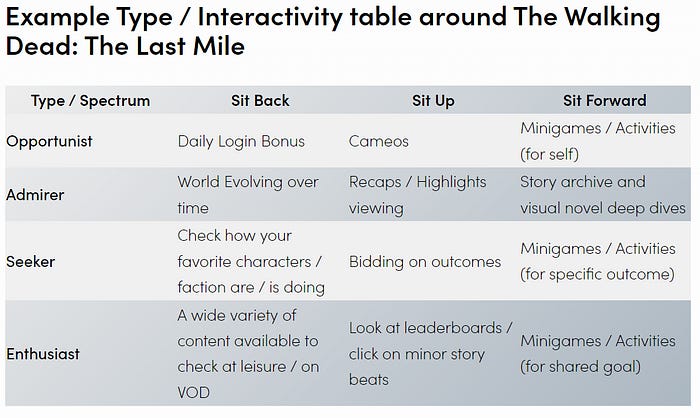
The series is well worth a read and provides interesting insight into how Genvid is thinking about the user experience of engaging with MILEs across a wide spectrum of users. The exercises that these blog posts run through also emphasize the importance of differentiating MILEs audiences from traditional gaming audiences.
Most of the solutions and mechanics proposed can be characterized as fairly casual in nature. With the caveat that the blog offers only hypothetical examples, I think it’s telling that the “Sit Forward” options are mostly “minigames” or “activities” — not exactly the most hardcore form of interactive entertainment. While there is nothing inherently wrong with this approach, it reinforces the need to evaluate the user experience of MILEs differently than that of a typical game.
The UX challenge for MILEs is tricky and much less straightforward than designing for a traditional game. By way of example, consider a theme and aesthetic that Genvid has experimented heavily with: the zombie / survival horror genre. Creating a viewing experience that meets the expectations of horror audiences is only part of the equation; there is still the larger question of what types of game mechanics will resonate with that audience. The games industry has seen countless iterations on zombie games, including squad-based RPGs, 4X games, and Match 3 puzzlers, among many others. Even within a given IP like The Walking Dead, games can span a wide spectrum of mechanics and cater to vastly different audiences.
In some ways, this can be boiled down to a classic creative conundrum of narrative vs. design. Clearly, a major selling point for MILEs (and one that Genvid hopes will contribute to a sticky user experience) is the evolving narrative. Viewers want to play a role in the unfolding story, so it makes sense to lead with big IPs and design mechanisms around them for audiences to interact with the various characters and influence pivotal plot points. To that end, features from The Walking Dead: Last Mile like character customization and “cameos” — where players can “appear in…official cutscenes and be immortalized as part of the official story” — make a lot of sense.
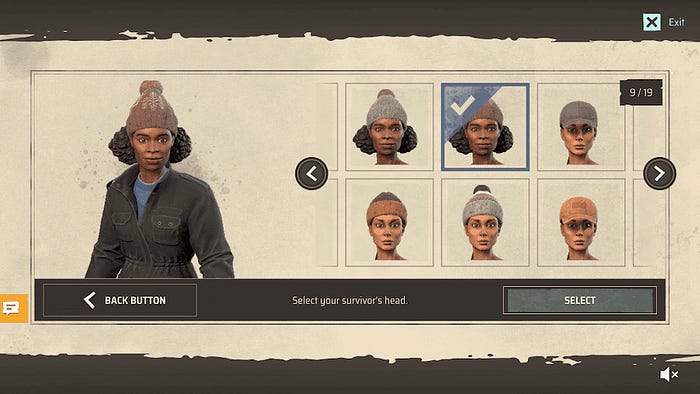
On the other hand, letting narrative dictate experience design can constrain the options available to game developers. IP holders may not be amenable to certain design choices, regardless of how fun or engaging they are, and the aforementioned closed ecosystem around MILEs development inherently limits the opportunity space for uncovering innovative designs.
Finally, it’s worth noting that the best approach to crafting a sustainable interactive entertainment business model is one that incorporates monetization plans into the design conversation from the outset. Unfortunately, as of this writing there is little evidence to suggest that monetization best practices have yet solidified within the MILE format.
A final obstacle yet to be resolved for MILEs is the business model. As mentioned earlier, most of Genvid’s early MILEs were crafted in partnership with large corporate backers and were likely less reliant on organic monetization to achieve their goals. Yet this final piece of the puzzle will be critical in determining the long-term commercial viability of MILEs.
As for the company’s next release, Silent Hill: Ascension, Navok and Genvid have been tight-lipped on the topic of monetization. Navok has stated that “it’s not going to be subscription-based, and it’s not going to be a fixed price…you’re not paying $70, and you’re not paying $9.99 a month.” Beyond that, however, details have yet to be formally announced.
Despite the lack of publicly available information, we can make some assumptions about the business model given the constraints outlined above. First, I find it highly doubtful that there will be any sort of up-front cost to viewing or engaging with the MILE. Genvid needs to show traction with this experience — in both viewership and user engagement — in order to entice other big IPs or development organizations to sign up for MILEs of their own. Ideally, the company will also want to show at least some promise of revenue, too, given that its last fundraise was announced nearly two years ago.
If we’ve also ruled out a subscription model, as Navok has stated, that leaves us with some combination of either free-to-play or ad-based monetization. Given the attitudes of traditional gaming audiences towards IAPs and microtransactions, I am not at all surprised that Genvid would be hesitant to discuss its plans for Silent Hill. While the core Silent Hill fan group may not be the exact target audience for Silent Hill: Ascension, it might still be vocal enough to dissuade more casual viewers from engaging with the experience. In some ways, Genvid’s coverage in the gaming enthusiast press (as opposed to, say, more film- and TV-centric outlets) may actually be a detriment, given the historically anti-F2P editorial bent of these publications.
Of course, I am speculating and may be completely wrong here. Genvid’s last zombie horror MILE, The Walking Dead: Last Mile, had no microtransactions despite utilizing an in-game engagement-based currency called “influence points.” That said, the company’s own website discusses influence points in the context of MILEs broadly (as opposed to being limited to any one experience) and it seems likely that this currency will resurface in future productions. According to Genvid, influence points can be used “to bid on story decisions big and small” and may also be spent “on an official cameo for your virtual self in the experience.”
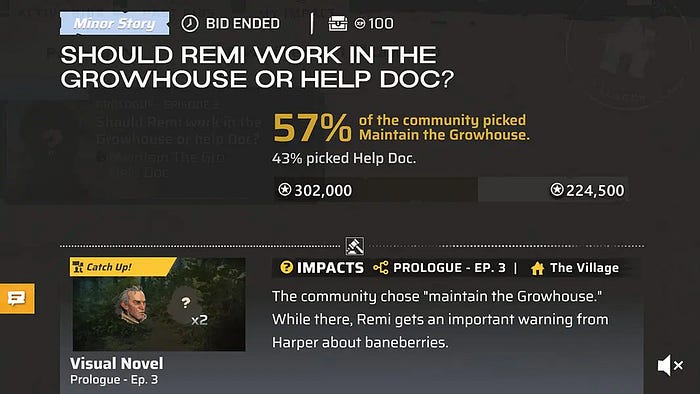
My hunch is that influence points will ultimately be merchandised for direct purchase, in addition to being earnable via engagement. Of course, the inevitable backlash that this approach will face is the tired accusation of “pay-to-win”. Players with deep pockets will outbid those who may be equally engaged but less willing or able to spend. The challenge for Genvid will be to balance these concerns with the actual impact to the narrative and audience experience that these types of purchases may bring about.
The aforementioned “cameos” feature makes sense here, as it’s implied that the person who made that purchase will only have a bit part in the narrative. Allowing any one user’s purchase behavior to meaningfully sway the narrative’s progression goes against the entire idea of a communally-decided story. I expect Genvid will pursue other monetization options that feature a similar combination of high user visibility and low narrative impact, such as cosmetics and other customization options. Interesting comps can be found in both streaming and gaming, where features like Twitch subscription celebrations or custom kill feeds have been prevalent for years.
It also wouldn’t be completely crazy to attempt some sort of advertising-based solution, given the similarities to film, television, and Twitch streaming. In-stream ads can be overlaid on top of or around the on-screen action. Sponsorships and in-game product placements can be sold. Perhaps even rewarded videos or offer walls could be implemented as a means of earning influence points or other in-game currencies in exchange for watching ads.
Options abound, but the challenge for Genvid will be to find a balance between the agency and influence over the narrative a given purchase may confer, the total spend depth available to a given player/viewer, and the user experience of monetizing. In other words, what utility do I get for making a purchase? Can I make purchases again and again? And does it feel good to do so?
Once the monetization model has been (at least partially) solved and payback periods can be estimated with some accuracy, a user acquisition operation can be put into motion. Imagine getting an ad that shows a live stream of the MILE and allows users to quickly jump into viewing and participating in the story, with little to no installation or account setup required. The experience would be analogous to trying out a new game in Roblox. With such little onboarding friction, the opportunity for social or viral acquisition campaigns would be quite large. In this regard, having a strong IP like Silent Hill or The Walking Dead might be extremely beneficial.
All of the challenges discussed above will be critical to overcome if the MILE format is ever going to take hold. I remain optimistic that Genvid will figure them out — if only because it’s had plenty of time to think through them and has undoubtedly learned from the successes and failures of its prior launches.
Even still, there are many reasons to believe that MILEs might never take off in a meaningful way. Perhaps charting the middle ground between “lean back” and “lean-in” experiences risks trying to be everything to everybody? Maybe the agency and decision-making in playing games loses significance when paired with massive concurrency? What if interactive streaming was a pandemic-driven phenomenon that ultimately recedes? Maybe MILEs are destined to suffer a similar fate to esports, serving as little more than marketing vehicles for non-endemic corporations seeking to appeal to a gaming audience?
These are all possible outcomes, but despite my optimism, I can’t help but wonder if we’ll ever see a Roger Bannister moment for the MILE format. Reframing the discussion to be less gaming-centric is one way to approach this, but further experimentation, collaboration, and risk-taking should be encouraged. I would love to see more teams iterating on the MILE format, but until we see a singular breakout success I suspect that Genvid will find it difficult to reframe the mental models of developers, analysts, and observers in the interactive entertainment space.
No posts
Comments
Nothing yet. Say the first thing.
Sign in to join the conversation.