
Don’t have time to read? Here is the audio podcast version so you can listen on the go!
The lesson my 19-year-old self learned during my first fashion internship might be the secret sauce for the most successful brands over the next 5 years.
Stick with me, this is long, but it will change how you view the business of fashion.
I’m not proud of who I was, but I think it’s important to share, because it proves how my time working in the fashion industry changed me forever. And if I could change, anyone can.
Think True Religion bell-bottoms, midriff-baring tank tops, sterling silver Tiffany & Co. chunky heart chokers, and Juicy Couture velour everything.
2003 marked the rise of the brand-obsession era.
I mean, brand loyalty had always existed. In elementary school, it was Limited Too and Delia’s. In middle school, it was Abercrombie. But by high school? Designer denim took over thanks to Seven For All Mankind, and that’s when labels really started to matter.
Back then, I was a brat.
Paris Hilton was my fashion icon, and yes, I was shopping at Fred Segal for overpriced Free City pajamas.
The peak of my brainwashed consumerism was when I got my Chanel 11.12 Classic Double Flap bag, the one that now retails for nearly $12,000, and used it to carry my TI-89 calculator to stats class.
Talk about out of touch.
I went into fashion because I was obsessed with brands. I wanted to be part of that world, the ability to create desire and image out of essentially nothing.
It wasn’t lost on me that I refused to wear an American Eagle polo, but somehow the exact same polo in the exact same color felt cooler if it came from Hollister. (Which is funny considering both brands literally used bird logos.)
I wanted to understand what created that feeling, that rush of buying something you loved, followed by the second rush of wearing it for the first time.
My first fashion internship was at a sample-sale company, Savvy and Co, and that’s where I got my first glimpse of what clothing was actually worth. We ran sales for brands with leftover stock at the end of the season. Brands like Catherine Malandrino, Elizabeth and James, Acne Denim… and I got to see firsthand just how low brands were willing to price things just to recoup some cash.
I got a silk Elizabeth and James skirt with a chunky silver zipper that I wore to death clubbing for only $15.
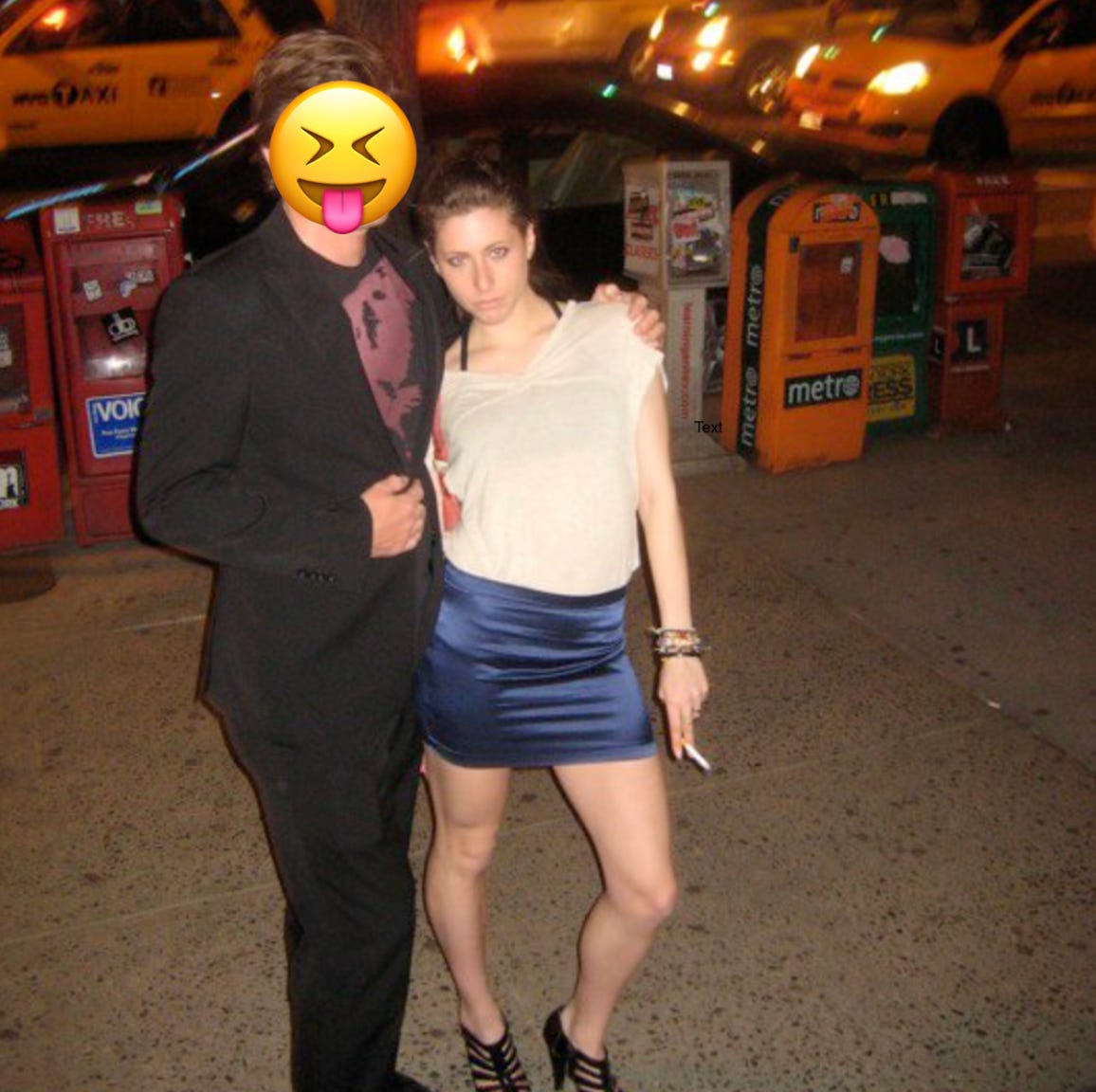
If you knew me in 2007, you knew this skirt. 😝 To protect the innocent lol.
-
That’s when I stopped paying full price for almost anything.
My next internship was at Beyond Vintage, and that’s where I really started to understand how brands were actually making clothing.
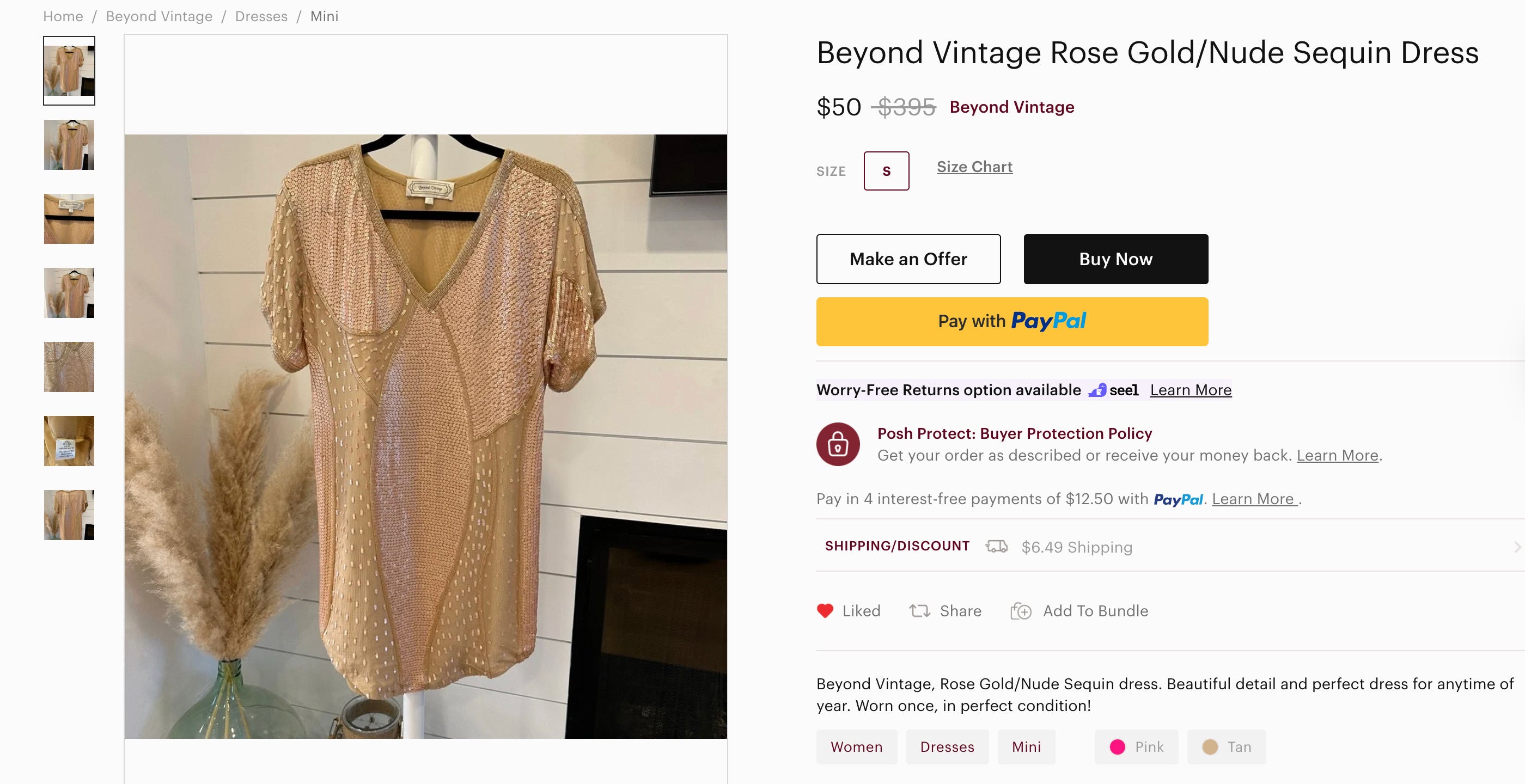
This is the very first project I ever got to be part of in the fashion industry!
-
At the time, celebrities were constantly wearing the brand's layers of lace and sequins, so I was beyond (pun intended) thrilled to work there and happy to be paid in clothing.
But the entire experience was incredibly anticlimactic.
The owner would pull vintage wallpaper prints that were no longer under copyright and recreate them with almost no changes. Then she’d go to vintage shops, buy garments, and knock those off too.
She positioned herself as a brilliant creative genius, spending most of the day smoking pot and pretending to design.
She was also horrific to work for.
One time, she sent me to get coffee, and I brought it back from Pax instead of Pret. The woman had a complete meltdown. You would’ve thought I’d endangered her life instead of bringing the wrong latte.
That experience completely shattered fashion’s allure for me.
I was already refusing to pay full price after seeing production costs, but now I was questioning whether these brands were ever actually “cool” in the first place.
Were the clothes genuinely special? Or were brands just really good at getting them onto the right people so consumers like me would believe they were?
I’m hyper-aware of the true value of almost everything I buy now, from skincare products to sandwiches.
At this point, ads barely work on me. Considering every third Instagram Reel is sponsored, I can proudly say I’m probably a marketer’s nightmare. In fact, the only thing I’ve ever bought directly from an ad was a Schrutte Farms hoodie because, as an Office fan, it was too good to pass up for $30.
But what I’ve noticed over the past few years is that more people are starting to see things this way, too.
And I think a huge reason for that is the internet, especially image search technology.
We can now take a photo of an item in a store, upload it to Google, Amazon, or Alibaba, and instantly compare products and prices.
And before anyone says, “Well, the more expensive version must be better, made with more ethical labor,”…. speaking firsthand, not necessarily.
Brands like Set Active, Supreme, and even Brooklinen have been criticized for sourcing ready-made products from manufacturers on Alibaba and simply relabeling them with massive markups.
The fashion industry is changing because people no longer need an unpaid internship to realize so much of it is smoke and mirrors. We have the internet.
And, you can experience it yourselves when you buy an expensive luxury piece that falls apart just as quickly as fast fashion.
And here is where I think the opportunity lies for small brands.
Brands like Parke and Dairy Boy are succeeding for a reason.
They’re offering solid-quality products at prices consumers can still justify. Are they the best products in the world? No. But they’re noticeably better than the average product flooding the market.
And they’re offering this slightly better quality without absurd luxury markups.
The era of the $450 sweatshirt that costs $12 to make is gone.
The brands that will dominate the next wave of fashion are the ones making an $18 sweatshirt and selling it for $120, which is still a healthy margin, but feels far more reasonable to consumers.
So if you’re building a fashion startup and your strategy is what I call “supply chain alchemy,” buying cheap products, adding cute branding, and hoping consumers won’t notice it's just more of the same junk but in cute packaging, I don’t think that’s going to work much longer.
While I’m on this tangent of the future, let me mention that I also believe niche brands are the future.
Lululemon has lost some of its identity. Alo feels diluted too. And you can see that reflected in shifting customer sentiment and declining stock prices.
The “jack of all trades” brands will be outpaced by companies that hyper-focus on solving very specific problems for very specific customers.
What are some brands you’ve stopped buying from because the quality started feeling cheaper and cheaper? And what newer brands are you loving right now?
Let me know in the comments.
See you next week!
-Melanie
I woke up to a brand nightmare this morning.
My competitor’s new launch is looking a lot like my nu:titty collection.
And, I’m not the only one noticing the similarities…
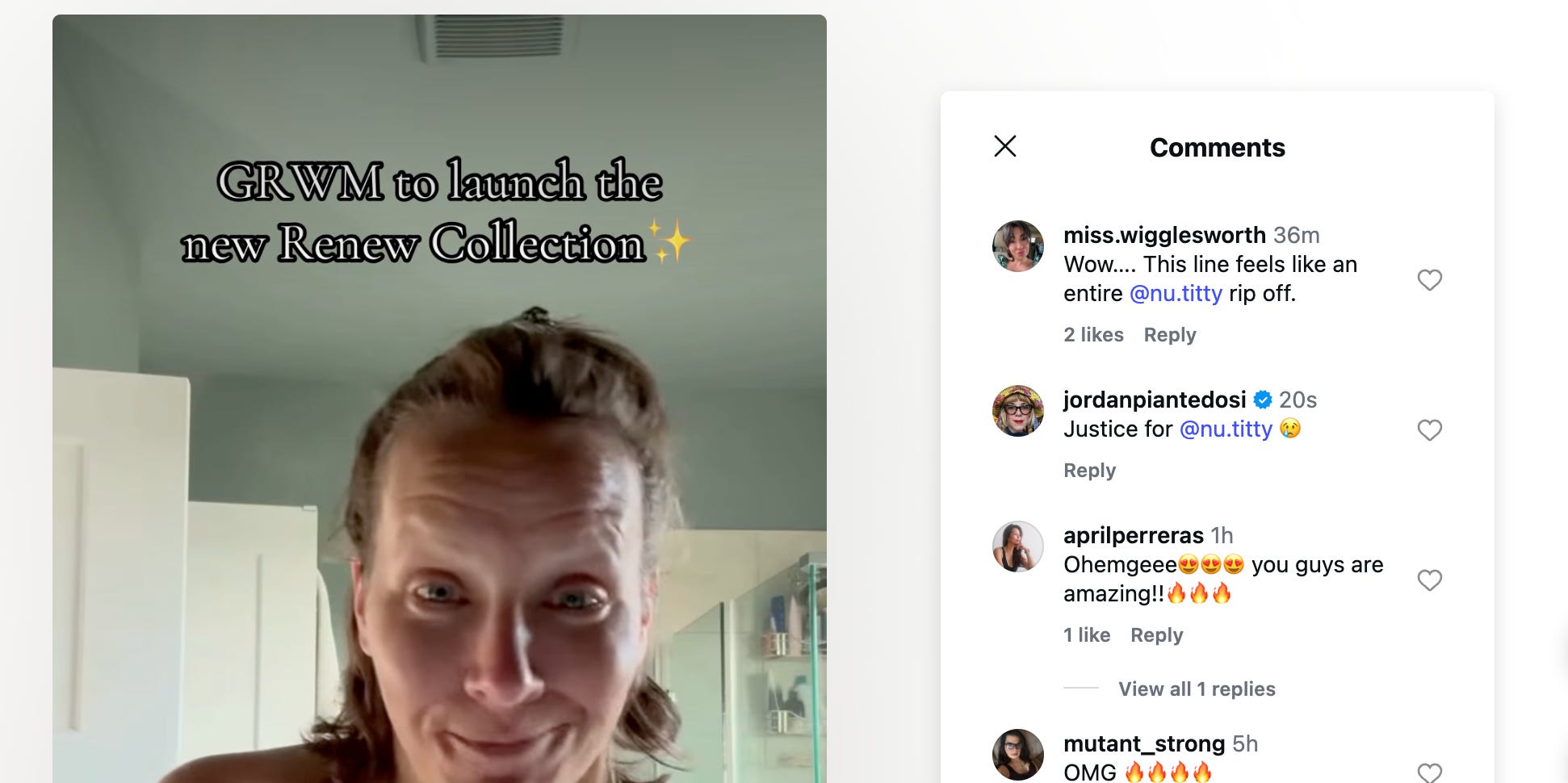
That’s the founder, Dana Donofree, of Ana Ono, the brand whose new collection is eerily similar to mine - raed the comments!
-
I did a whole video breaking it down - click to watch it here. And, please let me know what you think and what I should do next?
BTW, if you want to go comment too, here is the link to her post showing off the new line.
How bulk fabric is cut inside a clothing factory.
Apparel factory lingo guide - stop getting lost in the convo.
Breaking down how Vuori pants are made.
Surprising colors made from plants.
Only 2 places in India make indigo this way, and I got to visit one of them.
No posts
Comments
Nothing yet. Say the first thing.
Sign in to join the conversation.