
When I started A Look Behind The Seams (formerly known as Virtue + Vice) ten years ago, my goal was to change the fashion industry after years of working in factories and personally being part of the problem.
And my timing could not have been more perfect because brands like Everlane were just getting started, Mara Hoffman had completely overhauled their supply chain, and we were seeing a push for recycled polyester made from old water bottles and fishing nets everywhere. Even fast-fashion brands had sustainability goals for the first time.
It felt like the world was changing, and consumers were finally waking up and demanding that fashion do better.
But, the brands that were popping up seemingly overnight to change the world are now struggling. Mara Hoffman is out of business along with Allbirds. OuterKnown is rumored to have serious financial troubles, and Everlane, the darling of the sustainable fashion industry, just sold to Shein.
So what went wrong?
A lot of people want to point the finger at consumers, they weren’t purchasing so brands stopped caring. But…
In the 2025 Business of Fashion / McKinsey research, 61% of consumers in the US and UK ranked price as more important than sustainability when purchasing fashion.
According to the 2025 State of Fashion report, sustainability has become a lower priority for the industry itself. Only 18% of fashion executives viewed sustainability as a top-three business risk in 2025, down from 29% in 2024
But, the story is more nuanced and just the data.
The problem is, we aren’t asking the important question: WHY did consumers stop caring?
It wasn’t just the high price for sustainable products that led consumers to shop elsewhere.
In my opinion, it’s because too many brands rushed sustainable products that don’t perform well enough for their high costs.
Honestly, the sustainability movement of ten years ago reminds me of AI today: big promises, and then, when push came to shove, it didn’t perform as expected.
That hope that each new innovation would quietly improve things slowly fizzled the movement.
My favorite example is the paper straw.
Straws contribute to less than 0.03% of the world’s ocean plastic. And the paper straws that replaced them are incredibly inconvenient, melt within seconds, and there have been reports of toxic dyes and glues leaching into drinks. It’s clear this rush to sustainability was not fully thought out.
There are much more efficient and less annoying ways to cut down on plastic waste in our oceans (and I’ll get to that in just a minute).
Another perfect example of this rush to “do something” in fashion is recycling plastic water bottles into fabric. It sounds like a great solution - but here’s the problem: once that plastic becomes fabric, it can’t be recycled again and ends up in a landfill. Whereas a plastic bottle can be recycled into a new bottle infinitely, keeping it out of the waste stream forever.
And the list of sustainable failures goes on and on and on…
I got this Pull&Bear vegan-leather jacket I was obsessed with, but it didn’t last past one season before it began to peel. So I remade it in India in REAL leather with one of my factories that actually does all of Retrofete’s leather goods. It’s on year 3 and still looks perfect.
Then we have this viral video of a The North Face jacket not working in the rain…
In my opinion, The North Face switched to PFAS-free materials before they were truly ready, or before they did enough research to confirm their new options would hold up.
Also, side rant, can we talk about 100% cotton workout leggings that leave you with baggy knees and a saggy butt after five minutes of a yoga session?
Or those eco-friendly swimsuits that come with disclaimers like “poolside only, not for swimming” because they either fall apart or absorb so much water they get heavy and fall off when they get wet?
All of these products underperform, and they often carry a sustainability premium, read higher price tag. Coupled with the current state of the economy, it’s obvious why consumers are spending on other things. Why buy expensive sustainable stuff that doesn’t work when you can grab cheap fast fashion, that also doesn’t perform?
But brands are starting to fix this. The technology exists, and we can now create sustainable products that actually work.
Going back to my paper straw example. Alternatives have now evolved into pasta, cassava, and other edible options.
Now, imagine natural-fiber organic leggings that don’t stretch out, raincoats that aren’t toxically made yet still repel rain, or vegan leather that’s stronger and longer-lasting than real leather.
You can have all of that, and more. I’ll break down the technology and the exact suppliers you should be talking to if you’re curious.
I’m going to be real: And hit you with a few quick numbers - because as you should already know, good business decisions are always made on data; whether it’s what product to start with or where to invest your marketing bucks.
There are over 43,000 subscribers to this Substack
On average, 37% read it each week, that’s about 16,000 readers.
The craziest part: only 600 have become clients (hardly over 1%).
So, when I look at the data, I’m left wondering what I’m doing?
Could I be spending my time better for people who value it?
I set my monthly Substack rate at only $5, which is 16 cents a day. Because I want to see who really values all the time I dedicate to this, and if I should keep doing it.
My ask is fair: if you’ve learned something from me, want to keep learning, or appreciate the time I invest, please subscribe.
Subscribing unlocks the best part of this article, the part where I tell you exactly what you need for a successful production run!
TL;DR - “PS- In case you are curious…” and “Lastly, before I go, a few cool things…” will always be FREE. But the guides, how-tos, and true industry knowledge will now be $5 a month.
We’re back in NY and the first stop was obviously pizza - specifically East Village Pizza. Frank, the owner, has been feeding me late nights since 2009. I’m actually going to use his business as a case study soon because his social media strategy is worth talking about.
But for now, we just enjoyed a slice.
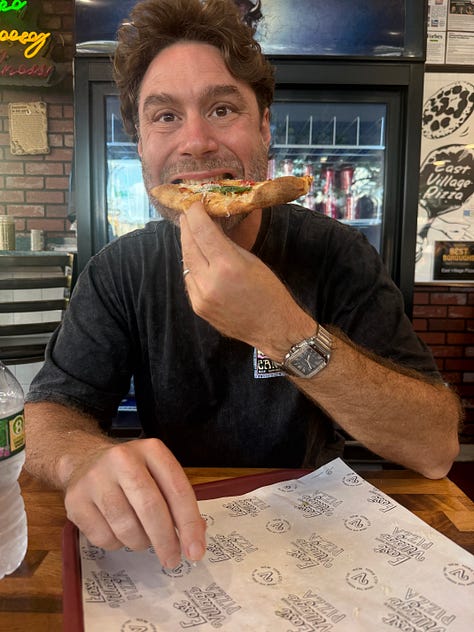
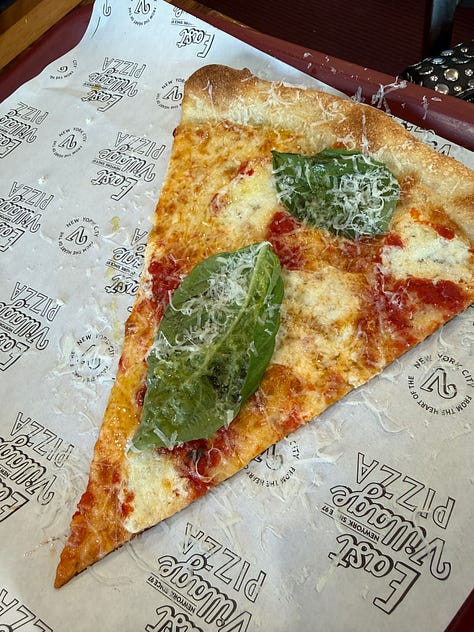
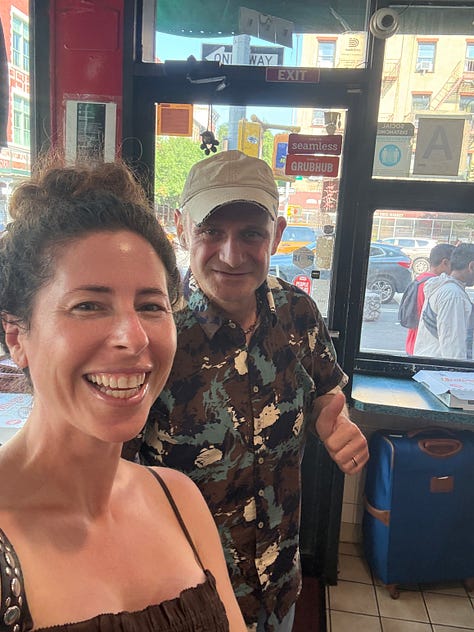
Next week is Functional Fabric Fair at the Javits Center in NYC, June 8-9. I’ll be there and if you want to join me, you can get in for FREE with this link.
But, for right now I’m clearing out my phone and making space for all the content I’m about to record next week!
In polyester, be sustainable. Here are a few examples.
Fashion industry Butterfly Effect.
Stop making boring clothing, do this instead.
Is the price tag of a Hill House Home Nap Dress really worth it?
Cotton greenwashing in fast fashion, what you need to know…
We will cover:
Plastic free workout clothes
Sustainable wicking
Organic cotton rain gear
Better pleather
Zero waste garment design
Net zer fabrics
Toxin free dyes
And, sustainable packaging options
Comments
Nothing yet. Say the first thing.
Sign in to join the conversation.