
Issue No. 58
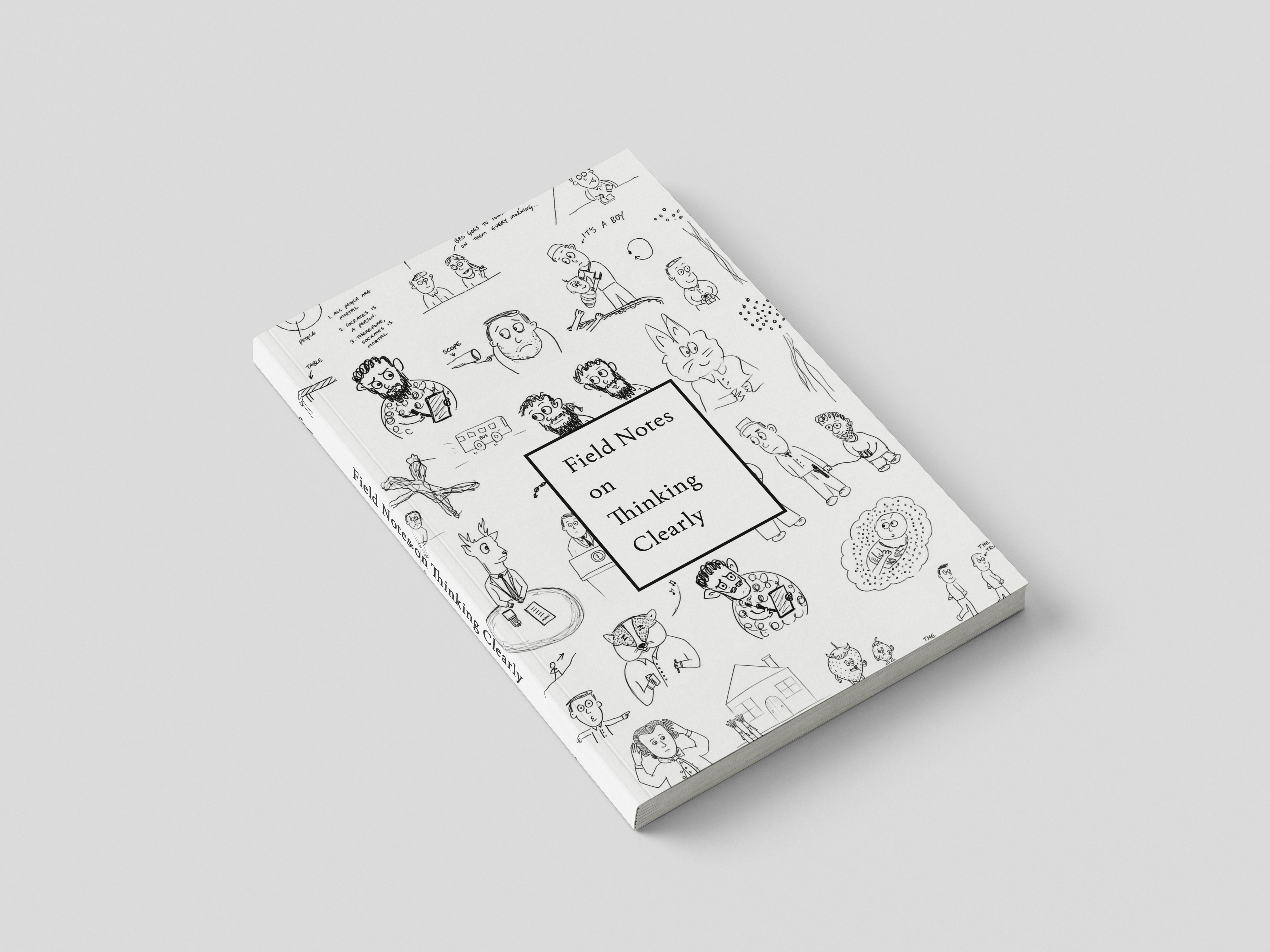
Paid subscribers, here is the keepsake I promised last time. It’s 58 chapters in three parts, edited to make the topics we’ve covered over the past three years easier to look up. It’s laid out as an actual book, which means if you print it double-sided and glue the spine, you’ll have a nice perfect-bound copy (as in the mockup below). All paid subscribers will receive an email later today with a link to the PDF.
The World Cup and Cognitive Biases
Something people absolutely love is when you go up to them after a World Cup game and rattle off a list of cognitive biases. People really appreciate that, I’ve found. They don’t invite you back, but they really appreciate it.
A short one this week, naming some of the tendencies we might show during sporting events like the World Cup.
Outcome bias. We’ll judge a coach’s decision (going for it, subbing early, “parking the bus” in the case of yesterday’s England-Argentina game) purely by whether it worked, not whether it was sound when made. If the team wins, the coach was a genius. If the team loses, he blundered.
Confirmation bias. When our team loses, we might feel so indignant that we’ll go looking for evidence confirming that conclusion (the ref, the offside, VAR, double standards).
Hindsight bias. After a game ends, we might turn to the person next to us and go, “Oh, you could see it coming … their defense was always shaky.” We might not have said that in the 75th minute when the team was doing well, but after the final whistle we might like to think we knew all along.
Availability heuristic. A player’s most recent moment might color how we judge their entire tournament. A dramatic moment like a shot on goal missed or a red card can dominate how we remember that person because it’s easier to recall.
Self-fulfilling prophecy. A team expects to defend a lead, sits deeper and deeper, invites pressure, plays worse in the closing minutes, and gets scored on twice. The fear of conceding helps create the conditions that produce the concession.
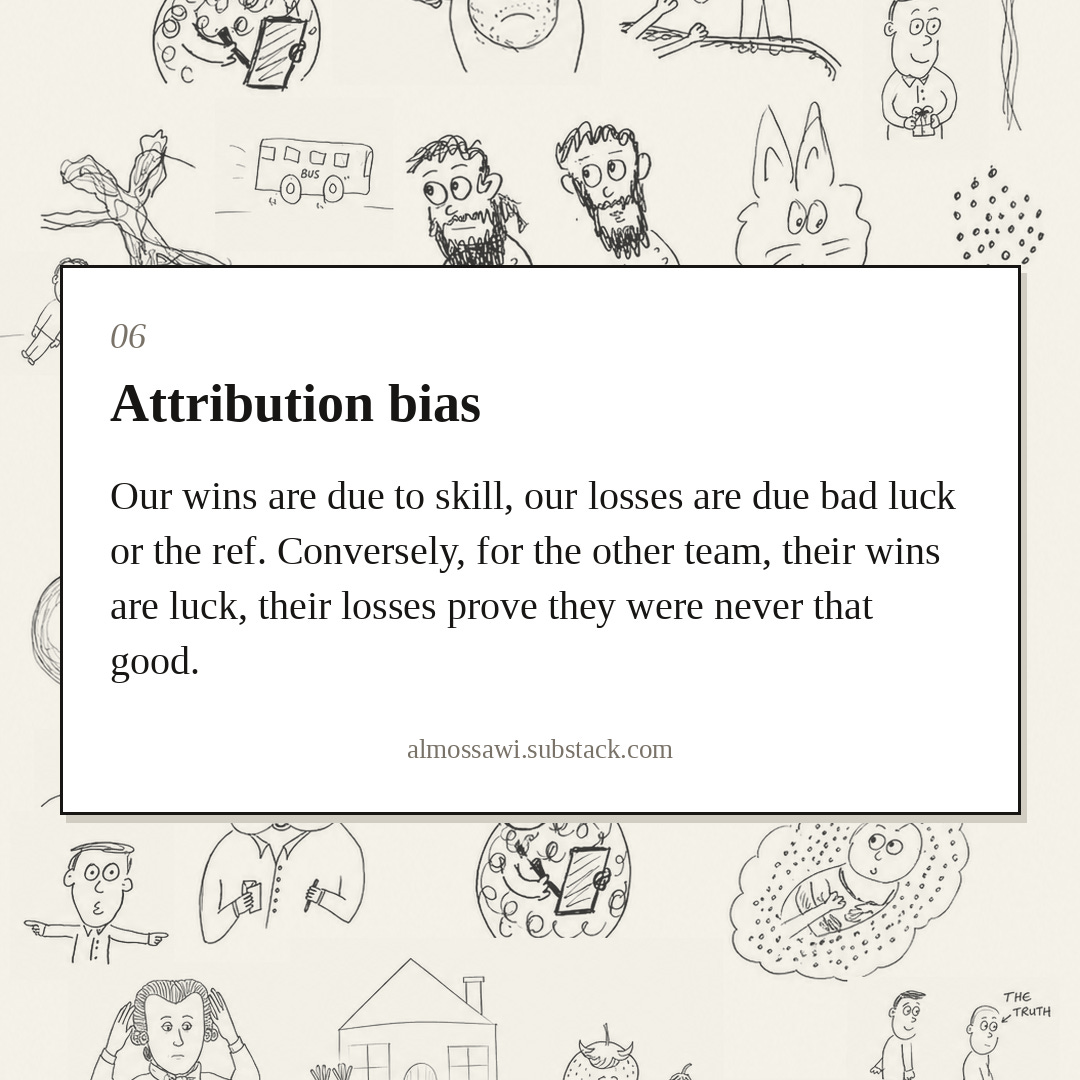
Attribution bias. Our wins are due to skill, our losses are due to bad luck or the ref. Conversely, for the other team, their wins are luck, their losses prove they were never that good.
None of this makes us irrational. We’re just fans, emotionally invested in our teams doing well, which is in fact what makes sports so enjoyable. But it’s interesting to see our minds at work, especially at times when we’re feeling emotions like euphoria or heartbreak.
I have perceiv’d that to be with those I like is enough,
To stop in company with the rest at evening is enough,
I do not ask any more delight—I swim in it, as in a sea.
—Walt Whitman (Leaves of Grass)*
*As I was compiling “Field Notes” this past week, I came across this quote, which was my pick for our very first issue of this newsletter. I found solace in those words back then and still now.
Until next time.
Be well,
Ali
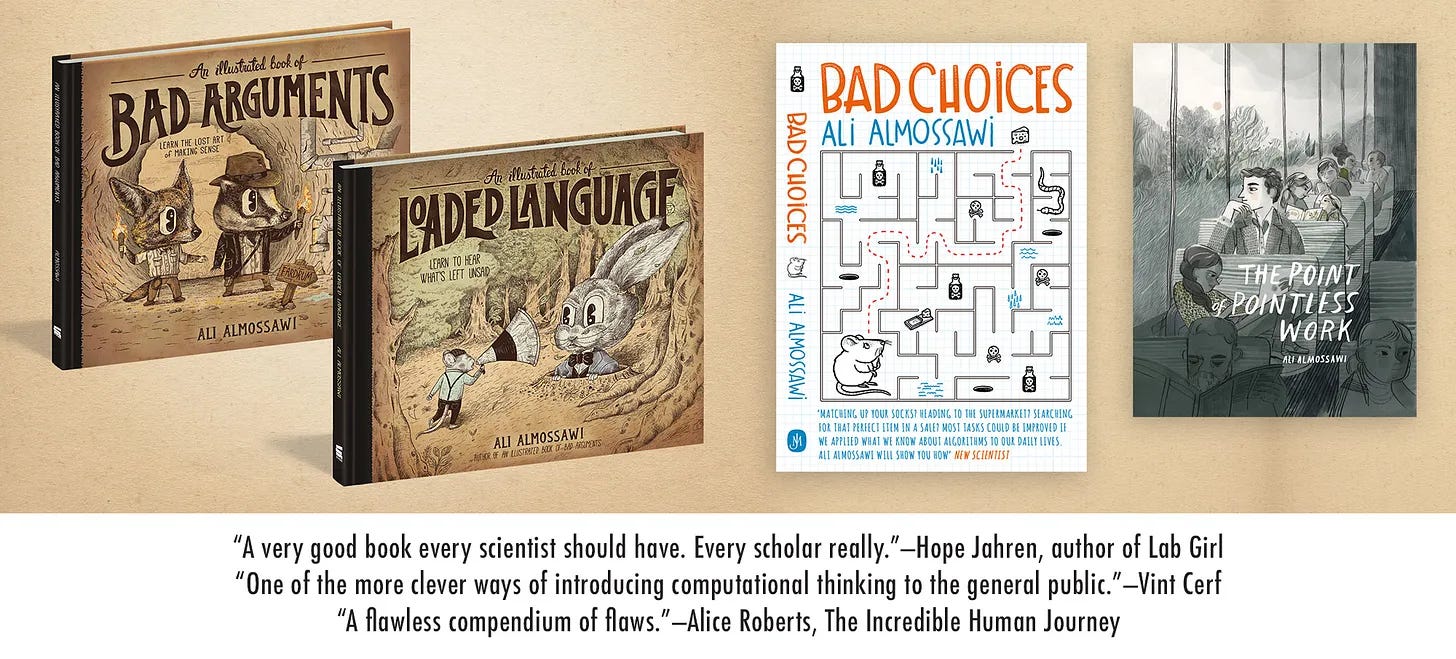
P.S. Some past issues to read through in case you missed them.
Comments
Nothing yet. Say the first thing.
Sign in to join the conversation.