
Issue No. 57
Paid subscribers, thank you to each and every one of you for your support these past three years. As a token of gratitude, I’ve started putting together Field Notes on Thinking Clearly, summarizing the best ideas from these past 57 issues into a pocket-sized PDF. It’ll look beautiful. You’ll each get one. My goal is to get it to you before the World Cup final.
A serendipitous series of events led to this week’s topic. I received an invitation to a gathering and after an exchange of emails realized it would be attended by a professor who had taught me two decades ago. The mention of their name dropped me into a memory that I had all but forgotten. During that same week, a conversation I had with a grad student about their research veered into Grice’s maxims, and suddenly the two things connected.
So I’ll share the memory, and then map it to the science behind why communication can sometimes be so hard.
The year is 2005, I’m 20, and I have two semesters to go before I finish grad school. I go up to a professor one day after class and ask if he’d be willing to write me a letter of recommendation for a Ph.D. program I’m interested in attending. He says something to the effect of, “Yeah, send me the link.” Weeks go by, I remind him in person one time, let’s say he nods or assures me he’s on it.
Then a week left, then a few days, then the night of, still nothing. The deadline passes and my application isn’t submitted to the one school I was interested in. (The story does have a happy ending, see below.)
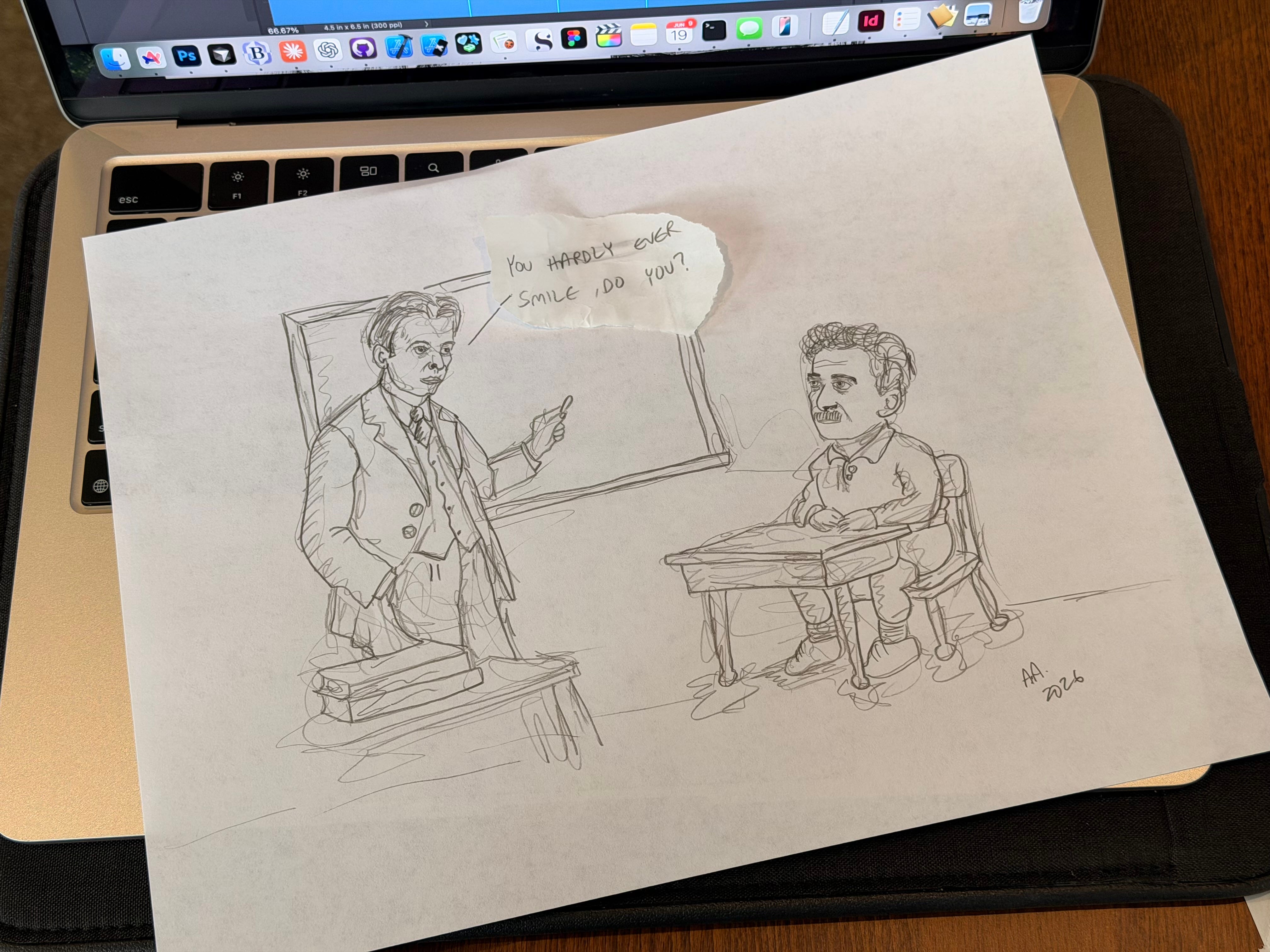
What’s most interesting for me now in that story is how literal-minded I was the whole time. I interpreted the person’s words literally. He said he would do something, so naturally, I reasoned, he was going to do it. Why wouldn’t he? He would have said so otherwise. I was incapable of comprehending why someone would say something and not mean it.
From the professor’s perspective, any number of things could have been the case. But for the sake of this story, let’s say he was noncommittal and therefore didn’t follow through. Him saying “Send me a link” and then prevaricating was, from his vantage, clear enough code for what he really meant. His expectation was that I would do the cognitive work to interpret his actual meaning rather than his literal words.
It does and there’s a framework built around it. According to Paul Grice, who was a philosopher of language, that gap and the subsequent meaning that arises because of it is called an implicature.
An implicature is something the speaker suggests or implies with an utterance, even though it is not literally expressed.1
Put differently, it’s implicit, communicative intent. The implicature in my case relied on me absorbing the cognitive burden of reading the other person’s tone, his level of enthusiasm, his body language, whatever signals he thought made the softness of the yes obvious. I didn’t pick up on those things, or perhaps they weren’t clear enough, so I took the literal meaning and ran with it.
Using Grice’s terms, the professor was operating at the pragmatic level, and I was operating at the semantic level. Neither of us knew we were operating at different levels, and so there was no way to bridge the gap.
What makes communication clear is a principle and four unstated commitments that follow from it. When we talk to each other, we assume we are cooperating toward the shared purpose of the conversation. This is called the cooperative principle. It’s the unspoken assumption that both parties are trying to make their contributions genuinely useful to the exchange.
The four commitments, or maxims as Grice called them, that follow from the cooperative principle are as follows.
Be informative. Say enough, but not too much. Give the information the situation requires, no more and no less.
For instance, someone asks how your job interview went and you say,
The interview went well, I think I have a good shot at the job.
An example of breaking the maxim would be,
OK.
It’s technically an answer, but it’s so lacking in information that the listener is left to fill in the gaps themselves.
Be truthful. Don’t say things you believe are false or can’t back up with evidence.
For instance, someone shows you a report they put together and you say,
I think the report is pretty good but the third section needs work.
An example of breaking the maxim would be,
Wow, this is different!
Technically not a lie, but the enthusiasm might imply approval you don’t feel.
Be relevant. Stay on topic, don’t introduce things that aren’t pertinent to what’s being discussed.
For instance, someone asks you how the food was and you say,
Really good, I’d go back.
An example of breaking the maxim would be,
Well the service was fast.
It doesn’t answer the question, which implies the food wasn’t worth mentioning, so it was probably bad.
Be clear. Be brief. Avoid ambiguity, obscurity, and unnecessary complexity.
For instance,
He sang the national anthem.
An example of breaking it,
He produced a series of sounds that corresponded loosely to the melody of the national anthem.
The phrasing implies the performance was painful to listen to without saying so directly.
Notice that in every example where a maxim is broken, the listener has to do work to extract the real meaning.
And because we all hold onto the cooperative principle, a deep-seated assumption that the speaker is still trying to communicate genuinely, we attempt to rationalize what we hear. The reasoning in our heads goes something like this:
They said something odd. But I assume they’re still being cooperative. So there must be a reason they said it that way. What would they have to mean for this to still count as a genuine communicative act?
And that rationalization is what generates meaning out of the implicature:
A maxim appears to be broken.
The listener notices the apparent break.
Rather than concluding the speaker is being uncooperative, the listener holds onto the cooperative principle and reasons out what was actually meant.
Grice identified two ways people break maxims.
By violating them. When a speaker uncooperatively breaks a maxim with the intent of deceiving the other person. Loaded language, particularly rife in politics, is a good example of this: “protect the children act,” “enhanced interrogation,” “collateral damage.” They’re phrases that shape judgment while appearing to simply describe.
By flouting them. When a speaker deliberately breaks a maxim, but expects the listener to understand the underlying meaning.
People flout maxims to avoid discomfort, to soften a blow, to be polite, to exit a conversation gracefully. Someone who hates your haircut says “it’s so bold” rather than “I don’t like it.” A manager says “that’s an interesting approach” rather than “this isn’t what I wanted.” A person asked how good someone is at soccer says “Oh, we all play for fun,” to avoid saying that person is actually bad.
In the case of our professor friend, he likely flouted the maxim of quantity. His responses contained far less information than the situation required and he expected me to pick up on that meaning. A genuine commitment would have involved asking about the deadline, more about the program, what kind of letter would have been most helpful, and so on.
When we break a maxim, we as speakers protect ourselves from an uncomfortable moment by transferring the cognitive work to the other person. We might think of indirectness as considerate, but we’re actually trading our listener’s cognitive effort for our own comfort.
Be direct. Don’t cause people anguish. Don’t force them to solve a puzzle in order to understand what you’re saying. Unless it’s a murder-mystery book you’re writing or satire and you’re doing it on purpose.
Meaning is constructed by the listener, not only transmitted by the speaker. Communication isn’t a one-way flow where meaning goes from one person to the other. It’s a collaborative, cooperative process of construction.
Learning a language is not enough to understand its assumptions. We absorb so many of language’s assumptions culturally, which is why learning how to speak a language on Duolingo is never quite the same thing as understanding the invisible ways meaning gets constructed and transmitted.
What happened next with the story from the intro? I don’t recall being upset at the time. I just remember being pretty bored in the years that followed. A fish out of water on most days. I got to spend a lot of time around family and almost certainly developed my lifelong love of walking outdoors during that time. I made friends, developed my doodling skills, met my now wife, and then one day while I was looking out the window at passing cars, an email came through from that very school I’d wanted to apply to four years ago saying, “Congratulations.”
The takeaway for me was that my own literal-mindedness, my failure to absorb the cognitive burden the professor had handed me, redirected my life in ways I couldn’t have anticipated. And it gave me one of many (many) wells of memories I can drop my mind into to fish out interesting kernels of ideas to write about.
Until next time.
Be well,
Ali
P.S. Some past issues to read through in case you missed them.
No posts
Comments
Nothing yet. Say the first thing.
Sign in to join the conversation.