
Venna
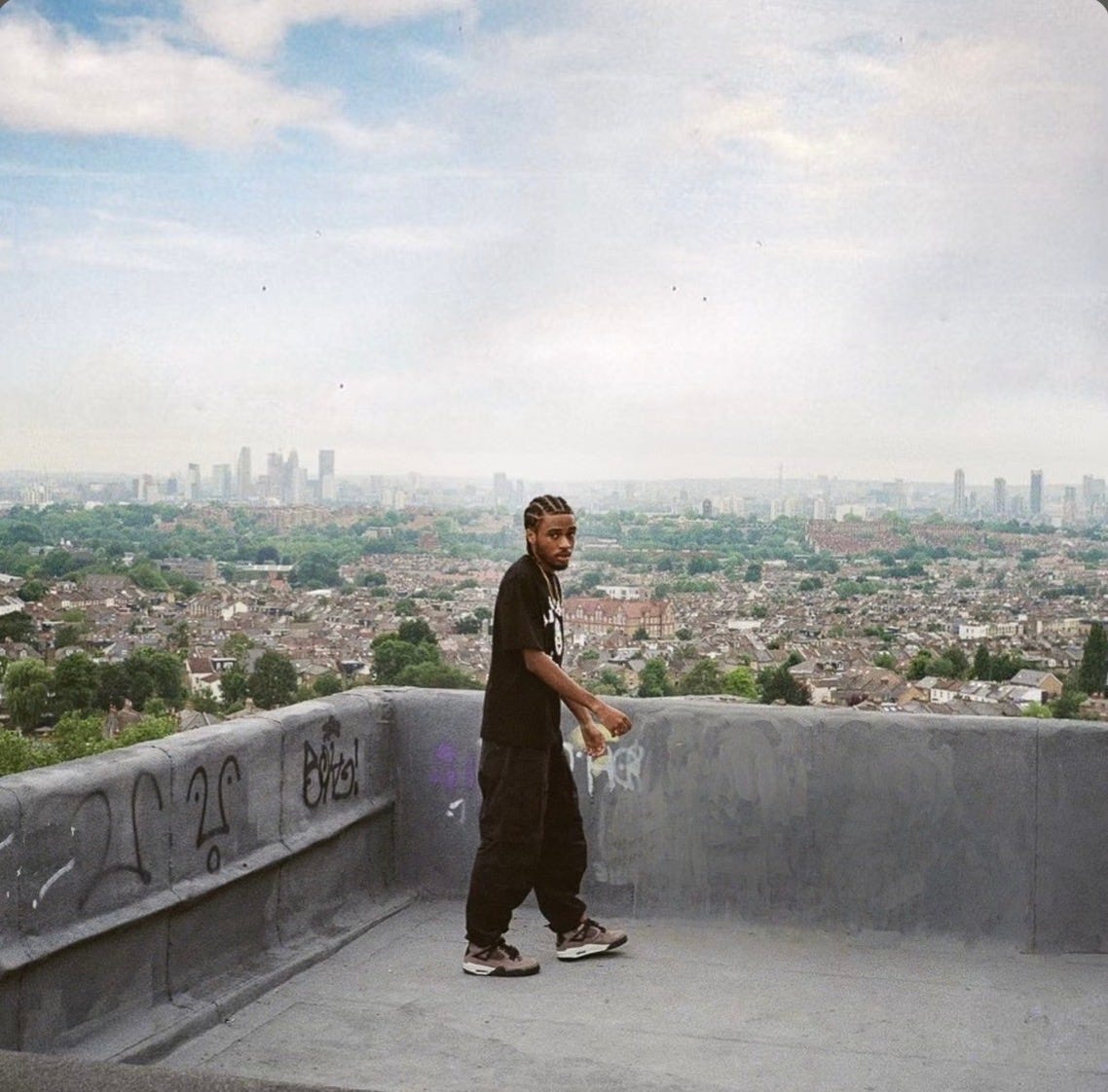
VENOLOGY (2021)
Venna: producer, saxophone
Marco Bernardis: Writer, composer
William Bui: Writer, composer
Knucks: vocals
Ashley Nwachukwu: vocals, composer
Jvck James: vocals
Tehillah Daniel: vocals, writer, composer
James Anderson: Writer, composer
Morgan Simpson: Writer, composer
Jada Conteh: vocals, composer
Emil Larbi: vocals, composer
My favorite tracks
“Aroma”
https://youtu.be/l6XHnDE1F9I?si=tB8ThTs3hkxdtuAm
“Avenue B”
https://youtu.be/ctKBVdqg4AQ?si=JAyXRsfynQFnL_78
Before Venna released his first record, he had a day job laying carpet. That was the reality behind the sessions: mornings on job sites, evenings in the studio. In that grind, he crossed paths with producer P2J, and the two developed a working chemistry that placed Venna’s saxophone on Burna Boy’s “Anybody” in 2019 and “Alarm Clock” the following year. He also contributed to Wizkid’s Made in Lagos in 2020. The work earned Venna Grammy recognition on both sides of that partnership, with nominations tied to Burna Boy’s African Giant and Wizkid’s Made in Lagos, before his contribution to Burna Boy’s Twice as Tall helped bring home a Grammy in 2021.
Born and raised in South London, Venna learned piano before taking up the alto saxophone at twelve. His musical development reflected the range of the city around him: jazz, hip-hop, R&B, Afrobeats, and Caribbean music all fed into a cohesive language that shaped not only how he played saxophone, but how he programmed and produced records. These influences built his understanding that musicianship and production were not separate skills, but different ways of deciding what a song needed without sacrificing compatibility.
That distinction is why VENOLOGY feels authentic. The six tracks were built by someone thinking in rhythm; space and vocal placement create atmosphere, but the movement of the music itself carries the weight, allowing silence and restraint to say as much as any other element could.
The timing of VENOLOGY explains a great deal. Venna made the EP during lockdown, when the usual rhythms of creative life had stopped and the world outside felt unusually heavy. COVID-19 was reshaping how people interacted and redefining what connection even meant. That isolation coincided with a broader moment of reckoning. Black Lives Matter protests in the United States and the End SARS movement in Nigeria were unfolding during the same stretch of time, each confronting state violence and demanding accountability in its own context.
Together, they fed into a heightened global Black consciousness, a period of introspection and unrest that stretched across borders and gave the music an extra layer of depth beyond self expression. Venna has since identified 2020 as a rare moment when specific political events entered his work directly, naming the murder of George Floyd and the violence surrounding the End SARS protests as influences on “June’s Cry” and “Sun, Moon & Herbs.” Of “Sun, Moon & Herbs,” he said it begins with “blissful anger” before moving toward “a release.”
The phrase captures VENOLOGY’s emotional logic: the EP absorbs the unrest around it without turning itself into a literal protest record. That nuance allows anger, grief, and tenderness to coexist in a way that adds emotional resonance without allowing one element to overpower the rest. At just over 21 minutes, the EP is short enough that every idea has to land cleanly. There is little room for excess, which fits Venna’s approach. The six songs move seamlessly between instrumental passages, rap, R&B, and jazz phrasing.
The warm but subtle “Aroma” opens the record. The title fits because the music enters gradually, establishing atmosphere as Venna’s saxophone maneuvers around the arrangement, carrying a smooth melodic line through production that remains light enough to leave space around each phrase. The track lasts less than two and a half minutes, but it introduces almost everything important about the project: measured but hard hitting drums, harmonies that move freely without losing structure, and phrasing that favors agility over density.
“Standard” shifts the focus toward London rap through Knucks, whose flow fits naturally inside Venna’s understated production. The collaboration works because neither artist has to adjust much to meet the other. Knucks’s conversational style and Venna’s melodic approach, with his saxophone accenting around the edges, make an ideal match.
“Avenue B” is the purest distillation of Venna’s approach. Keys, vocal fragments, drums, and saxophone settle into a wider arrangement, allowing the horn to carry more of the melodic weight. His tone remains warm, but his phrasing begins to stretch, with lines rising gradually before receding back into the production. The track shows how naturally his two primary roles have merged. He is playing the saxophone and producing the space around it at the same time, allowing him to shape a solo from both directions. “Avenue B” is one of the clearest examples of why VENOLOGY does not fit comfortably inside older ideas of jazz fusion. Venna is not taking an established jazz language and adding contemporary production around it. Instead, the production logic is part of the composition from the beginning.
“Sun, Moon & Herbs,” featuring JVCK JAMES, slows the emotional pace. The vocal guides the track while Venna responds around it with saxophone lines that deliberately play a secondary role until the song needs them to move forward. The track was shaped during one of the heavier periods of lockdown, which helps explain its subdued but searching tone.
“The Last Poets” shows Venna’s historical awareness. The title invokes the spoken word collective whose work helped connect poetry, Black political consciousness, rhythm, and the early foundations of rap. Venna does not attempt to reproduce their sound or turn the track into an explicit tribute. The reference, along with the assertive percussion, is enough. He handles the question of lineage through interpretation instead of remix.
The project arrived at an important point in the development of contemporary jazz because it demonstrated how far the conversation had moved beyond questions of crossover. Since the 1990s, jazz artists had often been asked to explain how jazz fit alongside hip-hop, electronic music, or other modern forms of popular music. By 2021, younger musicians like Venna had inherited a scene where those distinctions had already loosened considerably.
VENOLOGY reflects all of his experiences without turning them into a list of influences. Its significance in Venna’s career comes from that confidence. The record gave him a clear identity without requiring him to separate himself from the collaborative work that had helped shape him. Knucks, JVCK JAMES, Marco Bernardis, and the broader creative circle around the project remain essential to its backbone, but Venna still distinguishes himself and his sound as the driving force.
That balance has become increasingly important as his career develops. His strength isn’t simply that he can play saxophone over contemporary production. Plenty of musicians can do that. What distinguishes him is his ability to understand the emotional purpose of the instrument inside a complete recording and adjust accordingly.
That flexibility is the strength of VENOLOGY. Venna had already contributed to some of the most important Black popular music of his generation before releasing the EP. His first major artistic statement as a leader shows what he learned along the way: every element should serve the record before it serves the musician playing it. In 21 minutes, VENOLOGY establishes that principle without overstating it. That instinct gives the project its quiet confidence and explains why his saxophone feels comfortable in any setting.
-All Things Jazz-
No posts
Comments
Nothing yet. Say the first thing.
Sign in to join the conversation.