
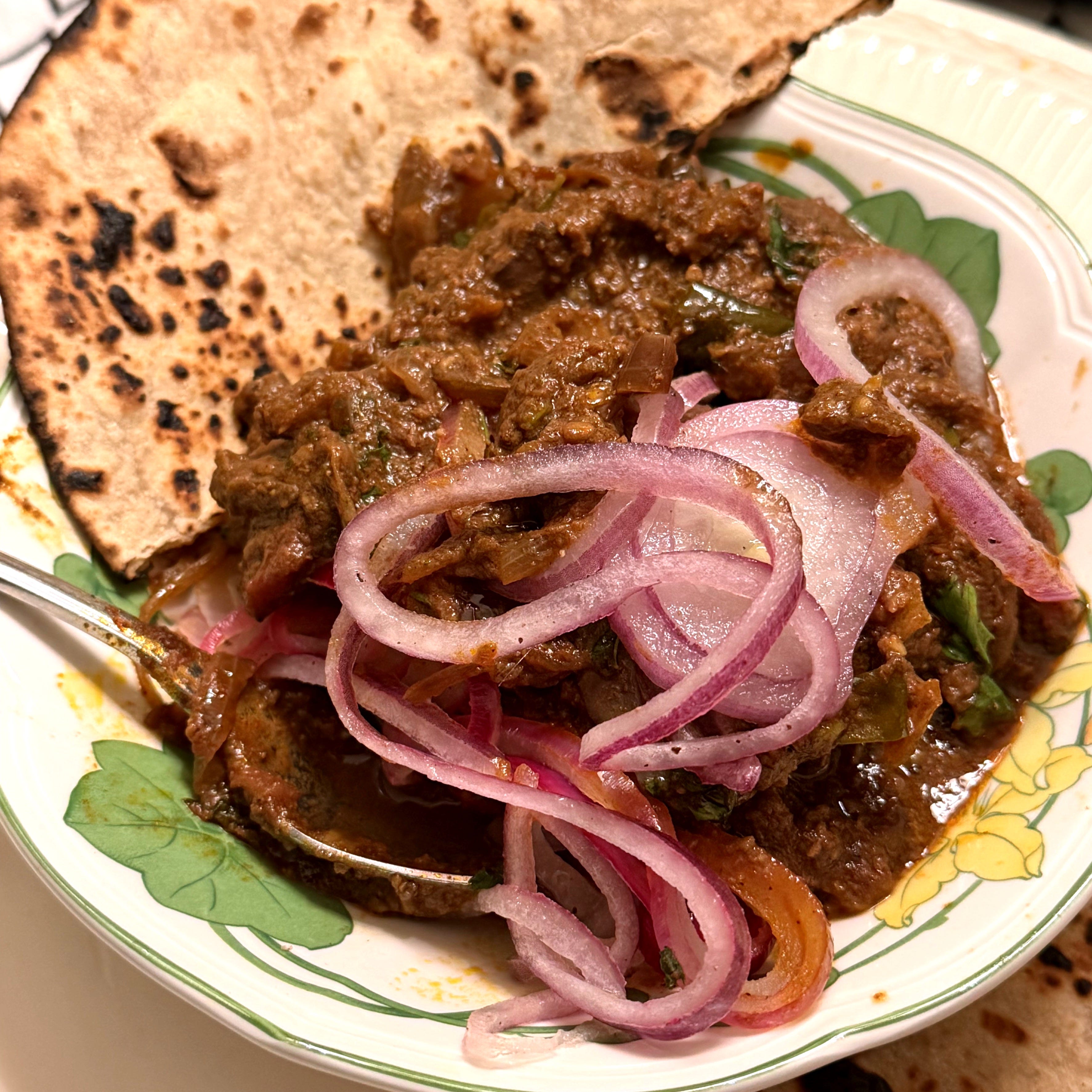
Namaste and Welcome,
You might be surprised to see chicken livers show up in an Ayurvedic newsletter. I understand. They aren’t glamorous, they come with complicated reputations, and they’re definitely not the sort of ingredient most people associate with Ayurveda.
But one of the things I appreciate most about Ayurveda is that it doesn’t deal in rigid food bans. It asks us to think about context—season, digestion, preparation, and what the body genuinely needs. Sometimes what the body needs is warmth, grounding spices, nourishing fats, and a generous dose of iron and B vitamins (especially for women in midlife).
I made and wrote up the recipe for this dish for Curry Night, a global collaboration of cooks sharing their favorite curries. It’s put together by and . I can’t wait to read all the contributions!
As soon as I cooked it, I realized it wasn’t just a Curry Night recipe—it fit the way I talk about food here in Ayurveda in Modern Life. It’s rooted in memory—Sunday brunches in India, fresh parathas, something quick and comforting on the table. It’s practical, economical, and adaptable — exactly the kind of everyday food that aligns with the way I think and write about Ayurveda.
Curry Night
Chicken livers are a humble ingredient. They don’t trend, they don’t photograph well, and they’ve carried an undeserved “unhealthy” reputation for years. In reality, liver is one of those foods where a little goes a long way—rich in nutrients, deeply satisfying, and best enjoyed thoughtfully rather than often. That nuance is in keeping with Ayurveda, which doesn’t place foods into strict categories of good or bad, but asks us to consider context, preparation, and proportion.
I grew up eating chicken liver curry in India, usually on a Sunday—not every Sunday, but often enough that it felt special. We ate meat just once a week, not for health reasons but because meat was expensive. In hindsight, that scarcity was its own kind of blessing; it made these meals feel celebratory, and probably did more for our health than we ever realized.
This recipe is more about technique than protein. The same masala base works beautifully with chicken, fish, tofu, paneer, or even potatoes—a flexible blueprint rooted in flavor, not rules.
Chicken Livers in a Spiced Onion Masala
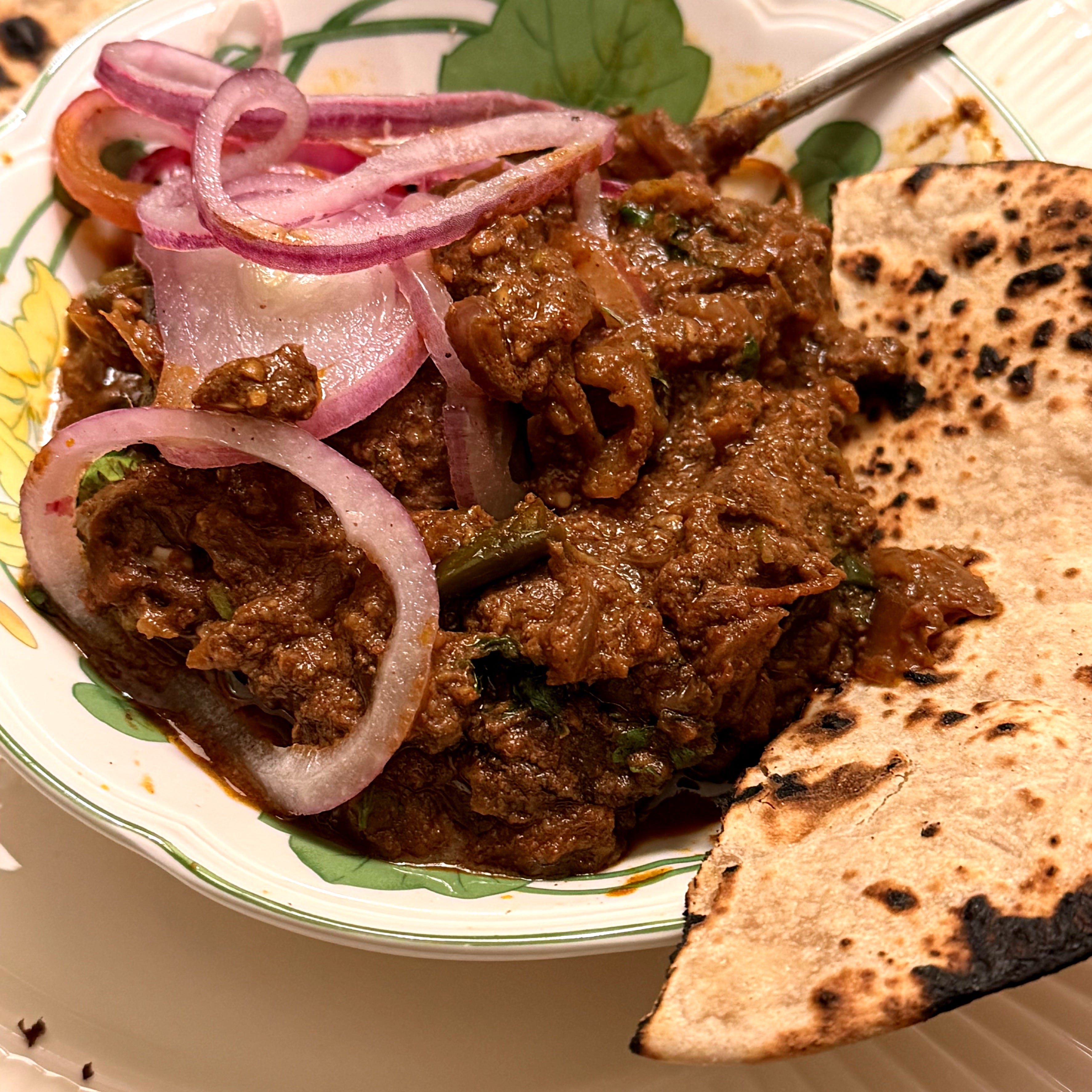
(Masala is an Indian mixture of spices, and aromatics cooked down into a flavorful base. Often combined with onions and tomatoes)
Ingredients
1 large red onion (or 2 small), thinly sliced
3–4 whole green chilies (Thai bird, bird’s eye, or Serrano)
2 tablespoons neutral oil
1 teaspoon kosher salt, divided
¾ teaspoon freshly ground black pepper
16 ounces chicken livers
1 tablespoon minced ginger
2 tablespoons minced garlic
1 teaspoon Kashmiri chili powder
1½ tablespoons coriander powder
1 teaspoon cumin powder
Pinch of clove + cinnamon powder (about ⅛ teaspoon combined)
1 heaping tablespoon tomato paste
1 cup chopped fresh tomatoes or canned diced tomatoes
2 tablespoons kasuri methi (optional)
2–3 tablespoons lemon or lime juice
2 tablespoons chopped cilantro
Instructions
1. Prepare the livers
Place the chicken livers in a strainer. They should be garnet-red and fresh-smelling. Trim any white veins. Cut into 1–1½ inch pieces and leave in the strainer until needed.
2. Caramelize the onions
Heat the oil in a large sauté pan over medium heat. Add the sliced onions, whole green chilies, ½ teaspoon salt, and black pepper.
Sauté 2–3 minutes, then reduce heat to medium-low. Let the onions caramelize slowly for 8–12 minutes.
If they brown too quickly, lower the heat and add a splash of water to deglaze.
3. Bloom the spices
Turn the heat to low (or briefly remove the pan from the heat).
Add coriander, cumin, Kashmiri chili, and the clove/cinnamon mixture.
Stir for 2–3 minutes until the spices lose their raw smell.
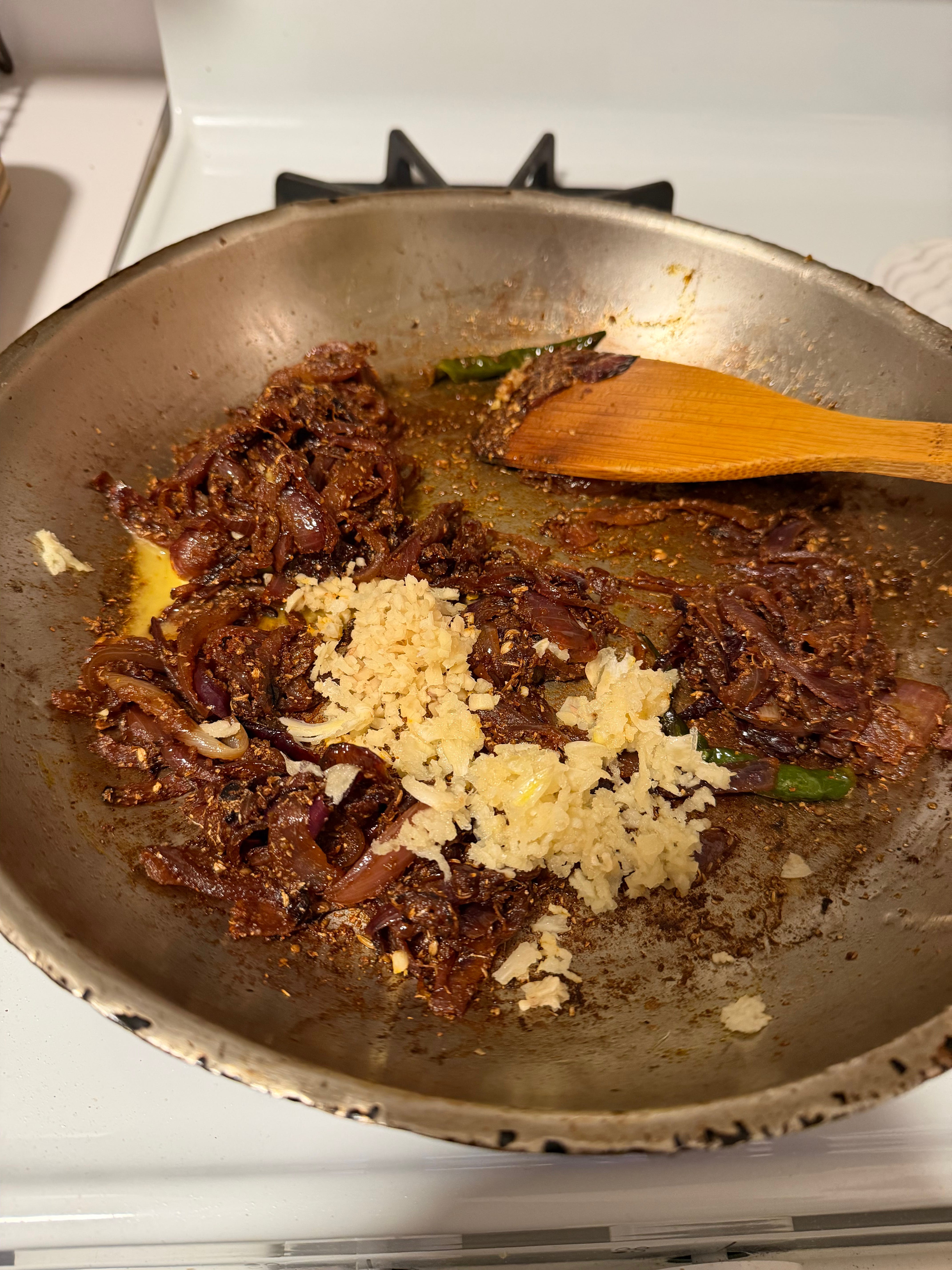
4. Add ginger and garlic
Stir in the ginger and garlic. Cook 1 minute.
5. Build the masala
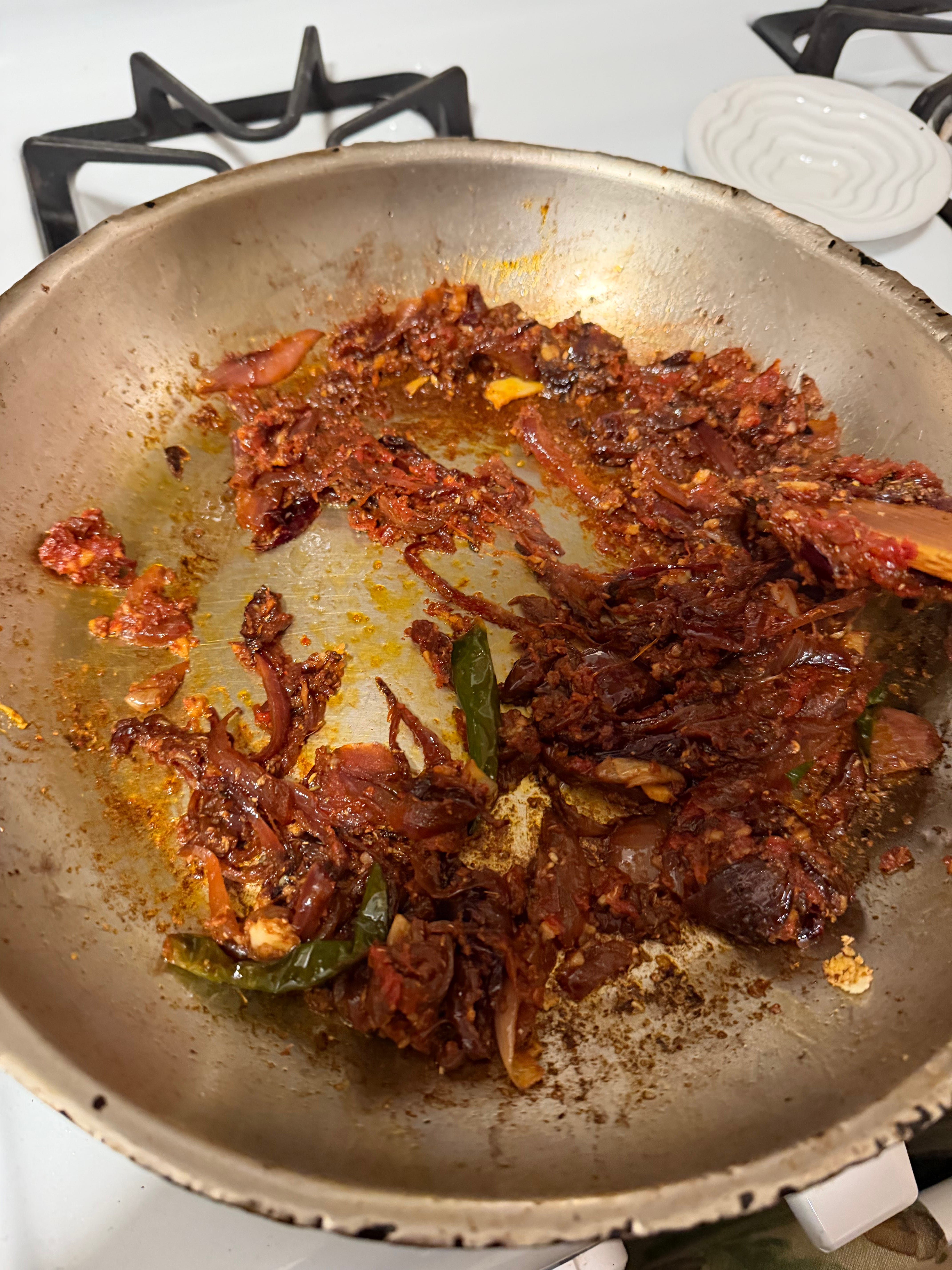
Add the tomato paste and mash it into the onion-spice mixture.
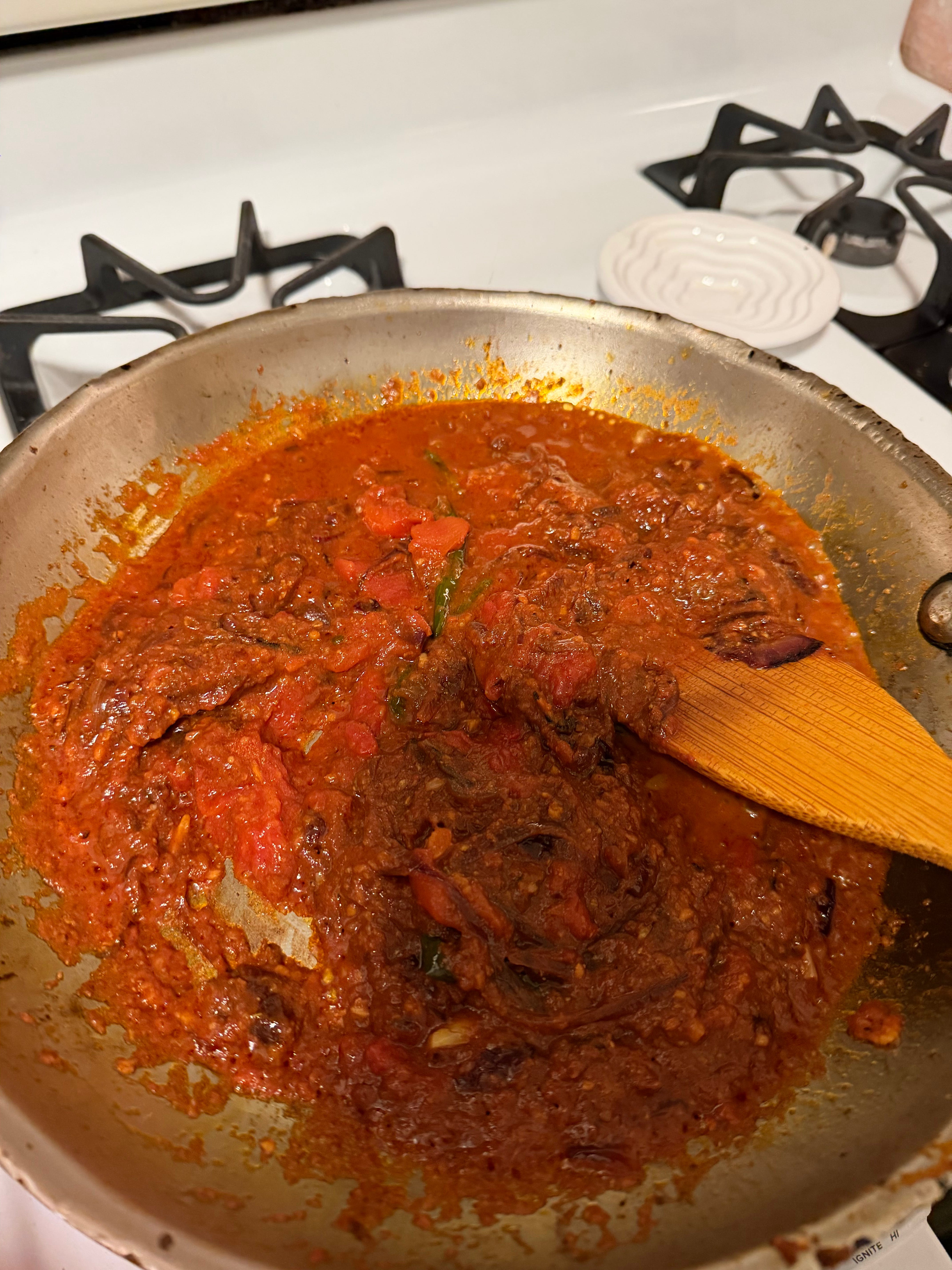
Add the chopped tomatoes, stir, taste, and add another ½ teaspoon salt.
The masala should be thick, dark, and glossy.
6. Cook the livers
Raise heat to medium-high. Add the livers in an even layer and gently stir to coat. Once the edges bubble, reduce heat to medium and cook 6–8 minutes, stirring occasionally.
Check doneness by cutting into the largest piece, a trace of pink in the center means it’s perfect.
7. Finish
Lower heat. Add lemon/lime juice and kasuri methi (if using). Taste and adjust seasoning — salt, chili, or acidity.
8. Serve
Garnish with cilantro. Serve warm with chapatis, parathas, pita, or basmati rice.
Thinly sliced red onions add a delicious crunch and help to cut the fattiness of the livers.
Cook’s Notes
On onions: Red onions give a deeper flavor and richer color, but yellow onions work just as well.
On Kashmiri chili: It’s mild — used mostly for color, not heat. If you want more heat, add a pinch of regular chili powder too.
On livers: Overcooking can make them grainy. Stop when the middle still shows a whisper of pink.
Substitutions & Variations
The beauty of this dish is the masala technique — once you learn it, you can swap in almost anything:
Chicken thighs, paneer, tofu, potatoes, fish, even boiled eggs
For a looser curry, add a splash of water. For a thicker, cling-to-the-roti masala, reduce longer.
Cooking this dish reminded me how much of Ayurveda lives in real life, not in perfection. Food isn’t meant to be rigid or performative. It’s meant to nourish, comfort, and make sense for who we are and how we live. A simple masala, a handful of spices, an ingredient that doesn’t always get the spotlight—sometimes that’s enough to bring us back to ourselves.
Finally,
Next week, I’ll be sharing Phase 3 of the Ayurvedic Food 101 series:
Personalizing Your Plate According to Your Constitution (Prakriti).
It’s one of my favorite Ayurvedic topics and the place where everything you’ve learned so far starts to click into everyday eating.
As always, thank you for reading, cooking, and being here with me.

P.S. If you missed the first two parts of the Ayurvedic Food 101 series you can catch up here:
Comments
Nothing yet. Say the first thing.
Sign in to join the conversation.