
In previous sections we’ve learned simple, yet powerful IoT recipes and visited the digital twin kitchen where endless solutions can be cooked up. We may now fill our knapsacks and continue on our journey. I’m convinced the next destination is a pivotal one, and though the first steps may include a critique of our existing habits around data and spatial information, I do not wish to set a negative tone. I wholeheartedly see this as an opportunity, a fundamental shift that embraces resilience and vigor on both a social and a personal level.
Before we start, how about a quick joke? This is stolen quite blatantly from David Foster Wallace, who likewise built an elaborate argument on a seemingly simple premise.
An old fish swims past two young fish. The old fish asks in a friendly tone, “How’s the water, boys?” The two young fish swim on without much thought, and after a moment one turns to the other and says, “What the hell is water?” I believe water is a good analogy for the way digital knowledge has engulfed us so thoroughly as the Internet, the World Wide Web, and a variety of supporting technologies reached a level of utility and dissemination to rival that of electricity, transportation, and of course water itself.
In terms of accessing a wide range of knowledge woven through shared interests, impact, and relevance, our current state seems to have overshot the boldest visions of classic science fiction. No more seeking out experts or making the trek to a library while praying they have a book on an obscure topic; wonderfully crafted knowledge appears instantly on my screen. Even when I stumble in comprehension, a kindred spirit (could be thousands of miles away) can offer support, our only bond a shared curiosity. Swimming in this water is quite bewildering, with seemingly no limits in any direction.
So far so good, I see no need to muddy the waters, yet allow me to make my case for the land and sky of digital knowledge before our limbs turn into fins. Putting aside the digital realm, the vast amount of knowledge we consume, filter and disseminate as we navigate the real world is simply astonishing. It is also quite astonishing we do not notice this capacity. Our ability to notice a slight alteration in a person’s gait in a crowd, a false note uttered by a single instrument in an orchestra, a slight crow’s feet on someone’s smile telling us all is fine, these are unnoticed marvels of the human brain.
We could of course imagine tossing a variety of such human experiences into our ocean of digital knowledge and discussing the dissonance that would follow. But I would rather set the stage with a more structured, yet still relatable scenario. It may initially seem like a relic of the past, but as it unfolds, I believe you’ll share my desire to bring such experiences back to prominence in our daily lives.
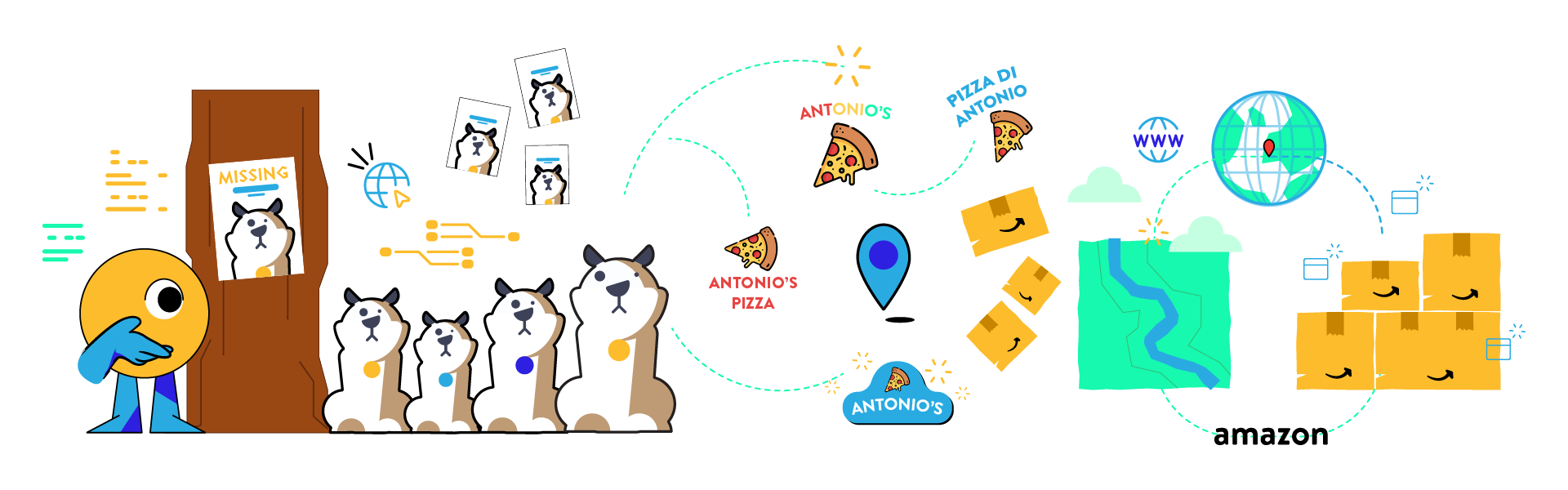
Let’s all close our eyes for a few seconds and picture some “missing puppy” posters hastily stapled to trees and taped to storefronts. A few close cousins are the offers for tutoring services, performance venues and dates for local bands, the opening of a new library, group support sessions, and so much more. These posters are sometimes adorned with a row of cut strips at the bottom where a phone number or email address can be torn off and taken.
It is important to note that, regardless of the technology at play, the “missing puppy” poster is not operating in the same conceptual space as the barrage of information blasted across social media or various websites. In other words, creating a missingpuppy.com–style website would not bridge these domains. A fundamental split occurs at the level of communication structure and knowledge sharing.
The poster is not competing for our attention the way a YouTube thumbnail with an exaggerated facial expression or the hasty “I need to get my cute idea across in three seconds” theatrics of a TikTok video might. Instead, it calls to us as part of the daily landscape, signaling a change in our immediate environment (a puppy is lost, a concert is coming, and so on) — perhaps not for us personally, but for someone within touching distance. This is critical.
It isn’t a flashy attempt to move ahead in the queue for our attention or to tickle our desire for constant stimulation and entertainment. There isn’t an insidious intent to slip in one more ad or to capture one more snippet of personal information. It is a call from someone within our community for support, or knowledge sharing, or artistic expression, or some other very human thing.
Sometimes the call is a long shot, such as a niche event or a lost puppy; what are the odds that the puppy is standing beside us, also staring at the poster? But which one of us has not imagined, even for a moment, that we might carry this puppy to a person yet unknown, perhaps just a few blocks from where we live. And when we ring their doorbell, that person becomes part of our social landscape, that household a familiar landmark along our daily route.
This type of knowledge dissemination is oddly focused; it is for those who share a common space. It is the space within which we may act: looking out for a puppy, supporting an artistic endeavor, uprighting a toppled bin, and much more. It is powerful because it addresses us as capable beings, not just passive observers. It opens new paths toward meaning, giving us a chance to grow as a person even as we set deeper roots.
I will cover how local communities are among the strongest indicators of a happy and healthy life soon, but for now let us stay focused on why there is a mismatch between the way we most comfortably access knowledge and the places where it would matter most. I will eventually tie this to how the digital twin may serve as the right protocol to bring the strengths of digital knowledge into the local space.
To point out the mismatch inherent in technologies such as the World Wide Web or social media, it helps to look at the biases built into these systems. I may actually skim over social media because the fast flow of content that mimics the ceaseless pace of television, analyzed with great precision by Neil Postman in “Amusing Ourselves to Death,” and the underlying structure that prioritizes the consumer above all else clash so blatantly with a true social fabric that not much more needs to be added.
The Web is woven from a more humane fabric, yet it still does not mesh with our previous scenario. I think this is worth mulling over. But first let us all tip our hats to Tim Berners-Lee, who had the remarkable intuition to design a protocol simple enough that an army of early adopters, some still in their teenage years, could generate a vast number of pages and propel the entire ecosystem into global relevance.
Yet this simplicity, as vital as it is, comes with a cost. A web address such as www.amazon.com simply resolves to a resource that can be rendered as a web page. There is no inherent mapping to context, so this address does not need to provide information about the river. And even if that had been the intent, there is no protocol that would add the geographical boundaries of the river to this web resource. As a result, www.amazon.com becomes a recognizable name that could point to any content. The fact that the current webpage happens to handle the greatest flow of product exchange in history, mirroring the physical flow of the river, is an interesting conceptual link that exists entirely outside the Web protocol.
I think we are now ready to view the web through the neighborhood lens. Let’s imagine a small but cozy (if a tad generic) joint in our neighborhood called Antonio’s Pizza. Let’s assume you want to check out their online menu and today’s specials. Do you simply type in www.antoniospizza.com? Not really. It is quite unlikely they secured the name among dozens (if not hundreds) of other Antonio’s Pizzas across the world. But who gets the name? The fastest, the luckiest, the richest? What happens to all the other Antonio’s Pizza locations?
If location information were an inherent part of the web, each Antonio’s could be located through a combination of name and location information, something like www.antoniospizza.42.3734.-71.11185.com. I realize that a barrage of meaningless numbers is usually a signal to the contemporary brain to start drifting off, but in this case the subtle change induced by a location-based protocol, especially when combined with Semantic Knowledge Graphs, is absolutely immense. This opens up a vast array of potential that I will unpack with delight.
But in the spirit of wrapping our current flow in a cohesive manner, I will focus on one extension of this idea in order to provide a feel for what is to come.
That point is likely something you may have noticed already. You may rightly state that all other Antonio’s Pizzas do not disappear from the face of the Internet, you can still locate them through online services such as Google Maps, Bing, Foursquare and so forth. But such services (let us underline that word in our minds) need to gather this data, manage and present them. This brings about additional layers of effort that only makes sense if there is a benefit to the companies (Google, Microsoft etc.).
Providing such a service for restaurants and some businesses makes sense, but what happens to the examples I’ve mentioned that impact the individual, their neighborhood, their highly beneficial sphere of influence? The lost pets, community gatherings, aspiring local artists and such? Those sometimes never appear in the space of the web or mobile application, the technologies that are capturing our attention with ever-increasing power. Is it hard to imagine someone walking down the street squeezing in one more video of a cute puppy while the poster on the tree gets ignored?
Now let’s consider how a technology with an inherent location protocol would enrich one of these neglected local spaces.
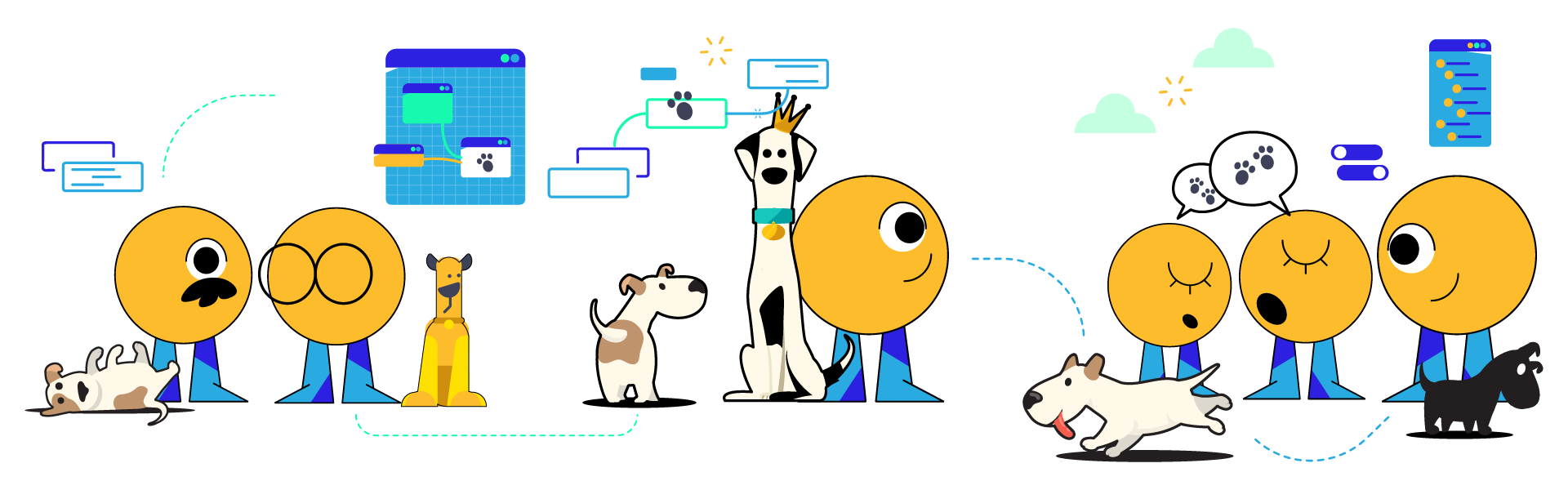
In my twenties, my family and I decided to join the ranks of dog owners with quite a challenging but rewarding breed, the Dalmatian. Yes, both my sister and I should have been way past the 101 Dalmatians craze, but I still think adding “Polka” to our family was a fantastic choice. At least for us. Dalmatians are playful, quite delusional about their fighting prowess, and have unbelievable stamina. Until Polka reached an elderly state, none of his play partners would ever outlast him.
Having a playful, popular breed that needs a lot of outdoor exercise means you become a staple in your neighborhood. Nearly every kid knows your dog, you are automatically known as Polka’s older brother, and over time you get to meet a lot of other dog owners. Another social twist added to my life was meeting a fellow dog owner, which may either be a great experience as the dogs wore each other out or a terrible one as you tried to drag away 25 kilograms of a snarling, rumbling furbag.
As you can imagine, such encounters were left to chance, but considering the vast health benefits associated with socializing and a sense of belonging, coupled with the ability to wear out the dogs at the same time, I would have loved to increase these encounters.
In a situation like this, I could have used our dream protocol to select the park and try to register a meeting website for fellow dog owners. We could add our dogs to the website, our typical visit hours, and perhaps even select our favorite play pals for notifications. Isn’t it an odd concept to have notifications that steer us toward health and community as opposed to the next dopamine hit?
What if I select the park and notice that someone has already established a dog club website? Once location is part of the protocol, it is trivial to pull all web content related to the space. No need for anyone to fight over Search Engine Optimization. This existing website is not a hindrance, but in fact a boon. We can simply join the existing digital and physical community. It is likely set up and updated by one of our fellow dog owners, so asking for a new feature can simply occur over a coffee chat. Seems so simple, but to me this is a leap worth seeking.
Finally, we can push this to different domains with ease. If the municipality or the regional government plans to work on the park, they can publish the plan details along with the park coordinates. Websites associated with this space can pull the dates and work details and provide notifications to visitors.
This section ran a bit long, and I truly appreciate you staying with me to the end. I simplified some of the technical aspects, which I will return to later. For now, I hope this conveyed how a seemingly small change at the protocol level, such as treating location as a first-class element, can unlock major shifts in how digital spaces enhance the physical. It is up to us to steer those shifts toward richer social ties, healthier communities, and more vigorous living spaces.
No posts
Comments
Nothing yet. Say the first thing.
Sign in to join the conversation.