
After a well-deserved rest among puppies and parks, we’ll continue our journey toward digital twin applications with more immediate and consequential impact. I do acknowledge that those wiser than me may argue that puppies and parks are already as serious as things get, so we’ll move forward with a promise to return to them.
To explore the more consequential aspects of the digital twin, I’ll draw on personal experience and ongoing projects. One such experience dates back a couple of years, during a discussion on using a large university campus as a testbed for smart-city solutions. The campus in question housed roughly twenty-five to thirty thousand people and spanned a substantial area of forest land.
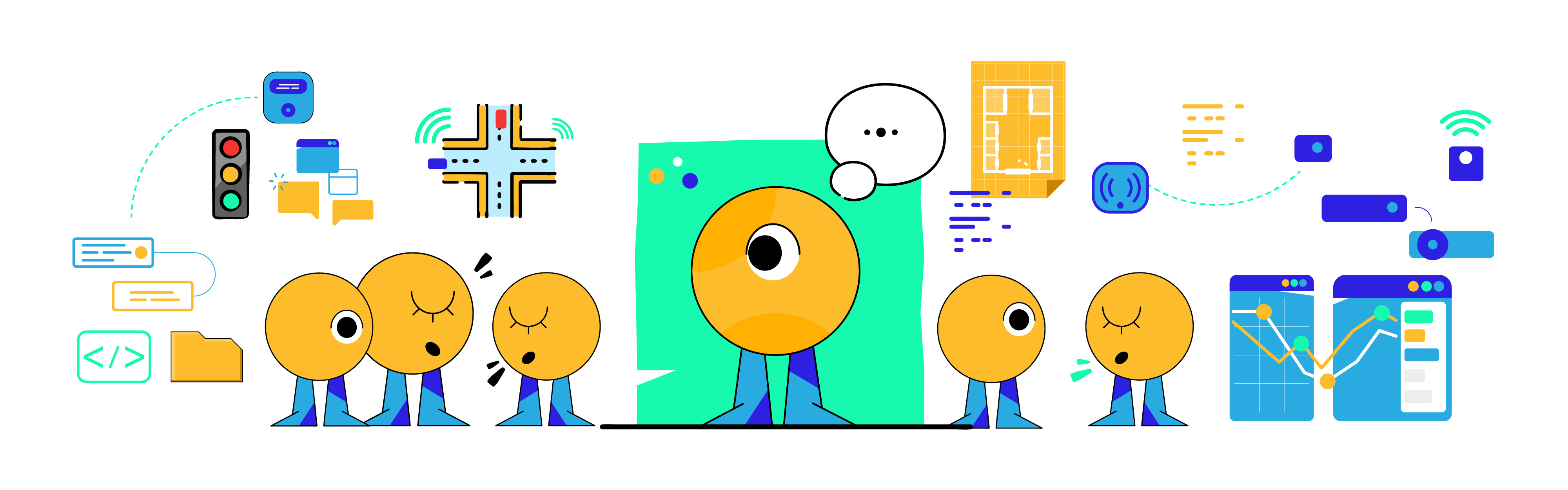
The discussion revolved around familiar applications: smart coordination of crossroads, efficient outdoor lighting, AI-based thermal comfort in buildings, and early detection systems for forest fires. I was unusually uninterruptive as the ideas poured forth.
My typical behavior during digital twin brainstorms is to alternate between pacing around, tossing out half-baked ideas, and eyeing the board marker. In this case, however, my stillness stemmed from an element of surprise.
Even as a relative outsider, I discovered that I was the only person in the room aware that several of these solutions were already implemented, albeit partially, across the campus. Some of those implementations had been carried out by researchers with offices in the very building where the meeting was taking place.
I’ll unpack this seemingly minor personal revelation to revisit a concept introduced earlier: the ways we currently share and access data are fundamentally incompatible with location-based technologies.This incompatibility is more than a source of friction. It results in a vast loss of unrealized potential that compounds across campuses, cities, and regions worldwide. From there, I’ll return to the role of the digital twin in reclaiming that potential and redirecting it toward a more sustainable future.
Getting back to the meeting, I did eventually point out the existence of these projects, which quickly dried up the creative juices that were starting to flow. Dreams do gallop easier across virgin lands. Even as I similarly lost the spark of ideas, later that afternoon a question kept tugging at me. How is it that we have so much knowledge at our fingertips, yet a multi-year, highly relevant project taking place down the hallway can escape our notice?
I knew about the projects due to a proof-of-concept effort by my firm to set up a digital maintenance locker for cyclists who enjoyed biking through the campus forest. The locker was intended to be accessible to students and staff through a mobile application, providing access to repair equipment, helmets, snacks, and similar necessities. Discussions during the planning phase gave us a snapshot of other smart city–related initiatives on campus.
In all fairness to my colleagues in the meeting, I had come across this knowledge largely by chance. But what if I had explicitly set out to find smart-city solutions on the campus? I tried to reacquire this information through web and literature searches. The most relevant result was a brief video reviewing the projects, but its visuals were poor enough that it was difficult to make out the presentation slides.
Video can prove to be a good medium for learning—provided we already know what we are looking for. But the suggestions offered in the sidebars of services such as YouTube or Dailymotion are hardly a reliable way to surface knowledge that meaningfully impacts our surroundings. These platforms are typically driven by algorithms designed to keep users watching more content.
In this case, academic publications related to the campus’s smart-city efforts could, in theory, have caught the attention of those at the meeting. Yet keeping track of such work still prioritizes research topics and personal connections to the authors. Alas, the spatial element once again takes a back seat.
Before (drum roll) bringing the digital twin into the picture, I would really like to emphasize what is at stake here. Research conducted towards the betterment of our shared spaces generates value across a variety of domains, forming a robust frame for the future. It is in this space that the quality of our lives is most impacted. We may even extract universal value from such solutions in order to make our contribution towards a sustainable planet.
The value—the potential—that runs deep in the local and wide across the globe is far easier to picture when both physical proximity and relevance are familiar. The traffic intersection solution developed on this campus is a short drive from my office, located inside a research hub. For the nearly thousand people who share this hub, there are two nearby intersections that are notoriously dangerous. In fact, the lawyer whose office is across from ours suffered a collision at one of these intersections that took him months to recover from.
How wonderful it would have been, for safety and for peace of mind, if this solution had been installed at the two dangerous intersections. Such a setup would also feed essential real-world data to the underlying technology, making it more robust even as it made life better for us.
In fact, I later found that the project had stalled because the primary researcher in charge could not overcome the red tape involved in installing critical sensors in the asphalt. I am sure she would have made more progress if beneficiaries like us had made it clear that the project was already paying dividends just a couple of kilometers away.
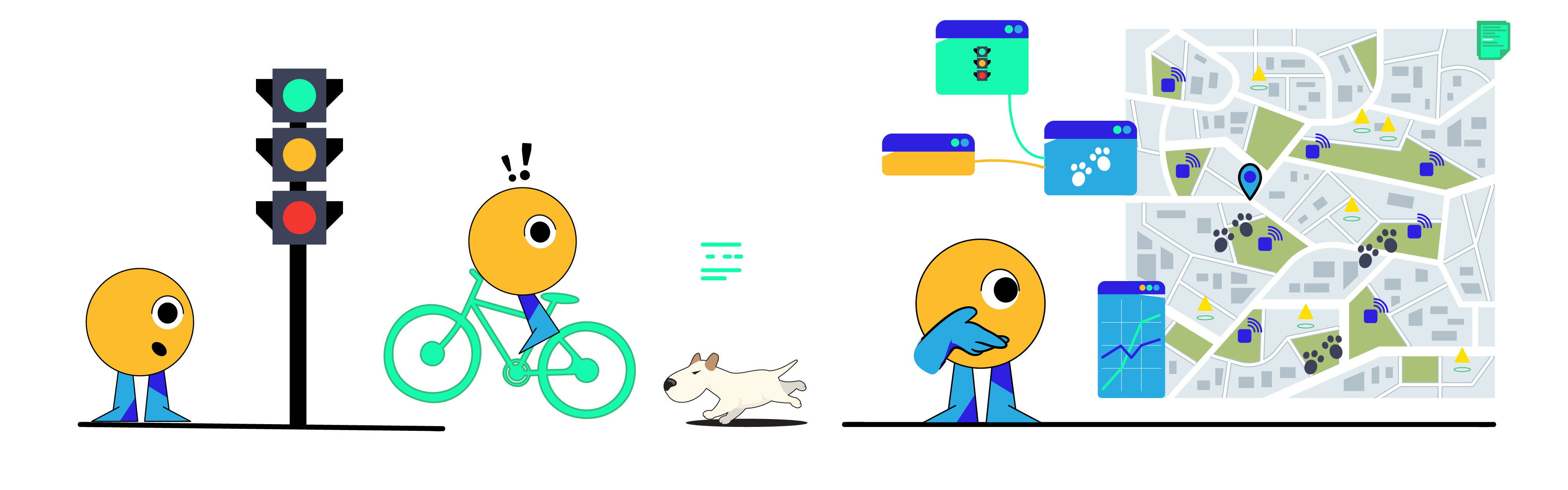
Likewise, the forest fire detection system could have been a force for good, as the last couple of years saw many countries lose substantial forest areas to fires. Additionally, the communication foundation installed for the project could have supported another serious issue within the campus forests. Over the same period, stray dog attacks resulted in several runners visiting the emergency room. If only those interested in tracking the dogs and developing a warning application had known that the necessary infrastructure was already in place.
But before I become yet another person proving that the saddest words of tongue and pen are “what might have been,” I would like to pivot to an active project that is pushing against this trend by growing inside a digital twin.
Some of you may recall the previous section on the IoT recipe for a passive cooling stack, which provides a practical way to lower cooling costs through a smart combination of simple technologies. In fact, my team has been working on such a solution as part of a national research project.
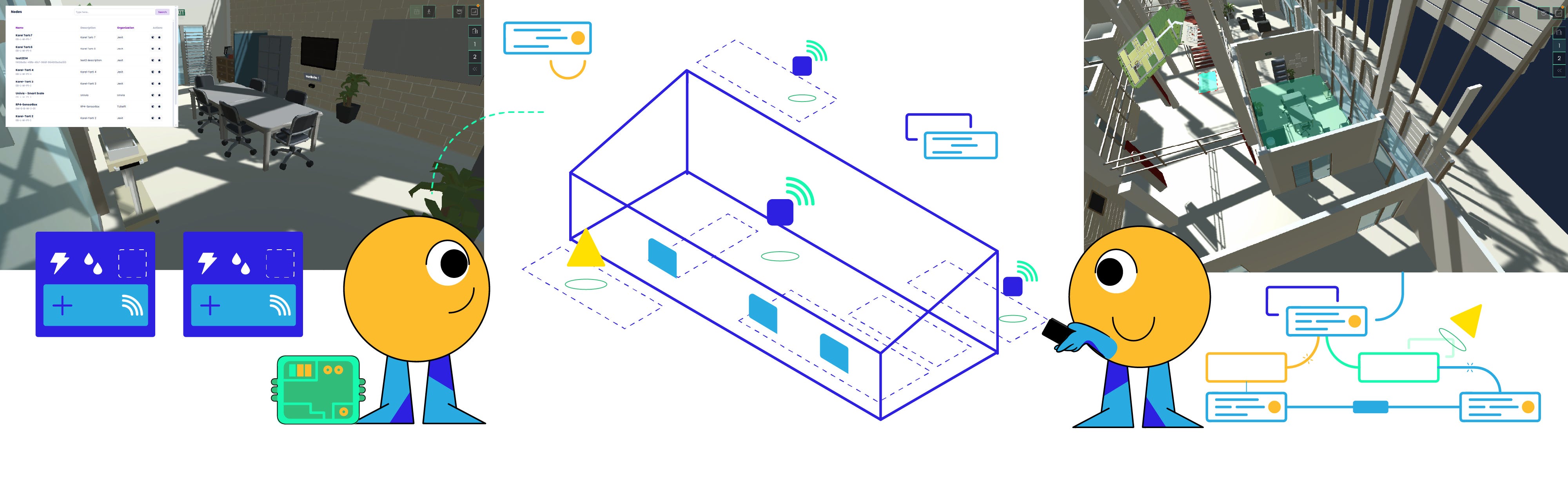
The components, including indoor sensors, machine learning algorithms, and remotely controlled ventilation, are being developed and tested for efficiency and cost, but the setup is also accessible through a digital twin. This allows interested parties to study the underlying technology, get in touch with the active participants, and even arrange a personal visit.
I do know that the existence of the digital twin is only the first step, as there are many points to address in bringing a wide range of users into the system, so that the discovery of such solutions becomes less about luck and more about a cohesive flow through shared spaces and interests.
These I will cover as we make progress. As you can see, I am on the journey just like you, equally eager to discover how far we can reach and what wonderful stops we will make along the way.
No posts
Comments
Nothing yet. Say the first thing.
Sign in to join the conversation.