
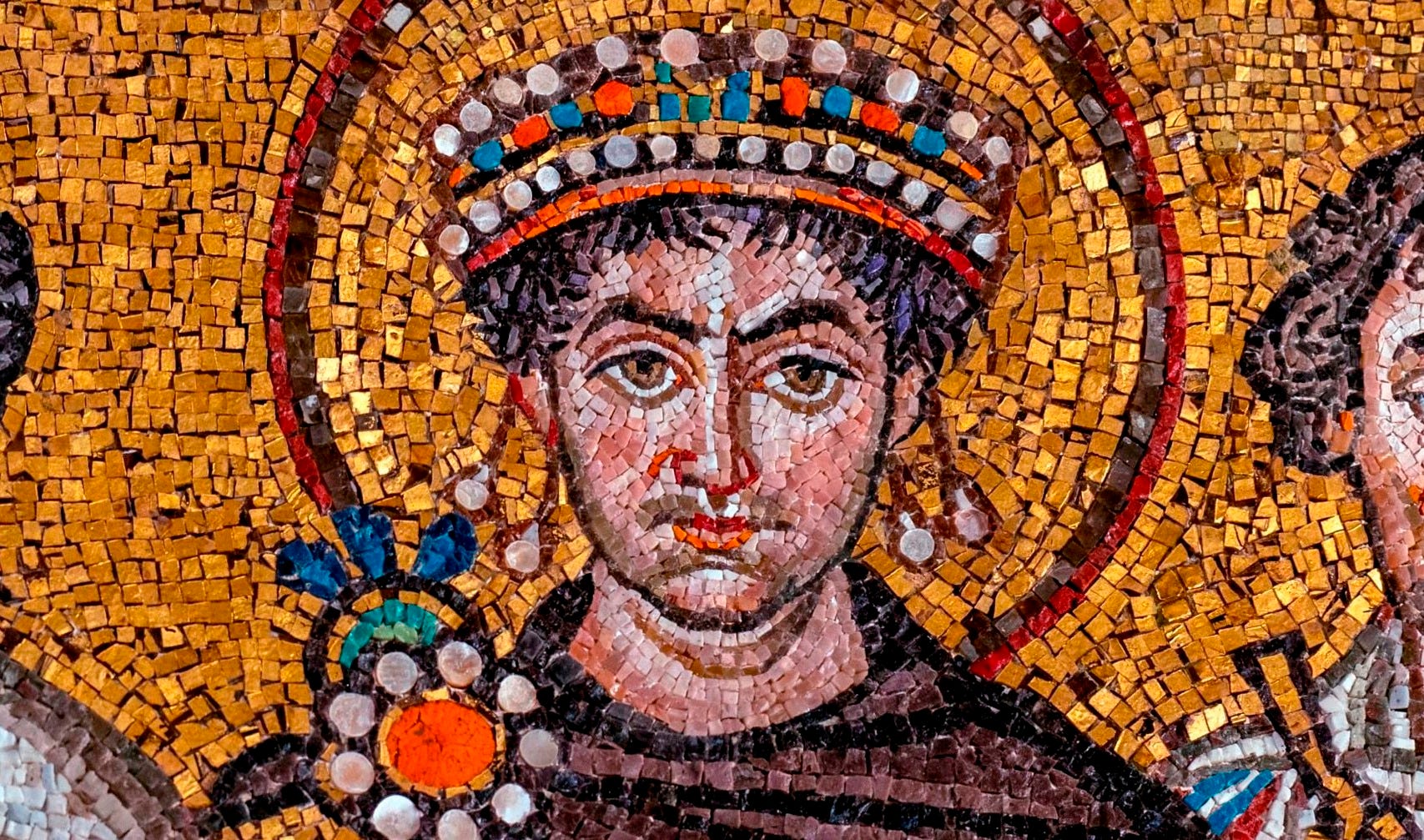
In 541 CE, a disease arrived at the Egyptian port of Pelusium from the east, probably carried on grain ships. It spread to Alexandria, then westward across the Mediterranean, then north into Constantinople, the capital of the Eastern Roman Empire. The historian Procopius, who witnessed the outbreak in Constantinople firsthand, described bodies piling up in the streets faster than the living could bury them. At its peak, he wrote, the city was losing 10,000 people per day.
Procopius was prone to exaggeration. But the epidemic he was describing now identified by modern researchers as the first recorded outbreak of bubonic plague was real, catastrophic, and historically consequential in ways that are still being debated. The Plague of Justinian did not just kill people. It may have ended the last serious attempt to reunify the Roman Empire, restructured the political geography of the Mediterranean, and created conditions that allowed Islam to emerge and spread across a weakened Byzantine and Persian world.
For a long time, the identification of the Plague of Justinian as bubonic plague was based primarily on the clinical descriptions left by ancient writers. Procopius described swellings in the groin, armpit, and behind the ear that are consistent with the buboes characteristic of Yersinia pestis infection. John of Ephesus, another contemporary, described similar symptoms. The accounts were suggestive but not definitive.
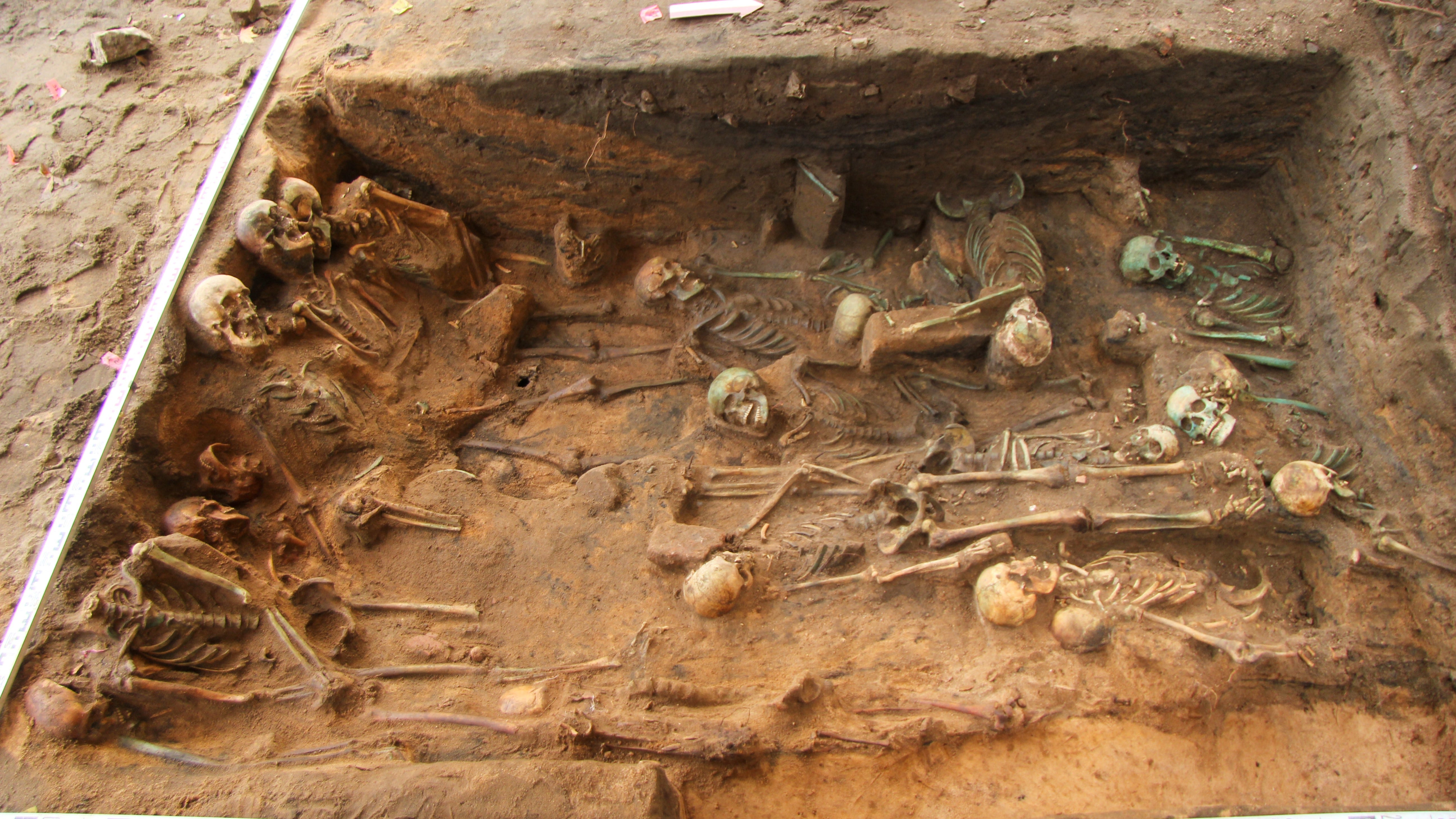
Ancient DNA analysis settled the question. A 2013 study published in The Lancet Infectious Diseases extracted and sequenced Yersinia pestis DNA from skeletal remains at burial sites in Bavaria and southern France, dated to the 6th century CE. The pathogen was confirmed: the same bacterium responsible for the Black Death in the 14th century was killing people in the 6th.
The Justinianic Plague was the first of what geneticists now call the first pandemic strain of Y. pestis a lineage distinct from the strains that caused the Black Death and from modern plague. It originated somewhere in central Asia, probably in the reservoirs of rodent populations that still maintain plague bacteria today, and spread westward along trade routes. The grain ships of the Byzantine Empire, which moved enormous quantities of food from Egypt to Constantinople and across the Mediterranean, provided both the rats and the fleas necessary to spread it efficiently.
Estimating mortality from ancient epidemics is genuinely difficult. Ancient population figures are unreliable, the geographic extent of the epidemic took years to fully document, and the disease returned in multiple waves the Justinianic Plague was not a single event but a recurrent epidemic that struck repeatedly for roughly 200 years, with major outbreaks in 541, 588, 654, and several intervening years.
Conservative modern estimates put total mortality at around 25-50 million deaths over the full pandemic period roughly 25-50% of the population of the Byzantine Empire and affected regions. Kyle Harper, a historian at the University of Oklahoma whose 2017 book “The Fate of Rome” is the most comprehensive modern treatment of climate and disease in late antiquity, argues that the plague fundamentally restructured Byzantine society. Tax revenues collapsed as agricultural labor disappeared. The military could not be adequately staffed or funded. The administrative machinery of the empire contracted.
The plague struck at the worst possible moment for the Eastern Roman Empire. Justinian had spent the 530s conducting the most successful military campaigns the Byzantines would ever achieve his general Belisarius had reconquered North Africa from the Vandals and most of Italy from the Ostrogoths, and seemed on the verge of restoring Roman control over the western Mediterranean.
The plague effectively ended this project. Armies depleted by disease could not hold newly conquered territory. The revenues needed to fund garrisons and pay soldiers disappeared with the dying taxpayers. Italy, which Justinian had just spent two decades and enormous resources reconquering, was invaded by the Lombards in 568 CE and lost within a generation. North Africa followed. The dream of a reunified Roman Empire which was actually achievable in the 530s became permanently impossible.
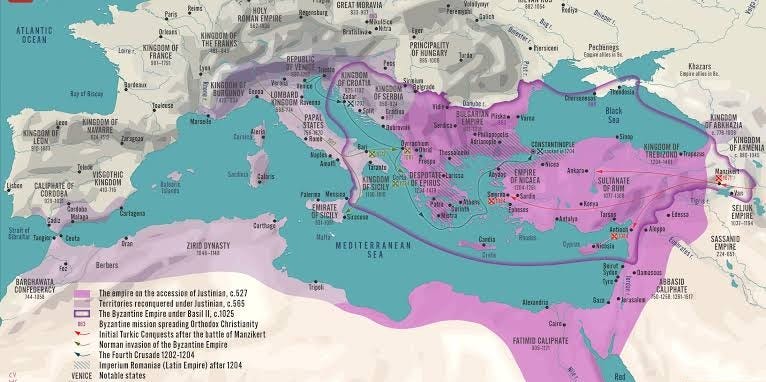
The Arab conquests of the 630s and 640s the rapid Islamic expansion that within a century brought Arab armies to the borders of France and the walls of Constantinople are not fully explicable without the plague. Both the Byzantine Empire and the Sassanid Persian Empire, which had exhausted each other in a brutal war from 602 to 628 CE, entered the period of Arab expansion severely weakened by two centuries of recurrent plague. Egypt, Syria, and Mesopotamia the richest provinces of the Byzantine and Persian empires fell to Arab armies in the 630s with a speed that surprised everyone, including the Arabs themselves. A fully healthy, fully staffed Byzantine military might well have stopped them. The one they had could not.
The Plague of Justinian is not as culturally familiar as the Black Death, and there is a reason for that: unlike the Black Death, it did not produce a visual culture of mortality that survived into modernity. The Black Death gave us the Dance of Death, memento mori art, and a tradition of plague writing that runs from Boccaccio to Defoe. The Justinianic Plague left us with John of Ephesus and Procopius, whose accounts are remarkable but not widely read outside of Byzantine history specialists.
What it left us with, more consequentially, is the world it created. If the Justinianic Plague had not struck when it did and how it did, Belisarius’s reconquests might have held. The Mediterranean might have remained a Roman lake. The political geography of Europe and the Middle East in 700 CE and therefore the trajectory of medieval history, and therefore everything downstream of that would have been different. A bacterium carried by fleas on rats changed the shape of the world. That is worth knowing.
Dols, M. W. (1974). Plague in early Islamic history. Journal of the American Oriental Society, 94(3), 371-383.
Harper, K. (2017). The Fate of Rome: Climate, Disease, and the End of an Empire. Princeton University Press.
Little, L. K. (Ed.). (2007). Plague and the End of Antiquity: The Pandemic of 541-750. Cambridge University Press.
Mordechai, L., et al. (2019). The Justinianic Plague: An inconsequential pandemic? Proceedings of the National Academy of Sciences, 116(51), 25546-25554.
Wagner, D. M., et al. (2014). Yersinia pestis and the Plague of Justinian 541-543 AD: A genomic analysis. The Lancet Infectious Diseases, 14(4), 319-326.
Comments
Nothing yet. Say the first thing.
Sign in to join the conversation.