
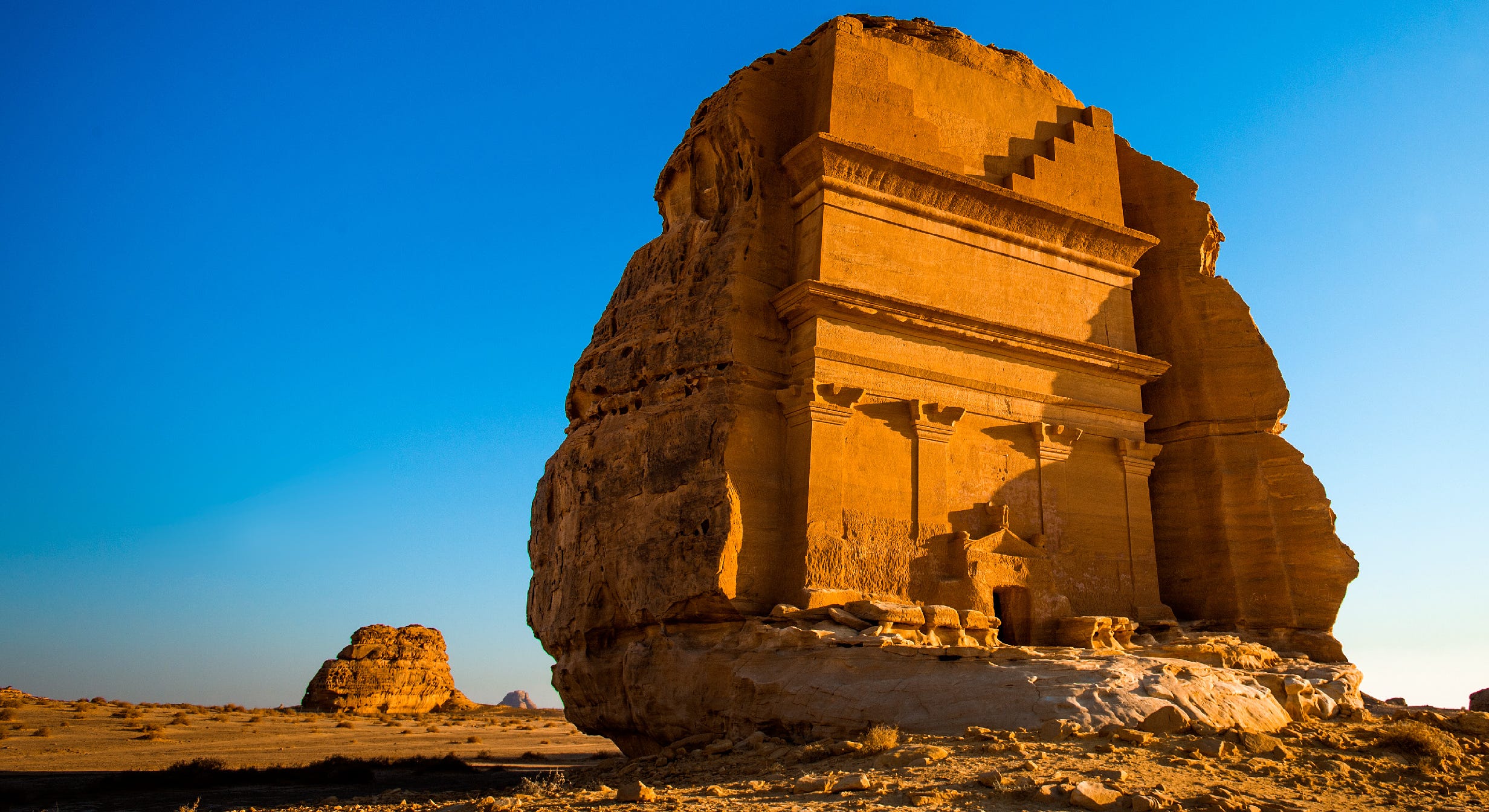
Hegra sits carved into rose colored sandstone cliffs in the deserts of northwestern Saudi Arabia, roughly 500 kilometers from Petra in Jordan, and for nearly two thousand years it stayed almost completely out of reach of tourists, archaeologists, and conquerors alike. That changed in 2020, when Saudi authorities opened the site to international visitors for the first time, revealing more than 100 monumental tombs carved directly into the rock by the Nabataean civilization, the same desert traders who built Petra roughly a century earlier. Hegra is now recognized as Saudi Arabia’s first UNESCO World Heritage Site.
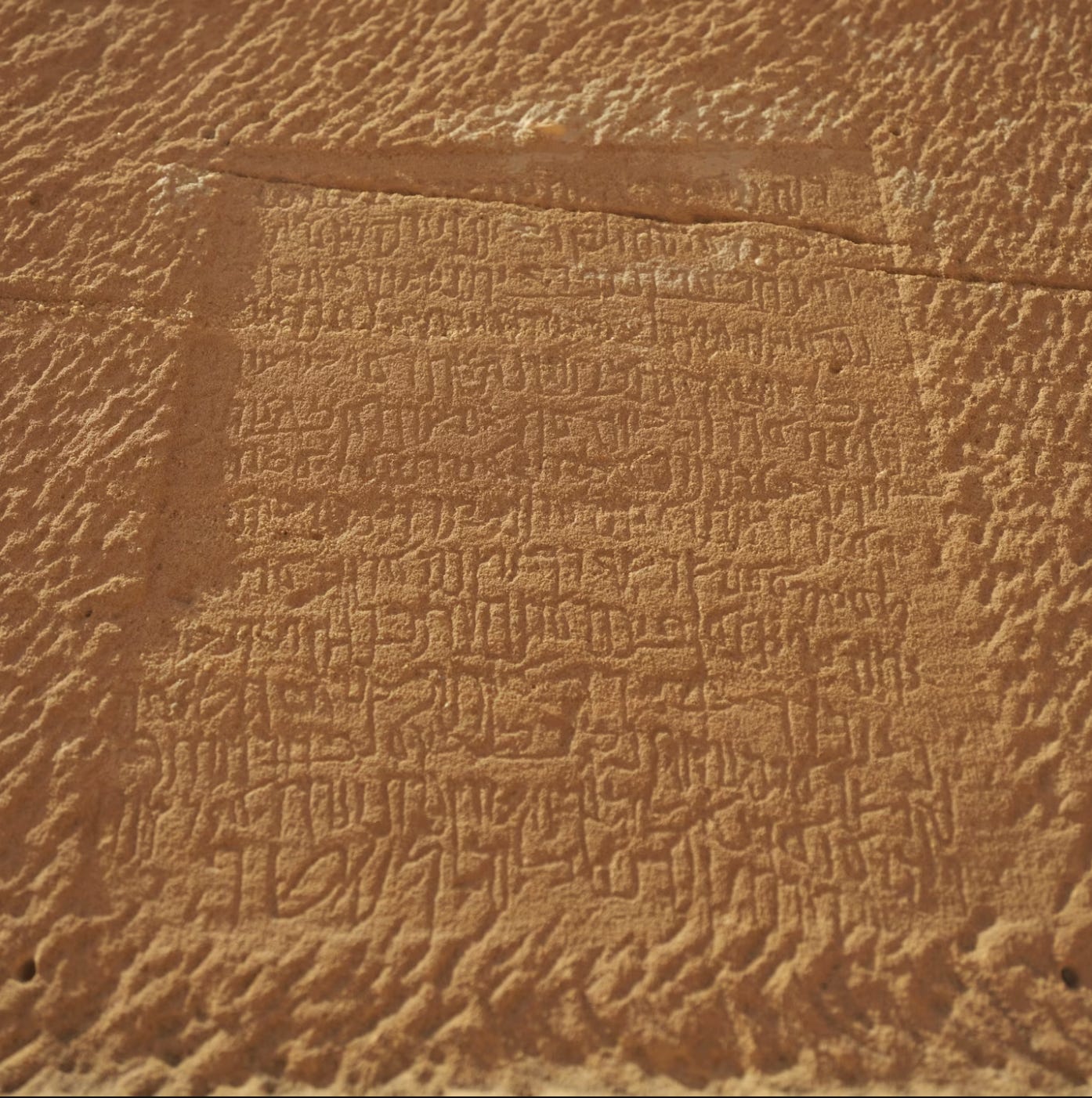
One monument in particular, known as Qasr al-Farid or the Lonely Castle, stands alone against an outcrop of rock and remains unfinished, its facade carved roughly two thirds of the way down before work apparently stopped, offering a rare glimpse of the carving technique itself, top down into solid stone rather than built up from a foundation. Of the roughly 111 monumental tombs identified across the site, 94 carry carved inscriptions naming their owners, a level of documentation that gives historians a far more personal record of who actually lived and died at Hegra than most ancient cities provide.
Nabataean wealth came from controlling incense and spice routes running from southern Arabia up toward the Mediterranean, and Hegra, known in antiquity as Hijra, served as their southernmost major city, a mirror of Petra’s role as the northern capital. Traders moving frankincense, myrrh, and silk through the desert paid tolls and found water, shelter, and protection at cities exactly like this one, spaced out along routes that could otherwise kill an unprepared caravan within days.
Rome eventually absorbed the Nabataean kingdom peacefully in 106 CE, annexing it as the province of Arabia Petraea without the extended military campaign Roman expansion usually required elsewhere. Hegra continued functioning as a trade center under Roman administration for generations afterward, and inscriptions found at the site show a mix of Nabataean, Greek, and Latin influence layered on top of each other rather than one culture violently replacing another. Unlike many ancient cities that show clear destruction layers from conquest, Hegra’s decline looks gradual, tied more to shifting trade routes than to war.
Since 2008, a joint Saudi and French archaeological team has carried out systematic survey and excavation work at the site under an agreement between Saudi heritage authorities and France’s Agency for AlUla Development, work that continued quietly for over a decade before the 2020 tourism opening ever made international headlines. Their excavations extended well beyond the tombs themselves, mapping wells, residential areas, and sections of the ancient city wall that most visitors never see.
AllThatHistory Weekly is a reader-supported publication. To receive new posts and support my work, consider becoming a free or paid subscriber.
Why Nobody Touched It for Centuries
Petra became one of the most photographed ruins on Earth after a Swiss explorer rediscovered it for Western audiences in 1812, drawing millions of tourists and generations of archaeological excavation ever since. Hegra sat largely untouched by comparison, and the reason has less to do with remoteness than with local religious tradition. The Quran describes the Thamud, an ancient people identified with this exact region, as having been destroyed by God for their arrogance and disbelief, and many local traditions treated the area as cursed ground best avoided rather than settled or explored.
That reputation, combined with Saudi Arabia’s historically restrictive approach to tourism and its conservative religious establishment, kept large-scale excavation and visitation off the table for most of the twentieth century. Where Petra absorbed foot traffic, looting, and erosion from over a century of open tourism, Hegra’s tombs and inscriptions remained essentially sealed in time, protected less by careful conservation policy than by a persistent cultural reluctance to disturb the site at all.
A Different Kind of Preservation Story
Saudi Arabia’s decision to open Hegra to the public in 2020 was part of a broader government push to diversify the economy away from oil and build a tourism sector nearly from scratch. Archaeologists arriving at the site found tombs with facades and inscriptions in unusually sharp condition, some still bearing the carved names of the families who commissioned them more than two thousand years ago, along with curse formulas warning against disturbing the dead that had apparently worked exactly as intended.
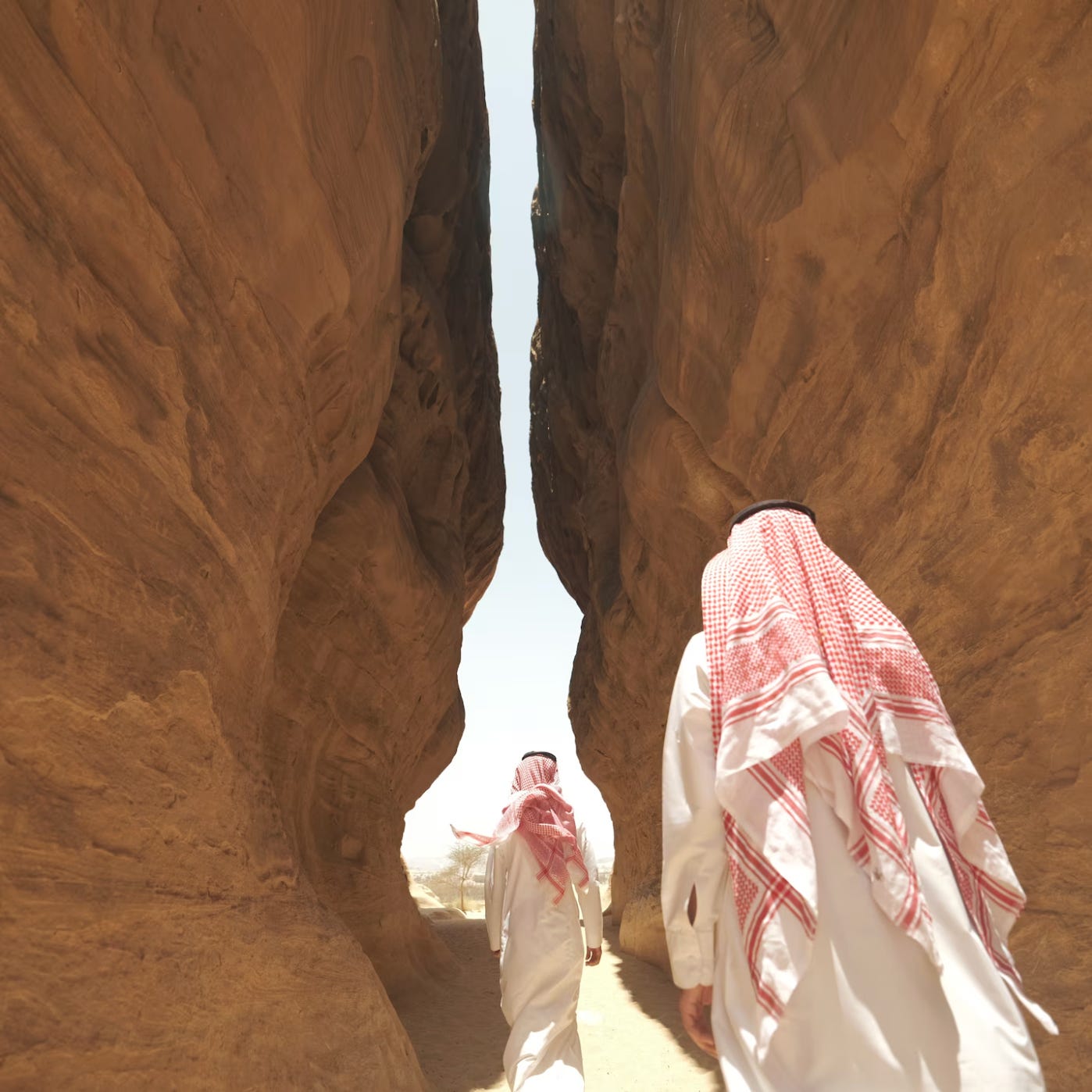
Beyond the tombs, visitors can walk through Jabal Ithlib, a narrow natural corridor between towering rock walls that the Nabataeans adapted into a religious meeting space, carving a hall known as the Diwan into one wall for communal gatherings and ceremonial banquets. Smaller niches nearby likely held carved betyls, abstract stone representations of Nabataean deities, showing that Hegra functioned as more than a burial ground and toll station. It also served as a genuine civic and religious center for the community that lived and traded there.
Petra earned its fame by being found early and shared widely, which came at the cost of the wear that inevitably follows global attention. Hegra earned its preservation almost by accident, protected for two thousand years by a story about divine punishment that kept curious hands away long after the original reasons for avoiding the site had faded from most people’s memory.
Does a ruin owe its survival more to being forgotten, or to being feared?
Thanks for reading AllThatHistory Weekly! This post is public so feel free to share it.
Comments
Nothing yet. Say the first thing.
Sign in to join the conversation.