
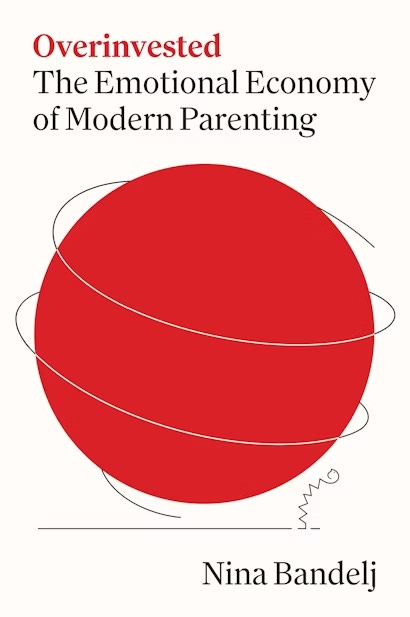
My favorite conference ritual is wandering the exhibition hall perusing new releases displayed at publishers’ booths. I get to temporarily slip into a fantasy world where I actually have time to read all the books that catch my eye, always while comfortably seated in a fireside armchair or perhaps sprawled across a lounge chair on the deck I do not have.
But making the rounds at a conference last summer, I knew when I picked up a galley of Nina Bandelj’s Overinvested: The Emotional Economy of Modern Parenting that this was a book I’d be reading, citing, and thinking about in the real world. It’s in close conversation with my own research, insofar as it centers the work of parenting. But it’s also a book I suspected (correctly) would help me make sense of the parenting waters in which I now personally swim.
Nina was kind enough to answer some questions about her amazing work. If you’re intrigued, you can pick up Overinvested at all the usual places!
[On another note, this winter was a rough one, but things are looking up, and I hope to be popping into this space more often than every three months (eek) going forward. I’m working on a piece about the uses (and misuses) of AI in family life and would love to hear from you: have you been using AI tools to manage elements of your home life? How? Are you opposed on principle? Why? Reply here or DM me – I’d love to hear about your experiences, good or bad.]
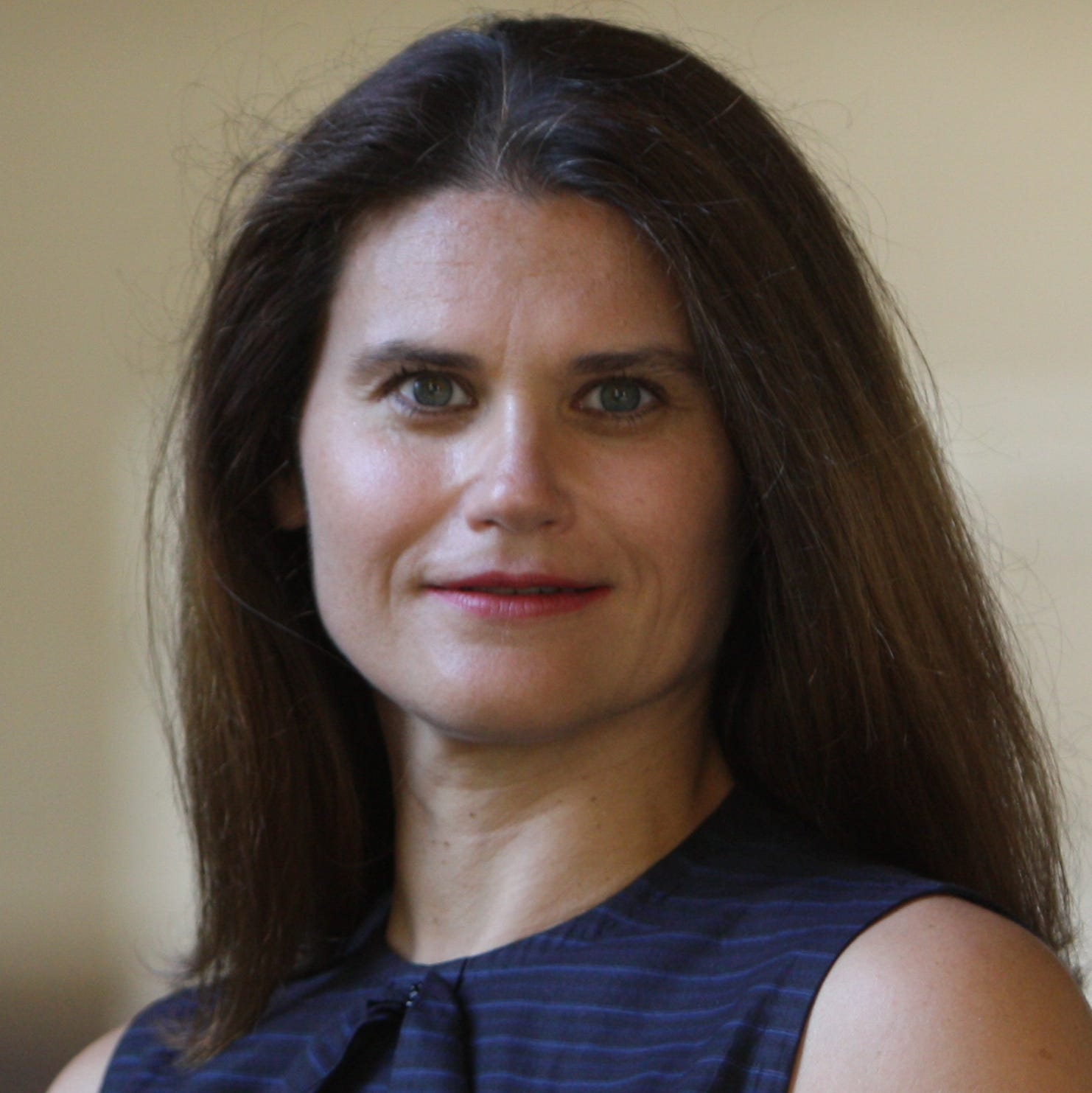
First off, Nina, I’m wondering if you can settle a debate I’ve been having (mostly with myself): is parenting today harder than it was a generation ago? Given my near-constant level of exhaustion and overwhelm, I’m heavily biased toward the “yes” side. But I’m also wary of the very human tendency to exaggerate the uniqueness of our current moment. What’s your take?
How about you don’t just take my word for it, Allison? Here’s the reality: in summer 2024, the U.S. Surgeon General Vivek Murthy issued a report titled “Parents Under Pressure.” This was a public health advisory, urging the American people to recognize the stress and mental health toll associated with parenting as a serious public health concern for the country. Nearly every one in two parents would report that most days their stress is completely overwhelming. These levels are unprecedented, urging us to ask, how did we get to this troubling parenting reality? Surely, the pandemic was a really hard time. The New York Times famously created a “primal scream line” for parents who are “tired as hell,” offering that they could “click the number to scream after the beep” to release some pressure.
In Overinvested: The Emotional Economy of Modern Parenting, I show how this crisis has been brewing before the pandemic, and how over the past several decades, we turned childrearing into exhausting labor to toil over and children into projects to manage. I trace how we ramped up the standard of what it means to be a good parent and how we privatized childrearing, especially childcare and education, by telling parents that it’s on us to invest from a very early age, even in the womb, into developing our children’s skills and abilities, or what you may see defined as “human capital.” At the same time, we’ve made parenting super emotional through a fount of advice that parents nowadays receive nonstop from parenting manuals, Facebook groups, Instagram posts, TikTok memes, WhatsApp chats, shaping our very subjectivities. All of it surrounded by an expanding multi-billion-dollar parenting industry offering gadgets, apps, extracurricular programs, financial instruments, you name it, that capitalize on parental love and devotion. It’s these social norms and structures that make parenting evermore financially and emotionally exhausting, increasingly so, compared to a generation ago.
As I was reading the first few pages of Overinvested, I will admit to raising an eyebrow. You start by making the case that contemporary parenting is largely “a process of human capitalization”: parents are working hard to increase their kid’s future economic value (i.e., the wages they will someday command) by stuffing them full of skills and education. That argument doesn’t jive with my experience; I want my kid to be happy and emotionally well-adjusted and honestly haven’t given much thought to her economic prospects. (Though to be fair, she’s only one.)
But then you added a second strand to your argument, and I thought, ‘Got me!’ Not only has parenting undergone a shift toward economic logic, you write, it’s also undergone a shift toward emotional logic. How are those two sides of the same coin? And why is it that they add up to something different than what most of the folks reading this newsletter likely understand as “intensive parenting”?
I love you pushing back on this idea, Allison, that parents engage in “human capitalization” of children. That’s exactly the sense I got from parents we interviewed for this research, and it was a surprise because when I analyzed how scientists and policy makers talk, it was very obvious that they kept offering a very economic cost benefit perspective, the need for “parental investment,” as they call it, to yield future economic returns to children. My research team and I talked to many parents, 120 of them, across socio-economic and racial backgrounds, and of different political and religious persuasions, and we did not hear that their goals of parenting are to primarily set up their children for future economic prospects. What then did parents say? Like you, they mostly talked about how much they love their children and how devoted they are to them. How they wanted their children to realize their potential, pursue their passions, and be happy. To have a loving relationship with their children, something that was much more important to them than what they thought was important to their own parents raising them.
For me, this is not surprising because, as I trace in the book, we live in a world that increasingly emphasizes how important emotions are to how we think and live. It’s because of these social forces that parents today are not only intensively focused on raising a child, what many know as intensive parenting, we are also invested into being good parents, ready to devote our entire selves to parenthood. And we are also invested into this with a lot of money, something that has become increasingly pronounced because of what social scientists call “financialization” of society, the intrusion of financial instruments and economic logics into the intimate sphere of family life. To capture this qualitative shift, and how the power of emotions and the power of economics have bowled us over, I call out that parenting today requires parents to be overinvested, not only intensive. That’s why the book title is Overinvested, not to pass judgment – absolutely not! – but to capture these strong societal pressures on individual parents, and even more on mothers I should add, to bear heavier and heavier emotional and financial burdens.
I’m obsessed with the power of social science to “denaturalize” our understanding of the world. Back in college when I was studying medical anthropology, my still-forming mind was blown by the idea that illness wasn’t just a matter of biology. It also has a cultural component! Your work is such a great example of this kind of paradigm-shifting power. For those of us who believe it’s natural - programmed into the human species, even - for parents to pour everything into their offspring, can you make the case for why this is in fact a “historically specific and culturally based” style of parenting, rather than an inevitable feature of rearing children?
You are right about how easy it is to think that some things are just natural, a matter of biology, or somehow essentially true. Parenting is one of them given that it feels so intimate. Love for and devotion to our children feels very natural. In fact, people today are divided on so many things, but this may be one that a lot of people have in common, agreeing that parents should be devoted to their children and want to do everything they can for them.
But is how we parent today simply programmed into the human species? Sociologists and anthropologists would disagree because how we see children, what they are capable of, and what it means to raise them, actually varies substantially over time and place. For instance, the “cry it out” method (leaving a crying baby to self-soothe during the night and then fall back asleep) used to be acceptable practice but is now quite controversial, with many advocating for attachment parenting focused on responsiveness and closeness. At the same time, the American Academy of Pediatrics maintains that “co-sleeping,” where the parent and child share the same bed, is dangerous for the infant because of the risk of sudden infant death syndrome (SIDS), even though co-sleeping has historically been the more common practice and still preferred in many cultures. We may find shocking that the famous early twentieth-century psychologist John Watson advised that parents should NOT hug and kiss their children. For Watson holding babies just for the sake of it was a sure way to produce “little tyrants.”
More? Princeton University sociologist Viviana Zelizer showed in her brilliant book that before the turn of the 20th century children were treated as “economically useful,” capable of working on the farm and contributing substantially to household labor. Historian Paula Fass reported how child independence has been a core American value throughout history, but today we talk a lot about “helicopter parenting” and “snowplow parenting” and “Tiger mom parenting” or other parenting styles that in many ways limit independence. Not that long ago, 12-year-olds would babysit neighbors’ kids. Not so much these days when most believe that 12-year-olds require supervision themselves. “Don’t Tell America the Babysitter is Dead,” was a 2024 article in The Atlantic that captured this shift (with a provocative title, of course).
Self-help books are really the quintessential Rich Texts, aren’t they? You analyzed more than a century of parenting advice books as a way to chart shifts in the definition of good parenting. What’s changed since 1894, when Dr. Emmett Holt began instructing parents on the benefits of “airing” for cold prevention and what to do in cases of “excessive nervousness in infants”? What do contemporary bestsellers like Expecting Better and Good Inside (both of which I read and enjoyed!) tell us about the state of the parenting advice industrial complex?
This was such a fun part of research for me. I was inspired by sociologist Sharon Hays who wrote a very important book published in 1996 called “The Cultural Contradictions of Motherhood” in which she coined the term “intensive mothering.” If folks don’t know, this book is the original source of the idea of intensive parenting. Hays analyzed three main parenting manuals that were popular in the 1980s, to understand what expert advice was given to mothers on childrearing, including Dr. Benjamin Spock’s The Commonsense Book of Baby and Child Care, dubbed the “parenting bible,” which sold 50 million copies by the time of Spock’s death, with nine editions published. But Dr. Spock ran out of fashion because of a proliferation of parenting books since the 1980s, consistent with the increasing emphasis on therapeutic/emotional advice giving in our society. The first edition of What To Expect When You’re Expecting came out in 1984 and it wasn’t published by a doctor or even a psychologist or parenting expert. The author, Heidi Murkoff, was a new mom who wanted more moms to know, well, what to expect when they are expecting.
Another explosion of parenting advice came in the early 2000s, very prominently with Amy Chua, a Yale Law School professor, not writing a legal treatise but a memoir, The Battle Hymn of the Tiger Mother, published in 2011. Two other bestselling parenting books during that time were, one, Pamela Druckerman’s Bringing Up Bébé: One American Mother Discovers the Wisdom of French Parenting, by a journalist who moved with her family to France and, second, fellow journalist Jennifer Senior’s All Joy and No Fun: The Paradox of Mothern Parenthood. All this to say that what started to resonate more and more in the parenting advice field was not just advice from experts with PhDs or MDs but experiences of moms themselves, as well as topics that paid more and more attention to the emotional wellbeing of children and the emotional experience of parenthood, or more specifically motherhood. This is consistent with what I mentioned earlier, how emotions play a bigger role in our lives, and how we understand ourselves and others. Let me just add that Good Inside, the 2021 book you mentioned, Allison, promises to offer practical strategies for parenting that, I quote, “feels good.”
I know from reading Overinvested that in addition to writing about parenting, you are a parent yourself. I’m in a somewhat analogous position: I’ve written extensively about the mental workload most mothers partnered with men carry—and I’m now a mom co-parenting with a dad. There are some days where my knowledge feels protective. Other days, I’m convinced it makes things worse: I know X, yet I still do it, and then I feel bad about doing it because I should know better. How do you navigate between your “sociologist of parenthood” and your “parent” roles? Have you been able to carve out a different relationship to parenthood than the (over)invested model you critique in the book?
I’m with you, Allison. And also can I just pause to say how much I love your book, What’s on Her Mind. (If you don’t have it yet, get it!) [Ed. Note: I swear I did not ask Nina to say this!!] And, like you, I’ve thought to myself: Nina, you should know better. You’ve researched this thoroughly, systematically, based on decades of experience as a sociology professor and social scientist, to discover that the overinvested parenting standard leads to negative outcomes for the wellbeing of parents, children as well as society… Yet, it’s SO incredibly hard when it’s about our own children. And I get why. After all, I live in this same exhausting parenting reality. That’s the big sociological lesson that I feel deeply in my own skin. That even the most intimate feelings are shaped by social forces. Most of these social forces—the power of emotions and the power of economics that I discussed, for instance—are not very visible so it’s easy to forget they exist, and to feel like parenting is all about personal choices and personal feelings. But we do see, for example, what other parents are doing, which creates pressures, and we can feel the draining power of the parenting industry and high costs of childcare and education on our wallets. These are visible social forces.
Can I also add that talking to many parents wasn’t just data. It’s people’s lives and often really heartbreaking stories of exhaustion and sacrifice. And a palpable sense of how hard it is to imagine getting off this derailed train of parental emotional and financial depletion. How can we get off? I have an anecdote from my own life in Overinvested, where I scream from the top of my lungs that I’m done, and I’m going on a parenting vacation. Well, it was a temporary solution, just like any vacation from a job that causes burnout is. Except, one can potentially quit a work job. Not easy, certainly, if it’s the only way to livelihood, but let’s say that we can hypothetically imagine quitting a work job more than we can imagine quitting the parenting job. But if we can’t just quit, then we need to work together to redefine the expectations and change the conditions of this job. There’s no boss to have a serious talk about it, but we can talk to each other, and to our policy makers. We need to support each other in changing these unsustainable parenting norms. If there’s one thing I want to say without a doubt after ten years of research, is that parenting can be something other than grueling labor leading to parental burnout—and that we all will actually be better for it. Children, for one, don’t deserve exhausted and burnout parents. Growing economic and racial inequality due to privatized childrearing is not leading to the bright future we all say we want for our children. There’s strength in numbers, so I’m calling on moms and dads, and grandparents and pet parents and non-parents, too. Let’s all join a social change movement, a collective effort to change norms and change structures and policies, with a mission to lessen the individual overinvestment pressure and feel empowered to ask for more societal investment in all of our children. What have we got to lose but a lot of stress and exhaustion?
Nina Bandelj is Chancellor’s Professor in the Department of Sociology at the University of California, Irvine. Learn more about her here, and pick up Overinvested at Bookshop or via the publisher.
No posts
Comments
Nothing yet. Say the first thing.
Sign in to join the conversation.