
Welcome back to the What’s On Your Mind series, where I interview interesting folks about the to-do’s we don’t talk enough about. If you’d like to nominate someone - or yourself! - for an upcoming interview, please reach out.
When this post drops, I will (if all has gone to plan) be in Montreal to celebrate my dear friend Chloe Bordewich’s wedding. We met half a lifetime ago, as college freshmen, and reconnected in 2016 when we ended up in the same grad school. For this month’s edition of What’s on Your Mind, I asked Chloe about how she and her partner are managing wedding preparations.
Planning a wedding is one of the most cognitive labor-intensive activities a couple can embark on. But Chloe and her partner have a particularly high degree of difficulty. As she puts it below: “We are trying to host a wedding that blends two cultures in a country neither of us is from, where we have lived only a few years and not attended any weddings.”
Some context: Chloe was raised in the U.S., but her partner grew up in Syria before being displaced by the civil war there. He eventually found refuge in Canada, but his citizenship status prevents him from traveling to many countries, including the U.S. As a result, the couple has spent the majority of their decade-long relationship living in separate countries.
Chloe and I have had fascinating conversations over the years about how certain approaches to planning (and general life management) may be cultural as well as gendered. And about how hard it is to tease apart all the factors that may be at play for any given couple: what’s gender, what’s class, what’s culture, and what’s individual idiosyncrasy?
Read on to hear how Chloe’s managing all of this alongside challenges big and small. Thanks, Chloe, for taking time out of this hectic period to share your experiences!
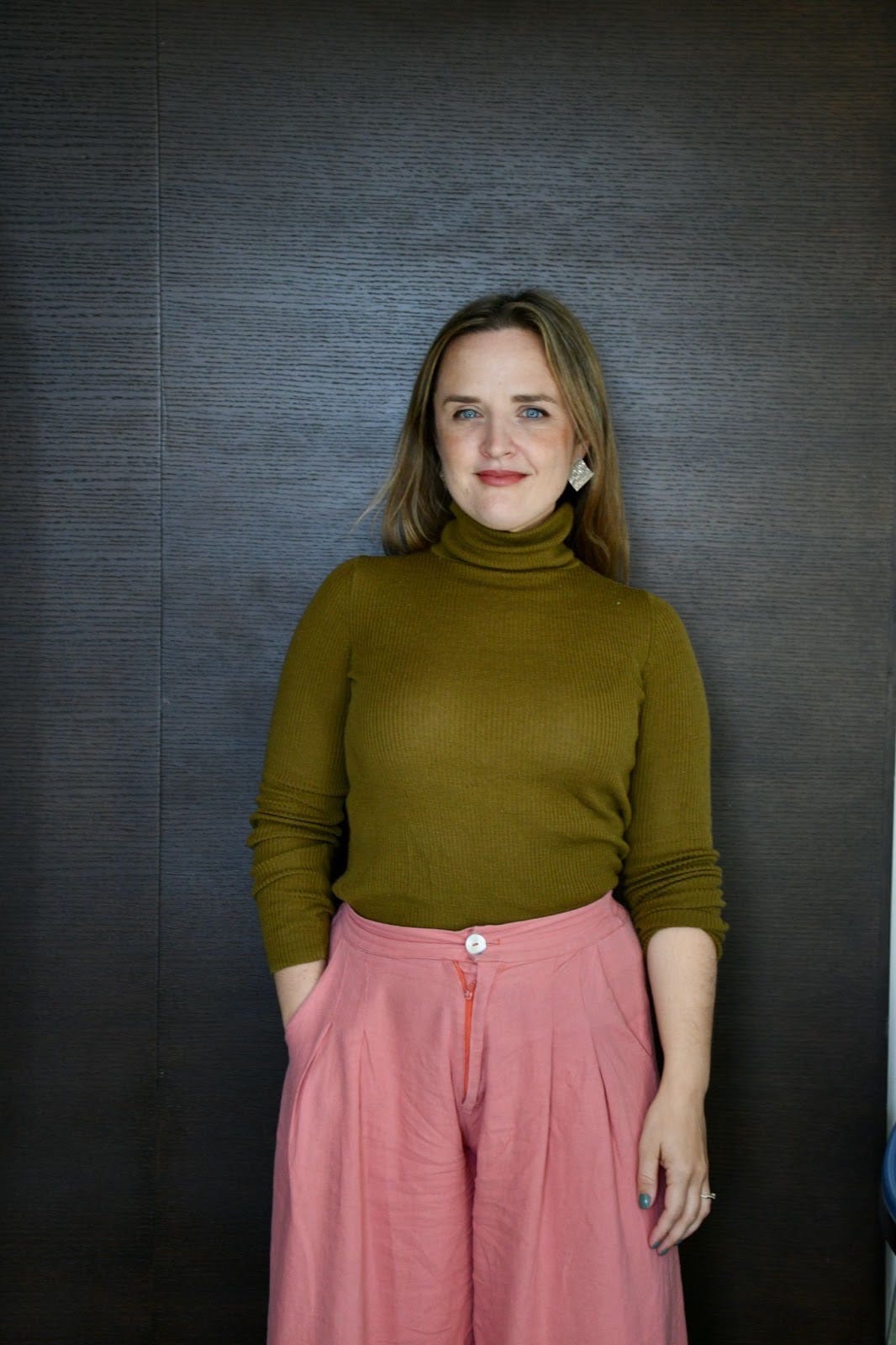
My partner and I do not have kids yet and my parents are, fortunately, in good health–I don’t have any dependents besides my anxious rescue cat. I’ve carried most of the mental load when it comes to shared household financial management and, recently, wedding planning, though we have reshuffled those tasks somewhat since both my partner’s and my employment situation changed this summer. Also, I have a standing weekly meeting with a good friend with whom I share a years-long task management Google doc. It started as a way of tracking our creative and professional projects, but we’ve added personal goals and decisions over time. It helps to have somewhere to externalize my interior chaos that isn’t dumping on my partner. (Ed. note: Genius!)
My postdoc contract ended about a month before our wedding, so I am headed into the final stretch of wedding planning without a reliable paycheck. On one hand, this means my time is technically my own. On the other, much of my mental real estate is taken up with financial anxiety and concerns about staying afloat professionally, knowing that I won’t have time to recommit to a full-time job search until after the wedding.
As a semi-freelance historian, editor, and translator, I spend a lot of time thinking about how to juggle seven or eight very distinct creative projects (paid and unpaid, a frustratingly gray area) and remain accountable to collaborators on all of them. Until two months ago, I was also commuting every week between Montreal and Toronto, about 6 hours each way. Those logistics took up a huge amount of real estate–and time!
Living in Canada but working on projects both here and in the United States, I deal with mounds of paperwork and have to keep especially meticulous tax records. Last year I also launched an editing business, Stray Cats Ink, with some grad school colleagues, and I would like to dedicate more time to expanding our client base. We love living in Montreal, but the difficulty, for both me and my partner, of finding reliable, full-time employment here has left us contemplating yet another move—at least temporarily.
We were eager for my partner’s family and close friends to travel to North America for our wedding and see a piece of our lives here. We went around in circles trying to make this happen, but his best friend’s, mother’s and sister’s visa applications were all refused. Heading into the final stretch, we also had a sudden pest infestation that forced us to pack up our whole apartment in less than 24 hours! (Ed. note: Omg)
Our venue setup is very DIY, which has meant we are responsible for every single little detail. I’ve been using lots of spreadsheets to manage them, yet they bring me no joy at all. I hate opening them to do any kind of tracking–recording payments, revising budgets, keeping things on schedule, etc. I have just enough will to make these trackers functional and not enough to optimize them to truly work for us.
Making design choices—choosing invitations, vases, napkins, etc.—anything where there is room for creativity. This is what will make our wedding feel like us. The design might be more chaotic than cohesive, but so are we!
We are trying to host a wedding that blends two cultures in a country neither of us is from, where we have lived only a few years and not attended any weddings. In fact, my partner has hardly attended any weddings at all because, for much of the decade we’ve been together, his citizenship status seriously restricted his travel. This means few common points of reference for what we did and didn’t want, or of guest expectations. (He loves to cite examples from Friends, which, despite my being the American, I’ve barely watched!) I also have a tendency to over-research decisions, and I struggled to relinquish control of this part of the process.
As a result, more of the planning fell to me, though my partner relieved a lot of the burden of execution and follow-up. I realized that I needed to ask him explicitly to take on specific decision-making tasks, and we were able to distribute these better in the final stretch. I wish I had asked sooner! But I needed to be okay with letting go of certain things I thought I cared about being a certain way.
It was easiest to take joy in the process when we made planning discussions into dates, especially when we focused them around discrete tasks and, ideally, decisions: “compare caterers and choose one,” “walk through the wedding day timeline,” and even, “write our vows.” These dates were simple: a grilled cheese at our favorite coffee shop or, once the weather was nice, a picnic and a bottle of wine in the park. This helped restrain my tendency to dump loads of wedding information all at once and connected wedding planning to the rituals of daily life together that make us happy. (Ed. note: Awww)
Chloe Bordewich is an editor, translator, and historian focused on the modern Arab world. Based in Montreal, she co-runs the Boston Little Syria Project and recently wrote a bilingual play. Learn more here.
No posts
Comments
Nothing yet. Say the first thing.
Sign in to join the conversation.