
In the years of the early Church, life wasn’t easy. Life expectancy was low, and hygiene was minimal. In Pagan marriages, girls were married off at 11 or 12 to men not of their choosing. Abortion, adultery, and infanticide were all too common. Oh, and being a Christian often meant death and persecution. You could say it was a “culture of death.” Sound familiar?
Still, the Church grew by 40% per decade. And the reason Christians were so successful, argues Church history expert Mike Aquilina, was that Christianity made a real difference in people’s lives. By the time Emperor Constantine legalized Christianity in 313 AD, over half of the Roman Empire was already Christian, so he was more or less acknowledging an existing reality.
All this and more comes from Mike Aquilina’s talk on Formed.org called Love Conquers All. I listened to the talk for the first time many years ago, and I have re-listened half a dozen times since because it challenges me each time.
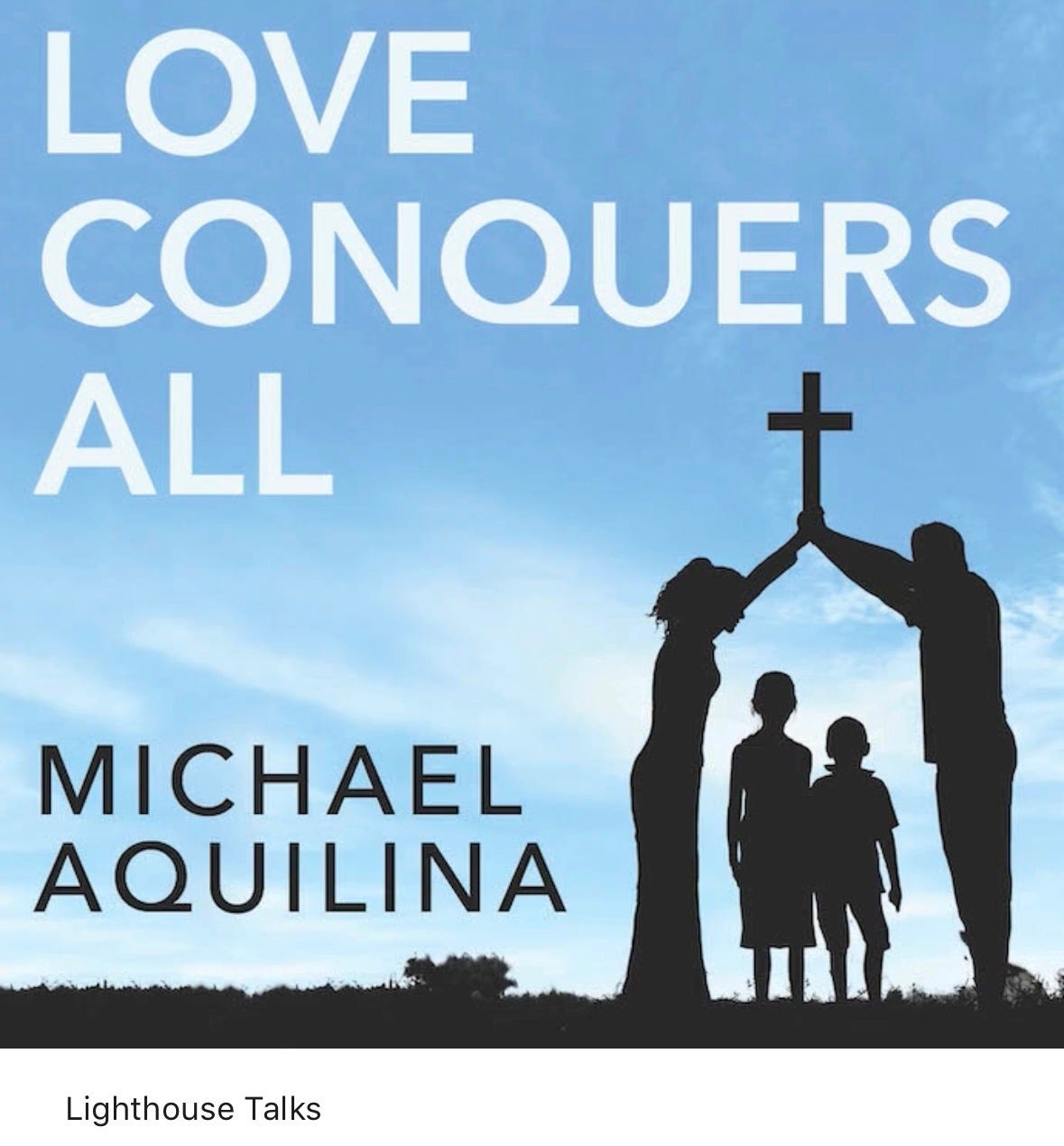
In the talk, Aquilina says that Christian homes were the Church’s primary place of evangelization. This wasn’t due to their eloquent speeches proving their neighbor’s pagan religion false. There was a fair amount of preaching, but the main reason for mass conversion was that Christians practiced true charity. Through the authentic witness of their lives, they made Christianity so attractive that pagan neighbors wanted to join the illegal Church that could have meant a death sentence.
Aquilina lays out a few ways that the Christian witness was so compelling:
· “The early Christian’s respect for the dignity of marriage made the faith enormously attractive to pagan women.” At first, women made up a disproportionate number of converts. Then the men began to convert because that’s where the women were.
· Christian marriages were happier than pagan ones. The way Christians lived the faith in their homes and marriages was very attractive, compared to the abuse and philandering in pagan homes.
· During epidemics, pagans would leave their sick family behind and head for the hills. Christians “were duty-bound not to abandon the sick,” because in caring for the sick, they cared for Jesus (Mat 25:39-40). So they stayed, caring for the sick, oftentimes becoming sick themselves. And yet an early Bishop noted that in times of illness, the pagans seemed to be filled with despair while the Christians were “serenely happy.”
· Many times, the pagans who received care survived their illness and were likely to become Christians themselves once they recovered.
· Christians showed courage in the face of death. There was nothing that could disturb them. (In my words, they didn’t act like outraged victims).
Love Your Enemies
Let’s look again at this: their pagan neighbors would have worshipped idols, practiced immorality, and possibly mocked their faith. They definitely wouldn’t have agreed on Roman government practices. And yet Christians cared for them and loved them in concrete ways, thereby giving witness to the faith. What keeps me coming back to this talk is the challenge to really love. The early Christians risked their lives to nurse back to health those with whom they fundamentally disagreed.
In short, they actually practiced Jesus’ command to “love your enemies, do good to those who hate you, bless those who curse you, pray for those who mistreat you” (Luke 6:28-29). This was Gospel for 9/11, and it made me pause.
Did Jesus say to embroider “love your enemies” on a decorative pillow? Or that we could sing a cheesy song at VBS that they will know we are Christians by our love?
Or did Jesus mean, if someone strikes your cheek, offer them to strike your other cheek as well? If your conscience isn’t pricked at these words, then you aren’t really listening to what Jesus is saying.
As I sat in the chapel praying the other night, I stared at our crucified Lord. He bore it all, turning his cheek and then some.
The early Christians loved their enemies and cared for their neighbors very practically. They weren’t out to win an ideological war. They were just following God’s commands the best they could in their homes.
I’m challenged by this because I have surrounded myself with other like-minded, homeschooling Catholics. And while I do think it’s important to do so in order to protect our kids and raise them in the faith, we also have literal neighbors who we don’t really know. There are people at our parish who have insulted me or with whom I disagree. And I have to reconcile how I want to act with how Jesus instructs I should act.
In my morning prayer lately, I’ve been reading through Acts of the Apostles. Peter went to the Gentiles, preached to them, and the Holy Spirit fell upon them. The “circumcision-only” camp got upset because the Gentiles ate the wrong food, kept the wrong company, and believed the wrong things. They didn’t want to welcome those who were different.
But Christians see Christ in everyone. God desires to have your enemy as His beloved, the way He desires you to be His beloved. But maybe the problem is that we don’t truly believe we are loved by God? It’s hard to love your neighbor as yourself if you don’t love yourself.
So maybe we need to look then at 9/12’s daily Gospel. You see the splinter in your neighbor’s eye but not the log in your own. Maybe you see your neighbor’s different political views. And maybe, morally, they are wrong. But do you see the wounds in their upbringing, the ideology they were inundated with at school, their experience of being belittled by Christians that turned them off to the faith? What if you were one of those turnoffs?
We can always repent for ourselves and our neighbors. We can pray for peace. Adore our Lord in Adoration. Bake a dessert for your enemy who thinks differently than you do, even on important issues. You catch more flies with honey than vinegar. No one converts their heart without an encounter with love. Yes, they will know we are Christians by our love.
It’s not a cheesy song; it's an incredibly difficult commandment that we can only fulfill with God’s help, with His grace transforming us.
The Power of Prayer
When King Herod ramped up persecutions in Acts 12, James died by the sword, and Peter was put in prison to be killed after the Passover. Then there’s this line: “So Peter was kept in prison; but earnest prayer for him was made to God by the Church” (Acts 12:5).
The Ignatius Study Bible notes, “early believers fought the battles of persecution on their knees,” attributing Peter’s rescue as an answer to their intercessory prayer. And what happens next is nothing less than miraculous.
In prison, the Romans had a rotating set of four guards watching Peter. One night, while asleep, an angel visited Peter and told him to get up and walk out. His chains fell off, he stepped over the guards, and thought the whole thing was just a vision until the angel left and he found himself standing in the street.
There are no good actions without prayer first. We have no idea what doors God will open, or what chains will fall off when we get on our knees and pray.
Prayer transforms us, and when God is living and moving in us, we become authentic witnesses to share Christ’s love with others.
Well, I guess this really wasn’t about politics. I don’t care much for politics, but I do care deeply about discipleship and Christian witness. They will know you are a Christian by your love.
And seriously, listen to Mike Aquilina’s talk. It’s so good and very convicting.
Thanks for reading! You can subscribe for free to get (bi)monthly reflections that will help you grow in your faith.
No posts
Comments
Nothing yet. Say the first thing.
Sign in to join the conversation.