
As the weather has cooled and slowed over the past few weeks, I’ve been looking back and thinking about the opportunist, fleeting and wild plants that appeared and disappeared again on the allotment, in the hedgerows and out in the fields. I have been sharing these new prints, with some accompanying notes and stories of how these plants sit in folklore and herbalism1 over the past few newsletters. Thanks for reading!
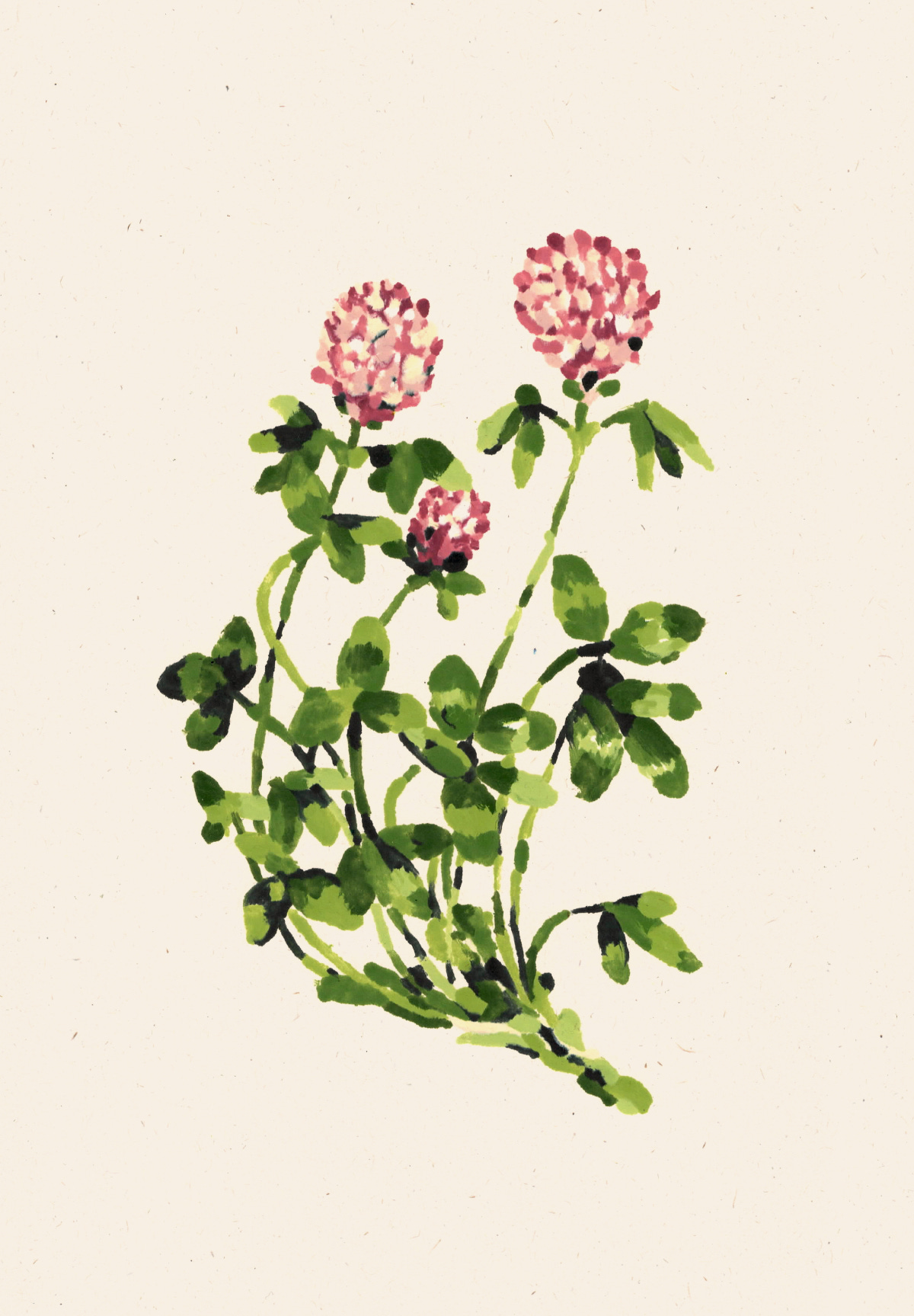
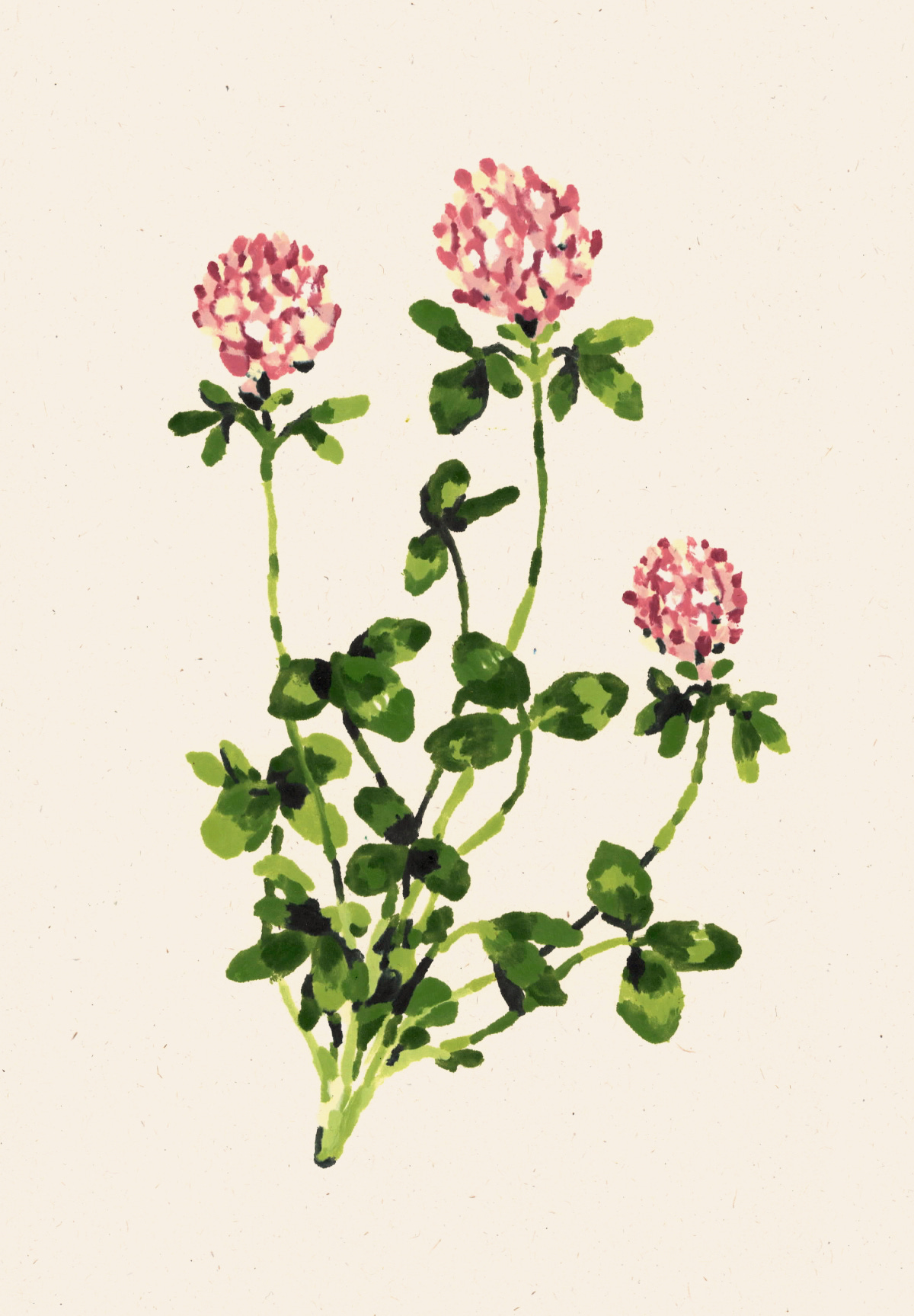
creeping clover, Dutch clover, honey stalks, honeysuckle grass, lamb’s suckling, sheep’s gowan, clover grass, common clover, gowan, shamrock
A small, spreading, herbaceous plant with leaves arranged in threes, though a lucky spotter may find leaves arranged in fours, fives or even more. Rounded white flower heads with pinkish accents and details.
Clover is best known as a good luck charm. Dreaming of it suggested a happy marriage and it was used for love divination. The four-leafed variety is particularly special, said to grant the power to see fairies, detect witches and be safe from evil.
‘A clover, a clover of two,
Put it in your right shoe,
The first young man (or woman) you meet,
In field, lane or street,
You shall have him, or one of his name’
Another widely known rhyme offered protection:
‘Trefoil, johnswort, vervain and dill,
Hinder witches of their will.’
And for those seeking a glimpse into the magical:
‘I’ll seek a four-leaved clover
In all the fairy dells
And if i find the charmed leaf
Oh how I’ll weave my spells.’
A clover ointment was even believed to make the wearer invisible, as seen in the case of an undetected shoplifter in a Penzance market. The ability to see invisible beings such as fairies was also thought to sharpen the ability to discern and perceive liars. If you hold a four-leafed clover in your hand, you will see right through illusions.
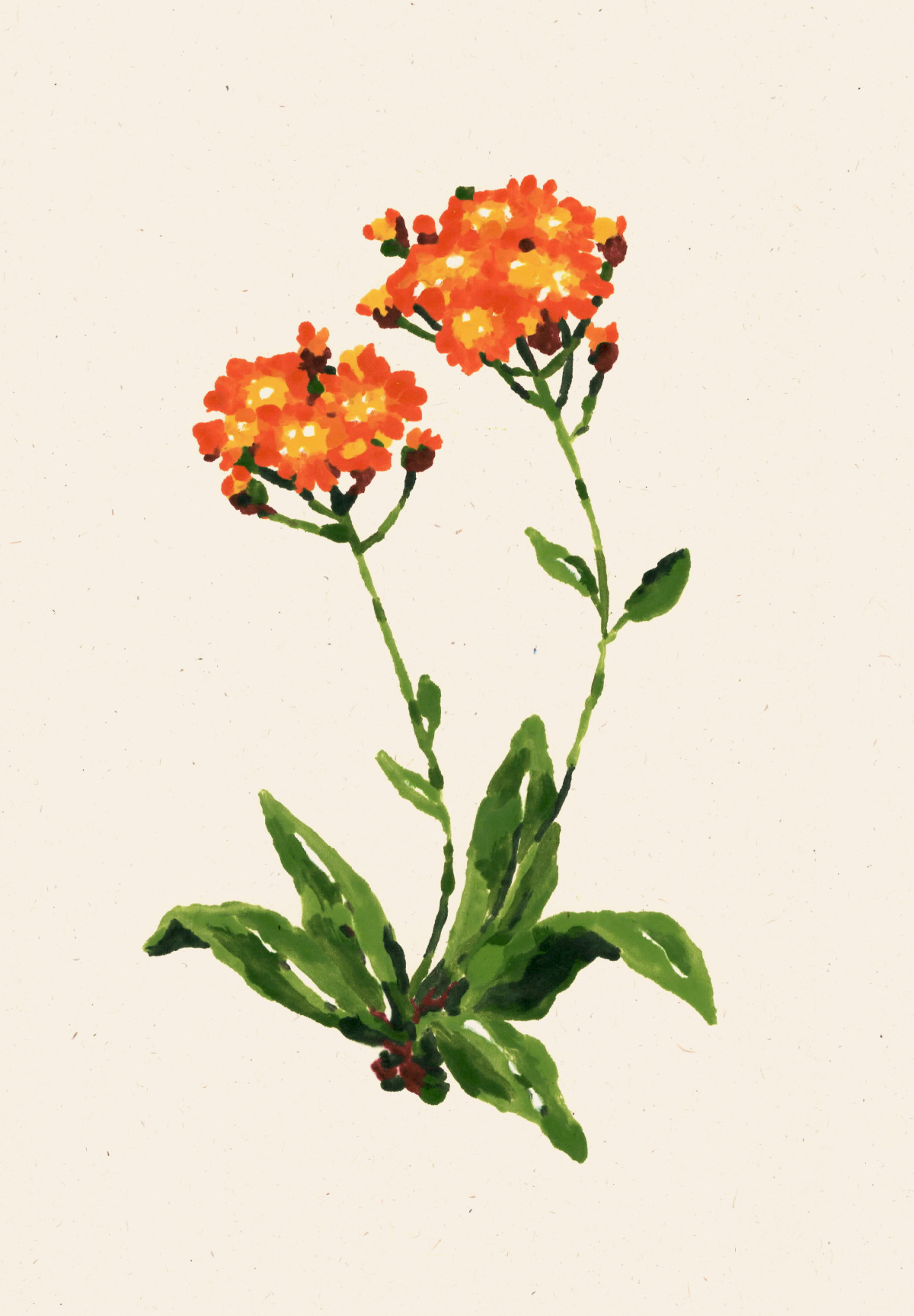
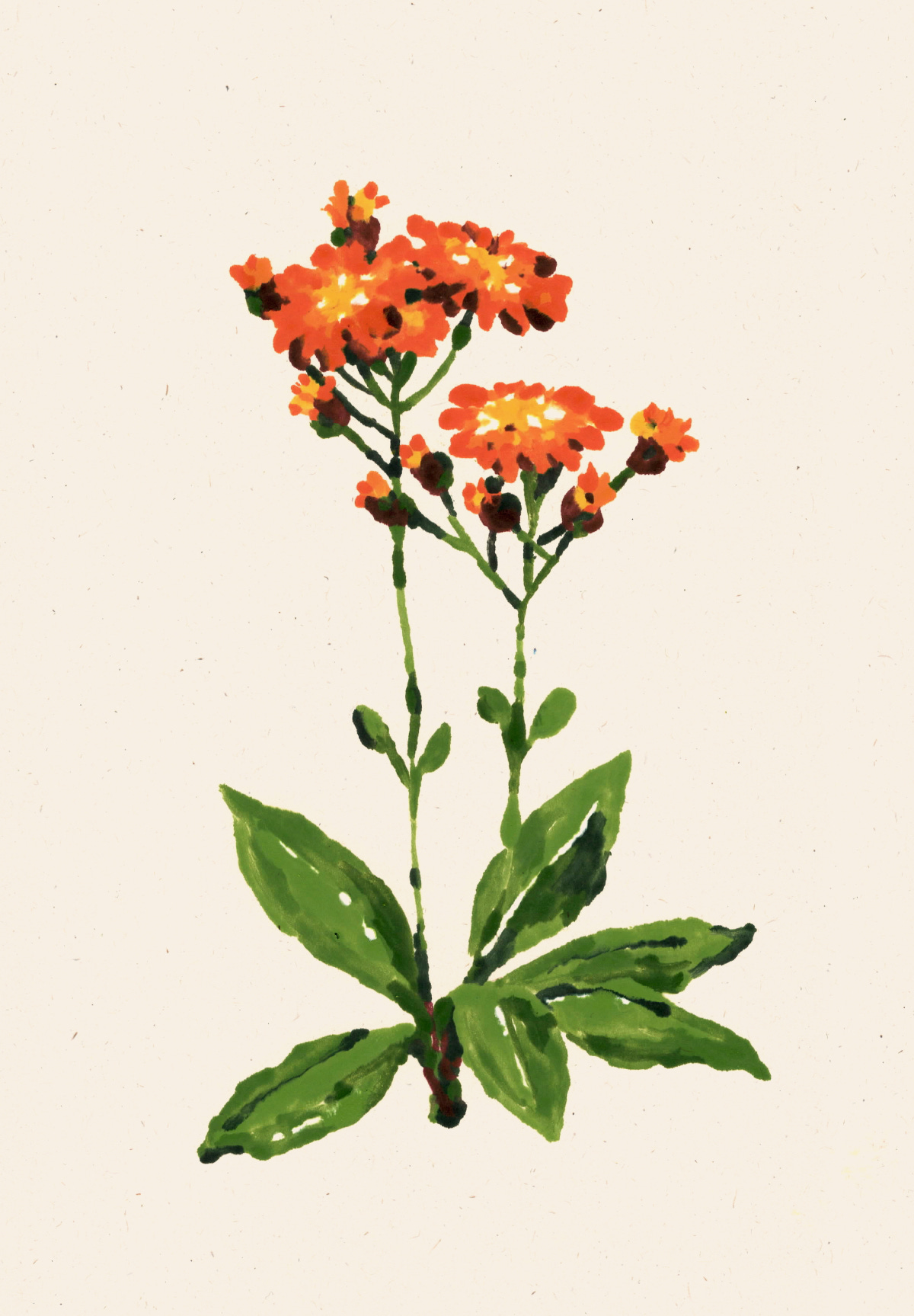
blood of St John, fellon herb, fox-and-cubs, felon herb, mouse ear, clust y lygoden
A perennial, creeping plant with hairy basal leaves and yellow-orange dandelion-like flower heads.
Hawkweeds have a history as a cooling, drying and binding medicine. Good for “the heate of the stomach and for inflammations, and the hot fits of agues and gnawings of the stomacke” as well as for hemming in sexual desire and “venereal dreams.” Hawkweeds take their name from the time of Pliny the Elder, with stories of hawks tearing open the flowers and sprinkling their eyes with the milky sap to sharpen and improve their eyesight.
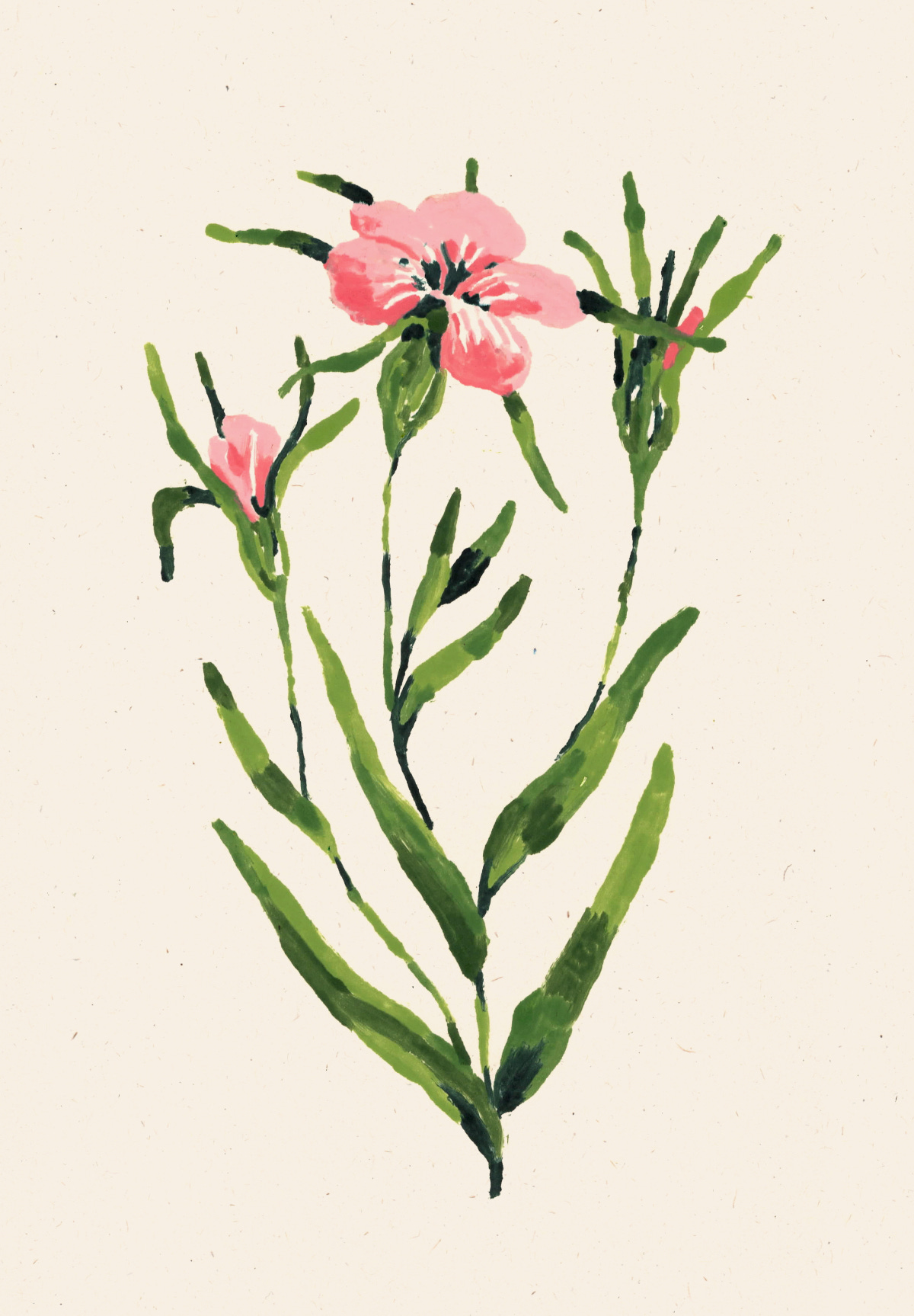
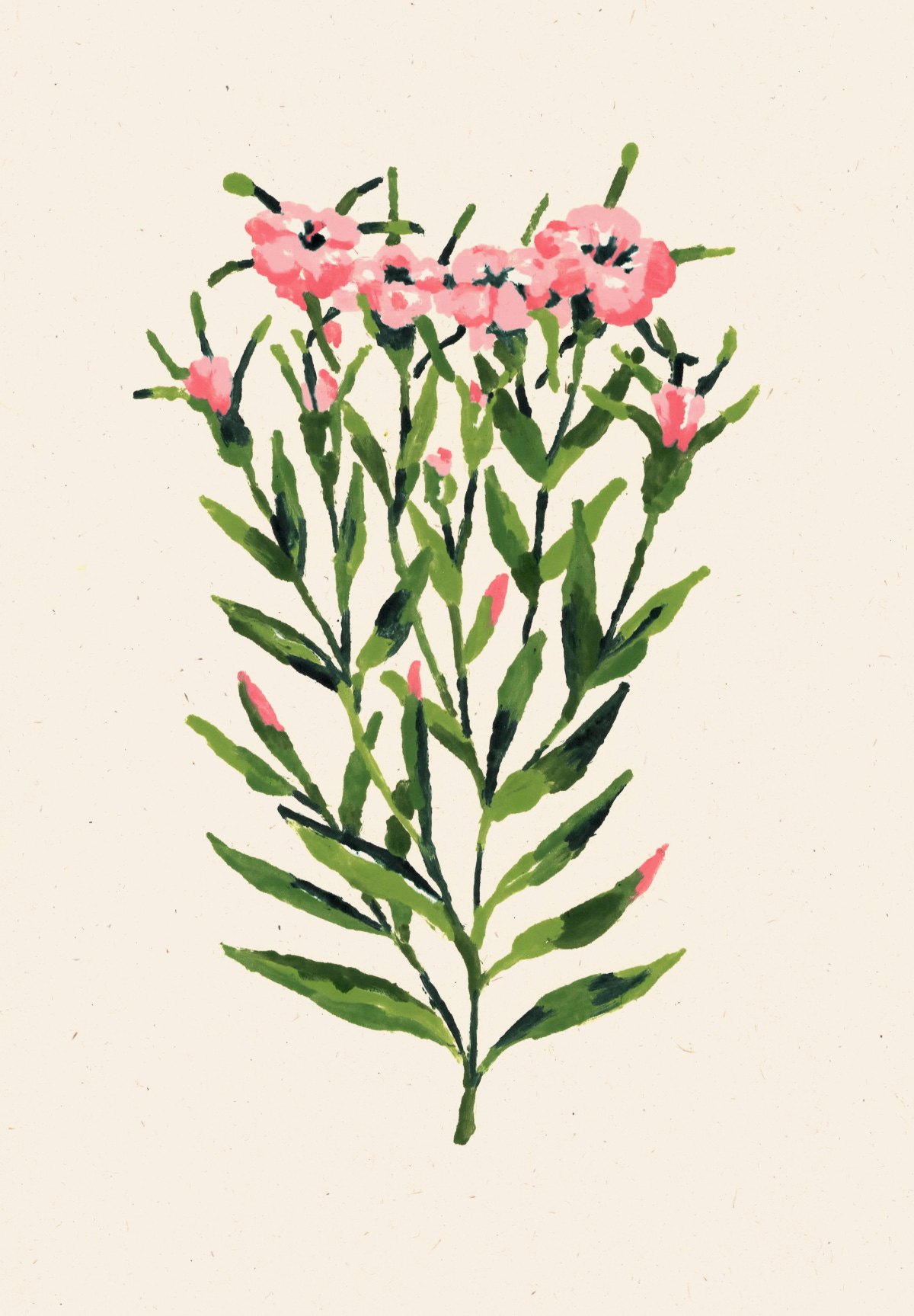
bastard nigella, corn cockle, corn campion, ray, zizany, darnel, corn pink, gith, joy of love, little and pretty, bulwg yr ŷd
A tall, spiky-stemmed annual with long, thin leaves and pinky-purple single flowers.
Corncockle, once a common field weed, is now more likely to be found in urban meadows and purchased wildflower seed mixes. Historically, it relied on being harvested amongst a crop and re-sown with the saved seed. It was considered a pest, making bread taste bitter and making those that inadvertently consumed the seed unwell. Roy Vickery’s Folk Flora describes an Easter Day ceremony in Herefordshire where folks would pick cockle from the harvested wheat, with the first to find any getting the first kiss of the maid and a slide of cake as their prize.
Despite its poisonous nature, Corncockle was used in folk medicine for intestinal worms, jaundice, constipation and gastritis, with its powdered seeds mixed with honey to create an expectorant and a diuretic. It was both a blessing and a curse, with its delicate flowers also representing gentility, innocent charm and daintiness.
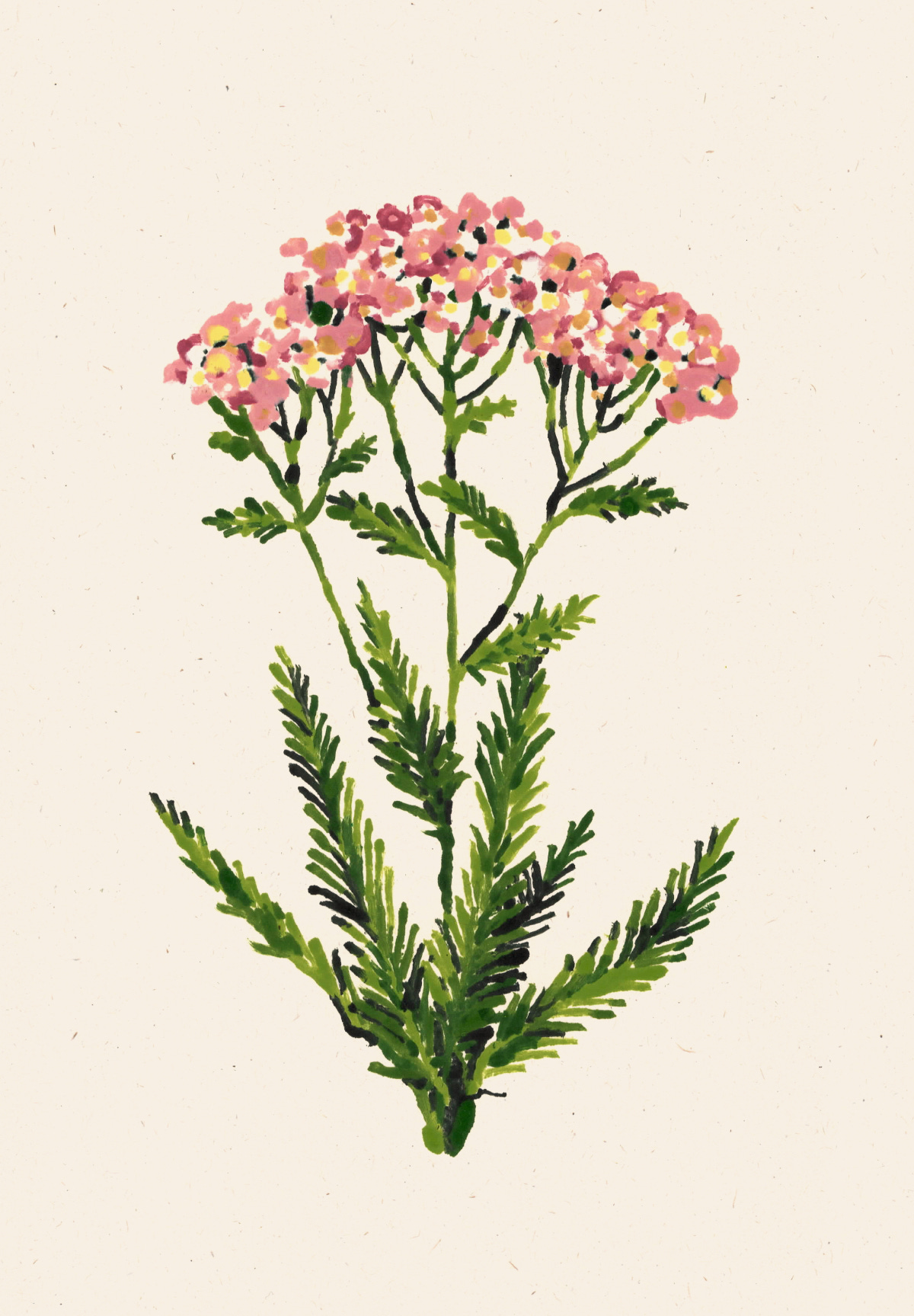
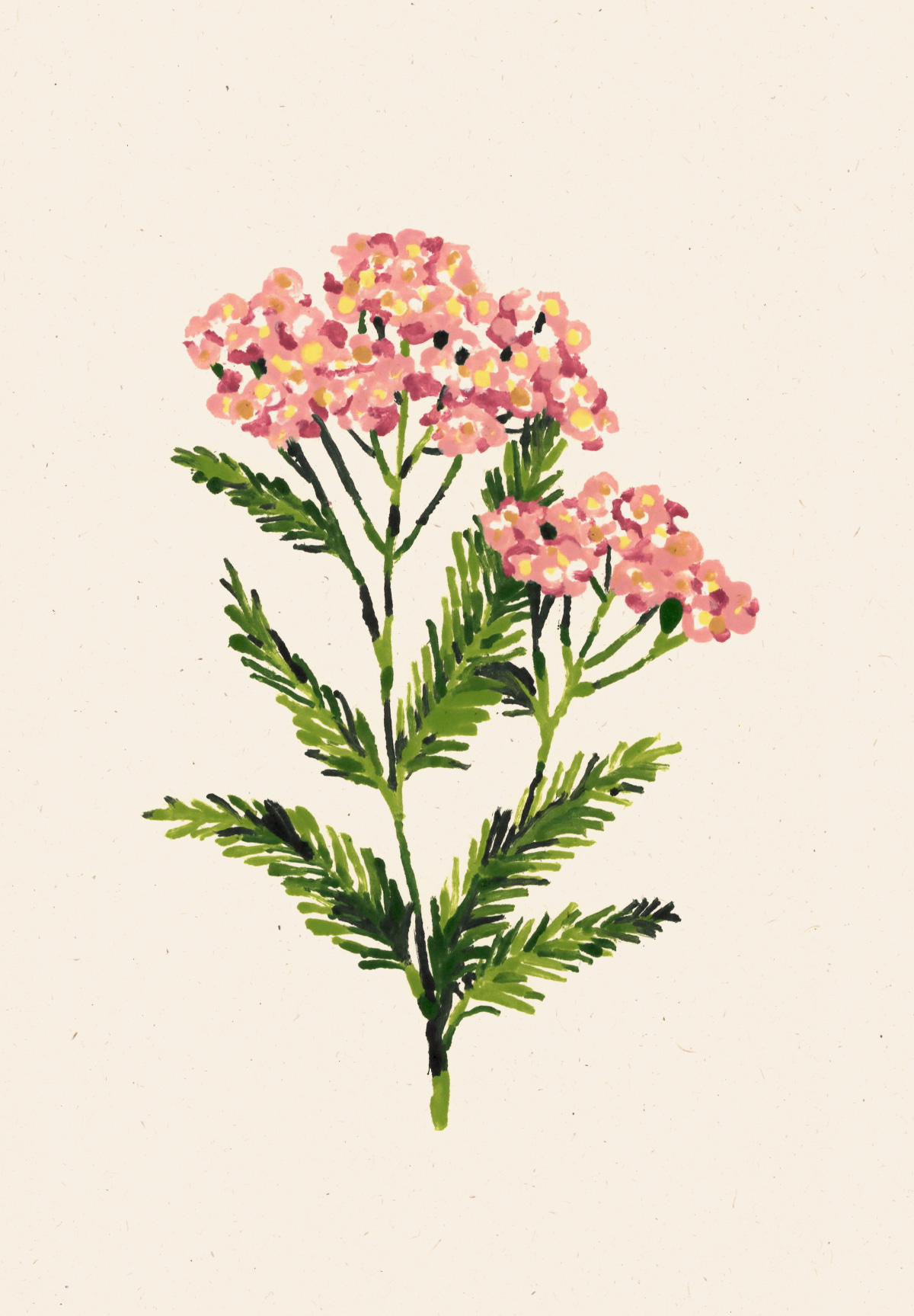
Devil’s nettle, hundred-leaved grass, Devil’s rattle, Devil’s plaything, lace plant, milfoil, nose pepper, nosebleed, old man’s pepper, sanguinary, savory tea, soldier’s woundwort, thousand weed, thousand-leaf, thousand-seal, Milddail
A common British wildflower with flat-topped clusters of white flowerheads that sit atop tough stems, with fine feathery leaves.
Yarrow is a plant steeped in ancient beliefs, being a key figure in divination, spells and witchcraft. Its other names, Devil’s Plaything and Devil’s Rattle, hint at its mystical side. An old charm, mentioned in Halliwell’s Popular Rhymes involves sewing an ounce of yarrow into a flannel and placing it under your pillow whilst reciting:
“Thou pretty herb of Venus tree,
Thy true name it is yarrow,
Now who my bosom friend must be,
Pray tell thou me tomorrow.”
to conjure a glimpse into the future. The name nosebleed comes from its ability to cause bleeding when its leaves were shoved up the nose, which is also believed to ease the pain of migraines.
“Green ‘arrow, green ‘arrow, you bears a white blow,
If my love loves me my nose will bleed now.”
Other uses include keeping witches at bay, by scattering the flowers on the property threshold, and making a calming tea, beneficial to sheep.

Next weekend is the annual Open Studios event at Yorkshire Artspace. Over 100 artists open up their studios across the two sites of Exchange Place (where I am based) and Persistence Works.
Date: Saturday 15th November & Sunday 16th November
Time: 11am - 5pm
Where: Exchange Place Studios, S2 5TR and Persistence Works, S1 2BS
More info: Click here
Quite a few sources have been useful in pulling this information together, especially:
Discovering the Folklore of Plants, by Margaret Baker, 1969. Published by Shire Publications Ltd.
The Treadwell’s Book of Plant Magic, by Christina Oakley Harrington, 2020. Published by Treadwell’s.
A Modern Herbal, by Mrs. M. Grieve F.R.H.S, 1931. Published by Jonathan Cape Ltd.
Comments
Nothing yet. Say the first thing.
Sign in to join the conversation.