
Hi there! I’ve been working on some new monoprints for a couple of upcoming events. As the weather has cooled and slowed over the past few weeks, I’ve been looking back and thinking about the opportunist, fleeting and wild plants that appeared and disappeared again on the allotment, in the hedgerows and out in the fields. I’ll be sharing these new prints, with some accompanying notes and stories of how these plants sit in folklore and herbalism1 over the next few newsletters. Thanks for reading!
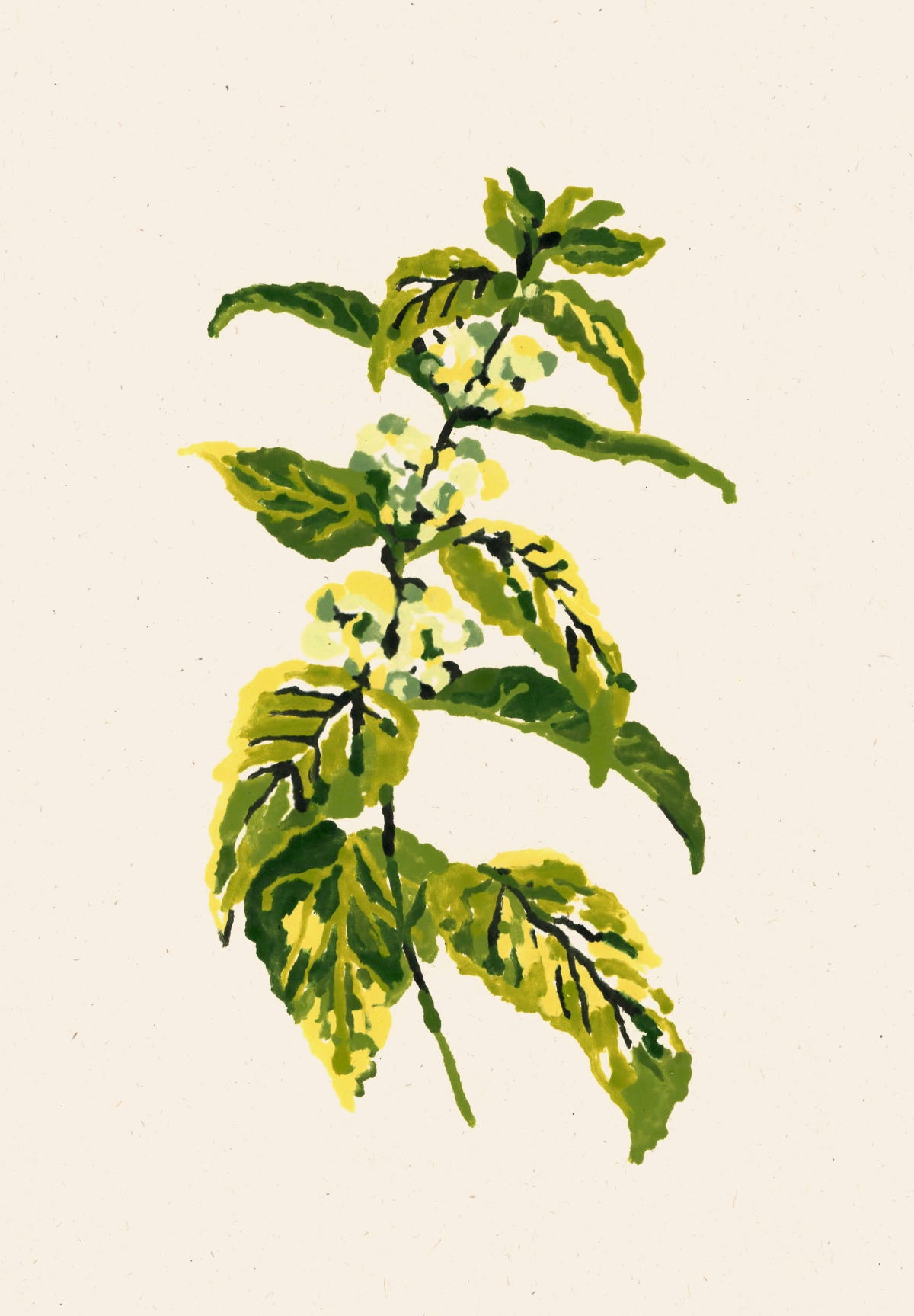
bee nettle, blind nettle, day nettle, deaf nettle, dog nettle, snake flower, white archangel, marddanhadlen wen
A perennial plant with large, softly haired leaves with serrated margins. Superficially similar to stinging nettles but without the sting. The flowers are a soft green-white and sit in whorls at the base of the leaf nodes.
‘If they would drink nettles in March,
And eat mugwort in May,
So many fine maidens
Wouldn’t go to clay.’
Nettles, both stinging and not, are plants of many talents. They provide courage in times of danger, can save a house from lightning, cure dog bites, stop nosebleeds and reduce rashes. Nettle juice applied to the scalp could cure baldness. It also has a number of domestic applications: before paraffin, the milk from cut nettles could be used as a rennet alternative to curdle milk, and the same milk could be used to seal cracks in leaking tubs and barrels. A branch hung in the larder could be used to deter flies and, near beehives, could be planted to drive away frogs. The dried stems of white dead nettles, sometimes called White Archangel, make particularly good whistles.
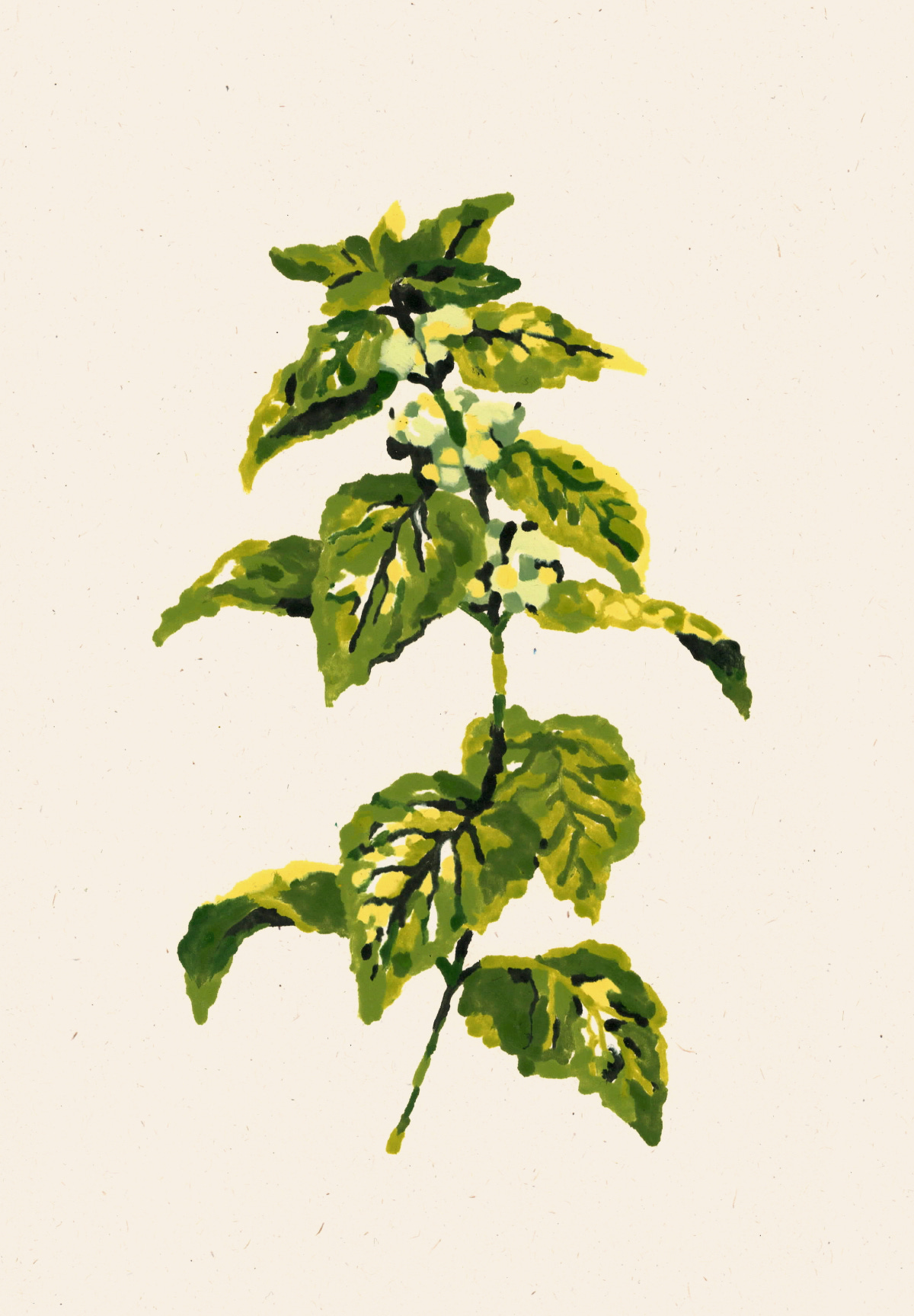
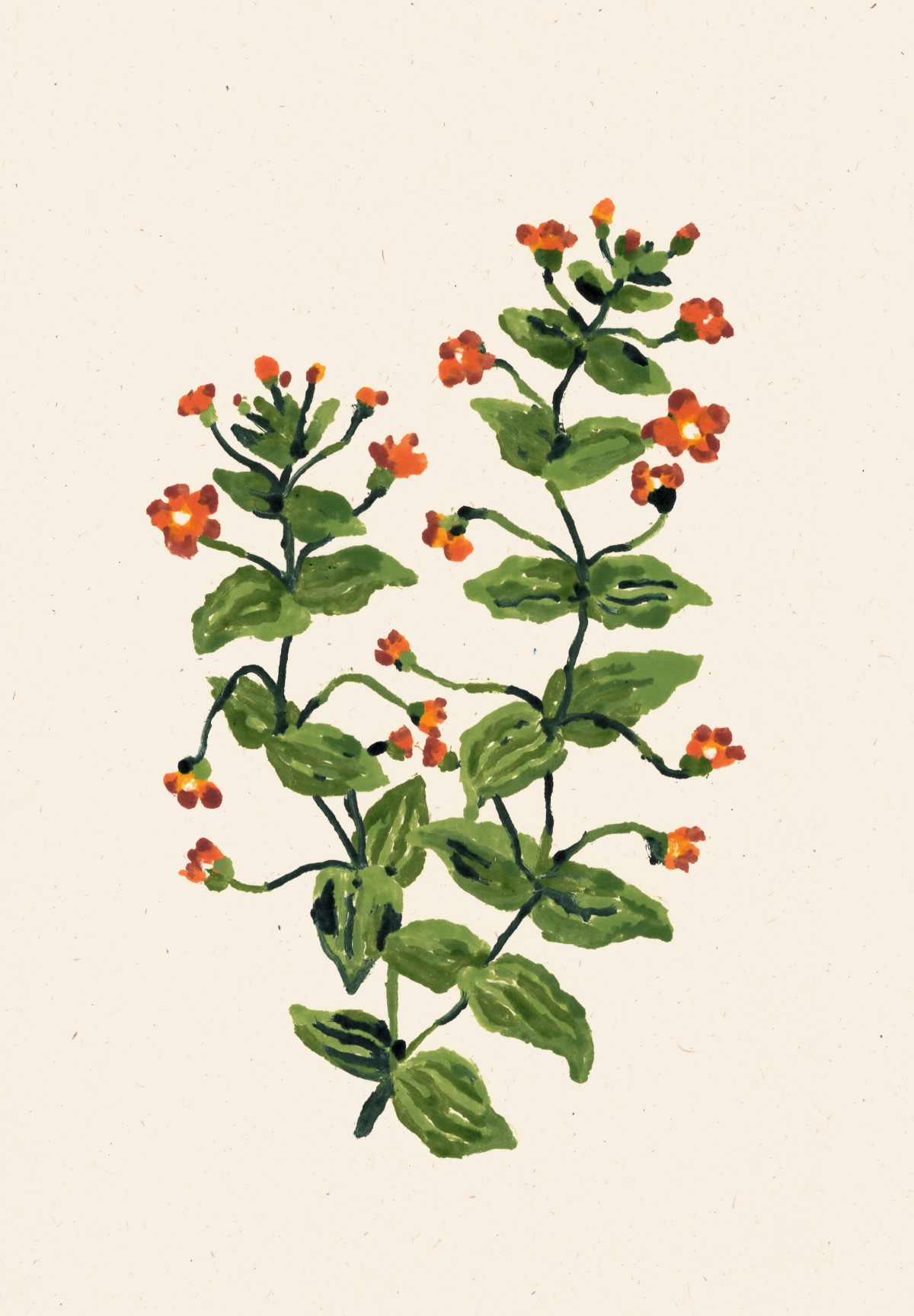
bird’s eye, bird’s tongue, burnet rose, clockflower, common pimpernel, eyebright, little Joan, poor man’s weatherglass, red chickweed, red pimpernel, shepherd’s clock, shepherd’s weatherglass, sunflower, wink-a-peep, gwlydd mair
A low-growing annual plant with sprawling stems, ovate leaves and delicate, scarlet-red flowers.
A delightful little plant that can tell the time - its flowers open and close with the sun. The name Poor Man’s Weatherglass comes from its ability to also predict the weather, as the petals close when rain is approaching. It holds a special place in folk magic, giving second sight to anyone holding it and moves against the current if dropped in moving water. Its mysterious qualities are summed up in the saying; “no heart can think, no tongue can tell, the virtues of the pimpernel.” Its also known for its ability to prevent evil magic from reaching its intended victim, and is especially potent when accompanied by the charm:
“Herb pimpernel I have thee found
Growing upon Christ Jesus’ ground
The same gift the Lord Jesus gave unto thee
When He shed His blood upon the tree:
Arise up pimpernel and go with me, And God bless me
And all that shall wear thee. Amen.”
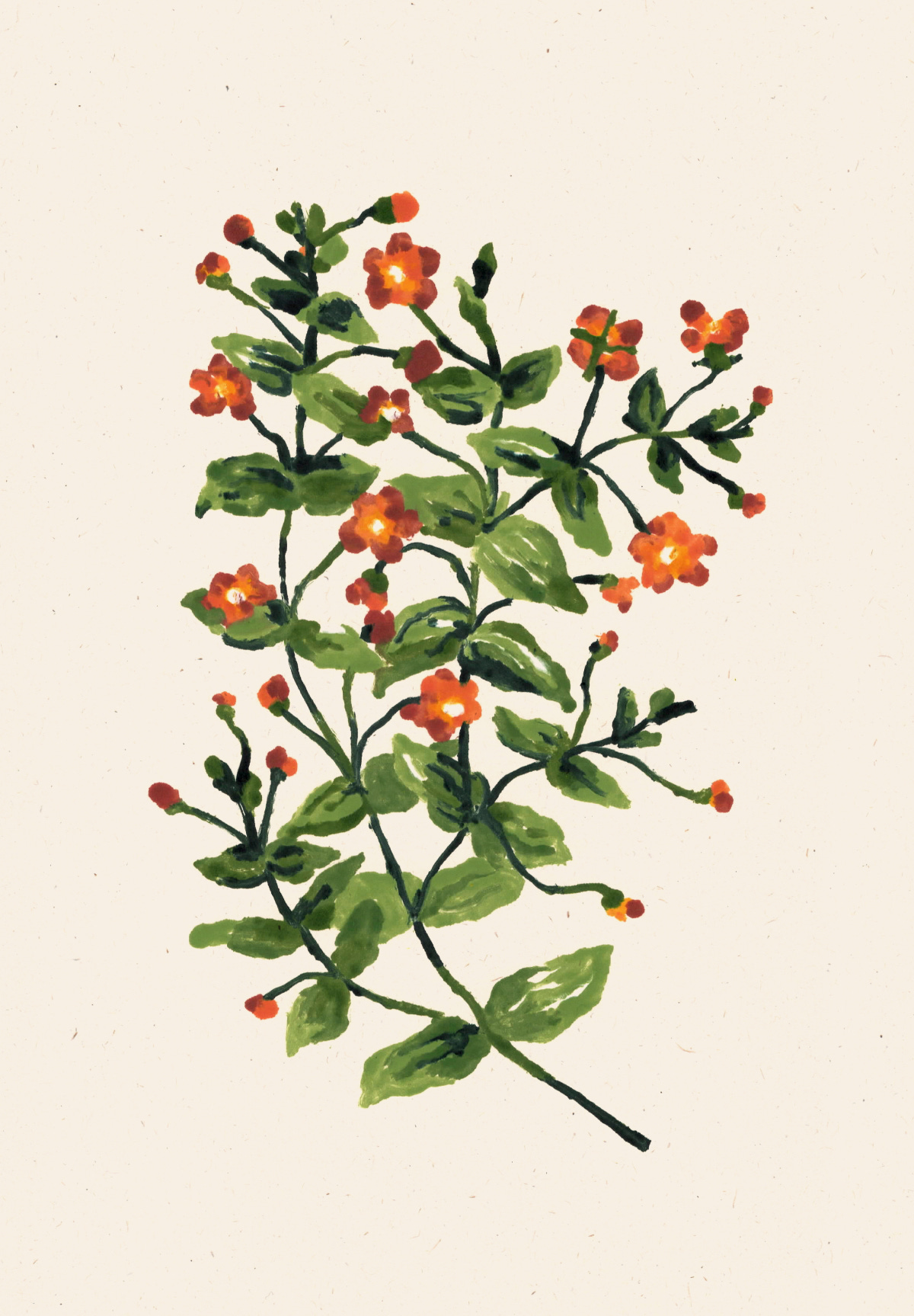
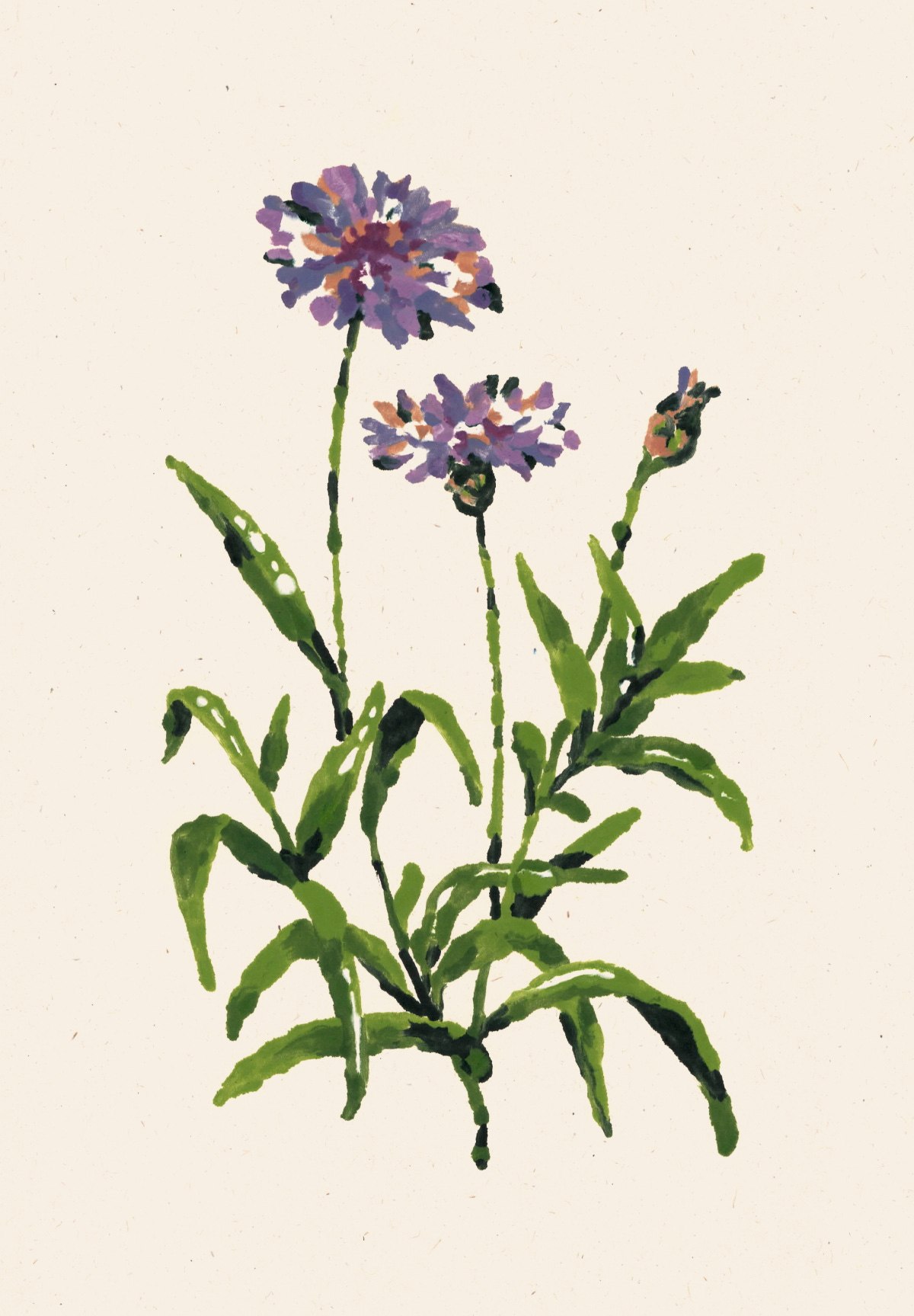
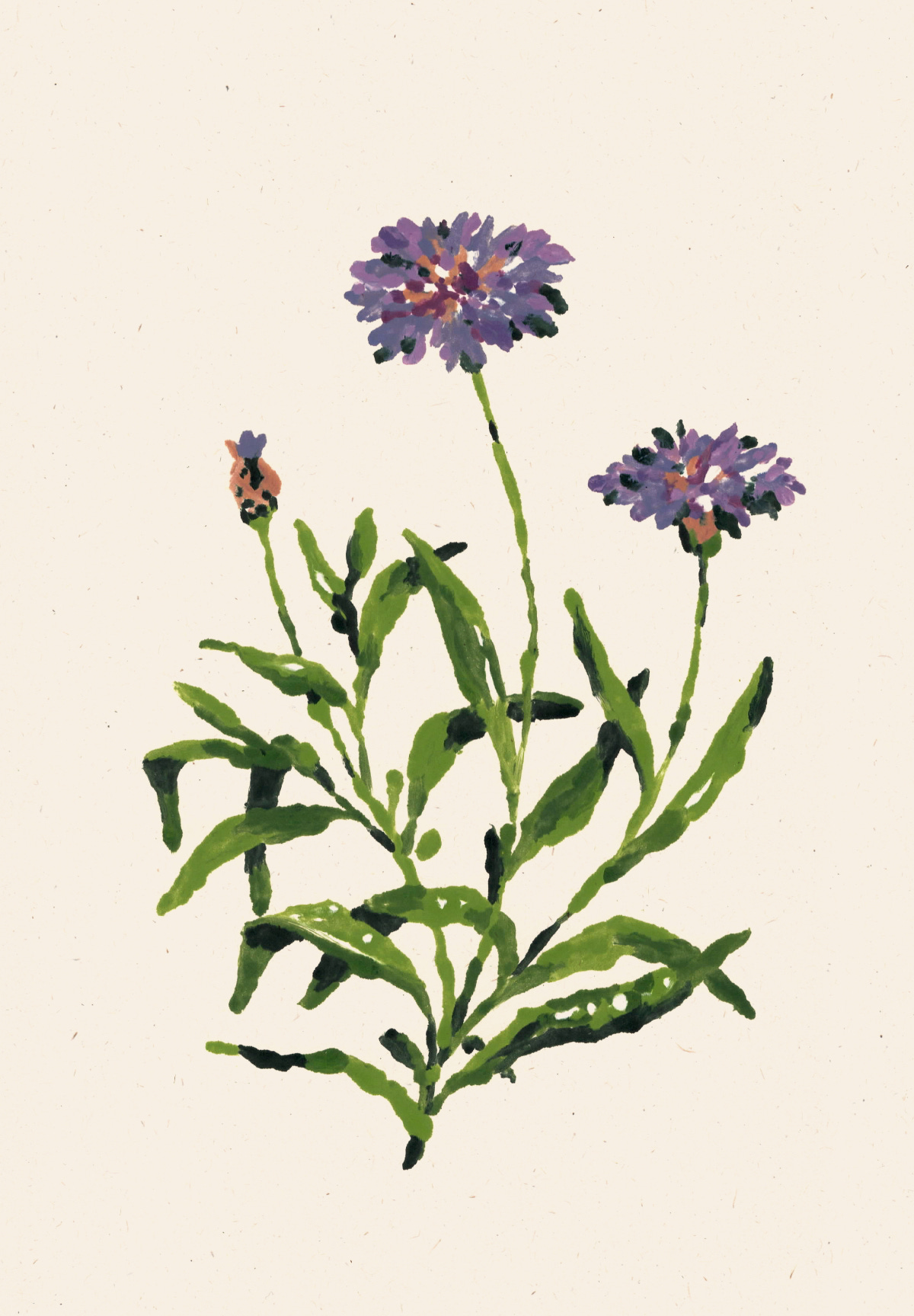
barbeau, blaver, blue blaw, blue bonnets, blue bow, blue sailors, blue tops, break-your-spectacles, brushes, bunk, corn binks, corn centaury, cornbottle, French pink, happy skies, haw dods, hurtsickle, ragged sailor, bachelor’s buttons, blawort, blue poppy, bluebottle, bluets, ragged robin, witches’ bells, penlas yr ŷd
An annual flower with blue-green lanceolate leaves, topped with intensely blue-purple flowers, like small fireworks.
The Cornflower has been known by many names, including Hurtsickle because its tough stems would turn the edge of a reaper’s sickle. It was also known as Bachelor’s Buttons as it played a role in divination: a young man would carry a flower in his pocket, and if it lived, he would marry his current sweetheart. If it wilted, he should seek a new love.

I’m very happy to be exhibiting at Sheffield Print Fair this year. I’ll have lots of monoprints and a small collection of publications available. It’s a really great showcase of the printmaking talent from the city (and beyond, but there’s a lot of Sheffield in there).
Date: Saturday 8th November
Time: 10am - 4:30pm
Where: Millenium Gallery, Sheffield, S1 2PP
More info: Click here

The following weekend is the annual Open Studios event at Yorkshire Artspace. Over 100 artists open up their studios across the two sites of Exchange Place (where I am based) and Persistence Works.
Date: Saturday 15th November & Sunday 16th November
Time: 11am - 5pm
Where: Exchange Place Studios, S2 5TR and Persistence Works, S1 2BS
More info: Click here
Quite a few sources have been useful in pulling this information together, especially:
Discovering the Folklore of Plants, by Margaret Baker, 1969. Published by Shire Publications Ltd.
The Treadwell’s Book of Plant Magic, by Christina Oakley Harrington, 2020. Published by Treadwell’s.
A Modern Herbal, by Mrs. M. Grieve F.R.H.S, 1931. Published by Jonathan Cape Ltd.
Comments
Nothing yet. Say the first thing.
Sign in to join the conversation.