
I am currently preparing a 2-hour webinar on the valuation of social enterprises, which takes place next Monday (also check out the offers of Efiko Academy).
A few weeks ago, I mentioned the example of royalties for popular Mongolian songs:
Imagine you are a songwriter and own the rights to a variety of popular Mongolian songs. Every time, someone streams your music, you earn a fee. One day, an entity offers to buy all your future royalties for $450,000. The entity also purchases a library of Bolivian, Austrian, and Swedish music, creating a diversified portfolio of music royalty streams, which they acquire for a total of €25 million.
In principle, it is quite easy to value these cash flows. You take the future cash flows and discount them to the present day. However, there are two key questions:
What is the discount rate for income which accrues sometime in the future?
How do you calculate / guess / estimate / predict these future cash flows?
Why is it necessary?
Recently, Markus Freiburg and I co-authored a book chapter (in press) on social finance in Germany. One of the aspects we covered is the increasing fund volume of impact investment funds.
The first generation of funds, which were created some 10-15 years ago had fund volumes of below €10 million, while they now routinely reach volume above €50 million. The increasing fund sizes mean that the funds can employ more investment managers and analysts and professionalize their activities. Here are some examples of notable impact investment funds based in Germany.

What is Valuation?
There are two main aspects related to the work of valuing a company:
Financial modelling
Putting a value on the cash flows
Financial modelling
Personally, I find the financial modelling more relevant (and fun). It is one of the things I miss most about my time as financial analyst in the Investment Banking Division of Morgan Stanley.
The financial modelling is mainly about forecasting revenues and costs and there are all kind of relationships. Just looking at the cost structure below, you can see different functions.
Think of the costs for commodities, personnel, computing, insurance, office, mobility or production facilities. They all behave very differently. While software has low marginal costs, buying Google Ads for marketing purposes tends to have increasing marginal costs.
For social enterprises, we can either have reduced or increased cost structures. Some are able to acquire third-party resources for free, while others have higher costs related to the special needs of the target group.
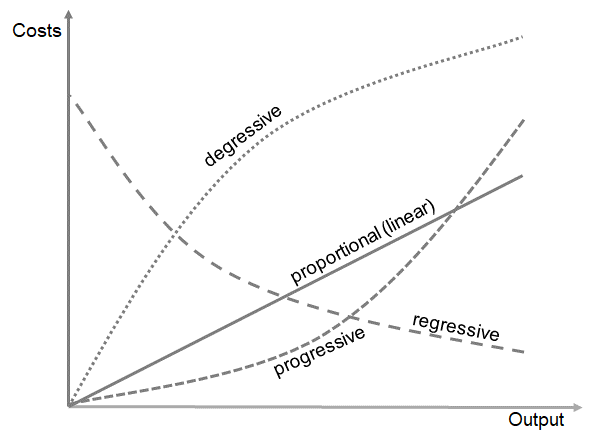
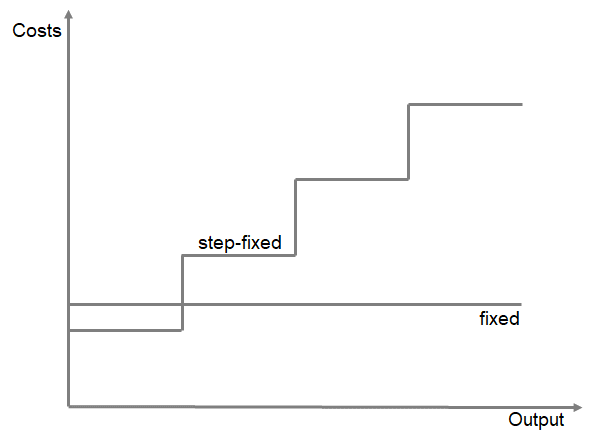
The same applies to revenues, and there are all kind of other examples such as network effects, saturated markets, freemium models and so on.
For social enterprises, we can assume relatively stable revenue streams as their clients are either loyal individuals or corporate / public buyers.
Valuation techniques
Valuation is the art of putting a value on the company. Commonly used valuation techniques rely on future cash flows or closely related measures such as EBITDA or EBIT.
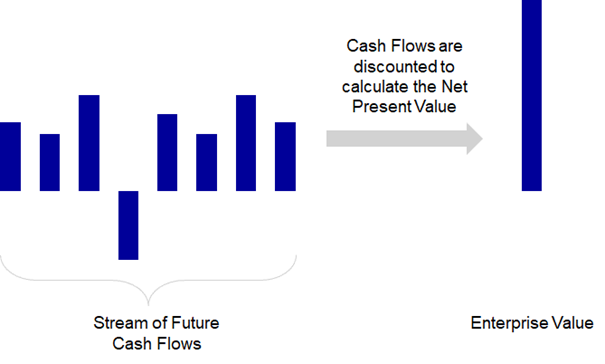
The DCF is a very robust methodology as it takes the future cash flows (or more precisely the unlevered free cash flows) and calculates the present value using a discount rate. The main principle is that €100 in the future should have a value of less than that. In other words: You are probably only paying €90 to receive €100 in 2 years.
The cost of capital
Obviously, the discount rate is very important and even small changes have a large impact on the final valuation.
Take the stream of cash flow with a total sum of 30 below. Depending on the discount rate, we would be willing to pay between 10.1 and 30.0 for the stream of cash flows (or company). That means that 15 is a good deal for some, while an unattractive deal for other investors.
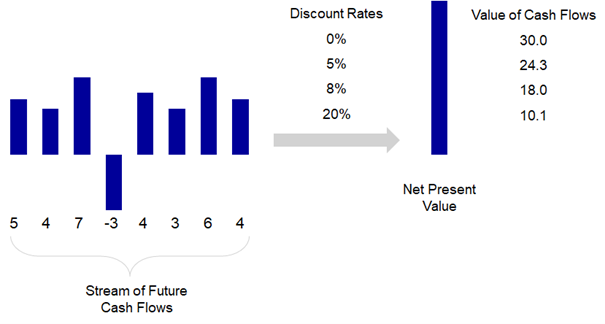
Discount rates are generally based on something called the “Weighted Average Cost of Capital”. It takes the costs of equity and the tax-adjusted cost of debt and weights them according to their proportion. The cost of debt is relatively straightforward, while the cost of equity typically involves the risk-free rate, a relevered beta and a market risk premium.
This rather universal approach is also the reason why valuations are typically in a close range.
Cost of capital for impact investing
However, this is not how the cost of capital is determined for impact investments.
I am currently reading “The Counting House” which is a very entertaining book about the fund of funds industry. In it, Gary Sernovitz describes how a university endowment manager sees hundreds of fund managers and decides how to allocate the capital. All of them have very different processes, strategies and value propositions.
A typical fund might present figures as the one below. These are two examples from funds which were highlighting their past successes (second illustration: Net IRR of 5 funds compared to a benchmark).
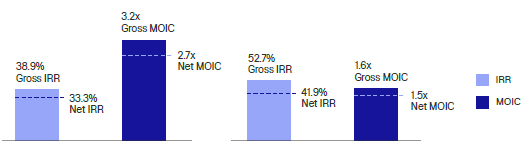
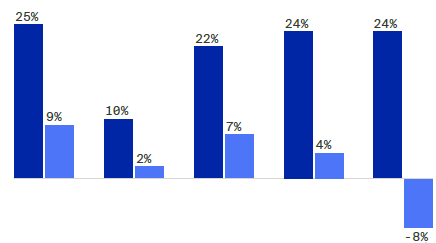
Obviously, that is what Limited Partners ("LPs") also expect for the future funds. A fund manager might go and say “Look, that is what we have achieved in the past and we expect the same performance going forward”. That is a sensible proposition but it also means that the fund manager needs to value companies using the IRR which the LPs as capital owners expect.
An impact investing fund manager has another approach. He will focus on the social impact the fund aims to create and will consequently forecast lower returns. The clustering or alignment of capital owners with investment approaches is shown in the figure below.
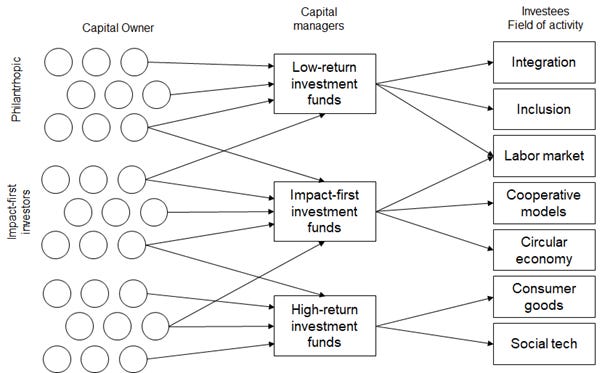
That means that the fund manager can value companies using a lower discount rate but needs to deliver the social impact which justified the lower return expectations.
Comments
Nothing yet. Say the first thing.
Sign in to join the conversation.