
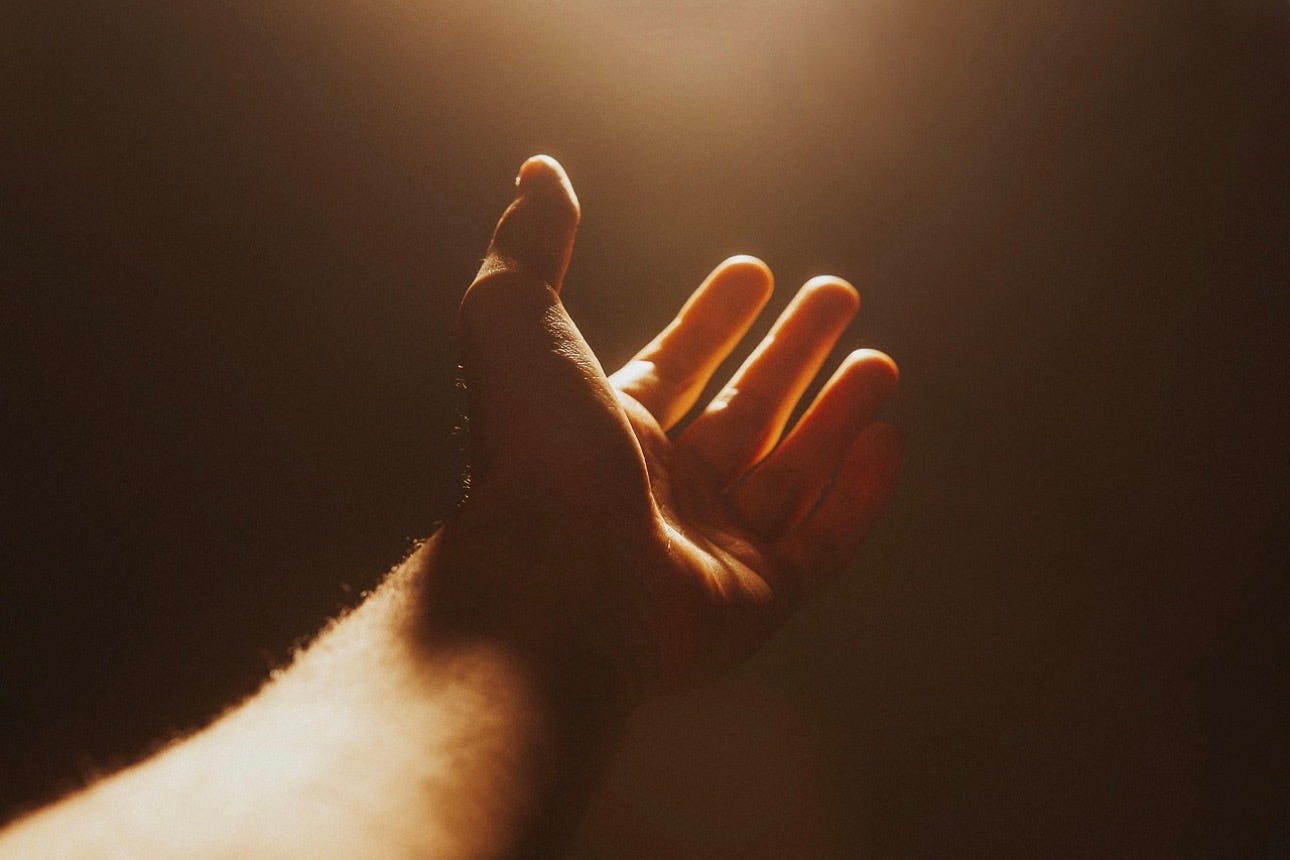
What can hope do, that logic and reason alone cannot? Can hope influence how we think, act, and respond to uncertainty in ways logic and reason alone cannot?
There is a some evidence pointing in that direction, though the conclusions we can draw can be nuanced at times.
There’s passive hope: “I hope things work out.”
And there’s active or strategic hope: “I see what may be possible, despite uncertainty.” Hope becomes strategic when it increases our capacity for meaningful possibility, for envisioning, choosing, persisting, adapting, even when outcomes are uncertain.
Hope can act like a wrapper around things we may intellectually understand by way of reason or logic. Logic can tell us what makes sense, but hope may help us believe that what makes sense is worth pursuing, even when the outcome is not yet visible, and certainly not guaranteed.
Logic says, “I see the path forward. I know what I need to do.”
Hope says, “This path is worth taking, though I cannot see the destination with certainty.”
Learn about Paid Subscriber Benefits
Read Poetics by Aristotle or Sapiens by Harari or watch The Village by M. Night Shyamalan, and a pattern emerges - - that as humans we need stories to explain the unexplainable, to guide, to cooperate, to thrive. Humans have used stories to create meaning or make an uncertain future more navigable. The frameworks they give us and the capacity they build may be closely related to the idea of hope.
However, both eastern and western philosophical traditions offer warnings about the kind of hope that can bind us to outcomes we cannot control, those that keep us attached to external things and the feeling of a sense of lack. They instead point us toward a deeper more trustful version of hope - - one that allows us to act without needing certainty about how a story will end.
For example, in Indian philosophy, the Gita advises to take responsibility for action but not cling to the expectation of the fruits of action. So instead of, “I need this to happen”, we shift to, “I will take the right action without my mood and inner well-being being dependent on its outcome.”
In Stoic philosophy, Epictetus’ Enchiridion advises us to be mindful of what is and is not in our control, and not be hindered or disturbed by the things out of our control. Our well-being should not be dependent on an outcome.
Both offer ways of thinking about the psychological conditions that can make hope either liberating or binding. Hope becomes something akin to trust without certainty.
Science helps us try to make sense of hope, ironically through experimentation and measurement, logic and reason.
We begin to understand that hope isn’t simply about “feeling better”. Research suggests that hope is associated with brain processes involved in goal-setting, planning, problem-solving, motivation, and reward anticipation. It changes our relationship to uncertainty and stress, helping us continue engage with the possibility of action when outcomes are uncertain.
Thought Experiments
Remember your childhood when you may have believed in a figure like Santa Claus (Father Christmas)? Did it give you a sense of hope? A sense of possibility? What was valuable to you about believing in Santa, though you later would come to learn the truth?
The point isn’t that hope requires us to believe something false. It’s that our capacity to imagine possibility changes our relationship to our present.
Perhaps there’s a more consequential version of this in medicine. Consider for a moment the placebo effect, and what you may have heard about unexpected recoveries and the evidence that a person’s expectations related to treatment has produced measurable changes in how that person experiences the symptoms.
The point is not that a sense of hope may explain a placebo effect, but rather that what we expect or believe may change how we experience illness, how we cope with it, and our stress levels, even if it cannot change the physiology of the underlying illness.
Hope expands what is possible. Hope allows us to imagine or articulate futures that may not yet exist.
Hope turns possibility into agency. Hope let’s us act and take the next step before achieving certainty.
Hope sustains action when certainty disappears. Hope may help us keep moving when the path becomes difficult.
So what does this mean in our personal and professional lives?
As individuals, we can begin changing a habit before we know how it may turn out.
As a leader, we can articulate a vision and give people a reason to move toward it.
As a parent or in a family, hope can help us stay connected to shared possibility.
Learn about Paid Subscriber Benefits
Hope is not a strategy on its own. Hope is a strategic force. It changes our relationship to uncertainty, and therefore our willingness to act.
Hope is a strategic force. It changes our relationship to uncertainty, and therefore our willingness to act.
Hope isn’t a substitute for logic, reason, or strategy. While logic and reason help us understand what is possible, hope may give us the capacity to use these very things and engage with possibility when we lack certainty.
So what do you think? Let me know in the comments below or by responding!
And if you missed these related posts and video below, do check them out!
Comments
Nothing yet. Say the first thing.
Sign in to join the conversation.