
Online reviews, after the birth of TripAdvisor (if there was anything en masse earlier let me know...perhaps ratemyteachers.com) they are everywhere all at once. I wrote a post in 2024 about reviews and why they are important, and they are. But there’s another side to the story, and after a few recent incidents, I thought I’d share some thoughts.
I’d love to know your thoughts on online reviews as well.
1. Negative online reviews can be removed
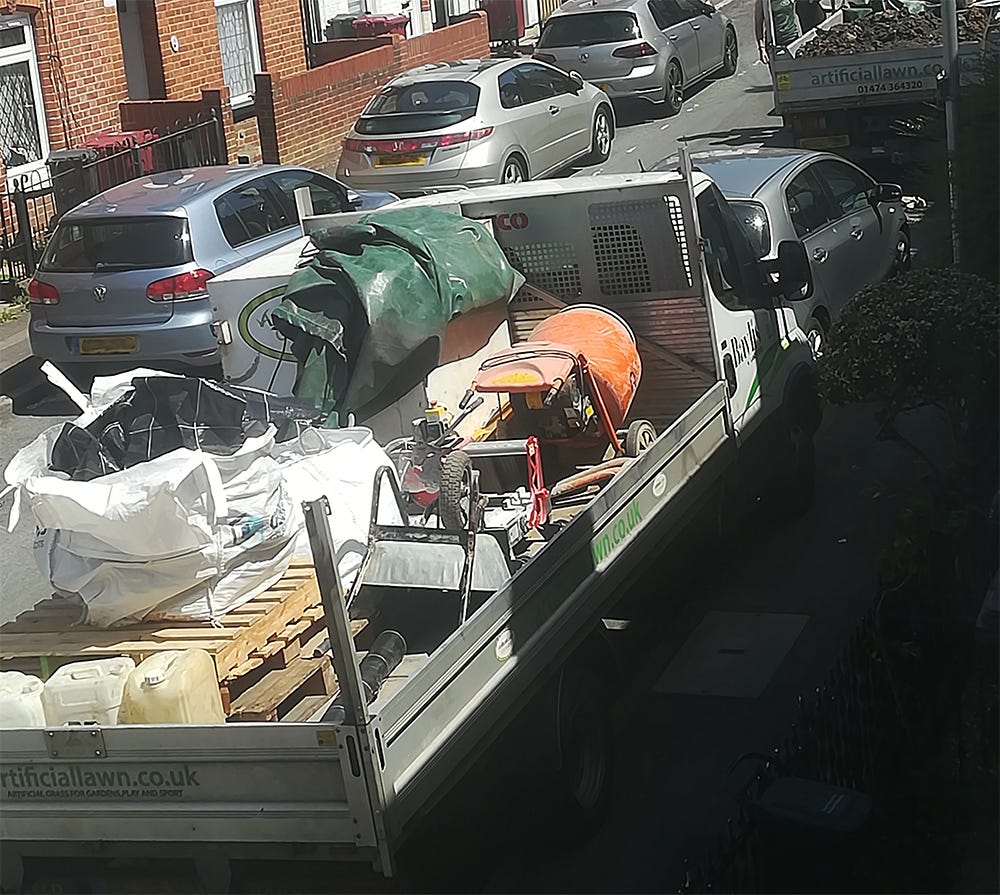
At the end of May, workers from a company called the Artificial Lawn Company (based in Kent, England) caused a noise disturbance in my street. In England, there are regulations regarding when “noisy works” can be carried out. And this company breached these by working at a neighbouring home outside of the hours that such works were permitted in my county. Not only did they breach these rules, but I complained about the company for the exact same reason in 2024, and the person who emailed me was the same person that I spoke to on that Saturday. He was standoffish and told me, to paraphrase, that he was aware of the rules and would continue doing the work anyway.
I left a negative online review for the company on yell.com, a popular online review site, which was accurate, and the Artificial Lawn Company challenged this. I sent evidence to yell.com who, although they agreed with me that my online review was accurate, made the decision to pull my negative online review for the reason that I was not a customer, despite the fact that the criteria to leave a review is “based on a genuine first-hand experience of engaging with a business within the last 12 months... the reviewer must have directly engaged with the business”. I did engage with this business only a month ago, and I have evidence that this engagement is genuine and first-hand.
If negative online reviews are liable to be removed at the request of the company who have caused upset, and the person who wrote the online review can prove that it’s genuine, does this not undermine the integrity of online reviews? And should reviews only be for customers, or should they be for others who are impacted by such companies as I was by the Artificial Lawn Company? In a world which is increasingly being hollowed out by AI, this might be one of the only avenues left in which people affected by the actions of companies have to make their voices heard.
2. Online reviews can be fake
I was left a negative online review on Facebook by someone who I’ve never met and didn’t even know existed until I saw their review. Their account suggested that they do good things (like take care of their children and raise money for autism charities), so it’s very possible that they might have been hacked. I have a Facebook author profile, and I didn’t know that I had online reviews turned on by default. As I am not someone who is running a business, it wasn’t something that I gave any thought to. I’d prefer anyone who has had read my book How to Leave a Group Chat to leave a review on Amazon, or my Goodreads page, or wherever they might have bought the book from.
Anyway, as this online review has nothing to do with me and doesn’t even describe my book accurately – How to Leave a Group Chat is a non-fiction book about smartphone use and communications, so there are no “pacing issues” or “pointless journeys”. I reported it to Facebook. And their bots decided “In this case, we did not remove the content that you reported”.
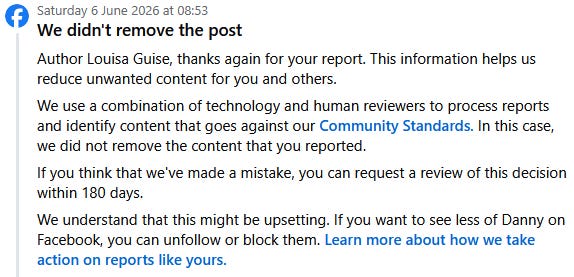
In my experience, when AI is involved in decisions of this nature, they are wrong. I was booted off Substack during my very early days (long before I launched All About Digital Marketing), and I went round the houses to find a contact for a human who could confirm that it was a mistake. Facebook also put me in Facebook jail recently, only to reverse their decision, and told me it was fine when I reported corn on their site.
I appealed the Facebook bot’s decision regarding the online review of course. I also worked out how to turn the review function off on my Facebook author profile. If I did actually need online reviews, it would have been more of a bugbear than it actually was for me, but I still don’t want Facebook to be let off the hook.
In short, poor decisions made by AI are undermining the value of online reviews, and of our online experiences overall.
3. We’re being asked to review EVERYTHING
Every week I attend meetings held by my local writer’s group (if you’re into any kind of writing, do yourself a favour and subscribe to their Substack). I confirm my attendance through meetup.com, and every week, meetup.com asks me to leave an online review of every single meeting I have attended!
I think I started attending meetings in 2019, so I am no newbie and I absolutely wouldn’t have been involved with this talented bunch of wordsmiths for as long as I have if their meetings were no good. I get it, meetup.com wants to rank different groups to advertise them to site members, but I should only need to provide one online review, I really don’t need to review every single . Also, meetup.com’s pestering doesn’t fit with the community nature of our wonderful little group. I don’t need to continually rate it like a school inspector rates a school.
Restaurant recommendations are helpful, and online reviews of places that I am visiting or staying are great for helping me get an idea of how the land lies. But I really don’t need to review everything every time I experience it.
What do you think about online reviews? Where do you find them helpful, or a hindrance? Comment below.
To feature on All About Digital Marketing and share your marketing or business expertise, please check out the guidelines blog and get in touch. And don’t forget to subscribe.
Louisa Guise is a Digital Marketing and Communications Professional and the author of How to Leave a Group Chat, a book about communication and smartphones which is also available as an audiobook. Subscribe to All About Digital Marketing for more gems like this.
Comments
Nothing yet. Say the first thing.
Sign in to join the conversation.