
I’ve interviewed a lot of writers over the years, but Amy Ephron may have one of the most intuitive writing processes I’ve ever encountered.
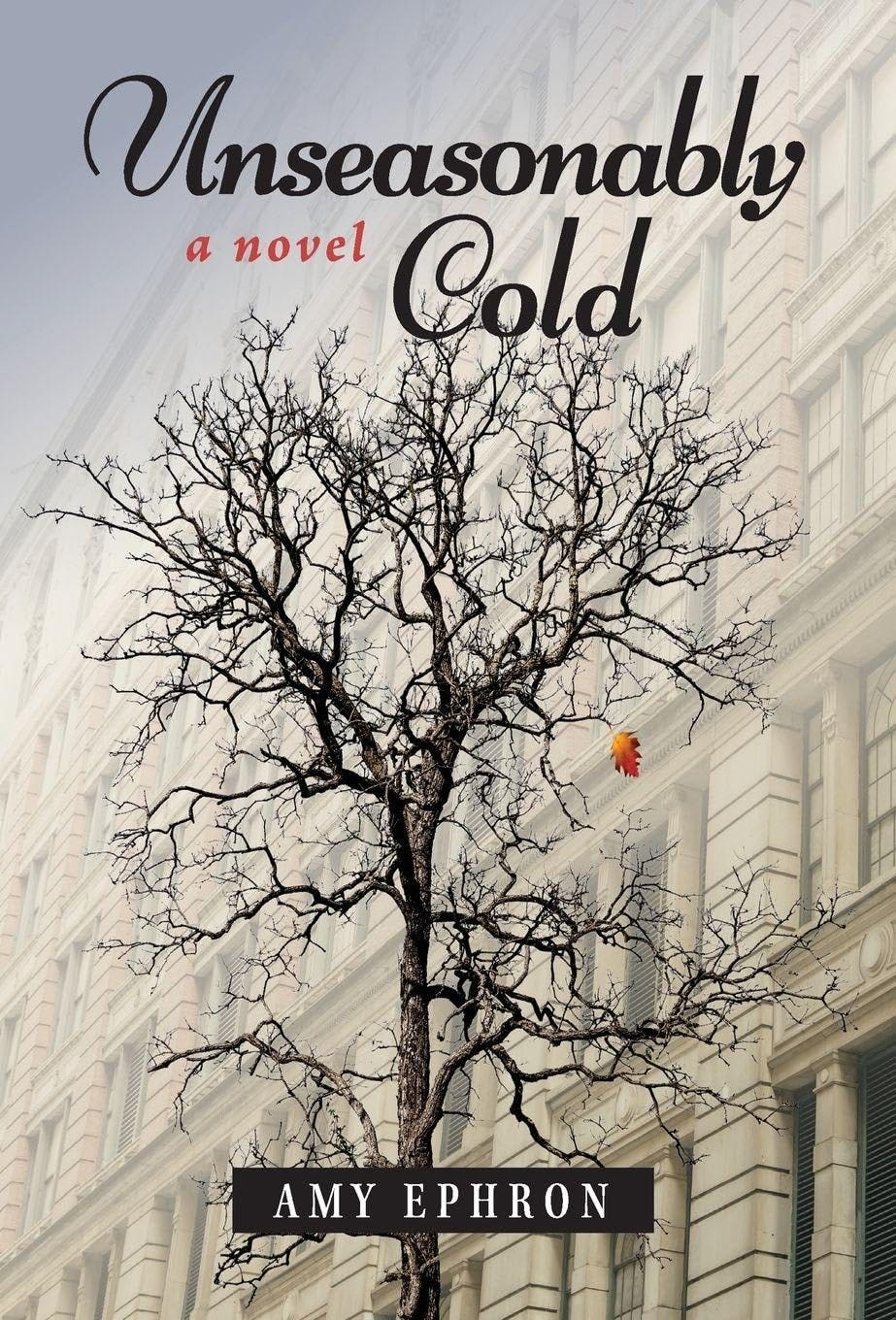
The first surprise came early in our conversation when Amy revealed that when she began writing Unseasonably Cold, she had absolutely no idea what had happened to Jane, the missing socialite at the center of the novel. She didn’t know where the story was going, who was responsible, or even how it would end. She discovered the answers as she wrote them.
This was not, according to Amy, a recommendation.
“Don’t write the way I write,” she told me repeatedly throughout our conversation.
Naturally, that made me want to know everything about how she writes.
Amy doesn’t outline. She doesn’t map chapters. She doesn’t build elaborate spreadsheets to track storylines. Instead, she writes sentence by sentence, revising obsessively before moving forward. By the time she reaches the end of a manuscript, there isn’t really a first draft waiting to be cleaned up later because the revision has been happening all along. She shared that she might rewrite a section sixty times before allowing herself to continue. It’s a process built less on structure and more on instinct.
As someone currently serializing a novel in public on Substack, I found this oddly reassuring.
Writers are constantly told there is a correct process. Outline first. Know your ending. Build your structure. Create signposts. Amy’s approach is almost the exact opposite. She leaves room for surprise, and according to her, that’s often where the magic happens.
At one point in Unseasonably Cold, an eccentric art collector simply appeared in a scene and changed its direction. Amy laughed while describing it because she genuinely didn’t know where he had come from. The character arrived, demanded space on the page, and altered the story. When I asked her how she keeps track of so many interwoven characters and storylines, her answer was simple: “They do it.”
It sounds impossible until you’ve written fiction yourself and realize it somehow makes perfect sense.
The other thing that struck me was the extraordinary level of detail behind her historical research. Amy wanted to know what paintings were hanging inside the Metropolitan Museum on the exact day her characters visited. When they dined at the Metropolitan Club, she tracked down the original 1939 menu. When newspaper clippings appeared in the novel, her publisher even recreated them using the original typefaces from those publications.
As someone who spent decades in fashion obsessing over details, I loved hearing this because details are character. What someone wears tells us who they are. What they order tells us who they are. Where they choose to meet tells us who they are. The smallest choices often reveal the largest truths.
We also talked about why Unseasonably Cold, despite being set in 1939, feels eerily contemporary. Amy started the book nearly eight years ago as an exploration of grief and what she called “collective grief,” that unique experience of losing someone beloved not only to you but to many others who come to you carrying their own loss as well. As the years passed and she returned to the manuscript, the world around her changed. A story that had once felt slightly satirical suddenly felt much closer to reality. Political division, cultural division, religious division, and a growing sense of instability transformed the book itself, forcing what she described as a tonal rewrite.
That observation stayed with me long after the live ended because sometimes writers aren’t predicting the future. They’re simply paying attention before the rest of us catch up.
Our conversation eventually moved to publishing and how dramatically the business has changed. Amy remembers selling books on six pages and an idea. Today’s authors are expected to arrive with a finished manuscript, a platform, an audience, and increasingly, a content strategy to support all of it. It was one of the reasons our conversation about Substack felt so timely. Writers want direct relationships with readers and more ownership over how their work reaches the world.
Before we wrapped, I asked Amy if she had any advice for writers.
Her answer was perfect.
“If anyone tells you not to have unreasonable expectations, ignore them because you wouldn’t write a novel unless you had unreasonable expectations.”
That may be the most honest description of writing I’ve heard in years.

Comments
Nothing yet. Say the first thing.
Sign in to join the conversation.