
I never really thought much about my hair. In middle school, I started coloring it different shades found in the aisles of Peoples Drug. In high school, I cut it all off, then began growing the top, leaving the bottom half from eyebrows to nape shaved. In college, it was blonde, it was auburn, it was cut in a pixie a la Kelly Taylor. After college, I continued to play with my hair: platinum, pink streaks, one night I put my hair in a side ponytail and cut it off for an asymmetric ‘do very similar to Kelly Osbourne’s cut at that time. Even when pregnant, I added purple, magenta, and pink highlights.
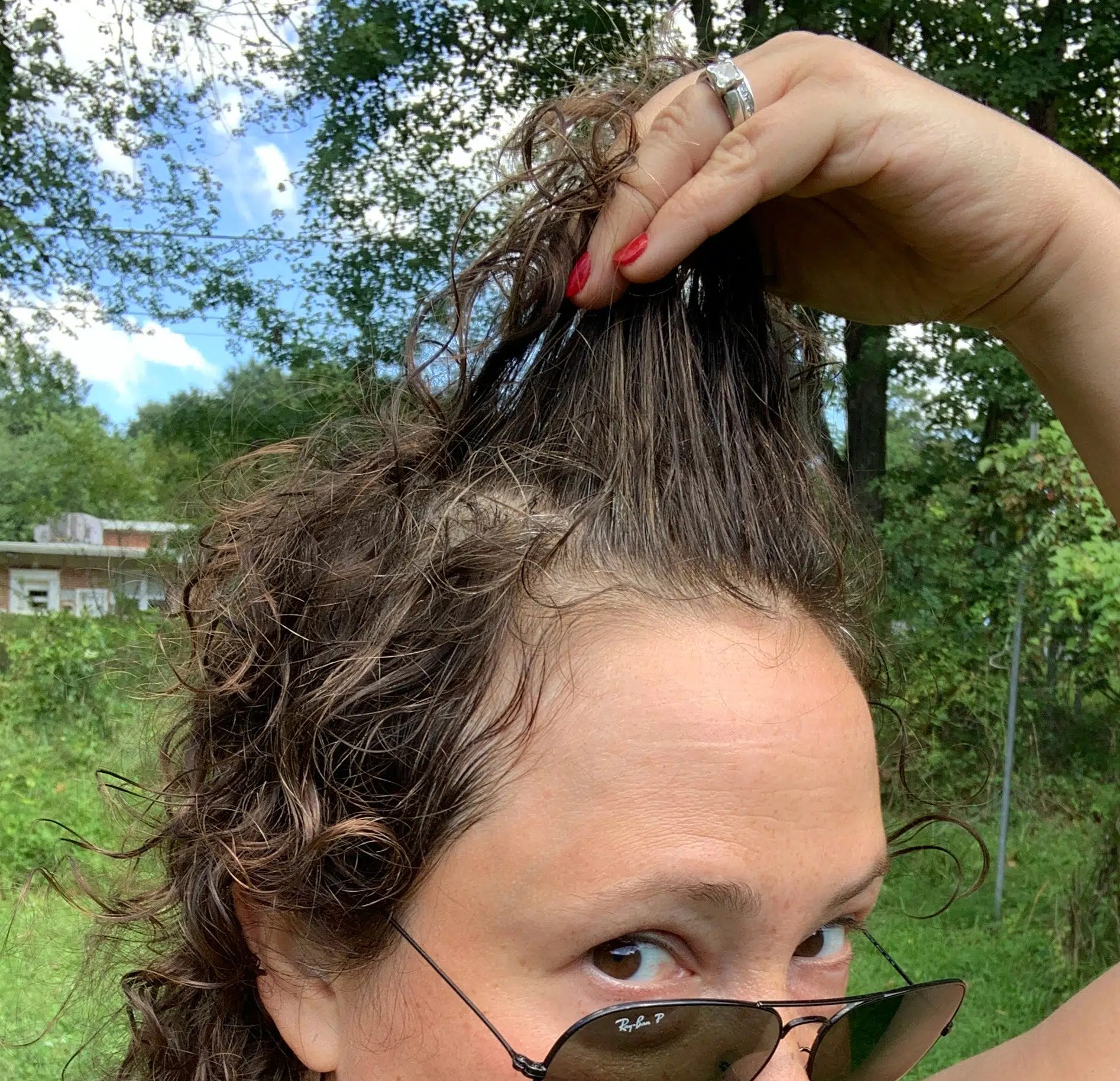
Once I hit my 40s, I started feeling as though my hair was thinner. Even my hair stylist noticed, and we decided to embrace my natural texture and go curly. I didn’t even know my hair was that curly, but loved how the ringlets helped hide my scalp and give the effect of more hair. But still, the visible scalp at the top of my head and the receding hairline was making me self-conscious and I began trying out different products to grow back hair, or hide the fact that I was seeing more scalp than I liked.
After a decade of different products, hacks, and methods, I have found what worked. I have written about my hairloss journey on my blog, but I know different folks read here and wanted to summarize what, IMO is worth it, and what is not, in case you too are dealing with this in midlife.
these aren’t to grow back hair, or even stop losing hair. They are all for strengthening your hair to prevent breakage, caring for your scalp, and/or adding volume to the strands (or drying out your hair to make it fuller at the roots). Aveda, Vegamour, Virtue, Keranique, Nécessaire… I was even an ambassador for Hair Biology but none handled hormonal hairloss.
This may just be because I wasn’t fanatical about using them. I never could figure out the best time because the serums and scalp treatments always made my hair look sticky or greasy or just like I needed a shower. Many find blow-drying roots a way to make the serums disappear, but with curly hair that looks best air-dried, that wasn’t an option for me. I also felt that cutting out hot tools for my hair was helping my hair health and thickness, too.
Maybe if I didn’t have the hair texture and style I did, I would have found success with Calecim, which came highly recommended by multiple folks including a hair stylist and a dermatologst. It was the last one I tried, and I didn’t even finish the six-week program because it was a whole process to figure out when to fit it into my life and not have to wear a hat to hide my weird hair.
I had already tried Vegamour, The Ordinary, GrandeHAIR, and a few different serums no longer on the market. I am not the right person for these products; if you have straighter hair or coarser hair they may be easier to fit into your life.
I think I am allergic to one of the ingredients in topical minoxidil. I tried Rogaine, I tried Hers, I tried one that JLo used to promote. Within a couple of weeks of using it, I would get itchy hot red welts on my scalp, temples, and nape. I have gotten similar reaction to some skincare products; I used to think it was salicylic acid and it may be, but since I also get it from these products I think the ingredient may be propylene glycol.
Biotin gave me cystic acne. Nutrafol tore up my stomach and my GP said she didn’t recommend it. Viviscal made my hair so greasy I quit after a month. Vegamour gummies tasted great and came in the most beautiful jar but did nothing. Same with drugstore hair gummies, collagen, and keratin.
That being said, I do take supplements. C, D, B complex, sea buckthorn oil, borage oil, krill oil, magnesium… I do think in general having the right vitamins and minerals provide overall health which can help skin, hair, and nails.
As long as I didn’t get caught in a downpour or use it before a pool party, I found a lot of success in the products that would color the scalp and thicken the roots with fibers. Toppik was a favorite because it wasn’t a spray but had a nozzle to puff the colored fibers and I could easily get the thinning place at the crown of my head.
Madison Reed's The Great Cover Up, L'Oreal Magic Root Cover Up, and Boldify powder were also constants in my medicine cabinets and my travel toiletry kit. I still love these products for hiding my roots when I’m due for a salon touch-up.
Stopping with the hair dryer, the curling iron, and the flat iron did wonders for my hair. Pulling my hair with a paddle or round brush alone was causing hairloss, and the heat was causing breakage. Shorter hair, going curly, and air drying (the occasional low heat with a diffuser when running late) reduced the amount of hair in the shower drain by a lot.
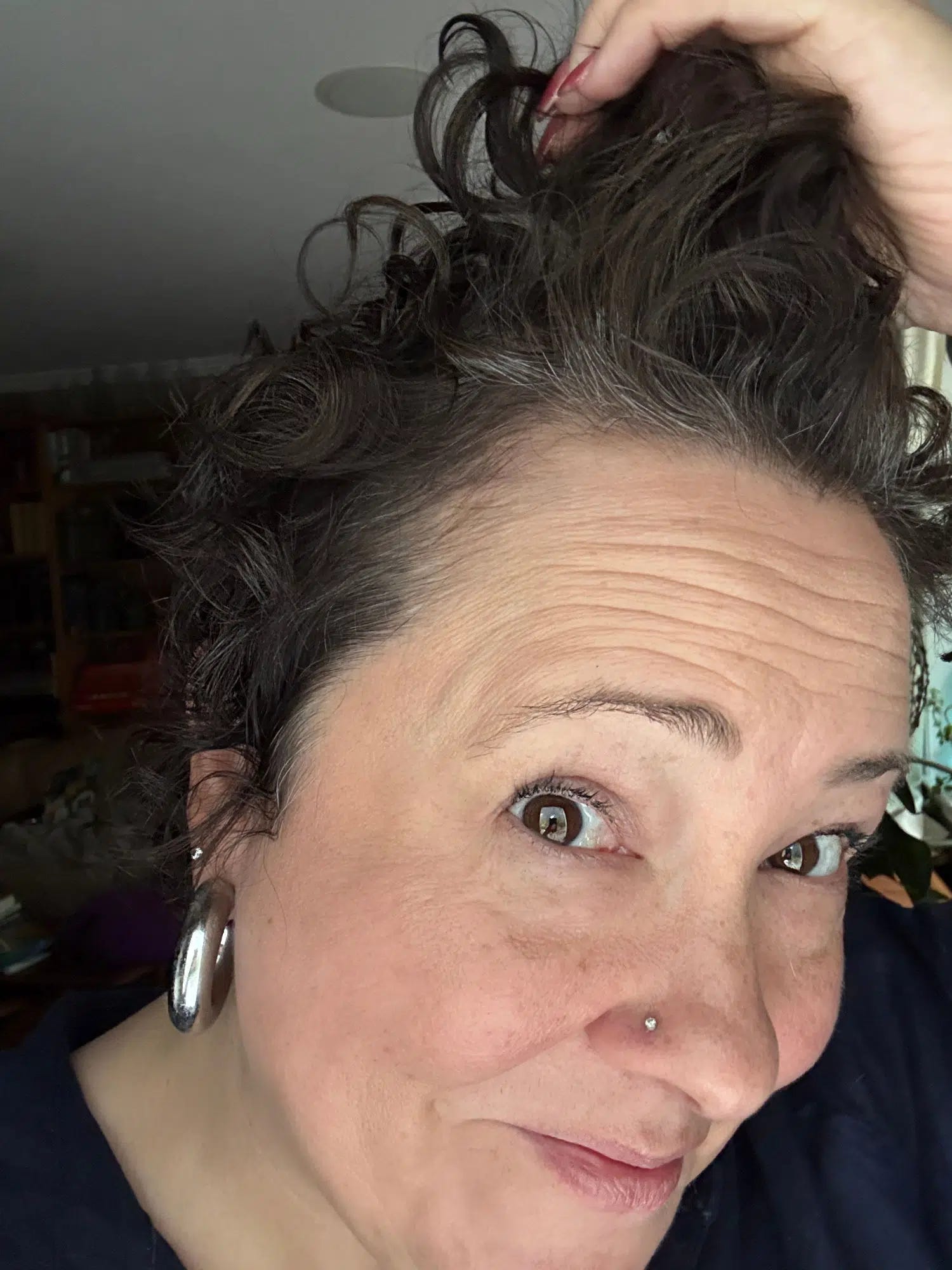
This is truly the only thing that worked. It takes a few months to kick in, and in the meantime you may experience some shedding that may make you want to quit. But I am around six months in and my hair is as thick as it was when I was 25. No greasy roots, nothing to fit into my schedule, I take a pill each morning after brushing my teeth.
Do know, oral minoxidil lowers your blood pressure. This could be a good thing (friends have been able to get off heart medicine because of minoxidil), but it is something to factor. Hair may grow in other places: I have noticed a bit more arm hair, a bit faster growing of nose hair, but I have had laser hair removal on most my body so it hasn’t been a factor for me. Also, once you start you can’t quit or all the hair you’ve gained will go and you will return to the level of hairloss you had (or may have grown into). Talk to your doctor. Some insurances cover this prescriptions, if you don’t have a doctor or your insurance doesn’t cover it, companies like Alloy offer it.
Over my hair journey, I have learned that different things work for different people. Also, hairloss in middle age can be due to a variety of factors. Thyroid, hormones, stress, heart health, genetics, and more. I also learned the doctors you expect (dermatologist, GP) may not know as much as others (gynecologist, cardiologist, hair stylist).
It’s worth it to meet with doctors to rule some things out before spending money on treatments. Also, before you go down this road of treatments, consider switching up your hair routine. Even if oral minoxidil didn’t work for me, just embracing my natural texture and using fewer hot tools, brushes, and stress on my hair did make it look fuller and healthier.
There are options out there, and right now with so many influencers being paid to say things work and show before and afters with one photo of them right after having a baby or not washing their hair for a couple od days, and the after with a shiny blowout… I thought I’d share honestly what did and didn’t work for me.
Comments
Nothing yet. Say the first thing.
Sign in to join the conversation.