
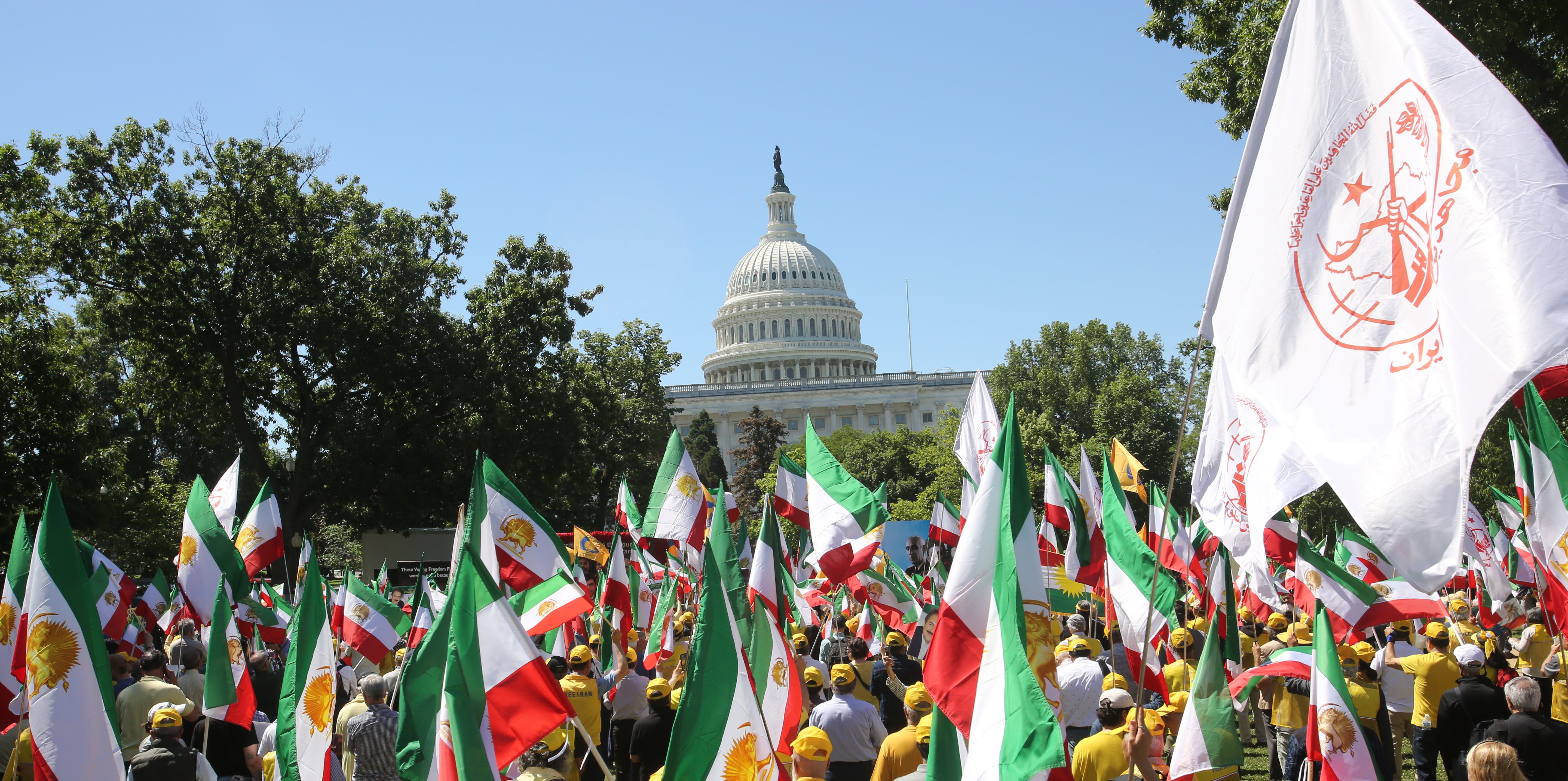
The debate on Iran’s opposition is too important to be shaped by inherited labels, selective sourcing, or the repetition of narratives long used by Tehran to discredit its organised opponents. El País’s article “La oposición a la República Islámica de Irán: entre la horca, la cárcel y el exilio, (May 17),” rightly highlights the scale of repression inside Iran. Yet its treatment of the principal Iranian opposition movement, the Mujahedin-e Khalq (PMOI or MEK), omitted essential context and repeated narratives long used by Tehran to discredit its opponents.
It comes at a time when the Iranian regime, confronted with unprecedented internal unrest and facing the prospect of collapse, has intensified both its domestic repression and its campaign of terror. In March and April alone, the regime executed at least eight members of the MEK. Any serious analysis of Iran’s opposition must therefore ask why Tehran devotes such extraordinary resources to demonising, imprisoning and executing members of this movement.
The article relies heavily on Eldar Mamedov and Trita Parsi, presenting them as neutral experts while omitting their controversial backgrounds. Mamedov had been dismissed from his position as an adviser to the Socialist Group in the European Parliament due to his repeated promotion of positions aligned with Tehran’s foreign policy interests, as well as the Belgian police raid on his residence in connection with the scandal known as “Qatargate.” Parsi, a well-known advocate for the regime’s interests in Washington, famously lost a defamation lawsuit against an Iranian dissident; the court’s dismissal of the case exposed extensive communications and lobbying activities that reinforced Parsi’s role as a de facto pro-Tehran advocate. Quoting them without acknowledging this history is deeply misleading.
The same problem appears in the article’s assessment of so-called “internal opposition” figures and factions in the regime’s machinery of repression, presenting them in a romanticized light. The “Organization of the Mojahedin of the Islamic Revolution,” portrayed in the article as part of the reformist current, was in fact created on Khomeini’s orders to confront and suppress the MEK and undermine its rapidly growing popular support following the 1979 revolution. Many of its members later went on to become interrogators, prison officials, and torturers within the regime’s security apparatus. To present such currents mainly as democratic alternatives, without reference to their role in repression, distorts the historical record.
Likewise, the article’s repetition of the regime’s outdated “Islamic Marxist” label ignores decades of documented history and political reality. The label itself was originally manufactured by the Shah’s dreaded secret police, SAVAK, in an attempt to stem the growing appeal of the MEK among Iran’s youth and educated classes. It was subsequently adopted and propagated by the current clerical regime as part of its long-running demonization campaign against the Iranian Resistance.
The article’s treatment of the Iran-Iraq war is also erroneous. The MEK did not fight against the Iranian people. When Iraq invaded Iran in 1980, MEK members opposed the aggression and rushed to the front lines to defend Iranian territory. After Iraqi forces withdrew from Iran in May 1982, however, and Khomeini insisted on prolonging the war under the slogan “Liberating Quds (Jerusalem) through Karbala,” the MEK called for peace. Only four years later, and six years after the war had begun, that part of the organization relocated to Iraq, after Baghdad accepted its peace proposal. Its military operations targeted the Revolutionary Guards and the regime’s machinery of repression, the very forces that continue brutalizing the Iranian people today — not Iran as a nation.
Finally, the article attempts to stigmatize the Iranian Resistance through alleged links with the Vox party, while concealing the fact that the National Council of Resistance of Iran (NCRI) has, for decades, enjoyed broad and bipartisan support across the international political spectrum, including in Spain. The Spanish Senate Foreign Affairs Committee has unanimously backed the NCRI’s 10-point plan for a democratic Iran.
The article selectively mentions former Vice-President of the European Parliament, Alejo Vidal-Quadras, while omitting the crucial fact that he narrowly survived an assassination attempt by a gunman hired by the Iranian regime, who shot him in the face at point-blank range — apparently in retaliation for his longstanding support for the Iranian Resistance. The attack starkly illustrated the lengths to which Tehran is prepared to go to target supporters of the MEK, even on European soil.
Ultimately, the article avoids the central political reality: Tehran’s greatest fear is an organized internal resistance. The real debate about Iran’s future is not between monarchy and theocracy, but between dictatorship in all its forms and the Iranian people’s aspiration for a democratic republic grounded in popular sovereignty and equality.
Safavi is a member of the Foreign Affairs Committee of the Paris-based National Council of Resistance of Iran (NCRI). He is on X @amsafavi
Comments
Nothing yet. Say the first thing.
Sign in to join the conversation.