
The Cash-for-Bodies Ledger
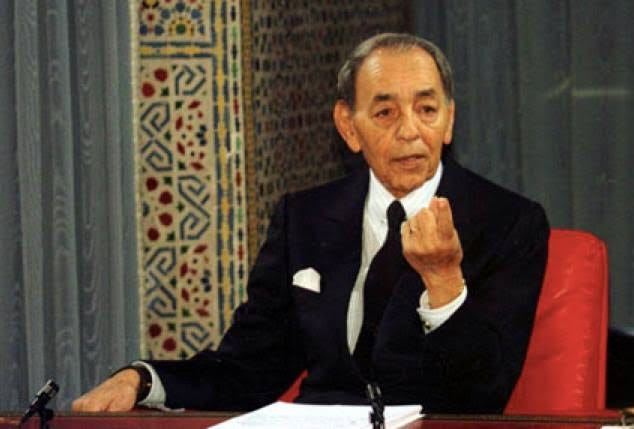
In 1961, the Moroccan monarchy put a cash price tag on its own citizens.
King Hassan II needed cash, weapons, and protection for his palace. Across the Mediterranean, the Zionist project was expanding onto newly acquired land. It needed raw physical muscle to build infrastructure and hold territory.
So the two states struck a deal. The official story called it a “humanitarian rescue mission” but really, this was human trafficking. It was named Operation Yachin.
Here is how the money worked.
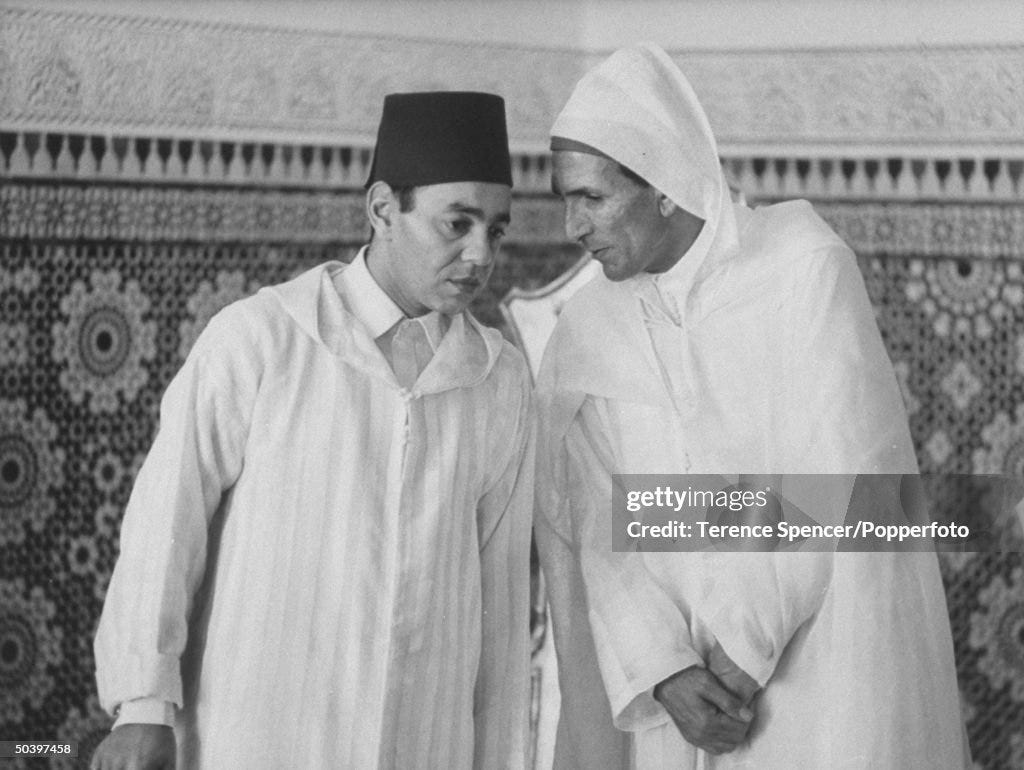
Israel and the Moroccan monarchy agreed on a direct per-head price tag for human beings. To open the extraction pipeline, a $500,000 cash retainer went directly into Hassan II’s royal treasury (Abécassis, Questions about Jewish Migrations from Morocco, HAL SHS, citing Bin-Nun 2009).
After the retainer, the Moroccan state received $100 per head for every Jewish citizen it permitted to leave, up to 50,000 people. Once the count passed 50,000, the unit price jumped to $250 per head. (Frédéric Abécassis, Questions about Jewish Migrations from Morocco, 2012, citing Yigal Bin-Nun)
Sovereign states do not write public receipts that say “payment for human beings.” To disguise the financial ledger, they used an American front organisation called the Hebrew Immigrant Aid Society (HIAS).
HIAS served as the financial and operational cover mechanism, moving roughly $50 million directly into Moroccan state accounts over three years. (Abécassis, Questions about Jewish Migrations from Morocco, 2012; Operation Yachin, Wikipedia)
On the ground in Casablanca, an undercover Mossad unit called Misgeret registered families, photographed them, and prepped them for movement. Between 1961 and 1964, this system extracted between 90,000 and 97,000 people—more than half of Morocco’s entire Jewish population. (Middle East Eye, How a Zionist migration programme split Moroccan Jewish families, 2021; Operation Yachin, Wikipedia)
King Hassan II monetised his own population, collected a per-head fee at the border, and handed those citizens over to a foreign power.
When an unlicensed broker does this, international law calls it human trafficking. When a monarch does it with an intelligence agency using a charity as a bank, official history calls it statecraft.
The Machinery
The Document Trap and One-Way Transit
To maintain a captive workforce, a state must eliminate that workforce’s ability to leave. That requires stripping their legal identity and revoking their return rights.
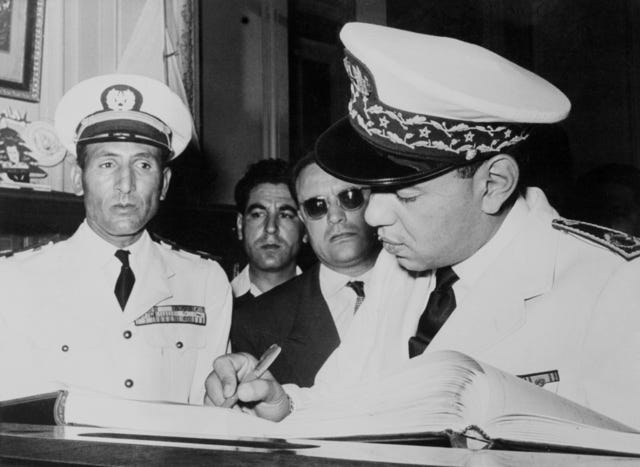
In Rabat, Raphaël Spanien, the HIAS representative in Morocco, met with General Mohamed Oufkir, the head of Moroccan internal security. Together, they engineered the document trap. (Abécassis, HAL SHS)
The Moroccan state legally barred Jewish citizens from receiving individual national passports. Instead, Oufkir’s Ministry of Interior issued collective group passports. A single sheet of paper listed dozens of families at a time. (Abécassis, HAL SHS; Eurasia Review, Emigration of Jews of Morocco to Israel in 20th Century, 2018)
When families reached the staging sites in Casablanca, state and agency operatives confiscated their individual identification papers.
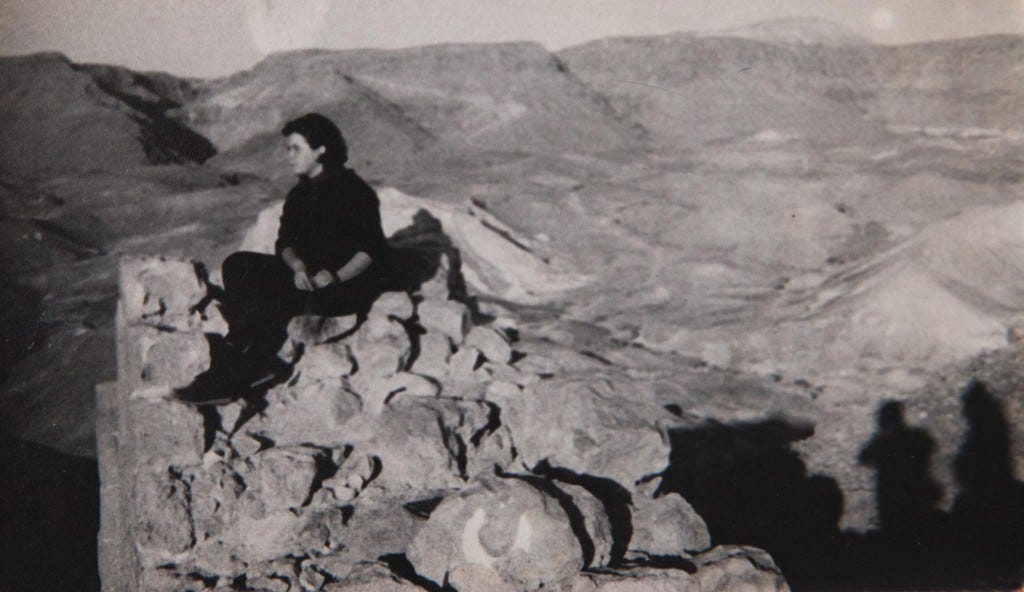
Fanny Mergui, who was taken from Casablanca as a child in 1961, recorded the procedure:
“We left Morocco with a collective passport, and the Jewish Agency took the papers of those who had them.” (Fanny Mergui, Marocaine avant d’être juive, UJFP, 2016)
Without an individual national passport, a migrant cannot book a commercial ticket, cross an international border, or request consular protection. Their legal status exists only on a group sheet held by state handlers.
Mergui stated the outcome directly: “It was a one-way trip.” (Middle East Eye, 2021)
Labor Assignment: Dimona, Potash, and Buffer Towns
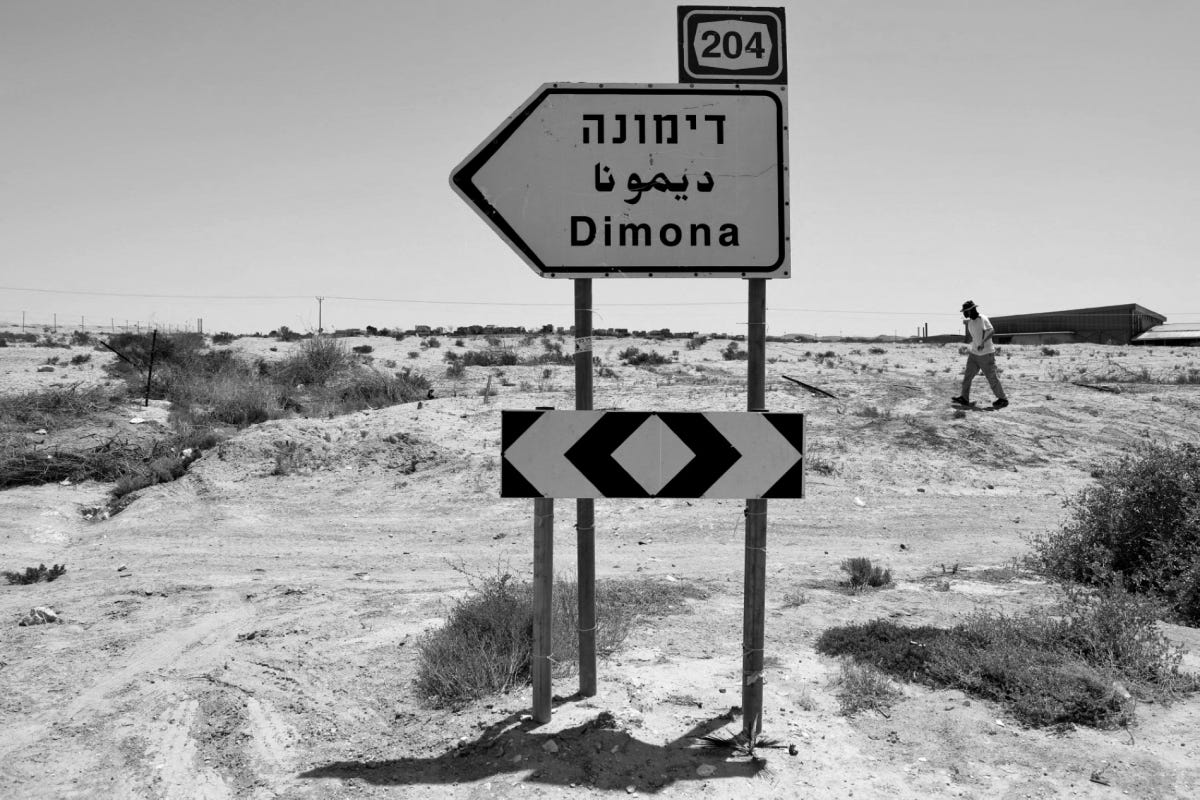
When the ships from Casablanca docked in Haifa, state agencies did not take families to urban homes. Officials sprayed disembarking passengers with DDT chemical pesticide, loaded them onto open flatbed trucks, and drove them into the desert under cover of night. (Middle Eastern Studies, Ma’abarot: Israeli immigrant transit camps revisited, 2024); (Jerusalem Post, Neighborhood watch, 2015);
State agencies routed this imported workforce directly to strategic military, industrial, and territorial sites:
The Dimona Nuclear Complex: State planners established Dimona as an isolated outpost in 1955 and rapidly expanded it during the early 1960s. Officials placed thousands of Moroccan immigrants in Dimona to build public housing, dig desert foundations, and provide a captive manual workforce for maintenance and construction at the nearby secret Negev Nuclear Research Centre; (Dimona, Wikipedia); (Oren Yiftachel, Social Control, Urban Planning and Ethno-class Relations, IJURR, 1998)
Mining the Dead Sea: State managers sent men directly to worker barracks at the Dead Sea Works (Mif’alei Yam HaMelach) in Sodom. Workers shoveled raw potash and cleaned toxic evaporation pans in 45°C heat, supplying key chemical feedstocks for commercial fertilisers and military munitions. (Dimona, Encyclopedia.com); (Dead Sea Works, Wikipedia); (Yehouda Shenhav, The Arab Jews, Stanford University Press, 2006)
The National Water Carrier: Imported labor dug the trenches and laid the heavy steel pipelines for HaMovil HaArtzi, diverting the Jordan River south to irrigate newly claimed territory in the Negev. (Central Zionist Archives, The National Water Carrier); (National Water Carrier of Israel, Wikipedia)
Human Buffer Outposts: State planners constructed “development towns” (Ayrot Pitu’ach)—including Dimona, Yeruham, Beit She’an, Kiryat Shmona, and Sderot—directly along armistice lines and perimeter corridors.[3]; (The Kibbutz and Development Cities in Israel, JSSJ)
Moroccan families were dumped in these outpost towns and handed raw concrete blocks. They functioned as physical buffer zones, positioned on the perimeter to absorb border clashes and protect European (Ashkenazi) elites living in Tel Aviv and Haifa; (Middle East Eye, 2021)
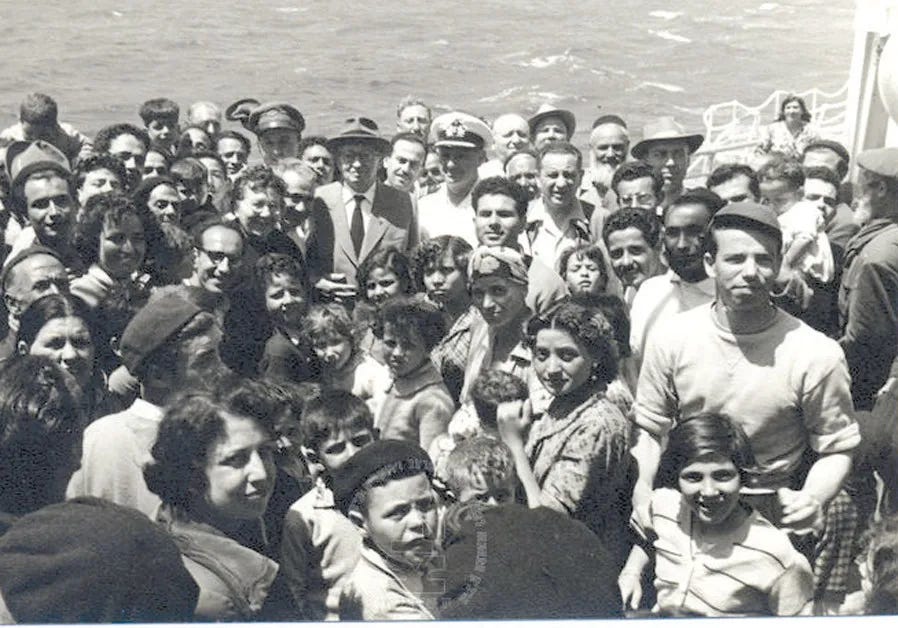
Fanny Mergui documented the reality on the ground:
“Once in Israel, Moroccan Jews were segregated into desolate areas where if you wanted a roof you had to build one yourself.” (Middle East Eye, 2021)
European administrators ran the state ministries, financial institutions, and military commands. The imported North African population provided the physical labor that dug the trenches, mined the chemicals, and guarded the perimeter.[3]; (+972 Magazine, Anti-Mizrahi discrimination was official Israeli policy)
Weapons, Bugged Hotels, and Political Hits
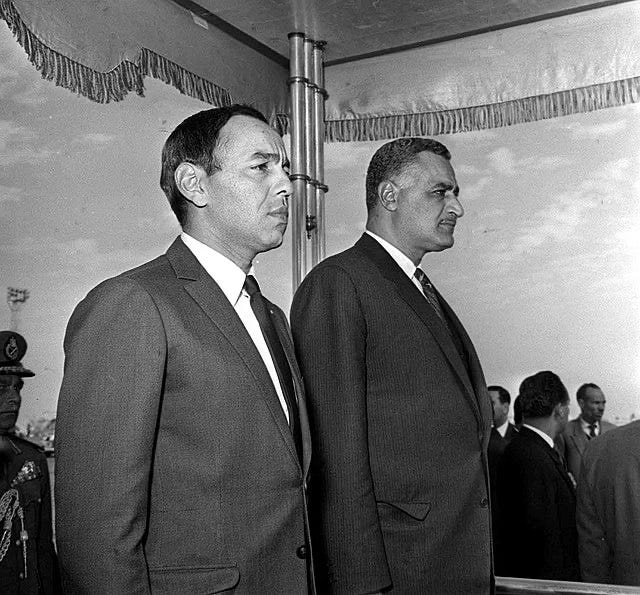
The cash paid to King Hassan II was only the initial down payment. Israel paid the rest of the bill in heavy weapons, military training, and state security services. (Times of Israel, A look at Israel’s decades-long covert intelligence ties with Morocco, 2020)
In February 1963, Mossad directors finalized a secret security pact with General Mohamed Oufkir. Mossad opened a permanent intelligence station in Rabat. Israel delivered French-built AMX-13 armor to the Moroccan army, trained Moroccan air force pilots, and organized the personal protection unit for Hassan II’s royal palace. (Ronen Bergman, Rise and Kill First, 2018); (Jewish exodus from the Muslim world, Wikipedia); (Bar-Zohar & Mishal, Mossad: The Greatest Missions of the Israeli Secret Service, HarperCollins, 2012 — print)
In September 1965, Hassan II returned the favor.
The Arab League held a secret military summit at a hotel in Casablanca to assess troop readiness. A joint Mossad and Shin Bet team code-named The Birds (Tziporim) installed listening devices throughout the conference rooms. (Ynetnews, Mossad listened in on Arab states’ preparations for Six-Day War, 2016); (1965 Arab League summit, Wikipedia)
Moroccan intelligence delivered the complete audio recordings directly to Israeli Military Intelligence (Aman). The tapes confirmed that Arab military coordination was non-existent and Egypt’s armored divisions were unready for battle. (Ynetnews, 2016)
Former Aman director Shlomo Gazit confirmed that these recordings provided the key operational intelligence used to execute the pre-emptive air strikes of the 1967 Six-Day War. (Ynetnews, 2016); (IntelNews, Mossad had prior knowledge of Six-Day War plans, 2016)
One month after the summit, Morocco collected another service. At Oufkir’s request, Mossad located exiled Moroccan opposition leader Mehdi Ben Barka in Paris. French and Moroccan agents abducted Ben Barka outside a brasserie and killed him in a villa outside the city. Mossad operatives assisted in disposing of the body. (Ronen Bergman, Rise and Kill First, 2018); (Mehdi Ben Barka, Wikipedia)
Hassan II traded his population’s exit rights for military armor, palace guards, intelligence tools, and political hits against his domestic rivals.
When the two states signed the public Abraham Accords in December 2020, diplomats presented it as a breakthrough. It was simply the public codification of a trade ledger established in 1961.
The Pattern & The Legal Shield
If an unlicensed operator takes money to move people across an international border, international law defines it as human trafficking.
If a sovereign state takes $250 a head to hand 90,000 people to a foreign intelligence service, international law calls it a bilateral migration agreement.
Here is how states drafted anti-trafficking statutes to grant themselves total immunity.
In 2000, state officials drafted two major international legal standards: the UN Palermo Protocol and the US Trafficking Victims Protection Act (TVPA). (UN Office on Drugs and Crime, Palermo Protocol, 2000); (US Congress, Public Law 106-386, 2000)
The authors—state prosecutors, interior ministry officials, and border police administrators—built two specific exemptions directly into the legal code:
The Non-State Actor Filter: The UN Palermo Protocol operates under the UN Convention against Transnational Organized Crime. Article 2 restricts its legal application to offenses committed by an “organized criminal group”—defined strictly as an informal, non-state syndicate. A sovereign state, royal ministry, or national intelligence agency is definitionally excluded from this criminal classification. (UNODC, UNTOC Treaty Text, 2000)
The Post-Arrival Filter: Under Title 22 of the United States Code, Section 7102 of the TVPA (spoken as “Under twenty-two U-S-C, section seventy-one zero two, of the T-V-P-A”), recruitment or transit is classified as trafficking only if the individual experiences forced labor, debt bondage, or commercial sex after arrival. The law intentionally ignores per-head cash payments and passport confiscations conducted by governments at the border. (Cornell Law Information Institute, 22 U.S.C. § 7102, 2000)
When a government monetizes exit permissions, collects a per-head fee, and confiscates national passports, statutory law classifies it as routine statecraft—provided the receiving state issues the arrivals legal paperwork upon landing.
The 2000 anti-trafficking statutes created a strict operational binary:
Unsanctioned human transport by private brokers is criminalized as human trafficking.
State-sanctioned human extraction using per-head indemnities and corporate cut-outs is protected under sovereign immunity.
States designed the legal framework to criminalize non-state competitors while legally insulating state-level human transactions.
Sources
Abécassis, Frédéric. “Questions about Jewish Migrations from Morocco.” (HAL SHS, 2012). https://shs.hal.science/halshs-00778664/document
Bin-Nun, Yigal. “La négociation de l’évacuation en masse des Juifs du Maroc.” In La fin du Judaïsme en terres d’Islam (2009), pp. 303–358. Summarised in: Moreshet Morocco, Juifs marocains – le prix de l’exil
Bar-Zohar, Michael & Mishal, Nissim. Mossad: The Greatest Missions of the Israeli Secret Service. (HarperCollins, 2012). Print.
Bergman, Ronen. Rise and Kill First: The Secret History of Israel’s Targeted Assassinations. (Random House, 2018). PDF
Cornell Law Information Institute. 22 U.S. Code § 7102 - Definitions (Trafficking Victims Protection Act). https://www.law.cornell.edu/uscode/text/22/7102
Middle East Eye. “’Everyone lost’: How a Zionist migration programme deprived Morocco of its thriving Jewish community.” (2021). https://www.middleeasteye.net/news/everyone-lost-how-zionist-migration-program-deprived-morocco-its-thriving-jewish-community
United Nations Office on Drugs and Crime (UNODC). Convention against Transnational Organized Crime and the Protocols Thereto. (2000). https://www.unodc.org/documents/treaties/UNTOC/Publications/TOC Convention/TOCebook-e.pdf
United States Congress. Public Law 106-386: Trafficking Victims Protection Act of 2000. https://www.congress.gov/106/plaws/publ386/PLAW-106publ386.pdf
Ynetnews. “Mossad listened in on Arab states’ preparations for Six-Day War.” (2016). https://www.ynetnews.com/articles/0,7340,L-4866702,00.html
Eurasia Review. “Emigration Of Jews Of Morocco To Israel In 20th Century.” (2018). https://www.eurasiareview.com/05032018-emigration-of-jews-of-morocco-to-israel-in-20th-century-analysis/
Jerusalem Post. “Neighborhood watch: The market’s looking up in the South.” (2015). https://www.jpost.com/metro/neighborhood-watch-the-markets-looking-up-in-the-south-392284
Jewish Voice for Peace. “Jews from the Middle East Fact Sheet.” (2015). https://www.jewishvoiceforpeace.org/wp-content/uploads/2015/07/JVP-Jews-of-the-middle-east-fact-sheet.pdf[2]
Khazzoom, Aziza. “The Great Chain of Orientalism: Jewish Ethnic Stratification in Israel.” American Sociological Review, Vol. 68, No. 4 (2003), pp. 481–510. JSTOR record
Middle Eastern Studies. “Ma’abarot: Israeli immigrant transit camps revisited.” (2024). https://www.tandfonline.com/doi/full/10.1080/13537121.2024.2367883
Quest: Issues in Contemporary Jewish History. “Space of Transit, Place of Memory: Ma’abarah and Literary Landscapes of Arab Jews.” (2022). https://www.quest-cdecjournal.it/space-of-transit-place-of-memory-maabarah-and-literary-landscapes-of-arab-jews/
Safah Hadasha. “The Nuclear Reactor in Moroccan Judeo-Arabic: Upper Dimona.” https://safahadasha.co.il/the-nuclear-reactor-in-moroccan-judeo-arabic/[1]
Shenhav, Yehouda. The Arab Jews: A Postcolonial Reading of Nationalism, Religion, and Ethnicity. (Stanford University Press, 2006). https://www.sup.org/books/title/?id=3552
Shohat, Ella. “Sephardim in Israel: Zionism from the Point of View of Its Jewish Victims.” Social Text, No. 19/20 (1988), pp. 1–35. JSTOR record
Yiftachel, Oren. “Democracy or Ethnocracy? Territory and Settler Politics in Israel/Palestine.” Middle East Report (MERIP), No. 207 (1998). https://merip.org/1998/06/democracy-or-ethnocracy/[3]
Yiftachel, Oren. “Social Control, Urban Planning and Ethno-class Relations: Mizrahi Jews in Israel’s Development Towns.” International Journal of Urban and Regional Research, Vol. 22, No. 1 (1998), pp. 82–113. https://onlinelibrary.wiley.com/doi/abs/10.1111/1468-2427.00255
Comments
Nothing yet. Say the first thing.
Sign in to join the conversation.