
I regret premiering the original video series as ‘Kaiser Wilhelm Gesellschaft’ because mostly this is about American bankers… no, European bankers…, not really.. hmm Jewish bankers? no that’s arguably racist. Stop. Lets be SPECIFIC. This is about The Warburgs and not at all about Kaiser Wilhelm.
This essay forms part of my broader (work in progress) Banker’s Wars Dossier.
The rabbit hole started with a question about the Chemistry lab, and oh boy how we travelled.
The other Banker’s War essays are here:
Truly is one big club.
Enjoy.
A
PEER REVIEW IS LITERAL. READERS YOU ARE MY PEERS.
This research is raw. It still needs review. It will be reviewed. You are invited to check the sources.
But please do not attack me about it.
Look at the sheer volume of evidence here.
I work alone and I have ADHD, these archives are routinely being attacked, links can break. Sources can contradict other sources. I’ve stuck with primary sources as much as possible.
If you think I have information wrong, before you irritate me, check is my source closer to primary than yours? If you challenge me and then quote wikipedia, how will that go for you?
If you notice any broken links or error you can report them here: review@alimcforever.com
This email is for broken links and genuine errors, not because you want to debate the frame. Email me black and white items with concrete fix proposals.
Do not email me anything grey, subjective, editorial or ideological please.
And do not get pedantic. I do not give a shite about feedback like “technically, JP Morgan’s yacht was 250ft not 300ft” … IFTHAT’SYOURONLYCOMMENTEATSHIT… if you send me an email like that I will report you for harassment.
Take what you need from my findings and go ahead write up your own versions with all of those exact measurements then. I’m not editing this for you, I’m moving on with my research and if that imperfection bothers you, you can either read someone else’s substack wait for publisher’s reviewed and final version of my book that I may or may not write some day.
GOD SPEED.
On January 11th, 1911, Kaiser Wilhelm II of Germany formally established the Kaiser Wilhelm Gesellschaft History of the Kaiser Wilhelm Society, Max Planck Society 1911: Founding of the Kaiser Wilhelm Society, Max Planck Society This is the parent organisation for the research institutions in Berlin. The emperor provided his name and his imperial protection, but that’s about it. Nature, Vol. 86, 16 March 1911, No. 2159 This institution was not actually paid for by the German state. It was funded privately by industrialists. Die Gründung und Finanzierung der Kaiser-Wilhelm-Gesellschaft, MPRL Proceedings Vol. 6 This was new for Germany. Before 1911, all German science was done in state funded institutions under the Humboldt model. The Humboldt model had been introduced in 1810 by the education reformer Wilheim von Humboldt. Wilhelm von Humboldt, On the Internal and External Organization of the Higher Scientific Institutions in Berlin, 1810 (English translation), German History in Documents and Images / GHI Washington This is still the template for modern research universities. History of Humboldt-Universität zu Berlin — Wilhelm von Humboldt, Humboldt-Universität zu Berlin Before Humboldt, European universities operated a teaching only method. And they only taught specific trades Humboldt replaced that trade school model with four core ideas. He didn’t agree with passive teaching. He believed that teachers must be active working professionals, researchers in their field, lives outside of class. He said that students do not just learn by memorizing facts. They learn by taking apart real science in real life with real researchers. And he believed that those professors should have academic freedom. They should be allowed to research whatever they want without State or religious interference. Total radical, I know. the purpose of higher education is to cultivate critical thinking, independent judgement and human character. Rather than providing a narrow job training. And he believed in institutional autonomy. The state provides the funding, but state officials should stay out of academic decisions. Wilhelm von Humboldt, On the Internal and External Organization of the Higher Scientific Institutions in Berlin, 1810 (English translation), GHI Washington
When the pre-war German economy gets pointed at as a powerhouse of innovation and technological advancement, it is because of the hundred years of Humboldt system, not the Kaiser Wilhelm Gesellschaft When industrial cartels established the Kaiser Wilhelm Gesellschaft in 1911, they deliberately broke from the Humboldt method. They said they wanted to “liberate elite scientists” from the burden of having to teach undergraduates. The Birth of the Kaiser Wilhelm Society, Max Planck Institute for Chemistry This structurally regressed Germany back into a silo where researchers and teachers don’t meet. This placed the researchers inside private, tightly controlled laboratories strictly designed to produce industrial patents. The emperor provided public land in Berlin-Dahlem and gave the institution a tax exempt legal status. Kaiser-Wilhelm-Gesellschaft, Deutsches Historisches Museum, LeMO The funding came from 83 industrialists who were offered the opportunity to buy a membership. 1911: Founding of the Kaiser Wilhelm Society, Max Planck Society Standard membership Had an entrance fee of 20,000 gold marks plus 1,000 gold marks per year, while life membership was a single up front payment of 40,000 gold marks. Nature, Vol. 86, 16 March 1911, No. 2159 (contemporary account of the KWG statutes) Die Gründung und Finanzierung der Kaiser-Wilhelm-Gesellschaft, MPRL Proceedings Vol. 6 For context, in 1911 an average German factory worker earned about 1,000 marks a year, Die durchschnittlichen Jahresverdienste von Arbeitnehmern in Industrie, Handel und Verkehr (1871–1913), Statistisches Jahrbuch für das Deutsche Reich, via German History in Documents and Images / GHI Washington so buying a single seat on the board at the Kaiser Wilhelm Gesellschaft would cost an average worker 40 years wages. That paywall kept the public, the parliament and the trade unions out. The people who bought themselves a seat on the board at the KWG were the ones who decided what research institutes got built, which directors were appointed and how the research budgets were then allocated. That membership gave them direct control over the outputs. It gave them exclusive first access to the research, proprietary formulas, to the patent rights been generated in these laboratories. But it also gave them total insulation from public oversight. Because it was structured as an eingetragener Verein, a private registered association, it was governed solely by its financial members. Kaiser-Wilhelm-Gesellschaft, Deutsches Historisches Museum, LeMO Die Abzeichen der Kaiser-Wilhelm-Gesellschaft, Virtuelles Ordensmuseum (confirms registration in the Vereinsregister, Königliches Amtsgericht Berlin-Mitte, 17 February 1911) That structure meant no politician, no trade unionist, no public university official could have a say in how the cartel ran its research city. The original list of 1911 subscribers is preserved in the Archives of the Max Planck Society Claudia Bergemann, Mitgliederverzeichnis der Kaiser-Wilhelm-Gesellschaft zur Förderung der Wissenschaften, Archiv zur Geschichte der Max-Planck-Gesellschaft, Hausreihe Bd. 3/1 (1990) When you examine the full list of 83 founders, Far from being a collection of random wealthy donors, this original founding circle was a tight syndicate of monopoly directors, private merchant bankers, arms dealers and imperial state enablers. Four men drove the creation of this research apparatus, and none of them were scientists.
Carl Duisburg was the managing director of Bayer AG. Carl Duisberg Biography, Wollheim Memorial By 1904, he had already merged Bayer, BASF and AGFA into a chemical cartel. Carl Duisberg Biography, Wollheim Memorial (“In 1904, Bayer entered into a strategic alliance with Agfa and BASF, a three-member league known as the Dreibund”) According to his own biography, Duisburg ran into a structural problem. State universities were too slow, university professors spent so much time teaching undergrads, and their budgets were so tightly controlled by parliament. So he published a lot of papers and lobbied a lot of state ministries arguing that Germany needed its own dedicated full time research laboratories with zero students and zero public oversight. He wanted laboratories that operated like industrial processing plants, designed solely to turn raw materials and coal tar into commercial patents.
Leopold Koppel was the owner of Bankhaus Koppel & Co. Leopold Koppel, Gedenktafeln in Berlin He was the majority shareholder in Auergesellschaft His firm processed monazite sand to extract rare earth minerals like thorium and uranium. Koppel put up a million gold mark endowment to construct a physical chemistry institute with one condition. Koppel, Archiv der Max-Planck-Gesellschaft (“Koppel verausgabte eine Million Mark für das Institut sowie weitere Zuschüsse in Höhe von jährlich 35.000 Mark”) History of the Fritz Haber Institute, Max Planck Society His chosen chemist, Fritz Haber, was to run it. History of the Fritz Haber Institute, Max Planck Society Koppel also personally paid Albert Einstein’s salary from 1913 so that he could research without having to teach students. Leopold Koppel to Walther Nernst, 3 June 1913, and Leopold Koppel to Max Planck, 28 January 1914, cited in The Collected Papers of Albert Einstein, Vol. 5, Doc. 579, Einstein Papers Project, Princeton University
Eduard Arnhold was the director of the Caesar Wollheim firm. Eduard Arnhold, Deutsche Biographie This firm held a monopoly over Silesian coal extraction and distribution. Eduard Arnhold, Deutsche Biographie (“gelang es dem Unternehmen… den Absatz der oberschlesischen Steinkohle… weitgehend zu monopolisieren”) Arnhold controlled the raw fossil fuel extraction that was fueling Berlin’s industrial expansion and supplied the carbon feedstocks for these chemical synthesis Laboratories
Gustav Krupp von Bohlen und Halbach was the Head of the Krupp Heavy steal and armament empire. Gustav Krupp von Bohlen und Halbach and Bertha Krupp von Bohlen und Halbach, thyssenkrupp Corporate History These are the core four industrialists who petitioned for the creation of the Kaiser Wilhelm Gesellschaft. Other notable founding members include Franz von Mendelssohn of Bankhaus Mendelssohn & Co., senior partner of Berlin’s premier private merchant bank. He became the first treasurer. Franz von Mendelssohn, Mendelssohn-Gesellschaft (“whose finances he oversees from the organization’s founding in 1911 until his death”) Franz von Mendelssohn, Berlingeschichte (“wurde M. deren erster Schatzmeister”) Wilheim von Siemens, head of the Siemens electrical, telegraph and heavy machinery empire. August Thyssen and Hugo Stinnes. These two were the “undisputed titans” of the Ruhr Valley coal mines and heavy steel mills. Paul von Gontard was the director of Germany’s largest private arms ammunitions manufacturer. Paul von Gontard, Deutsche Biographie (“Generaldirektor der Deutschen Waffen- und Munitionsfabriken in Berlin”)
Now here’s where it gets a bit weird, the industrial funders to the Kaiser Wilheim were not all German. In 1902, J.P. Morgan created the International Mercantile Marine Trust. This was a massive American shipping monopoly designed to control the transatlantic trade. This trust was incorporated in New Jersey Original Ownership Interests, corporate history reference, rms-republic.com (“IMM was incorporated under the laws of New Jersey on June 6, 1893, as the International Navigation Company; the company’s name was changed to International Mercantile Marine by amended certificate of incorporation dated October 1, 1902”) and it absorbed White Star Lane, Atlantic Transport Line, Red Star Line, Leyland Line, American Line, Domination Line, the international navigation company, the Hamburg American Packet Shipping Joint Stock Company and Norddeutscher Lloyd. I’m running out of time. Go to part two.
On July 1st, 1902, JP Morgan’s 300 ft steam yacht dropped anchor in Kiel Harbour on the Baltic coast and Kaiser Wilheim rode out from his own yacht, the SMY Hohenzollern to meet him. John C. G. Röhl, Wilhelm II: Into the Abyss of War and Exile, 1900–1941, pp. 210–214 These two met on yachts because JP Morgan had just bought control of the North Atlantic shipping lanes and the German emperor wanted to know what Wall Street intended to do with them. U.S. House Committee on Merchant Marine and Fisheries, Report on Steamship Agreements and Affiliations in the American Foreign and Domestic Trade under H. Res. 587 (1914) Morgan had just launched a $120 million trust called the International Mercantile Marine Company, the IMM U.S. House Committee on Merchant Marine and Fisheries, Report on Steamship Agreements and Affiliations in the American Foreign and Domestic Trade under H. Res. 587 (1914) This was an attempt to privatize and monopolize all transatlantic shipping. U.S. House Committee on Merchant Marine and Fisheries, Report on Steamship Agreements and Affiliations in the American Foreign and Domestic Trade under H. Res. 587 (1914) $120 million in 1902 is about roughly $4.7 billion today. Morgan’s IMM was incorporated in New Jersey and it absorbed White Star Line, Atlantic Transport Line, Red Star Line, Leyland Line, American Line, Dominion Line, and the International Navigation Company. U.S. House Committee on Merchant Marine and Fisheries, Report on Steamship Agreements and Affiliations in the American Foreign and Domestic Trade under H. Res. 587 (1914) Morgan now had his sights on the HAPAG the Hamburg-Amerikanische Packetfahrt-Actien -Gesellschaft and the Norddeutscher Lloyd U.S. House Committee on Merchant Marine and Fisheries, Report on Steamship Agreements and Affiliations in the American Foreign and Domestic Trade under H. Res. 587 (1914) To understand why this Wall Street banker was buying foreign steamships, you have to understand how JP Morgan made his money. JP Morgan’s business strategy was so aggressive that financial dictionaries had to invent a verb for it. ‘Morganization’ was JP Morgan’s formula for taking over an entire industry and killing off the free market. Investopedia defines it as ‘restructuring an industry to eliminate competition’. In reality, morganization was the blueprint for corporate cartelization. Morgan would find industries with lots of competitors, buy them all, roll them all up into a trust and control the entire supply chain, top to bottom. U.S. House Committee on Banking and Currency, Money Trust Investigation: Report on the Concentration of Control of Money and Credit (1913) You might think that the market looks free and full of competition, but all of these rivals have been brought into a room with Wall Street money. And they were no longer competing. They were all owned by the same parent entity. U.S. House Committee on Banking and Currency, Money Trust Investigation (1913), Exhibit 134-B Morgan didn’t just buy the factories, he also bought all of the raw material and all of the distribution network, the transport. If the industry was iron ore mining, then Morgan owned the mine, but also the steel mill, the railroads, the port docks. So that basically anybody working in that industry would have to pay Morgan a toll at some point just to have their goods moved. United States v. United States Steel Corporation, Petition, U.S. Circuit Court for the District of New Jersey (1911) Morgan also understood that he didn’t need to own 100% of the company to control it. So in exchange for financing or rescuing a company, he would demand seats on the board of directors for himself and his business partners. This is how a tiny group of Wall Street bankers ended up sitting on almost every corporate board in America. And that is how they were able to coordinate prices and market access behind closed doors. U.S. House Committee on Banking and Currency, Money Trust Investigation: Report on the Concentration of Control of Money and Credit (1913) Morgan didn’t care about building better ships, or making better steel, His business strategy was an engineering system designed to financialize industrial assets. His goal was eliminate price competition, lockdown entire supply chains, and extract guaranteed returns through board level cartel control. U.S. House Committee on Banking and Currency, Money Trust Investigation: Report on the Concentration of Control of Money and Credit (1913) In 1901 Morgan had bought out Andrew Carnegie and combined over 200 competing steel manufacturing plants into US Steel, the world’s first billion dollar company. United States v. United States Steel Corporation, Petition, U.S. Circuit Court for the District of New Jersey (1911) He did the same thing with American Railways, reorganizing the Erie, the Pennsylvania, and the New York Central lines until a handful of men in his New York office set the freight rates for the entire country. U.S. House Committee on Banking and Currency, Money Trust Investigation (1913), Exhibit 134-B After all of this mainland United States consolidation, the next logical step for Morgan was what’s called vertical integration. So what is vertical integration? Imagine you own an apple orchard. If you pay a trucking company to haul your apples to the city, and then you pay a grocery store to put them on the shelf, those two middle men take a cut of your profit. But if you buy the trucking company and the grocery store, you get to keep every penny of profit from your apple tree. You also get to choose who else’s apples get picked up or put on the shelf. So if a rival farmer tries to sell his apples, you’re gonna charge him double for transport. That was JP Morgan’s greedy logic. Once he had control of all the steel and all the railways, he took control of all of America’s port terminals and then set his sights on transatlantic shipping. Morgan’s logic was if he owned all the ocean ships, then he could offer factory owners a single contract that covered the train, the port, and the voyage across the Atlantic. Independent ship owners who only owned their ships, not the railways and the ports couldn’t compete with this. JP Morgan was offering an all in one supply chain. U.S. House Committee on Merchant Marine and Fisheries, Report on Steamship Agreements and Affiliations in the American Foreign and Domestic Trade under H. Res. 587 (1914) Between 1900 and 1902 JP Morgan went on a European ocean liner buying spree. He bought the British White Star Line. This is the company that would later build the Titanic. He bought this for £10 million, which was roughly double its market value. The National Archives, Board of Trade company file BT 31/15981/38204 He bought the Leyland line, the Red Star Line and the Atlantic transport line. U.S. House Committee on Merchant Marine and Fisheries, Report on Steamship Agreements and Affiliations in the American Foreign and Domestic Trade under H. Res. 587 (1914) Before we go back to Kaiser Wilheim, I want to pause here. I want you to think about this. What are the implications of a private American banker buying up all of Britain’s naval merchant infrastructure? Shipping was the vascular system of the British Empire. This was a Wall Street banker in 1902 buying up the logistical engine of British power. When the British Parliament realised that a private Wall Street bank now owned their auxiliary naval reserves, they panicked. House of Commons debate, 19 February 1903 To stop the last major British transatlantic line falling to JP Morgan, the British government executed a public bailout. They gave the Cunard line a £2.5 million state backed loan and an annual £150,000 subsidy to build two state backed superliners. House of Commons, North Atlantic Shipping Bill debate, 7 March 1934 The fact that this company was in such deep financial trouble that it needed that massive state loan tells you a lot about JP Morgan’s strategy. These companies did not fall into deep financial trouble randomly all at the same time on their own JP Morgan was manipulating global trade markets. House of Commons debate, 19 February 1903 The British political class were aware of this and panicking, but most working class taxpayers never noticed the difference. These companies continued to wave Union Jack flags. This was state theatre. The British admirality actually insisted that these JP Morgan owned ships continue to fly the Union Jack and hire British sailors. House of Commons debate, 19 February 1903 This was saving face. The sailors on these ships still wore British uniform, but every ££ in revenue flowed straight to New York City. U.S. House Committee on Merchant Marine and Fisheries, Report on Steamship Agreements and Affiliations in the American Foreign and Domestic Trade under H. Res. 587 (1914) Britain never recovered it’s maritime independence after this. By the time World War 1 broke out, Britain was entirely dependent on Wall Street’s merchant fleets and JP Morgan’s credit lines to even feed its population or transport its military. After merging all of the British ships into his new trust, JP Morgan set his sights on Germany. He fully expected the German shipping giants to fold just as the British did. He expected that these companies too would sell out or collapse under the pressure of his railway network. He was wrong. These German companies already had an economic weapon that Wall Street couldn’t touch. They had control over Eastern European human migration. U.S. House Committee on Merchant Marine and Fisheries, Report on Steamship Agreements and Affiliations in the American Foreign and Domestic Trade under H. Res. 587 (1914) The primary profit driver for these companies was carrying people, Jewish people. These ships moved what’s called steerage passengers. Millions of displaced people fleeing violent pogroms. Key Documents of German-Jewish History, On the Road with Ballin—Experiences Made by a Russian Emigrant In the 1890s, HAPAG Managing Director Albert Ballin had struck a deal with the Prussian government. Geheimes Staatsarchiv Preußischer Kulturbesitz, Prussian Ministry of the Interior, Rep. 77, Abt. XIII, Nr. 20, Vols. 16–17, Überwachung der Auswanderung über die preußischen Grenzen The Prussian state had set up Kontrollstationen at every railway crossing on the eastern German border. Geheimes Staatsarchiv Preußischer Kulturbesitz, Prussian Ministry of the Interior, Rep. 77, Abt. XIII, Nr. 20, Vols. 16–17 Prussian police stopped all migrants trying to enter Germany. And if the migrants did not hold a prepaid ticket to one of these ships, they were either turned around or detained. Staatsarchiv Hamburg, Bestand 371-8, Auswanderungsamt Hamburg, files II E I 1a 7, Grenzsperre und Durchwandererkontrolle Ballin turned Imperial checkpoints into a guaranteed passenger pipeline for his ships. Staatsarchiv Hamburg, Bestand 373-1, HAPAG-Archiv, and Bestand 371-8, Auswanderungsamt Hamburg And I’m running out of record time again, so go to part three.
In part two, I told you that J.P. Morgan sailed his yacht into Kiel Harbor in July 1902 to have a meeting with Kaiser Wilhelm. John C. G. Röhl, Wilhelm II: Into the Abyss of War and Exile, 1900–1941, pp. 210–214 That meeting was between J.P. Morgan, Kaiser Wilhelm, Albert Ballin, the director general of HAPAG, Heinrich Wiegand, the director general of Norddeutscher Lloyd, and Lord William Pirrie, the chairman of Harland & Wolff. U.S. House Committee on Merchant Marine and Fisheries, Report on Steamship Agreements and Affiliations in the American Foreign and Domestic Trade under H. Res. 587 (1914) Now, yesterday in part two, I said that J.P. Morgan went on a European ocean liner buying spree and that after buying up all of the British liners, he set his sights on Germany. U.S. House Committee on Merchant Marine and Fisheries, Report on Steamship Agreements and Affiliations (1914) I said that J.P. Morgan expected these German shipping giants to fold just like the British did. And I said that these German companies already had an economic weapon that Wall Street couldn’t touch.
I need to pause here and correct that framing. This hostile takeover story is corporate propaganda. When you follow the primary documents, this framing of Wall Street versus the German shippers completely falls apart. J.P. Morgan did not hit a wall in 1902 that blocked him from buying these German liners. These German liners were already controlled by Wall Street. U.S. House Committee on Merchant Marine and Fisheries, Report on Steamship Agreements and Affiliations (1914)
Guess who I found sitting on the supervisory board at HAPAG from 1901 onwards. This is Max Warburg. Staatsarchiv Hamburg, Bestand 373-1, HAPAG-Archiv, supervisory-board minutes and registers And he wasn’t just an investor. Albert Ballin’s private villa guest book records Max visiting his home at least 43 times. Albert Ballin, Handwritten Notebook, 1902–1918 Ballin was the godfather to Max’s son. Eric M. Warburg inscription to John J. McCloy, 13 April 1967, described in Johannes Gerhardt, The Kaiser, Dignitaries, and the Press as Guests of Albert Ballin
Now look across the ocean to Wall Street. Running the New York investment bank Kuhn, Loeb & Company were Max’s two brothers, Paul and Felix. American Jewish Archives, Jacob H. Schiff Papers, Kuhn, Loeb & Co. partnership registers and correspondence Max was a senior partner at M.M. Warburg & Co. M.M. Warburg & Co., official bank history This bank still exists, and it’s still privately owned by the same Warburg family that owned it 220 years ago. M.M. Warburg & Co., official corporate portrait and ownership history
Max sat on the HAPAG advisory board and he was the personal financial adviser to Kaiser Wilhelm while his two brothers, Paul and Felix, were in New York running the investment bank that was funding the transcontinental railways. Staatsarchiv Hamburg, Bestand 373-1, HAPAG-Archiv, and Bestand 622-1/27, Familienarchiv Warburg / M.M. Warburg & Co. In Hamburg, Max financed the ocean liners. And in New York, Paul and Felix financed the trains taking passengers from the docks to the Midwestern factories. U.S. House Committee on Banking and Currency, Money Trust Investigation, Exhibit 134-B (1913)
The primary cargo that moved through this loop was human beings, specifically Eastern European Jewish refugees fleeing violent pogroms. Key Documents of German-Jewish History, On the Road with Ballin—Experiences Made by a Russian Emigrant Albert Ballin is quoted as saying, “Without steerage passengers, I would be bankrupt in a matter of weeks.” Bernhard Huldermann, Albert Ballin (1922), HAPAG participant account
In 1892, there was a cholera outbreak in Hamburg that killed 8,000 people. Staatsarchiv Hamburg, records of the 1892 Hamburg cholera epidemic The Prussian state blamed this on poor Russian Jewish refugees. They declared this a public health emergency, and the social panic around diseased Jewish refugees was leveraged to deregulate and strip away public oversight. Geheimes Staatsarchiv Preußischer Kulturbesitz, Ministerium des Innern, Rep. 77, Abt. XIII, Nr. 20, Vols. 16–17, Überwachung der Auswanderung über die preußischen Grenzen
The state’s border functions were privatized and handed to this corporate syndicate. HAPAG and Norddeutscher Lloyd were handed massive state contracts to build, staff, and fund a network of border control stations (Kontrollstationen). It was agreed that these shipping lines would hire medical staff and install steam disinfection machinery. Geheimes Staatsarchiv Preußischer Kulturbesitz, Prussian Ministry of the Interior decree of 18 September 1894, Rep. 77, Abt. XIII, Nr. 20, Vols. 16–17
In return, the Prussian Ministry of the Interior stationed Prussian border police at these private facilities. Prussian border police—the Grenzpolizei, sorry—stopped every immigrant entering Prussia. If a refugee held a valid ticket for one of these liners and they passed a medical inspection, they were then placed onto sealed Auswandererzüge immigrant trains. They were then transported from that border stop directly to Hamburg or the Bremen docks so that they didn’t set foot in any Prussian towns. Staatsarchiv Hamburg, Bestand 371-8, Auswanderungsamt Hamburg, II E I 1a 7, Grenzsperre und Durchwandererkontrolle
If one of these refugees held a ticket for any competing non-German shipping line, such as the British White Star or Cunard, Prussian police turned them back under the pretext of medical unfitness. Geheimes Staatsarchiv Preußischer Kulturbesitz, Rep. 77, Abt. XIII, Nr. 20, Vols. 16–17 That alone should tell you. They said that this was a pandemic, but then they turned people away if they held a ticket for a competing shipping line. Regardless of how sick they were, these people weren’t sick. This is disaster capitalism.
I will explain what disaster capitalism is, but first I want to show you who was involved in this. Botho von Eulenburg was the Prussian Minister President and Minister of the Interior. This is who authorized the initial privatization of state border control functions. Ernst von Köller was the Prussian Minister of the Interior who signed the formal administrative decree expanding station police powers. Geheimes Staatsarchiv Preußischer Kulturbesitz, Prussian Ministry of the Interior decree of 18 September 1894, Rep. 77, Abt. XIII, Nr. 20, Vols. 16–17 They had worked with Albert Ballin, the director of HAPAG, with Heinrich Wiegand, the director of Norddeutscher Lloyd, and their banker Max Warburg. He had arranged the credit lines that built both of these steamship fleets and the transit station infrastructure. Staatsarchiv Hamburg, Bestand 373-1, HAPAG-Archiv, and Bestand 622-1/27, Familienarchiv Warburg / M.M. Warburg & Co.
When J.P. Morgan tried to enter the transatlantic trade with his International Mercantile Marine Company trust, Ballin and Warburg already held the legal contracts for the Prussian border stations. If Morgan tried to fight HAPAG, then the Prussian border police would simply block any IMM-ticketed passengers from crossing the border. Geheimes Staatsarchiv Preußischer Kulturbesitz, Rep. 77, Abt. XIII, Nr. 20, Vols. 16–17
This forced Morgan to sit down with these men in Kiel Harbor in 1902 and sign an Interessengemeinschaft (community of interest) agreement. This officially brought J.P. Morgan into a profit-sharing network built on 1894 Prussian border decrees. U.S. House Committee on Merchant Marine and Fisheries, Report on Steamship Agreements and Affiliations (1914)
In the next video, I want to talk about what happened to these refugees when they arrived on Ellis Island. And I want to tell you about the history of Kuhn, Loeb & Co.
The same year that the Prussian state declared a health emergency, the United States also passed the Quarantine Act of 1893. U.S. Congress, An Act Granting Additional Quarantine Powers and Imposing Additional Duties upon the Marine-Hospital Service, 27 Stat. 449, 15 February 1893 This looks like it’s in reaction to the surge of immigration bringing cholera to the United States, but in actuality, it created an excuse to round up and detain people without question on the basis that they might be sick. U.S. Congress, Quarantine Act of 1893, §§ 3 and 7
I mentioned that this looks like disaster capitalism. I did a video about a year ago that explains this in full. It was removed from TikTok, but it’s available here on YouTube if you want to watch it. Disaster capitalism is a phrase most closely associated with the author Naomi Klein. She uses this phrase “disaster capitalism” in the book The Shock Doctrine. Naomi Klein, The Shock Doctrine
Disaster capitalism is a term for the way states and corporations use crisis, war, coups, natural disasters, economic crashes, climate shocks to push through privatization, to push through deregulation, to push through anything that under normal conditions you would say fuck no to. Naomi Klein, The Shock Doctrine: An Excerpt from the Introduction
In the context of 1892 Hamburg, a cholera outbreak was killing people. That’s the disaster. 8,000 people have died. Staatsarchiv Hamburg, records of the 1892 Hamburg cholera epidemic That disaster event can be legitimate. There really is a cholera outbreak. Or it can be manufactured. A crisis strikes and it creates a policy vacuum. The state panics about health costs and immigration liabilities, and the oligarch steps in with the solution. How close the oligarch was to manufacturing the crisis is usually hard to distinguish, but they always have an answer.
In this case, Albert Ballin and Max Warburg step in and offer to build private disinfection hubs at train stations. In return for their help seemingly managing this health crisis, the Prussian state handed over its border police. And those border police were used to block any refugee holding a ticket for a competing shipping line and force them onto these HAPAG ships. Geheimes Staatsarchiv Preußischer Kulturbesitz, Rep. 77, Abt. XIII, Nr. 20, Vols. 16–17; Staatsarchiv Hamburg, Bestand 371-8, II E I 1a 7 So the original cholera crisis was converted into a permanent state-enforced human trafficking network.
Let’s get into what actually happened to these people when they arrived in the United States and who benefited from…
If you open a small shop and your product fails, you lose your money. That’s called free market risk. Now imagine a different kind of system. Instead of taking a risk, you lend your money directly to the government. In return, the government hands you a piece of paper called a bond. To make sure you get paid back with interest, the government uses its police and its tax collectors to extract money from working-class citizens. That is not free market capitalism. This is sovereign usury. It is a system where private bankers use state power to guarantee their own profits. And no investment bank in American history perfected this system quite like Kuhn, Loeb & Co. U.S. House Committee on Banking and Currency, Money Trust Investigation: Report on the Concentration of Control of Money and Credit (1913)
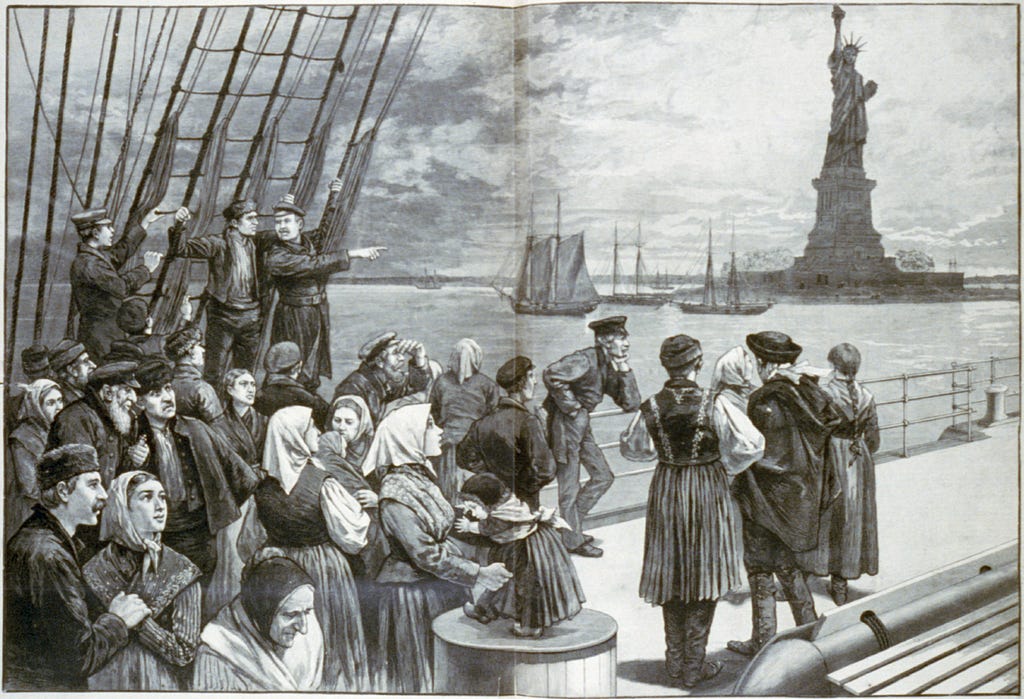
In the previous video, I showed you how Max Warburg of Hamburg filtered Jewish refugees through private border stations onto transatlantic steamships. Geheimes Staatsarchiv Preußischer Kulturbesitz, Ministerium des Innern, Rep. 77, Abt. XIII, Nr. 20, Vols. 16–17, Überwachung der Auswanderung über die preußischen Grenzen When these refugees arrived in New York City, Max’s brothers, Paul and Felix Warburg, were waiting as senior partners at Kuhn, Loeb & Co. American Jewish Archives, Jacob H. Schiff Papers, Kuhn, Loeb & Co. partnership registers and correspondence To these men, every single refugee stepping off those ships was an economic unit.
On the 1st of July 1862, President Abraham Lincoln signed the Pacific Railway Act. Pacific Railway Act, 12 Stat. 489, enrolled act, National Archives, Record Group 11 This act granted 10 miles of public land for every 1 mile of railway track laid down. Not 10 miles for the whole project. 10 miles of free land for every one mile of railway track that you laid down. Pacific Railway Act, §§ 2–3, 12 Stat. 491–492 That means if you laid 2,000 miles of railway, you got 40,000 square miles of free real estate. That is an area larger than the entire state of Indiana handed to a private corporate board for zero dollars. And that’s before I mentioned the cash subsidies.
The government also handed out cash bonds paying anywhere between $16,000 and $50,000 per mile. And this is in 1864 money for the transcontinental line. Pacific Railway Act, § 5, 12 Stat. 492–493; amendment of 2 July 1864, 13 Stat. 356 The US Treasury issued over $53 million in direct state bonds, as in cash payouts to private oligarchs. U.S. Treasury, Annual Report of the Secretary of the Treasury on the State of the Finances for the Year 1898, Pacific Railroad accounts Put that into today’s money and the federal government handed out over a billion dollars in cash to its mates. Then in 1864, Congress authorized the railway bosses to issue another $53 million in private bonds. That brought the total amount handed out to oligarchs up over two billion. And that created over $100 million in tradable Wall Street paper debt backed by 40,000 square miles of Indigenous land. Union Pacific Railroad Company v. United States, 99 U.S. 402 (1878)
When you add up all the railway acts that passed between 1862 and 1871, Congress handed private rail cartels a total of 273,000 square miles of public territory. That’s larger than the entire state of Texas. U.S. House Committee on Public Lands, Taxation of Railroad Lands, H. Rep. 474, 43rd Congress, 1st Session (1874), reproducing the Commissioner of the General Land Office report And the state used military force to clear the land for these private owners. The state funded the construction, and Wall Street bankers kept the paper, the land, and the profits. U.S. House Committee on Banking and Currency, Money Trust Investigation (1913)
To clear this land, the US Army deployed troops, slaughtered over 30 million bison, burned Native villages, and forcibly drove Indigenous nations onto barren, military-guarded reservations. William T. Hornaday, Map Illustrating the Extermination of the American Bison (1889), digitised by the Library of Congress This is America’s genocide. It happened between 1860 and 1880. Wall Street bankers could not sell paper debt secured by land that Indigenous nations physically controlled. The state used military violence to extinguish Native occupancy and create a legal patent that private corporations could monetize. National Archives, Bureau of Land Management records, Record Group 49
Kuhn, Loeb & Co. were the syndicate managers for the railroad land grants. U.S. House Committee on Banking and Currency, Money Trust Investigation, Exhibit 134-B (1913) They set up marketing offices across Europe and the US Atlantic ports. Library of Congress, Land Grants, Railroad Maps, 1828–1900 Jacob Schiff was a senior partner at Kuhn, Loeb & Co. American Jewish Archives, Jacob H. Schiff Papers When the panic of 1893 mysteriously bankrupted all major American rail lines, Jacob Schiff and his client Edward Harriman formed a syndicate and paid $58.4 million in cash to settle the federal government’s claims and buy the Union Pacific out of receivership. U.S. Treasury, Annual Report of the Secretary of the Treasury on the State of the Finances for the Year 1898, Union Pacific settlement accounts
Kuhn, Loeb & Co. then reorganized that company into the Union Pacific Railroad Company and they underwrote $100 million in new first mortgage bonds and $75 million in preferred stock. Union Pacific Railroad Company annual-report figures reproduced in the Commercial and Financial Chronicle, 28 December 1901 Those bonds were secured against the actual physical railways, like the value of the steel in the ground. Meaning if the bank ever defaulted on these bonds, you’d have to pull up the physical railways. Union Pacific Railroad Company v. United States, 99 U.S. 402 (1878)
This business model depended on converting land into continuous cash flow. Without a lot of settlers buying little plots of land in the Midwest and paying freight tariffs, then the railroad would not be able to service the interest on its Wall Street bonds. U.S. House Committee on Public Lands, Taxation of Railroad Lands, H. Rep. 474 (1874) It is the railroads that established these marketing agencies in Europe. Library of Congress, Land Grants, Railroad Maps, 1828–1900 They were offering mortgages. All of that free land that the railroads got from the federal government, that the federal government stole from the Indigenous nations, was divided into thousands of tiny little plots. And these desperate refugees were then offered 10- and 15-year mortgages on those plots—on that land they had gotten for free. Burlington & Missouri River Railroad land-purchase application, 9 June 1874, ten-year credit terms, Railroads and the Making of Modern America archive
Then once settled, farmers were geographically locked into using the single rail line servicing their area, and freight rates on those railways were set to generate the operational revenue necessary to cover the annual interest on Kuhn, Loeb’s bonds. U.S. House Committee on Banking and Currency, Money Trust Investigation (1913) It wasn’t just Jewish refugees that were targeted with mortgages. The railways had agents across Germany and Eastern Europe, but also Scandinavia, Ireland. Library of Congress, Land Grants, Railroad Maps, 1828–1900
But Kuhn, Loeb didn’t just fund the railways. They underwrote the entire industrial supply chain. U.S. House Committee on Banking and Currency, Money Trust Investigation, Exhibit 134-B (1913) If an American worked at a factory, turned on a light, or even bought meat at a butcher, a tiny fraction of that money was going back to Kuhn, Loeb.
Kuhn, Loeb & Company didn’t help build America. They placed their private financial tollbooth on every acre of land, every mile of track, and every ship that arrived in the docks. U.S. House Committee on Banking and Currency, Money Trust Investigation: Report on the Concentration of Control of Money and Credit (1913) And this family’s history, the Warburg family, their history goes quite far back. So we’ll have to look at that in the next part.
In 1513, the Venetian Senate granted a formal charter, a condotta, to a merchant named Anselmo del Banco. Marino Sanuto, I diarii di Marino Sanuto, 1496–1533, transcribed from the Venetian autograph manuscripts His Hebrew name was Asher Levi Meshullam. His family ran loan counters across Venice and Padua. Archivio di Stato di Venezia, Senato, Deliberazioni, Registri In medieval Italian, the word for a merchant’s wooden bench was a banco, and that trade descriptor became the family’s surname, del Banco, literally “of the bank.” Archivio di Stato di Venezia records reproduced in Preludio al Ghetto di Venezia
When Venice established the world’s first formal ghetto, Anselmo del Banco served as the chief negotiator between the Jewish communities and the Venetian state. Archivio di Stato di Venezia records reproduced in Preludio al Ghetto di Venezia He was also deeply involved with the Jewish community in Jerusalem. He frequently sent money back and forth on behalf of the Jewish community in Venice and helped those who sailed there from Venice. National Library of Israel, Central Archives for the History of the Jewish People, correspondence received from Jewish community councils in Eretz Israel
On the 14th of July 1555, Pope Paul IV declared a papal war on Jewish banking. He issued the papal bull Cum Nimis Absurdum. This bull revoked property rights, forced Jews across the Papal States into walled ghettos, banned Jewish physicians from treating Christians, and imposed severe caps on commercial loan interest rates. Paul IV, Cum nimis absurdum, reproduced in Bullarum diplomatum et privilegiorum sanctorum Romanorum pontificum The Jewish community remember this as living under the “evil Pope.” I understand imposing caps on commercial loan interest rates; making money off loan interest is banned in the Torah. Deuteronomy 23:20–21 Usury is also not a line of business that was accessible to the majority of European Jews. It was del Banco and his brothers that was upsetting the Pope. Why this Pope is called the “evil Pope” is because the rest of this papal bull is just racist. Paul IV, Cum nimis absurdum
A specific Jewish banker was causing chaos with commercial loans. His community didn’t know what he was doing. He had their trust. When Venice pushed them all into a ghetto, he stood up and spoke for them. Archivio di Stato di Venezia records reproduced in Preludio al Ghetto di Venezia In theory, actually, no, he didn’t. He fled to Germany. As raids intensified and Italian Jews were persecuted, del Banco’s family fled into the Habsburg Empire. They shut down their remaining loan banks in Padua and Venice. And first they moved to Bologna as a temporary staging point to consolidate liquid capital. Prince-Bishopric of Paderborn and Westphalian municipal records discussed in Rambam Maimonides Medical Journal, The Warburg Family
Consolidating liquid capital means selling off any physical real estate, calling in all of their debts, and moving reserves from their satellite banks across Italy into one secure vault. Anselmo’s direct descendant is recorded in Italian records as Simon del Banco. He led the core branch of the family across the Alps into the Holy Roman Empire. He then established a residency in Kassel, the capital of the Landgraviate of Hesse. Hessisches Staatsarchiv Marburg, sixteenth-century charter and municipal collections Here the family were given a protective residency charter, Schutzbrief in German, and this was issued by Philipp I of Hesse. And from this point on in local tax records, he is known as Simon von Kassel. Hessisches Staatsarchiv Marburg, Urkunden and Kassel municipal records
Following Simon’s death, his two sons relocated approximately 30 miles north to a trading center in the Prince-Bishopric of Paderborn. This is where the family formally adopted the town’s name as their surname. Stadtarchiv Warburg, municipal, tax and family-history records That is a name certain clock apps don’t like.
Comments
Nothing yet. Say the first thing.
Sign in to join the conversation.