
Ottawa, April 2024. A closed session at the United Nations plastics treaty negotiations, INC-4.
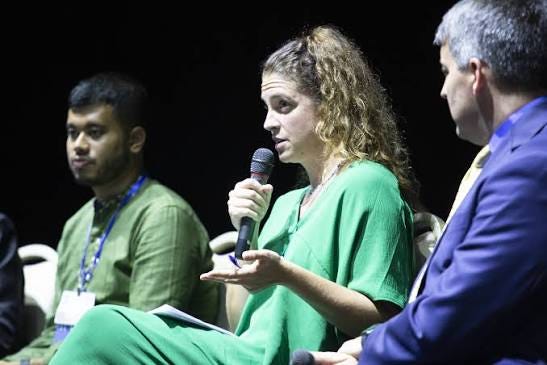
Bethanie Carney Almroth, ecotoxicologist at Gothenburg University, is presenting her research on the health effects of plastic chemicals to delegates. A man working for a US plastic packaging company interrupts. He shouts across the room that she is fear-mongering and citing misinformation. At a separate event, employees of a US chemicals company form a ring around her and tell her her research misrepresents reality.
She files a formal complaint with the UN.
That same session: 196 fossil fuel and chemical industry lobbyists are registered attendees. More than the scientists. More than the national delegations of most countries. (Center for International Environmental Law)
The WHO reports that the industry is citing at those negotiations — the ones that conclude microplastics in drinking water “don’t appear to pose a health risk at current levels” — were co-authored by Todd Gouin, a former Unilever employee, and Bart Koelmans, whose department at Wageningen University received funding from the European Chemical Industry Council (Cefic) and Plastics Europe. Wageningen also hosts a Unilever research centre. Dow Chemicals cited those reports in public presentations. The International Council of Chemical Associations included them in UN submissions. (SourceMaterial, ibid.)
In February 2025, Matthew Campen at the University of New Mexico published a study in Nature Medicine. His team examined brain tissue from human cadavers. Every sample contained plastic. The median concentration in brains from 2024 deaths was approximately 4,917 micrograms per gram of tissue — just under 0.5% of the brain, by weight. That figure is roughly 50% higher than in samples from 2016. In people who died with dementia, plastic concentrations were three to five times higher still. (Campen et al)
The FDA’s response, as of that date: “current scientific evidence does not demonstrate that levels of microplastics or nanoplastics detected in foods pose a risk to human health.” (The New Lede, February 2025)
I’m not explaining why or how the lobbying happens. That part is obvious or explained here.
The question today is what intellectual infrastructure makes it possible to put plastic in every human brain on the planet and classify the damage as a chemistry problem rather than a life destroying harm problem.
The answer starts in 1827.
Correcting The Original Definitions
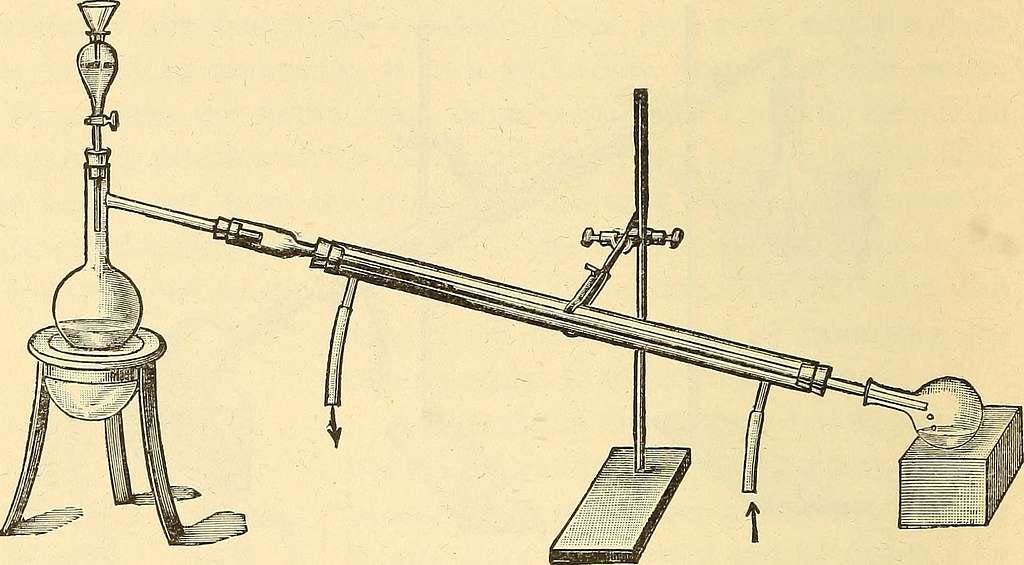
What “organic chemistry” meant when the phrase was invented
When organic chemistry first formalised into a field of study in 1806, Jöns Jakob Berzelius coined the term “organic chemistry”.
By 1827 he had defined it formally, in the Lehrbuch der Chemie, in German:
“die organische Chemie als die Chemie der Pflanzen- und Tiersubstanzen, oder der Stoffe, die unter dem Einfluß der Lebenskraft gebildet werden”
Plain English: organic chemistry is the chemistry of plant and animal substances — or of substances formed under the influence of the life force. (Schmidt, Ausführliches Lehrbuch der pharmazeutischen Chemie)
Lebenskraft — life force — is in the founding definition. Not as metaphor. As the thing that explains what organic substances are.
In 1842, fourteen years after Wöhler’s urea synthesis (more on that shortly), Justus Liebig — the most prominent organic chemist in Europe — published Die organische Chemie in ihrer Anwendung auf Physiologie und Pathologie. His own words:
“Diese Kraft heißt Lebenskraft” — This force is called the life force.
And:
“das Mineral wird Theil eines Trägers der Lebenskraft” — the mineral becomes part of a bearer of the life force.
In 1848, Leopold Gmelin, in his Handbuch der Chemie:
“The bodies of the organic kingdom are distinguished, in their most complete state, from those of the inorganic kingdom: 1. By their inherent vital force.”
In 1850, William Benjamin Carpenter published in the Philosophical Transactions of the Royal Society of London:
“The phenomena of each living body proceed from a vital agency, or anima, peculiar to each organized structure, and having nothing in common with chemical or mechanical principles.”
That is 1850. Twenty-two years after the experiment that is now said to have killed vitalism in 1828. The Royal Society is still publishing papers saying vital agency is more correct than mechanist accounts. Berzelius — the man supposedly refuted by Wöhler — continued publishing his annual chemistry reports until his death in 1848, holding vitalist positions throughout.
Vitalism vs mechanism — quick context
Vitalism says: a living body has a “something” that a stone does not. Call it life force, Lebenskraft, soul, organising principle. Whatever the name, the claim is that you cannot fully explain a living thing just by talking about matter and forces.
Mechanism says: a living body is a very complicated machine. Given enough time, everything it does — healing, thinking, feeling — can be explained using the same physics and chemistry that apply to non‑living matter. No extra force. No special principle.
So when Carpenter writes in 1850 about “vital agency,” he is saying: treat a body as something that is actively trying to stay alive, not just as parts following laws. When Berthelot writes in 1860 that there is “one chemistry” for both living and non‑living, he is saying: treat a body as just another lump of matter.
The joke
On 22 February 1828, Friedrich Wöhler wrote to Berzelius:
“I cannot, so to say, hold my chemical water and must tell you that I can make urea without the help of a kidney or even an animal, neither man nor dog. Ammonium cyanate is urea.”
(Yale Chem 125 archive) also Wöhler–Berzelius correspondence, ed. Wallach, Leipzig 1901, archive.org)
Berzelius wrote back on 7 March 1828:
“When one has begun his immortality with urine, there is every reason to end the trip to paradise in the same way… Aluminium and artificial urea, certainly two very different matters, following one another so closely, will, my Lord, be braided as jewels into your crown of laurels, and should the quantity of the artificial not suffice, one could easily make up the difference with a little from the chamber pot.”
(ibid)
The letter contains no mention of vitalism. No claim of refutation. No theoretical framing. It is a joke about urine.
The man supposedly refuted wrote back a joke about urine. He continued publishing vitalist chemistry reports for another twenty years.
Peter J. Ramberg’s peer-reviewed study, “The Death of Vitalism and the Birth of Organic Chemistry: Wöhler’s Urea Synthesis and the Disciplinary Identity of Organic Chemistry,” documents that the attribution of vitalism’s death to Wöhler is a textbook construction assembled decades after his death, not a historical event. (Ramberg)
The Two Men Who Actually Did It
Berthelot, 1860
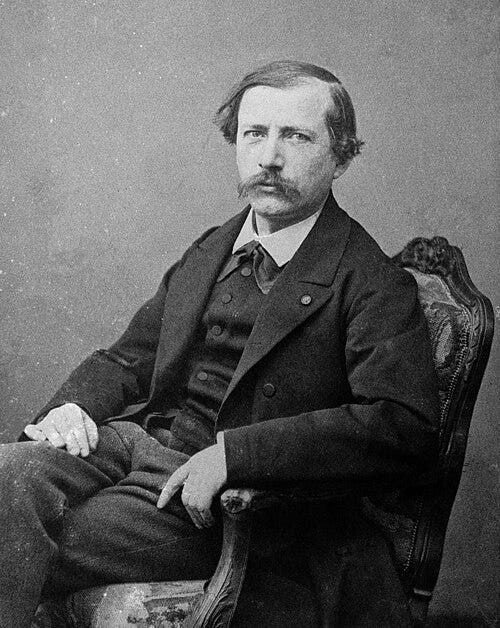
Marcellin Berthelot published Chimie Organique Fondée sur la Synthèse in two volumes in Paris in 1860. (Gallica)
His opening statement: “Bannir la vie de toutes les explications relatives à la chimie organique, tel est le but de nos études.”
Plain English: Banish life from all explanations relating to organic chemistry. That is the aim of our studies.
He continued: “The claim of vitalists that vegetable and animal substances were essentially different from those made in the laboratory was no longer tenable. There were not two chemistries but one, and chemical reactions in both the inorganic and organic realms depended ultimately on purely mechanical factors.” (Encyclopedia.com biography of Berthelot)
He also stated: “La chimie crée son objet” — Chemistry creates its object. (Jackson). So: If organic chemistry creates its own object — if “organic” means whatever the apparatus can make — then there is no external standard, no life standard, against which the work can be measured.
Berthelot also opposed Pasteur directly.
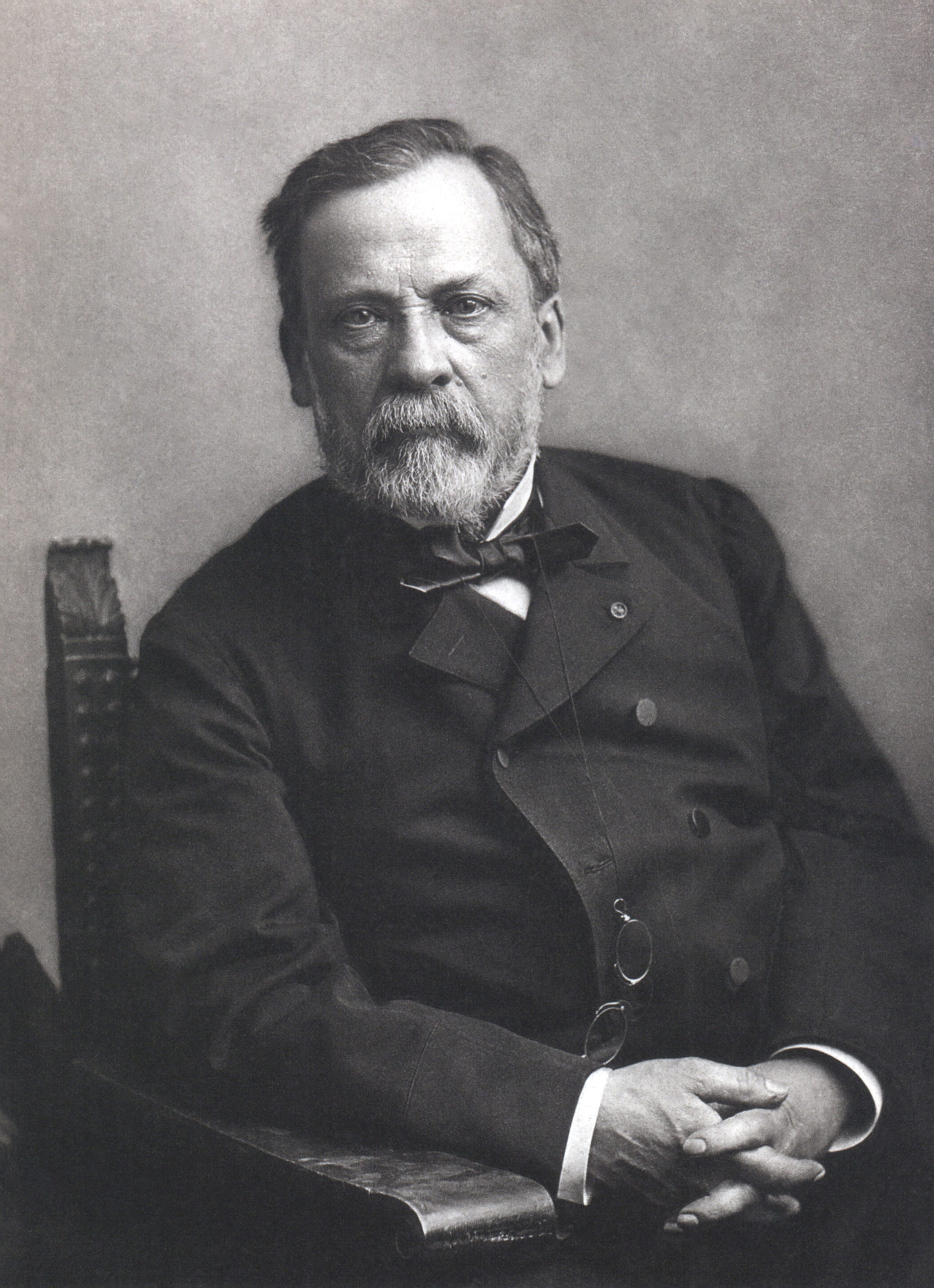
Louis Pasteur held a vitalist interpretation of fermentation — that fermentation requires living organisms, not just chemical catalysts. Berthelot preferred “a theory of fermentation fully analogous to that of inorganic catalysts.” (CTS journal). Pasteur was one of the most senior scientific figures in France.
Pasteur publicly nailed bacteria and yeast as the agents of fermentation in August 1857, in his lecture on lactic fermentation to the Société des Sciences de Lille. That paper showed that a specific living organism — what he called “lactic yeast” — causes lactic acid fermentation. Modern microbiology dates the birth of the field from that work.
He then extended the same logic to alcoholic fermentation. In 1860, Pasteur’s major paper on alcoholic fermentation demonstrated that beer and wine are made by living yeast cells transforming sugar into ethanol and carbon dioxide. The later text Physiological Theory of Fermentation (1879) is him systematising a position that had already been experimentally proven for two decades.
Pasteur proved the science. Yeast and bacteria ferment. That result was accepted. It went into microbiology, into germ theory, into medicine. Pasteur won in the laboratory.
Berthelot won in the dictionary.
His definition — “organic chemistry means carbon bonds, not life” — became the foundation of what chemistry students are taught, what industry is licensed to do, and what regulation is built to assess. That definition never depended on the fermentation debate. It was a separate move, operating at a different level. Berthelot wasn’t saying “Pasteur is wrong about yeast.” He was saying “the word life should not appear in chemistry at all.” Those are two different claims. Pasteur refuted the first. Nobody stopped the second.
We have known since 1857 that living things are categorically different from non-living things in ways that matter — that a body is not just a bag of chemicals, that living organisms do things machines cannot, that fermentation requires life. Germ theory is built on that. Modern medicine is built on that. Microbiology is built on that.
And we walk out of the microbiology lecture where life is a special category, microbes do things chemicals cannot, living systems respond and adapt and resist and into an organic chemistry lecture where ‘organic chemistry’ means carbon bonds, the living world is a substrate, a compound is a compound.
The wall between those two rooms is the load-bearing wall of a 160-year industry.
And we teach both. Every year. Without telling students there was ever a debate, or that one side had a government minister and a factory, and the other side had a microscope and the data.
Where is life in chemistry, then? What do chemists think? How do they think life is happening?
Chemistry's current answer is: life is an emergent property.
How does it stay together if it only emerged? How does it keep going?
Chemistry does not know.
Reality Check:
A living body does not just sit there being chemistry. It actively fights dissolution. Right now, your cells are doing something that no non-living arrangement of matter does: they are rebuilding themselves faster than they are breaking down. The second law of thermodynamics says everything tends toward disorder — heat spreads, structures degrade, complexity collapses. A rock obeys that. A living body spends every second of its existence refusing it.
Erwin Schrödinger — physicist, not a vitalist — asked the same question in 1944 in a book literally called What Is Life? His answer was that organisms survive by feeding on “negative entropy.” They take in order from the environment — food, sunlight — and use it to keep themselves organised against the universe’s constant pressure to dissolve them. He concluded that life may require new physical laws to fully explain it. That was a physicist in 1944, and those new laws have not arrived.
Two biologists, Maturana and Varela, gave the phenomenon its proper name in 1972: autopoiesis. From the Greek for self-making. A living system, they said, is a system that continuously produces and maintains itself — its own components, its own boundary, its own organisation. The cell membrane is not just a container. It is produced by the cell, maintains the cell, and is replaced by the cell in a continuous loop of self-creation. The cell is not a bag of chemicals. It is a process that keeps making itself. Stop the process and you get a bag of chemicals.
That distinction — between the process and the substance — is the vitalist intuition, arrived at through rigorous biology, a hundred years after Berthelot declared the question closed.
Chemistry can describe the components. It cannot explain the persistence or resilience of life. That is still an open problem. And the industry built on the definition that said there was no open problem has been releasing compounds into living systems without any consideration for how it will impact life’s ability to sustain momentum over eons.
Fuck it, over the next two decades.
So…
Next question:
How was this institutionalised?
Berthelot’s institutional trajectory after the 1860 book:
1863–1864: Lectures at the Collège de France on the strength of the book
8 August 1865: Chair of organic chemistry created for him personally at the Collège de France
1871: Enters the French Senate
1881: Elected to a permanent senatorship
1884: Chairs a commission on the laicisation of primary education
11 December 1886: Minister of Public Instruction and Fine Arts
1895: Foreign Minister of France
(French Senate biographical archive).
The Loi Goblet of 30 October 1886 — enacted the same year Berthelot became Minister of Public Instruction, on a commission he had chaired — removed religious teachers from all French primary schools and replaced religious instruction with secular science curricula. Article 17: “In public schools of all kinds, teaching is entrusted exclusively to secular staff.” (French education ministry archive of the law).
The man who wrote “banish life from all explanations relating to organic chemistry” in 1860 became, twenty-six years later, the man who decided what French children were taught about the nature of life.
He taught them that life was meaningless and indistinguishable from a stick of carbon atoms.
Pasteur died in September 1895. Berthelot became Foreign Minister in November 1895.
Kekulé, 1861
August Kekulé published Lehrbuch der organischen Chemie oder der Chemie der Kohlenstoffverbindungen in 1861. (Archive.org)
The title: Organic Chemistry or the Chemistry of Carbon Compounds.
The “or” is the redefinition. Not “and.” “Or.” Organic chemistry is, by definition the same thing as the chemistry of carbon compounds.
Life = Carbon Rod

Kekulé’s textbook ran to four volumes, published through the 1860s, and was used across Germany, Britain, and France. It was the pedagogical infrastructure through which every chemist trained in the second half of the nineteenth century learned the definition of their subject. What Berthelot argued in 1860, Kekulé encoded in the classroom in 1861.
By the time the textbook reached its second volume, it included a substantial section on “Anilinfarben” — aniline dyes from coal tar — the chemistry of the industry that was already being built on the redefinition. (Kekulé, Lehrbuch, Vol. 2, pp. 668–687, archive.org) [PRIMARY]
he Factories
Three companies were founded in a single calendar year, three years after Berthelot’s book:
2 January 1863: Farbwerke Meister Lucius & Co., Höchst am Main. Five workers. Aniline dyes from coal tar. Later: Hoechst AG.
1 August 1863: Friedrich Bayer et comp., Barmen (now Wuppertal). Founded by Friedrich Bayer and Johann Friedrich Weskott. Coal-tar aniline dyes. Later: Bayer AG.
1863: Kalle & Co., Biebrich.
(Wollheim Memorial, Frankfurt)
6 April 1865: Badische Anilin- und Soda-Fabrik (BASF), founded by Friedrich Engelhorn, August Clemm, and Carl Clemm. Mannheim, later moved to Ludwigshafen. Aniline and fuchsine from coal tar. (BASF corporate chronology)
1870: Deutsche Bank founded by concession of King Wilhelm I. Founding capital: 5 million talers. “True founder” Ludwig Bamberger came from Banque de Paris et des Pays-Bas (later BNP Paribas). Stated purpose in the articles of association: “the promotion and easing of trade relations between Germany, the other European countries and overseas markets” — explicitly “to release Germany’s foreign trade from its dependence on English and French banks.” (Deutsche Bank Chronicle).
1873: Agfa, Berlin. 1873: Cassella & Co., Frankfurt-Fechenheim.
By 1877, Germany produced half the world’s dyestuff output. By 1900, six companies — BASF, Bayer, Hoechst, Agfa, Cassella, and Kalle — controlled the world synthetic dye market. (Wollheim Memorial, ibid.)
What those factories destroyed
This part is not in the chemistry textbooks.
Madder root. Alizarin — the red dye from madder root — was synthesised from coal-tar anthracene by Graebe, Liebermann, and Caro in 1868–1869, patented in 1869. Within ten years, the natural product was completely displaced. Madder root had been grown at scale for centuries in France (Vaucluse and Alsace), Turkey, Iran, and India. In 1881 alone, BASF made a profit of £1 million from synthetic alizarin. (Development of the Coal-tar Colour Industry)
Bengal indigo. BASF synthesised indigo commercially in July 1897 via the Heumann process (naphthalene from coal tar). Bengal indigo acreage fell from 1.5 million acres to one-third within ten years. Indian indigo export fell from £4 million to one-sixth. The Bihar peasantry that had grown indigo under British plantation coercion — the same peasantry whose resistance produced the 1859–1862 Blue Mutiny — was left with nothing. Gandhi’s Champaran mission of 1917–1918, one of the founding acts of Indian independence organising, was a direct response to the collapse. (Cambridge University Press: Prakash Kumar, Indigo Plantations and Science in Colonial India)
Cochineal. The carmine red extracted from the cochineal insect — grown in Mexico, Guatemala, and the Canary Islands — had been the second most valuable commodity exported from Spanish colonial America, after silver. Aniline red, synthesised by A. W. Hofmann in 1858, and the azo dyes from the 1880s, destroyed the market within a generation. (Cambridge Core: ‘Cochineal Production and Trade in New Spain’)
The German coal-tar dye industry did not just replace expensive dyes with cheaper ones. It also carefully destroyed it’s “competition”) AKA centuries-old agricultural economies across France, Turkey, Iran, India, Mexico, Guatemala, and the Canary Islands, and transferred the value to six factory towns in the Rhine valley.
The Cartelisation
1904: BASF, Bayer, and Agfa form the Dreibund cartel. Hoechst, Cassella, and Kalle form the Dreiverband.
August 1916: Both cartels merge, with Weiler-ter-Meer, into the Interessengemeinschaft der deutschen Teerfarbenfabriken — the Syndicate of German Coal-Tar Dye Manufacturers. Fifty-year contract. Wartime coordination of raw materials, production, and sales.
21 November 1925: Merger contract signed by BASF, Bayer, Hoechst, Agfa, Weiler-ter-Meer, Griesheim-Elektron.
2 December 1925: IG Farbenindustrie AG becomes effective. Equity capital: 641.6 million reichsmarks in common shares. Headquarters: Frankfurt am Main. Employees: approximately 80,000. By 1928: the fourth-largest corporation in the world, after General Motors, US Steel, and Standard Oil of New Jersey.
Equity percentages at founding: BASF 27.4%, Bayer 27.4%, Hoechst (including Cassella and Kalle) 27.4%, Agfa 9%, Griesheim-Elektron 6.9%, Weiler-ter-Meer 1.9%.
Named founders on record: Carl Bosch (BASF, first chairman of the managing board), Carl Duisberg (Bayer, first chairman of the supervisory board), Edmund ter Meer, Franz Oppenheim, Arthur von Weinberg.
American IG, April 1929
American IG Chemical Corporation, incorporated in Delaware, April 1929, as the US arm of IG Farben.
Board of directors:
Hermann Schmitz — number two at IG Farben — first president of American IG
Edsel Ford — president of Ford Motor Company
Walter C. Teagle — president of Standard Oil Company of New Jersey
Charles E. Mitchell — chairman of National City Bank of New York
Paul M. Warburg — chairman of Industrial Acceptance Bank; director of the Federal Reserve Bank of New York; brother of Max Warburg, who sat on IG Farben’s supervisory board in Hamburg
Standard Oil and IG Farben also entered a patent-sharing agreement via the Jasco company (Joint American Study Company), pooling patents on synthetic rubber, synthetic fuel, and related IG chemistry. (Science History Institute)
Nuremberg
Of the 24 IG Farben executives tried at Nuremberg in the subsequent proceedings, 13 were convicted. The maximum sentence handed down was eight years. Most served less. No one was convicted for the Zyklon B supply contract. (Harvard Law School)
30 January 1952: IG Farben broken up by Allied order into 11 companies. Three continued as majors: BASF, Bayer, and Hoechst.
By 1969, Hoechst had absorbed Cassella. By 1956, Bayer held Agfa at 100%. By 1970, the three majors had reabsorbed all nine successor companies.
1999: Hoechst merged with Rhône-Poulenc to form Aventis. 2004: Aventis merged with Sanofi-Synthélabo to form Sanofi.
2018: Bayer acquired Monsanto.
The coal-tar dye company founded in Barmen in 1863, which became part of IG Farben in 1925, which was broken up at Nuremberg in 1952, which was reassembled by 1970, now owns the company that controls the majority of the world’s patented agricultural seed stock.
The Suppression Continues
The American Chemistry Council established its Long-Range Research Initiative (LRI) in 1999, “to advance scientific understanding of the potential impacts of chemicals on human health and the environment.” (ACC, LRI programme page)
In practice: the industry that was built on the redefinition of “organic” now funds the science that maintains it.
The endpoint is Todd Gouin’s WHO drinking-water report and the lobbyists surrounding Bethanie Carney Almroth in Ottawa. The mechanism is the same as the one Berthelot used in 1860. Banish life from all explanations. Define the problem as chemistry. Fund the chemistry. Control the results.
The word for what living tissue is doing that plastic is not doing was removed from the scientific vocabulary between 1860 and 1861.
Berthelot wrote it out of organic chemistry in 1860.
Kekulé put the new definition in the textbook in 1861.
Three coal-tar dye factories opened in 1863.
In February 2025, Matthew Campen measured the result in the brains of the dead.
What this piece does not argue
It does not argue vitalism was correct. It argues vitalism was removed without being tested.

Arguing for vitalism is like saying your favourite pokemon is Charmander when the rest of the global scientific community is dualing Charizards. IFKYK.
Comments
Nothing yet. Say the first thing.
Sign in to join the conversation.