
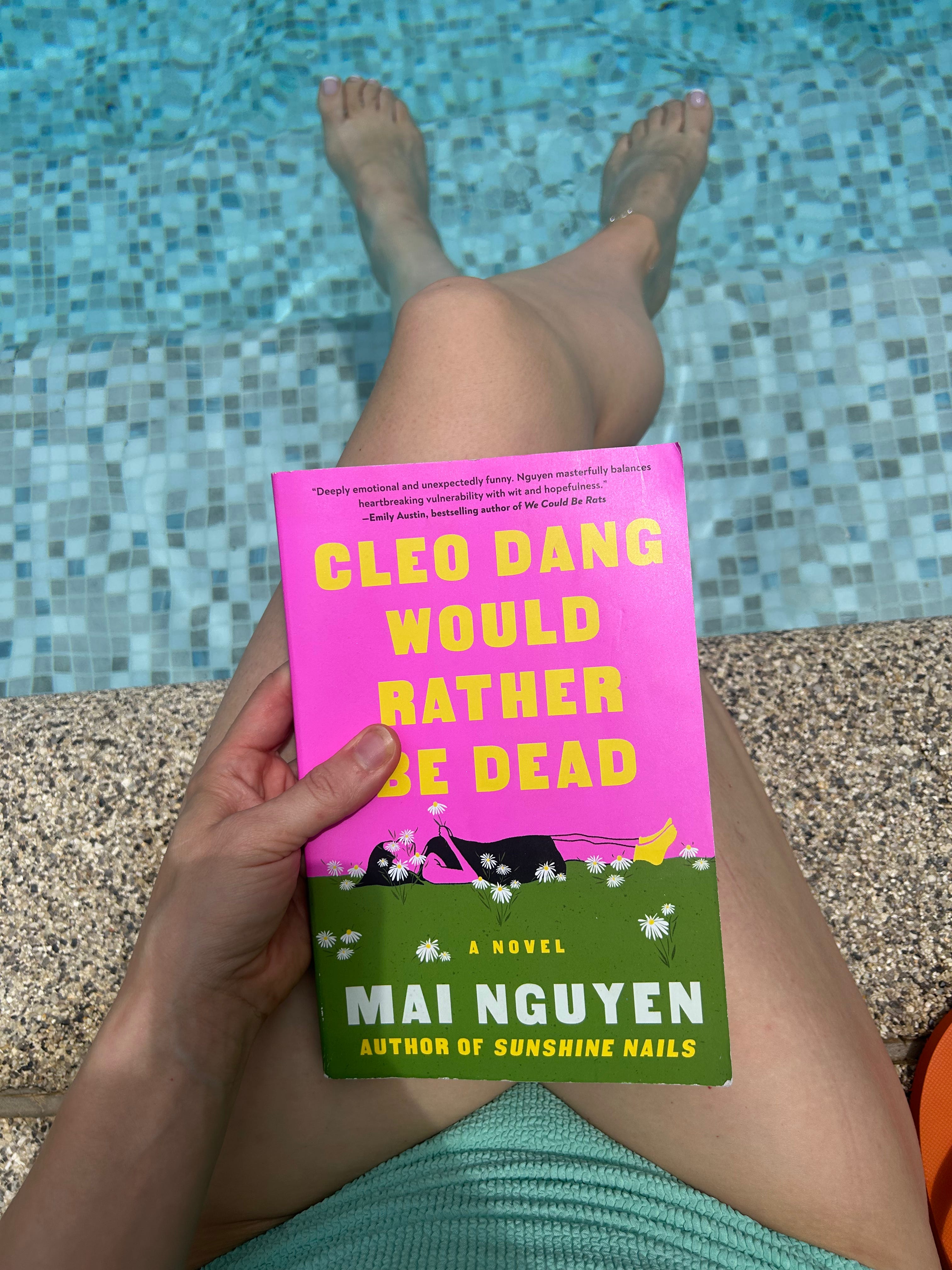
I’m not sure what led me to this Oprah article back in June, where I read author Mai Nguyen’s essay about her baby girl, Gemma, who died when she was 4 days old in 2022. All I know is that as soon as I read it, I knew I had to buy Cleo Dang Would Rather Be Dead, the novel about a woman - Cleo, an actuary - whose baby dies shortly after birth. Let me clarify: I had to read this other book about an actuary who loses her baby, also written by a mother who knows the profound pain of baby loss herself.
The knowledge that it existed made me so happy. Not happy that Mai has experienced the devastation of losing her precious baby girl. Not happy about someone else knowing the messy trauma of trying to put that story onto the page for other people to read. Not even happy because I felt seen (although I did). I was happy because I felt vindicated. Validated.
You see, this was a book that I wanted to read.
Me, the reader. Me, the baby-loss mother. Me, the book lover. The love-story lover. Me, the book buyer.
Not me, the author trying to convince publishers that people would want to read my novel.
It made me happy that a publisher other than mine had decided that a story so beautiful, and so like mine, was a story worth publishing. Worth telling. Because it is. Again and again and again.
I wish there were a hundred books like ours. Enough that everyone could read at least one. Enough that more people around the world might be brave enough to read, to learn, to understand this all-too-common experience that so many people shy away from, and which leaves those of us who have no choice but to know it feeling isolated, alone, stigmatised.
I knew, just as I had known when writing my own book, that there would be people who would read Mai’s novel and feel seen and held too.
From what I read in that article, Mai wasn’t going to shy away helping those people understand all of it. The dark humour. The grief. The loss. But also the love. The huge, overwhelming love.
I knew when I picked up the book that I’d know Cleo, the main character’s pain. But I think I’m a unique reader in that I knew I’d know Mai’s pain too. Not just the pain of losing a baby, but the pain of writing about a subject that society tells you nobody wants to read about.
I knew why she chose fiction. I knew why she made her main character an actuary. I knew intimately, even without meeting or talking to her, Mai’s desire to write a story to help others understand. I knew how hard it would have been to write every sentence, and yet how profoundly important it would have felt to do it anyway.
I knew that even though our circumstances were different, we were connected the moment our babies died. By the universe. By the profound grief of not having our babies with us. And then, by coincidence, by our careers. By our brains which gave us an ability to look pain, grief, and trauma deep in the eye and turn those complex feelings into beautiful, truthful stories of hope, love, connection, and gratitude.
Even though our experiences of baby loss are different. Even though Mai lives an ocean away from me in Canada, we are connected by the ocean of grief we had both been pushed into when our baby daughters died.
So I did what any perfectly normal person would do. I ordered her book, then I sent her a DM. I told her about Poppy and my novel. Then I wondered whether I had crossed the line from fellow writer into internet stalker.
“Hi, my baby died too and I wrote a novel because I couldn’t find one about this experience, and I’ve discovered you have done the same because your baby is inexplicably not with you either. Can we be friends?”
Not exactly a conventional conversation starter. Except, in the world of baby loss, it kind of is. And that very same day, she replied, with a long message which included this sentence.
She wrote: “I wish I’d known you sooner.”
I think we sort of did,.
The day after that, Cleo Dang Would Rather Be Dead arrived in my letterbox. When I started reading it, on the plane to Thailand no less (a place where, I’ve since found out Mai spent six months living!) it felt like turning the pages back on my own life but from the opposite place. As a spectator.
Our novels - just like our experiences of having our baby girls - aren’t the same. In Mai’s novel, Cleo’s daughter dies just after birth. Sofie’s son, Leo, is stillborn at 38 weeks.
Cleo is Vietnamese and Japanese Australian; Sofie is British. Their marriages are different. Their friendships are different. Their paths through grief are different. And yet, they are so much the same,
Over the past 12 years of being Poppy’s mum, of writing my book, and in the last six months of working at Petals, the baby-loss counselling charity, I have had the privilege of talking to so many baby-loss mothers. And I’ve learned that so many of the feelings, thoughts, experiences and conversations that seem unbearably specific to us in our grief and trauma are, in fact, shared. They echo with a profoundly loud ring of familiarity. The me too of baby loss:
The anger.
The disbelief.
The dark humour.
The raging against a world that carries on as if yours hadn’t ended.
The friends and family who want to accelerate you towards a place where your grief doesn’t make them uncomfortable.
The pregnant friends.
The awkward colleagues.
The desperate searching for a new life - a new skin that a shell of a human can wear, because the old one no longer fits. And then discovering, gradually, that you are sharing that shell with so many other women whose skin has pressed close to a baby they would never bring home, and so can never take it off.
It doesn’t surprise me that both Mai and I had both been compelled to write these books that feel so tracigcally, beautifully similar - these two love stories dedicated to the infinite love of a baby-loss mother, about two heroines and their complex paths through grief to a place of hope. We both discovered in our grief that this was a universal story that had rarely been told and sought to rectify it.
The fact that our approaches had seemingly been mirrored shows again how profoundly connected the baby loss community is. We, the one in four, who have experienced pregnancy or baby loss, know this gritty, heart-breakingly devastating, tragic, messy, beautiful, hopeful, love-filled story inside out. What we want is for the community to feel seen, but also for those around us who haven’t been on the same path to understand. Familiarise themselves with the complex, confusing emotions, to know the ‘why’ behind the WTF of our grief that seems to uncomfortably deconstruct people’s idea of what ‘getting over’ something should look like.
The difference is that we want everyone to understand this: our babies are not “something” that happened to us. They are our children. There is no “getting over” them. There is only learning to live through the grief of loving someone who died.
And we can only do that when we are supported by the people around us. And that support has to ripple out in concentric circles: from those closest to us – our partners, families and friends – to neighbours and acquaintances; to colleagues, managers and HR departments; to social media followers we have never met; to the people who decide hospital budgets, who understaff maternity units, who determine whether specialist bereavement counselling is considered essential; and to governments that choose what they value and what they fund.
We need everyone to understand baby loss, because understanding changes how bereaved parents are treated. It means we are supported through trauma and grief, rather than expected to get up, go back to work, and somehow return to a version of “normal” that no longer exists.
I haven’t seen a single book reviewer or blogger in the UK talk about this book (and i follow many). Just as I’m sure Cleo had never seen or read about mine over in Canada. Sadly, books like ours don’t travel as far and wide as they should.
That this book exists too is a joy to me - and I want the world to read it. And I feel so lucky to have stumbled (or been led to) that article that lead me to Mai’s tragic - and tragically beautiful and hopeful love story that teaches us so much about what being human means.
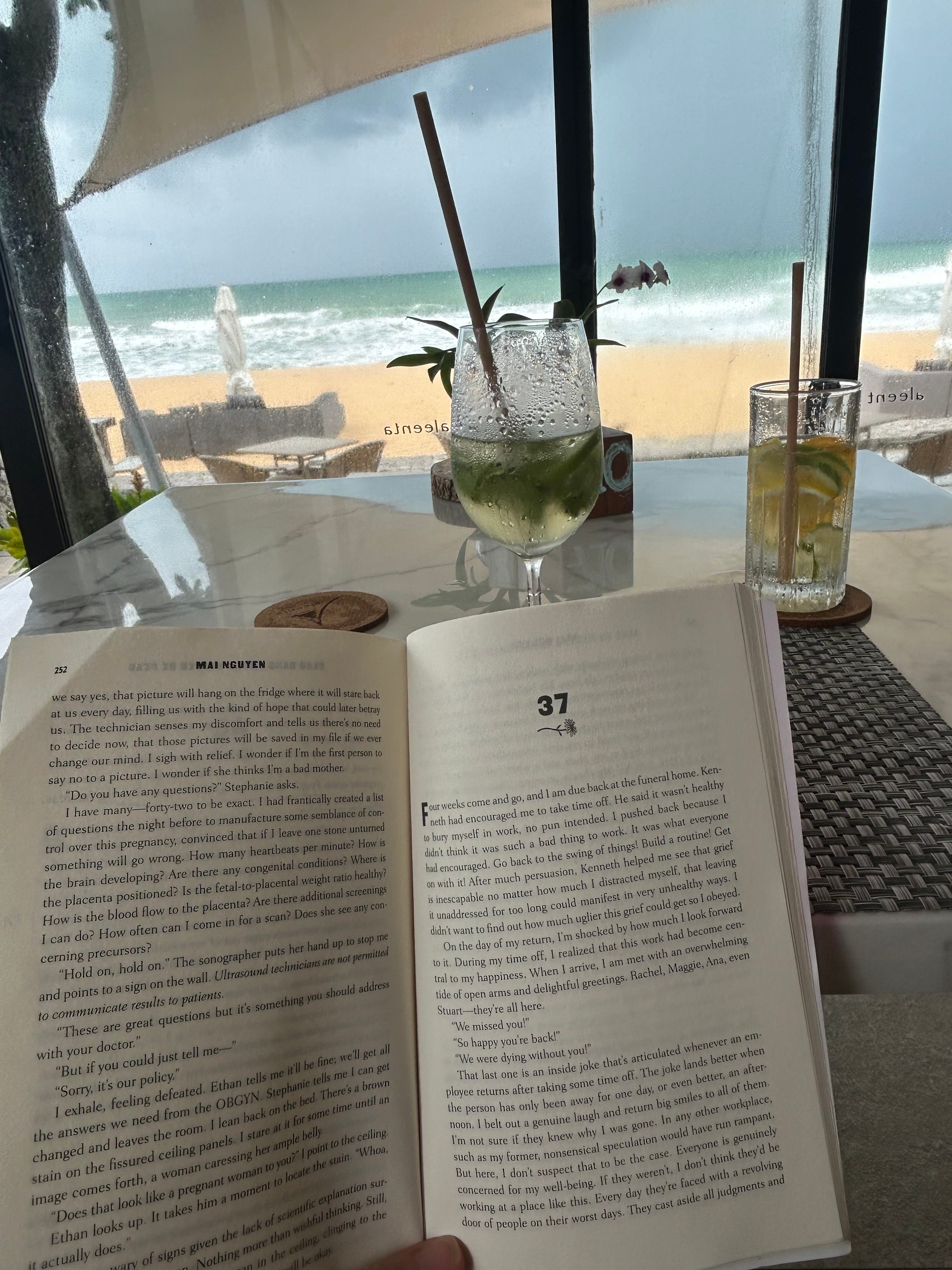
Cleo Dang Would Rather Be Dead
Cleo Dang is a force of nature: brilliant, effective, reliable, resourceful, in control…. before her baby dies of a heart condition. Afterwards, Cleo is funny, dry, razor-sharp, furious, tender, impossible to look away from. She is forced to learn, painfully and reluctantly, how to live without Daisy. Coincidentally, Cleo’s best friend, Paloma, goes into labour on the same day and brings her baby boy home, becoming a living reminder of the life Cleo was supposed to have. When Cleo realises over a coffee with a colleague (quite literally - no spoilers) that she can’t go back to work as a senior actuarial analyst at the leading life insurance company she works at, she takes a job at a funeral home. It’s there that she learns what it is to live again.
The novel is devastating, of course. Mai captures the profundity - and confusion - of life after loss, how it both undoes and remakes a person. She also expertly presents the dark humour of grief that only exists when life has become so absurdly, unbearably heartbreakingly real that comedy and tragedy suddenly coexist.
What I loved most was the fierce messiness and honesty of Cleo’s grief. This is not grief as a neat arc or a lesson in resilience. It is grief in all its contradictory forms: ugly, irrational, obsessive, loving, isolating, funny, and full of longing. Cleo, whilst funny and clever and witty, is not always likeable, and that is precisely why she feels so real. She is allowed to be angry, selfish, generous, broken, sometimes all within the same page.
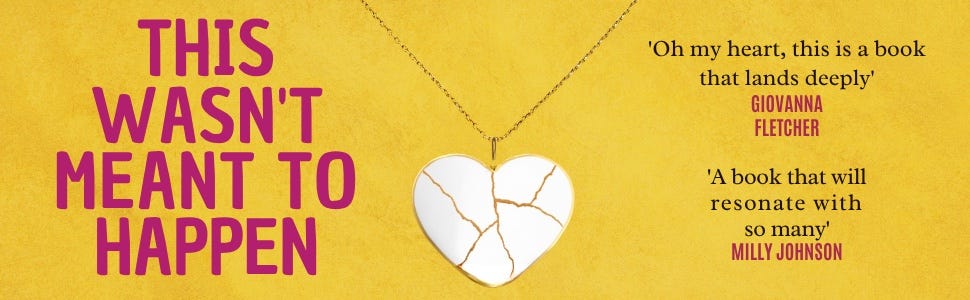
Reading this book felt like turning the pages back on my own experience of having Poppy, and on my own experience of writing This Wasn’t Meant to Happen. I kept encountering feelings I had lived so deeply, thoughts I had carried for years. Every page was familiar to me, and every page was different too.
Cleo also nails the physicality of postpartum grief in a way I have rarely seen on the page. The postpartum body that has lost its baby. The milk that comes in anyway. The loneliness that becomes almost tangible. The surreal administrative reality of death. The unbearable proximity of other people’s babies. These are details that only someone who has lived this can write with such precision.
Again and again, I found echoes in the emotional landscape we had both written. Not because our stories were the same, but because grief had taught us both the same impossible language.
What makes the novel extraordinary, though, is that it is not only about loss. It is about what comes after. It is about friendship, work, identity, community, and the strange, unexpected ways grief can lead us towards other people. Cleo finds a different future from the one she imagined. Not a better one. Not a replacement. Just a life that is still capable of containing joy.
This is one of the most honest novels about baby loss I have ever read. Not because it tells my story, but because it tells Cleo’s so completely that it made me feel less alone in my own.
After I finished it, I kept thinking about the message Mai had sent me.
“I wish I’d known you sooner.”
I think we sort of did.
That is what this book gave me: the feeling that somewhere, on the other side of an ocean of grief, another mother had written her way through the same darkness, and somehow our stories had found each other.
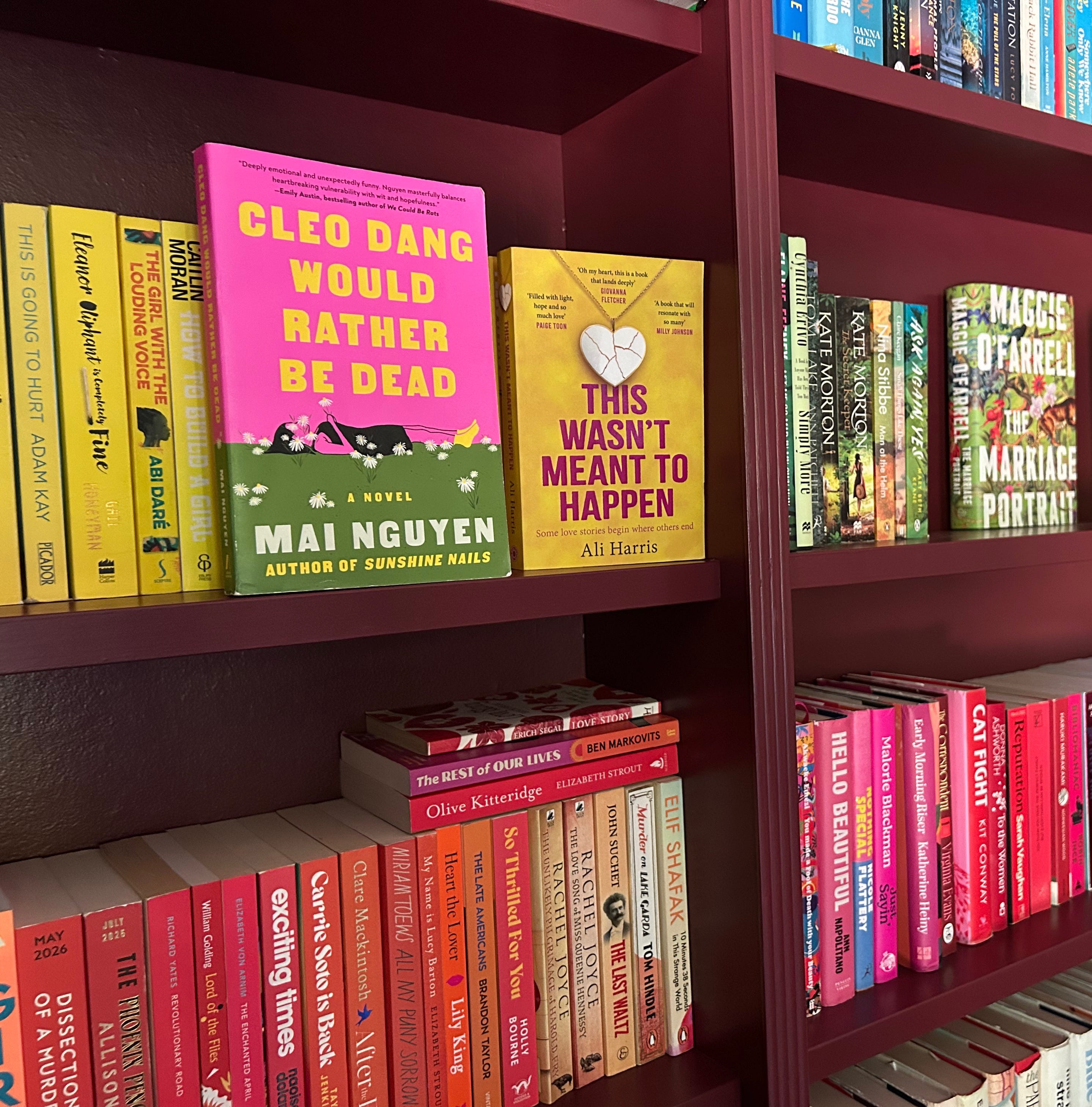
It did for me what I hope my book has done for others: it has reminded me that while this kind of grief is intensely lonely, you are never alone. There are so many parents out there who know this pain too.
“I no longer feel like I am a problem to be fixed. I am part of something bigger… We may not know each other. We may walk among each other, unaware. But we are tethered by our grief.” - Cleo Dang Would Rather be Dead
Thanks to Mai - and to Cleo - that is exactly how I felt reading this book. Tethered. Like I’d found someone I had never met, who somehow knew the landscape of my heart said, I know. I’ve been here too.
Thank you, Mai.
Comments
Nothing yet. Say the first thing.
Sign in to join the conversation.