
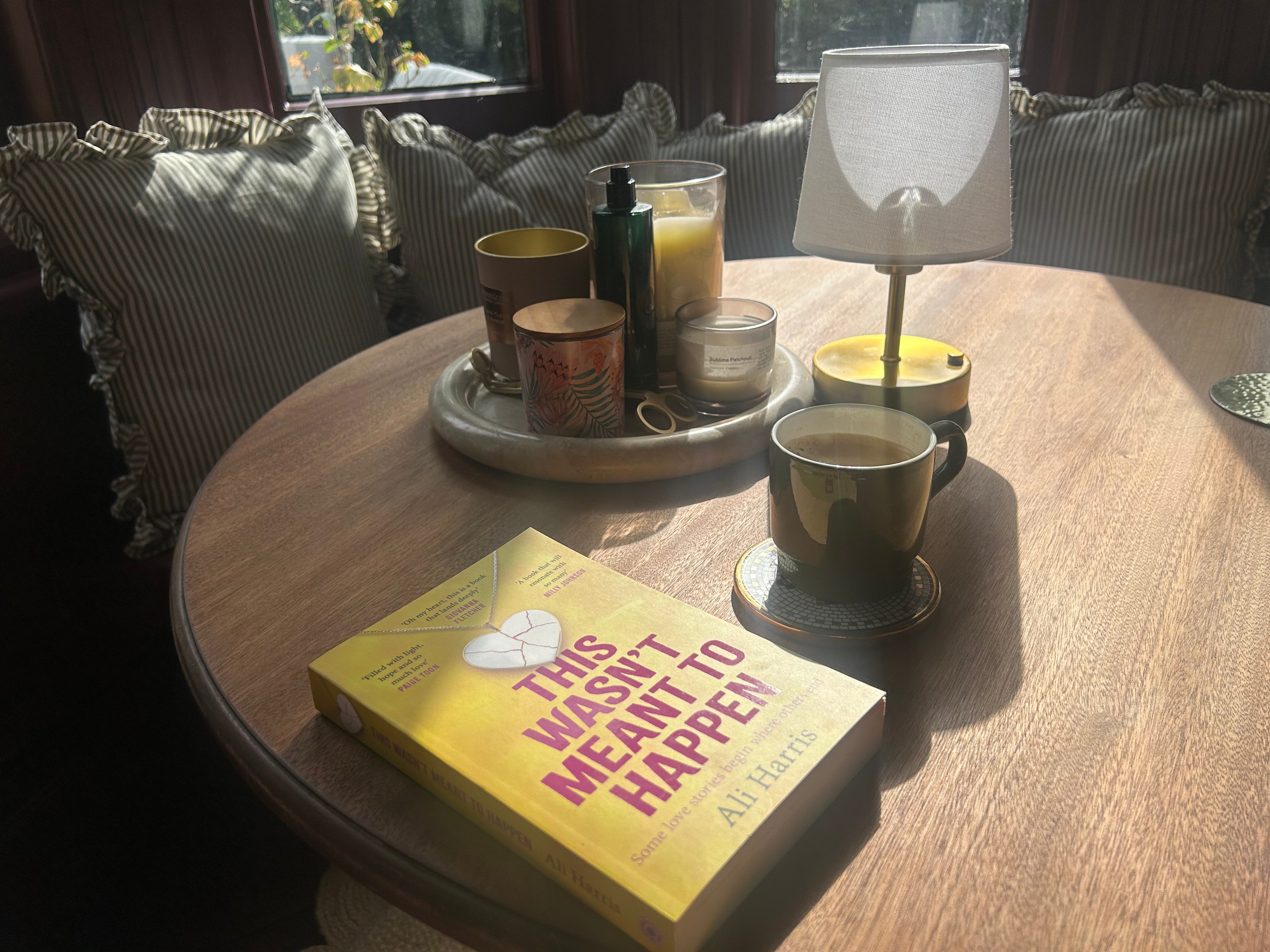
Hello! It’s been a while, I know! But life has been full these past six months, in the most beautiful (and difficult) of ways. I’ve taken on an incredible new, all-consuming role as Marketing & Comms Manager at Petals, the baby loss counselling charity that supported me after Poppy died, and which I later became an ambassador for after my book was published. In so many ways, it feels like a complete full circle. Three months after my book came out, Petals advertised the role, and I immediately knew I had to apply.
I started there back in March, working four days a week, and it has meant that my attention has been almost entirely focused on Petals: on work I believe in, work I’m proud of, work that genuinely matters. As a result, my own writing, which has been such a central part of my life for so long, has inevitably taken a back seat. That includes talking about This Wasn’t Meant to Happen, the novel I wrote about baby loss and remain incredibly proud of.
This comes alongside an additional part of my life that has created less time for writing - caring for my elderly father, who moved in with us late last year. I’ve written about that experience, and the 7 lessons I’ve learned, here for Redonline.uk.
But switching my focus to other work and responsibilities doesn’t mean I’ve forgotten about my book. Or why I wrote it. Or how important it still feels to me that people read it. That my hopes for it have always been that it might have a life long after the fanfare of book launch, press, podcasts had passed, but that it might also fulfil my publishers’ promise of being a ‘slow burn’ bestseller.
It hasn’t been a bestseller. Or even a medium seller. You could say ‘That wasn’t meant to happen’ (ha ha), but I always suspected this would be the case - not least because of my difficult publishing journey, which you can read about here.
Of course I hoped it might make a big impact and start big conversations. It certainly allowed me to have really beautiful ones that will stay with me a long time. Like with Giovanna Fletcher, on her Happy Mum podcast and the one I’ve been privileged to have with readers, either in person or online. And I know I’m luckier than many authors to have got a publishing deal at all (especially as it was touch and go there for a while!)
But I’m also aware that many of my readers may think that just because I had access to certain platforms to get press coverage, as I did because of my background as a journalist, it was ‘A Success’ in the traditional sense of the world. But in comparison to many authors, and probably in the eyes of the publishing industry, it hasn’t been.
It didn’t make it into supermarkets; only a handful of bookshops stocked it (mostly the ones I visited for my events - so they had to!) It didn’t get translated into other languages and sell around the world, like my other novels did (although the fact that it’s available in America, Canada and Australia still thrills me). Elizabeth Day didn’t read it and rave about it, despite me giving it my best shot when I met her at my publisher’s summer party and asked her if she’d consider reading it. How to Fail, indeed. (I maintain it was worth a try!)
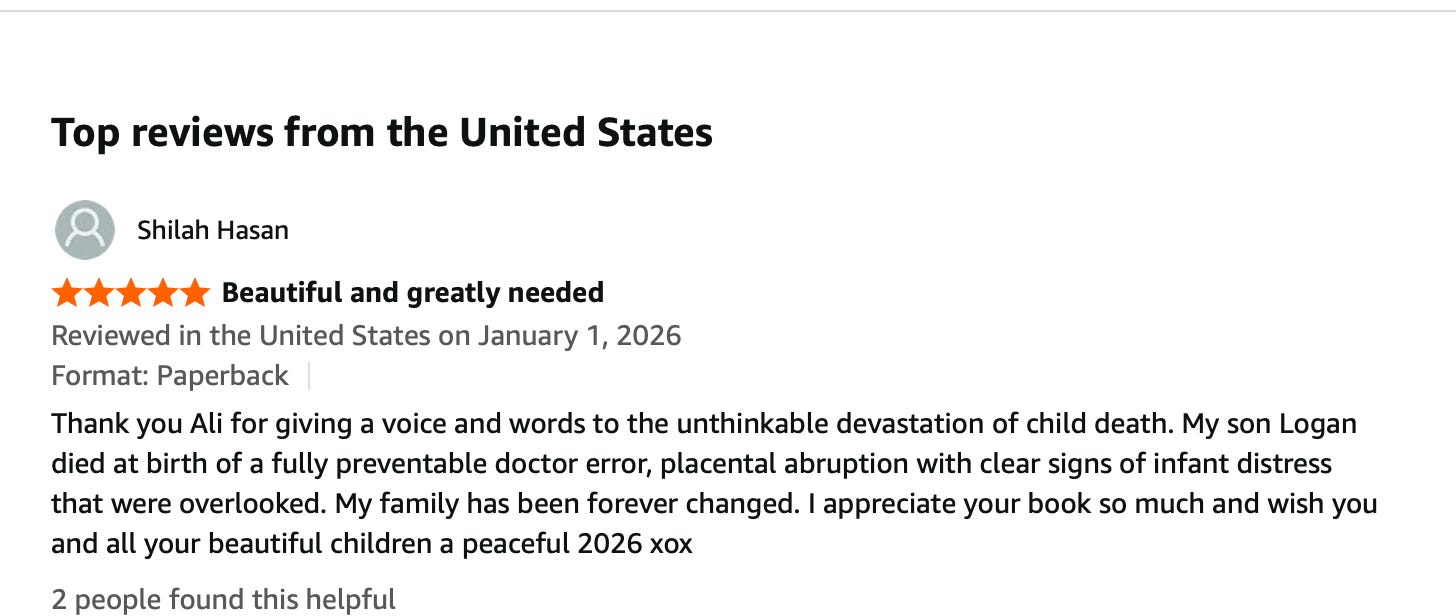
But I’ve come to believe that what my book did - is doing - is what I always intended for it to do. It now exists to provide comfort for bereaved parents in the baby loss community who needed to feel seen and understood. And perhaps it has also reached a few more readers who haven’t experienced this devastating loss personally, but now understand that journey a little better.
It has also given me the chance to have so many small, intimate conversations either at events or online that feel mighty big to me and, I think (I hope), to the person or small group of people I have had them with. I have had the privilege of hearing about so many much-loved babies; to meet women who are still processing the loss of their baby decades after it happened. And to have people reach out and say, ‘I know this journey too, and I needed to read this right now.’
And whilst that has always mattered more to me than any bestseller list, what I don’t want is for those conversations to only remain private, between the few, not the masses. I want us all to be having these conversations with each other. Trust me, it is far less depressing than talking about, say, the Tates, or Trump, the economy or the European wildfires. You see, what I have learned in the 12 years since my baby died is that conversations about grief are actually conversations about love.
Love, not hate. They are distressing, but not disturbing. And right now, they are more important than ever. Because they are the foundation of what it means to be human in a world that is increasingly driven by AI. These conversations are not meant for an echo chamber: they are for every one of us to have - whether we have experienced loss and grief or not. Because even if we haven’t, we can still be part of the conversation by choosing to be the ones to listen. After all, isn’t a conversation as much about listening as it is about talking?
Why culture doesn’t favour conversations like this
Back in spring, I watched the BBC series Babies about a couple trying to navigate recurrent miscarriage, and it really brought my intention for the book back into sharp focus.
The six-part BBC drama beautifully portrayed the deeply difficult and traumatic journey the baby loss community knows too well. Not just the losses themselves, but the cocooning of a couple trying to recover from a great loss. The silences. The insensitive comments. The dark humour. The washing up and the waiting. The tea and medicalisation of trauma. (Because Brits always make tea in difficult moments. So many cups of tea). The differences in how a couple deals with grief. The way life is just meant to… go on. Babies should have been the TV programme those people were talking about - at work, in homes, at the dinner table, on the bus, in offices, in student houses. It should have been watercooler TV. And yet… it wasn’t.
I cannot fathom how little it was talked about, actually. After the first episode, I was waiting for a cultural earthquake: entire radio and TV shows dedicated to unpicking its depiction of one of the most primal, heartbreaking, life-shattering experiences a person can go through. But aside from a couple of newspaper articles and TV reviews, and an interview on The One Show, there was… silence.
I shouldn’t have been surprised. This was a drama about baby loss, after all. Difficult, uncomfortable, painful. Of course it didn’t get much coverage. There was probably a true-crime drama that was far easier to publicise. (Sorry - there’s no need for sarcasm, as my mum has always said.)
Hope met with silence
It just makes me incredibly cross. And sad. And disappointed. To have so much hope that a primetime BBC drama like this (a brilliant and beautiful one) or indeed a novel might finally help close the gap between those who have experienced baby loss and those who haven’t. That it might become a comfortable talking point (because we’re all comfortable talking about culture), which could then lead to meaningful conversation, deeper understanding, real insight, real support, and ultimately, change.
But the silence, the lack of attention, the lack of interest showed there is still an impassable chasm between those who have experienced baby loss and those who haven’t.
But if 1 in 4 couples experience miscarriage, stillbirth or neonatal death, that means one baby dies every four minutes. With those shocking statistics, don’t we have a duty to try to understand the stories behind them? To lean in rather than away; tune in rather than turn off, to reach for the difficult read, rather than the entertaining one? To actively learn about things we hope will never happen to us.
Working within the baby loss community at Petals, and speaking to people every day who have accessed the kind of specialist, life-changing support it provides, has only deepened this belief. I hear what it means to be truly supported in grief. And I also see how often people outside of that experience don’t know what to say, what to do, or how to show up.
I know this because until I found Petals myself, I felt unseen and unheard in my own experience of baby loss. I felt alone - and I knew that meant other people did too.And the place I never feel alone is when I’m reading a book. The place I always go to understand the world, the business of being human, is in books.
What art allows us to do
“I believe books exist to do something that is so much harder to measure than in sales: shift understanding. To give someone language they didn’t have before. To help them sit with something uncomfortable, rather than look away. These books might have small readerships. But they are mighty powerful ones.”
In the last few weeks, This Wasn’t Meant to Happen has quietly passed 400 reviews on Amazon. Ignoring the small percentage that didn’t enjoy it, that’s over 400 people who felt compelled to say their life was enhanced in some way by it. Indeed, some write so movingly about it that their reviews have made me cry.
400 might not sound like a lot to authors whose books are bestsellers. But to me, that’s 400 people who either felt seen through reading it, or who may now be able to hold someone else because they have. 400 people who - with the rule of 5 - might tell 5 other people, all of whom might end up being the one person who a friend or family member can talk to about their baby. That’s 2000 people, potentially, who might be able to start a conversation that they wouldn’t have been able to have had before.
You see, some books don’t dominate tables in bookshops or appear on bestseller lists. They’re not picked up for escapism or entertainment by the masses. But is that the only way we measure success? I believe books exist to do something that is so much harder to measure than in sales: shift understanding. To give someone language they didn’t have before. To help them sit with something uncomfortable, rather than look away. These books might have small readerships. But they are mighty powerful ones.
And yet, they rely on people finding the book. Knowing it exists. Choosing to engage with something that might feel difficult, heavy, or “not for them.”
That’s the part I find the hardest. The echo chamber. People choosing to look away. Not watching a TV show about baby loss. Not picking up a novel about it because not enough shops are stocking it and no one has told them it exists. What chance do we as a society have then, to change how we talk and cope with trauma and grief?
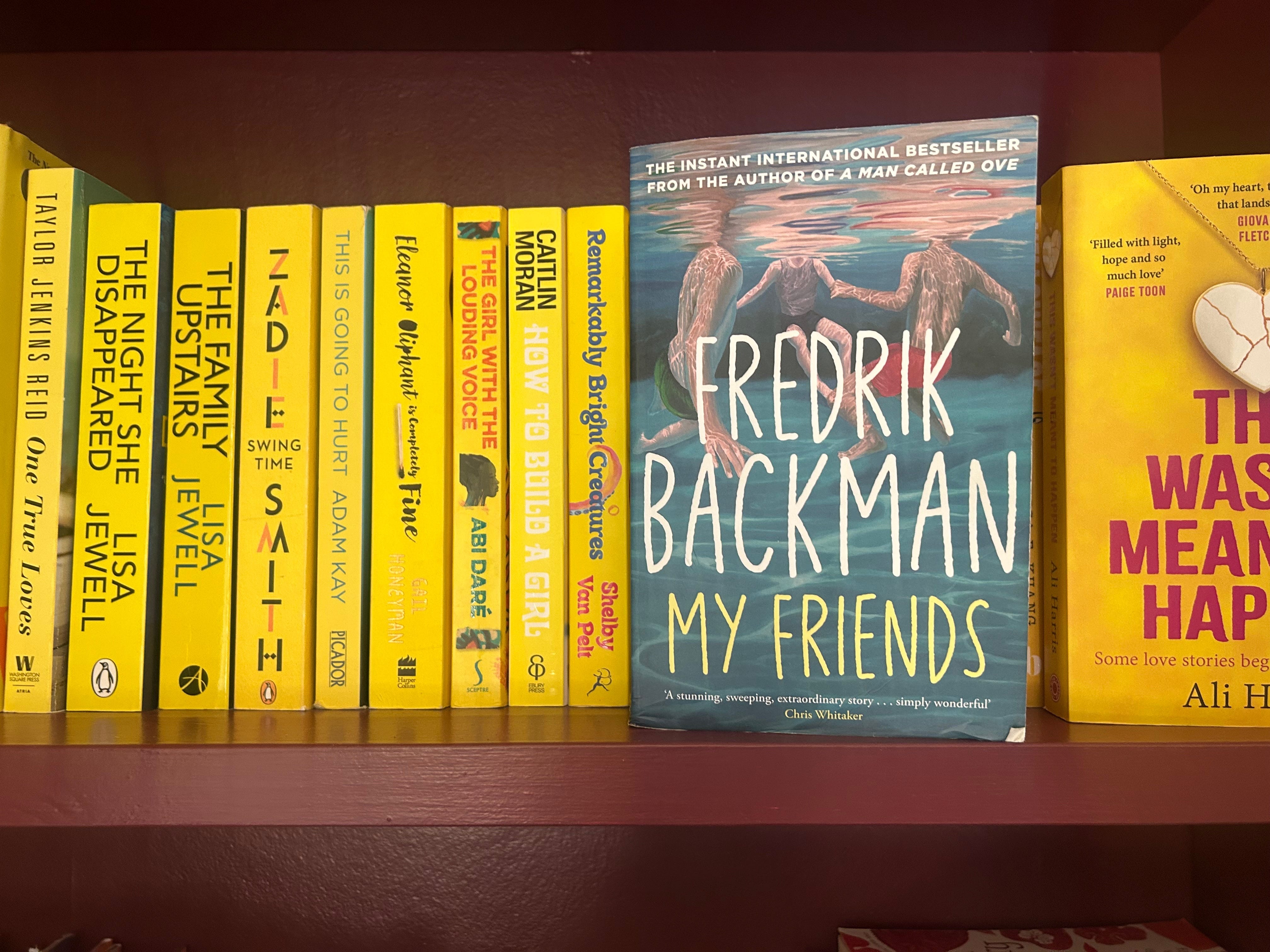
I finished a book recently that I loved so much I wish I could read it again for the first time. I felt bereft that it had ended. I want to tell the world about it. I want to go back and read every turned-down page and paragraph I’d underlined - the ones that felt like they captured something essential about life, friendship, love, grief, and being human. That book was My Friends by Fredrik Backman. This quote from it sums up exactly how I feel about why we need to read and watch things that are uncomfortable.
“It’s art that helps me cope. Because art is a fragile magic, just like love, and that’s humanity’s only dance against death.”
Understanding life doesn’t come from avoiding talking about death, it comes from sitting with it. Reading about it. Watching it. And doing this in the company of the kind art that isn’t scared to show you the difficult, tragic, traumatic things about being human - rather than simply entertaining and distracting things - reminds us that we’re not alone.
And isn’t that knowledge the most hopeful thing of all? The thing that makes being human not just survivable, but beautiful.
Choosing not to look away
So if you haven’t watched Babies yet, I would gently encourage you to. And if you’ve never read a book about baby loss, perhaps this is your moment to pick up This Wasn’t Meant to Happen.
The message within Sofie and Rory and Leo’s story - the one that has become ever clearer to me since writing it, and even more so since working in the baby loss community for the past six months - is this:
We have to get better at talking about not just baby loss, but trauma and grief itself.
We have to get better at showing up for people who are living - or have lived - through it.
We have to talk about grief to be able to see, feel and understand the love.
And that starts with doing uncomfortable things. Watching the difficult series, even when it feels like “too much.” Reading the book that isn’t an easy escape. Choosing not to look away.
Perhaps then we can talk. Really talk.
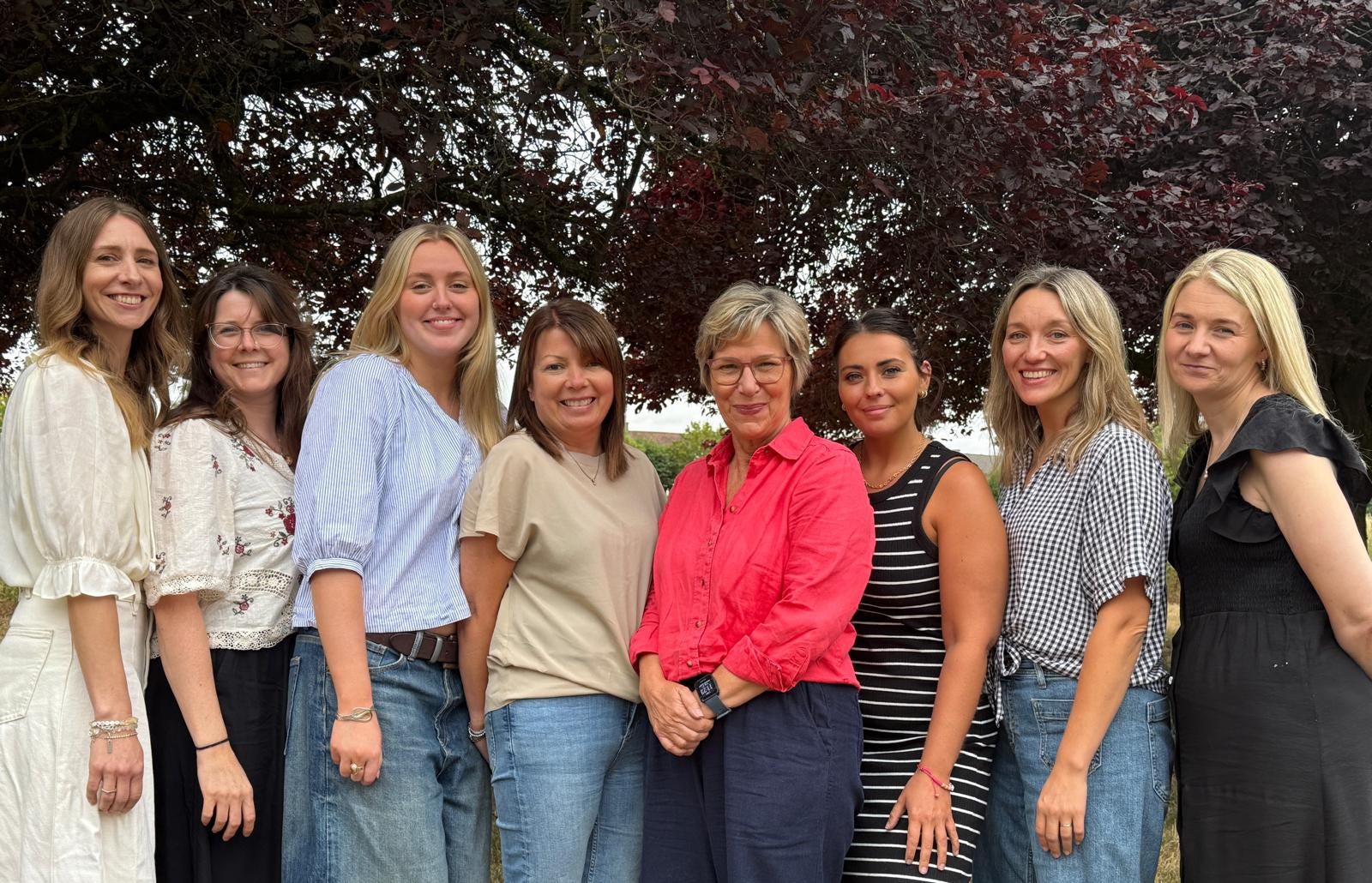
An echo chamber, or…..?
For a long time I worried that the conversation around baby loss was trapped inside an echo chamber. At Petals, where we have conversations about baby loss every single day, we care deeply about listening to the families it affects. Our counsellors support bereaved parents through unimaginable trauma, and behind the scenes we work to ensure that no couple who experiences the loss of their baby is left without specialist counselling support. That those who need us know Petals is a safe place to land, a place where they will be held.
And I’ve realised that it doesn’t feel like an echo chamber at all. It feels like being invited into a vast, beautiful, shimmering palace whose true wealth is understanding, compassion, and the courage to hold other people’s pain.
A palace where the resounding ‘echo’ is love.
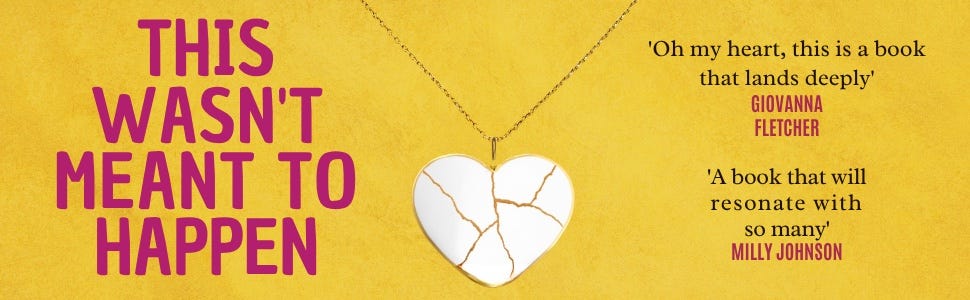
P.S. If you’d like to read This Wasn’t Meant to Happen, it’s currently free on Kindle Unlimited!
Comments
Nothing yet. Say the first thing.
Sign in to join the conversation.