
There are passages, and then there are passages. Those that stick with you long after a book is finished. These passages will usually evoke the strongest of emotions, the ones you instinctively look for when you reach out for that book and find yourself nonchalantly skimming its pages.
The Shahnameh is an epic poem that is filled with such passages — you would expect it, considering it is the longest epic poem ever composed by a single author. The Iliad, likewise, is filled with such passages.
I have chosen two such passages to share. Not for their aesthetic quality. Not for their eloquence. But for the way they seemed out of place; an out-of-tune chord in an otherwise masterful musical piece that inspired much deliberation. I have indicated such passages below by making them bold.
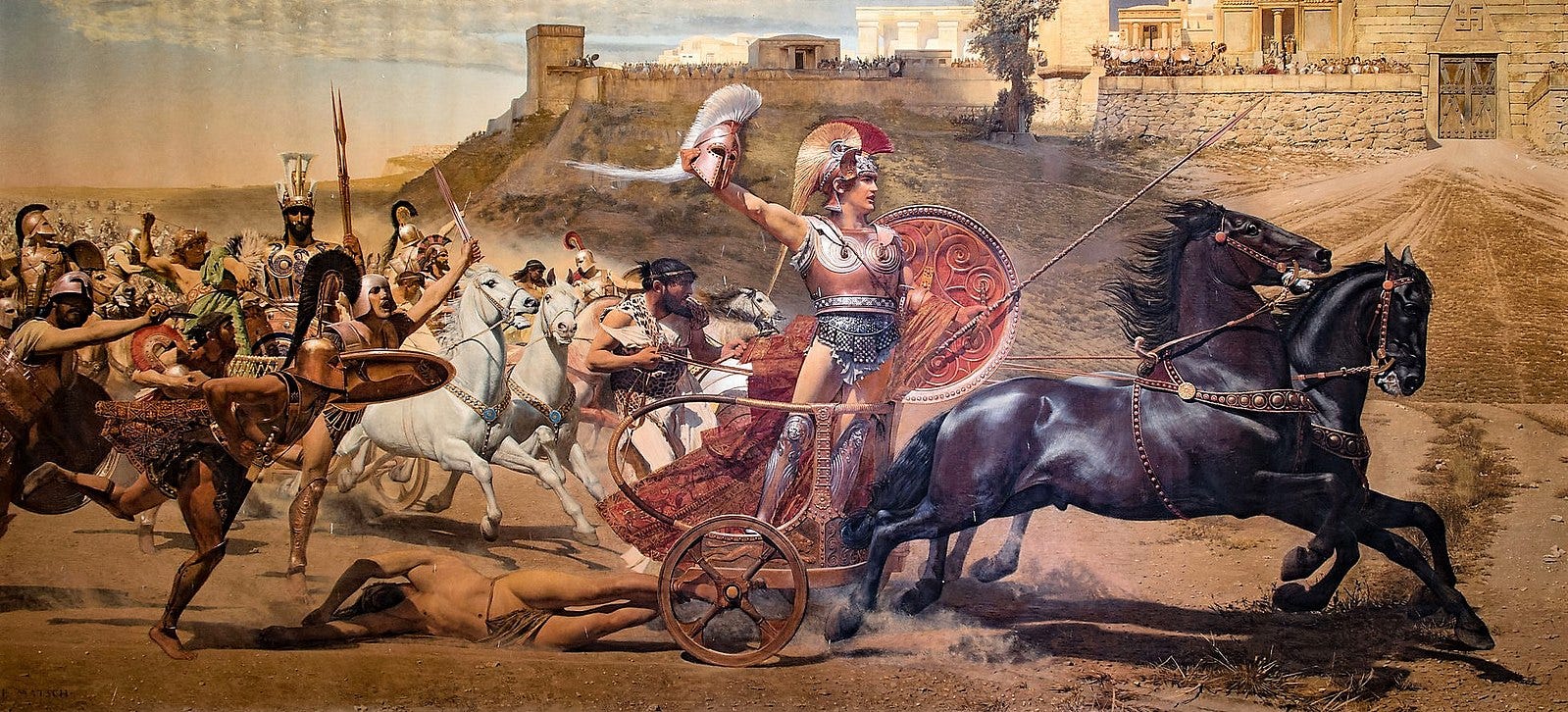
The first is from Achilles. He has just won one of his greatest victories, vanquishing the mighty Trojan prince, Hektor. The Greeks are gathering to defile Hektor’s corpse, and it is to them that Achilles addresses his speech. Yet one passage seems out of place, capturing my attention for its otherworldly concern amidst the bloody glory of victory:
Text within this block will maintain its original spacing when published
"Friends, who are leaders of the Argives and keep their counsel:
since the gods have granted me the killing of this man
who has done us much damage, such as not all the others together
have done, come, let us go in armor about the city
to see if we can find out what purpose is in the Trojans,
whether they will abandon their high city, now that this man
has fallen, or are minded to stay, though Hektor lives no longer.
Yet still, why does the heart within me debate on these things?
There is a dead man who lies by the ships, unwept, unburied:
Patroklos: and I will not forget him, never so long as
I remain among the living and my knees have their spring beneath me.
And though the dead forget the dead in the house of Hades,
even there I shall still remember my beloved companion.
But now, you young men of the Achaians, let us go back, singing
a victory song, to our hollow ships; and take this with us.
We have won ourselves enormous fame; we have killed the great Hektor
whom the Trojans glorified as if he were a god in their city."
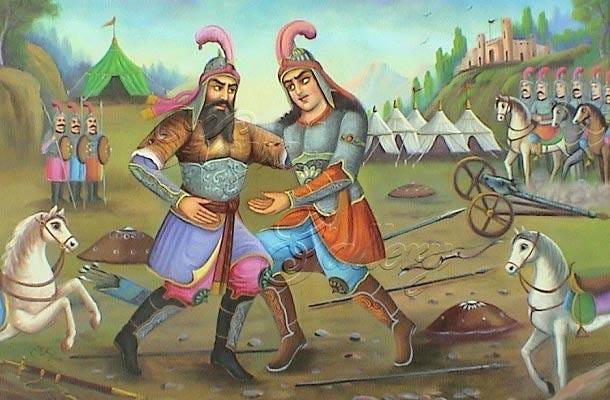
The second of such passages is from the Shahnameh. The legendary hero Rostam is waging battle against Sohrab, not knowing that Sohrab is his son. Ferdowsi offers detailed depictions of their battles:
Text within this block will maintain its original spacing when published
At first they fought with short javelins, then attacked one another with Indian swords, and sparks sprang forth from the clash of iron against iron. The mighty blows left both swords shattered, and they grasped their ponderous maces, and a weariness began to weigh their arms down. Their horses too began to tire, and the blows the heroes dealt shattered both the horse armor and their own cuirasses. Finally, both the horses and their riders paused, exhausted by the battle, and neither hero could summon the strength to deliver another blow. The two stood facing one another at a distance, the father filled with pain, the son with sorrow, their bodies soaked with sweat, their mouths caked with dirt, their tongues cracked with thirst.
Before continuing with narrating their battles, Ferdowsi pauses momentarily, and decides to zooms out of the chaos, taking a cosmic and heartbreaking snapshot of the battle:
Text within this block will maintain its original spacing when published
O world! thy doings are a mystery,
The broken and the whole both come from thee!
Love stirred in neither of these twain, no trace
Of wisdom was there, love showed not its face!
The fish in streams, wild asses on the plain,
And beasts of burden know their young again,
But toil and lust forbid a man to know
The difference between a child and foe!
Let’s chat in the Comments section below! What passages have remained with you long after you’ve read them?
No posts
Comments
Nothing yet. Say the first thing.
Sign in to join the conversation.